1950s Maps of Kaplan, Louisiana
Explore 10 historic maps of Kaplan from the 1950s. These maps offer a rare glimpse into what life looked like during the 1950s — showing old roads, neighborhoods, homes, and landmarks that have changed or disappeared over time.
Whether you're researching your family's past, planning a metal detecting trip, or studying how Kaplan's landscape evolved across the 1950s, these high-resolution maps are a powerful tool for exploring the history of this region.
- Focus on a specific era: All maps on this page are from the 1950s, giving you a focused view of this time period.
- See what’s changed: Compare century-old streets, trails, and buildings to today's modern landscape using overlays and satellite layers.
- Research with precision: Use these maps for genealogy, historical research, land use analysis, or educational projects.
- View, download, or print: Maps are fully viewable online in high resolution, and can be downloaded or printed for your own records.
Start exploring Kaplan's history through authentic maps from the 1950s. This is your window into the past.
Kaplan, LA maps
(10)- 1952 Map of Lake Charles
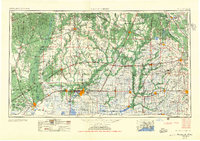 1952 Lake Charles1952 Print · USGSSouthwest Louisiana is captured here in the mid-fifties, showing a landscape defined by the rise of the petrochemical industry and deep-water navigation. Researchers can trace family roots through numerous small-town settlements and oil developments like Nibletts Bluff, the Lockport Oil Field, and Starks.
 - 1954 Map of Kaplan
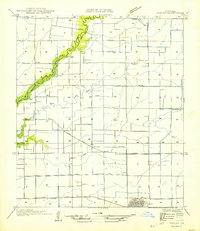 1954 Kaplan1954 Print · USGSCoastal prairie life and agricultural development define this mid-century look at the Vermilion Parish countryside. Genealogists and local historians can trace the Southern Pacific rail line, locate the Apshire Cem, and find small communities like Leleux or Cossinade.
 - 1954 Map of Schooner Bayou NE
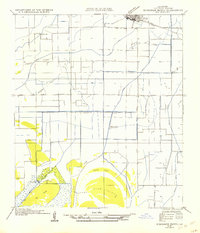 1954 Schooner Bayou NE1954 Print · USGSThe Vermilion Parish marshlands and rice country are captured here at mid-century, centered on the rail hub at Kaplan. Researchers can locate family landmarks like Hebert Cem and the Broussard Sch among a complex network of drainage canals.
 - 1954 Map of Port Arthur
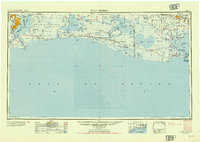 1954 Port Arthur1954 Print · USGSThe Texas and Louisiana coastlines meet here in the mid-fifties, showing the industrial rise of Port Arthur alongside vast wildlife preserves. Researchers can trace remote coastal settlements and infrastructure like Pecan Island, the Sabine Pass Lighthouse, and the North Island School.
 - 1954 Map of Lake Charles, 1964 Print
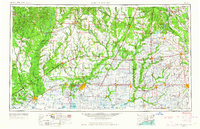 1954 Lake Charles1964 Print · USGSSouthwest Louisiana in the mid-fifties is defined by its massive petroleum industry and its complex network of bayous and rail lines. Researchers can trace the development of the Sulphur Mines Oil Field or locate historic settlements like Longville and De Quincy.3 unique versions available
 - 1955 Map of Crowley, 1956 Print
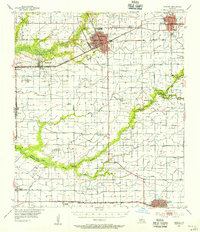 1955 Crowley1956 Print · USGSAcadia Parish and the northern edge of Vermilion Parish are shown in the mid-fifties, during a period of agricultural and industrial expansion. Researchers can trace family history through numerous rural landmarks like Hebron Ch, Woodlawn Cem, and Simon Cem.4 unique versions available
 - 1955 Map of Forked Island, 1956 Print
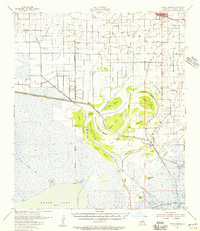 1955 Forked Island1956 Print · USGSCoastal Vermilion Parish marshlands come to life in the 1950s, showing the intersection of new industry and old maritime routes. Genealogists can trace family roots through sites like St Davids Ch, Hebert Cem, and the private airstrips at Kaplan.2 unique versions available
 - 1956 Map of Port Arthur, 1965 Print
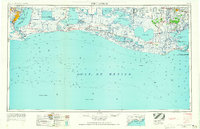 1956 Port Arthur1965 Print · USGSThe Texas and Louisiana coastlines meet here in the mid-fifties, showing a landscape of sprawling marshes and growing refinery towns. Genealogists and historians can trace ridge settlements like Grand Cheniere or find the Sabine Pass Lighthouse and Pecan Island.3 unique versions available
 - 1958 Map of Port Arthur
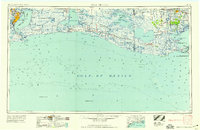 1958 Port Arthur1958 Print · USGSThe Texas and Louisiana coastlines meet in the late fifties at the busy industrial port of Port Arthur. Historians and genealogists can trace the early rail networks of the Southern Pacific and locate coastal settlements like Cameron, Pecan Island, and Abbeville.
 - 1959 Map of Port Arthur
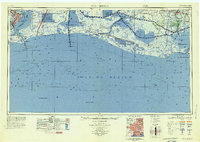 1959 Port Arthur1959 Print · USGSThe Texas and Louisiana coastlines meet in this late-fifties study of a landscape defined by industry and wildlife preserves. Trace the Intracoastal Waterway past Pecan Island and Abbeville, or locate the shipping channels at Sabine Pass.
End of results
Showing maps 1-10 of 10
Top cities near Kaplan
- Lafayette historical maps
- Crowley historical maps
- Abbeville historical maps
- Rayne historical maps
- Scott historical maps
- Duson historical maps
See more
Frequently asked questions
- What are the different types of historical maps available for Kaplan?
- What is the oldest map of Kaplan?
- Where can I purchase historical maps of Kaplan for my home or office?
- Where can I download high-res historical maps of Kaplan?
- Are there historical topographic maps available for Kaplan?
- Is there historical aerial imagery available for Kaplan?
- Where are historical maps of Kaplan sourced from?