Old Maps of Ivytown, Maryland for Academic Research
Study the evolution of Ivytown with 16 high-resolution historic maps. Whether you're teaching, researching, or modeling changes in land use, these maps provide essential visual documentation of urban, environmental, and geographic change.
- Analyze long-term change: Track patterns in development, transportation, and natural features.
- Ideal for environmental or urban studies: Support academic projects with primary historical map data.
- Use in the classroom or lab: Educators and researchers rely on these maps to bring historical context to life.
These maps are a powerful tool for teaching, research, and visualizing how Ivytown has changed over the decades.
Ivytown, MD maps
(16)- 1898 Map of Choptank
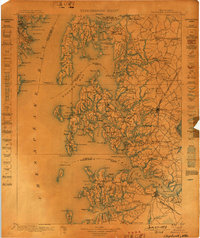 1898 Choptank1898 Print · USGSThe Maryland Eastern Shore and its intricate Chesapeake coastline are documented here in the late 1890s. Genealogists can trace family roots in Annapolis or Easton, while maritime historians can locate historic landings such as Corners Wharf and Wye Landing.2 unique versions available
 - 1904 Map of Oxford
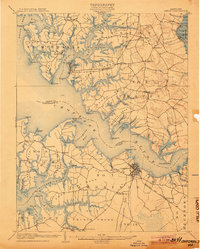 1904 Oxford1904 Print · USGSCoastal Maryland at the start of the twentieth century was a world of steamships, rail landings, and tide-driven commerce. Genealogists can trace early homesteads and watermen's hubs near Cambridge, Oxford, and the landing at Trappe Ldg.3 unique versions available
 - 1908 Map of Choptank
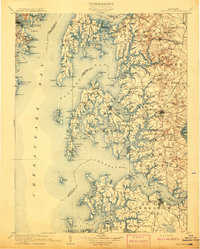 1908 Choptank1908 Print · USGSMaryland's Eastern Shore and the Chesapeake Bay are captured here at the start of the twentieth century, showing a world of steamships and rail. Genealogists can trace family names at St Michaels, Oxford, and waterfront landings like Claiborne or Arundel on the Bay.5 unique versions available
 - 1942 Map of Trappe, 1962 Print
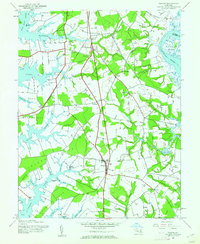 1942 Trappe1962 Print · USGSMaryland's Eastern Shore appears here in the early 1940s, showing a landscape defined by tidal necks and the Pennsylvania railroad. Genealogists and local historians can trace small settlements like Stumptown, rural sites such as Union Ch, and several family burial grounds including Merrick Cem.3 unique versions available
 - 1943 Map of Trappe
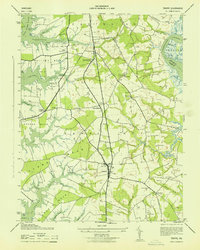 1943 Trappe1943 Print · USGSCoastal Talbot County in the early 1940s is mapped here in detail, showing a landscape of fertile necks and winding tidal creeks. Researchers can trace family roots at Union Church or Merrick Cemetery and locate rail history at Trappe Station.
 - 1948 Map of Washington
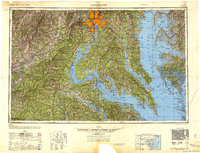 1948 Washington1948 Print · USGSThe Potomac and Chesapeake regions in the late 1940s reveal a landscape of expanding military reach and deep-rooted Tidewater settlements. Trace old rail corridors like the Richmond Fredericksburg & Potomac RR or locate landmarks like the Wakefield Washington Monument and St. Marys College.2 unique versions available
 - 1957 Map of Washington, 1966 Print
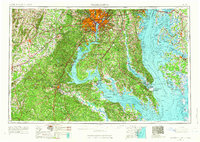 1957 Washington1966 Print · USGSThe mid-Atlantic region during the mid-fifties and early sixties reveals a landscape of growing suburbs and vital military outposts. Researchers can trace historic river towns and shorelines from Alexandria to the Hooper Islands and St Clements Island.5 unique versions available
 - 1961 Map of Washington
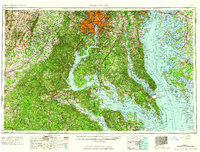 1961 Washington1961 Print · USGSThe mid-Atlantic region in the late fifties is presented in remarkable detail, from the Blue Ridge foothills to the Chesapeake Eastern Shore. Researchers can trace historic river landings and military sites like Mount Vernon, Fort Belvoir, and Point Lookout.2 unique versions available
 - 1983 Map of Washington East, 1984 Print
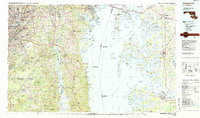 1983 Washington East1984 Print · USGSThe Chesapeake Bay region in the early eighties shows the Maryland capital and its suburbs meeting the maritime traditions of the Eastern Shore. Researchers can trace land patterns from Andrews Air Force Base to waterfront settlements like Oxford and Chesapeake Beach.2 unique versions available
 - 1988 Map of Trappe
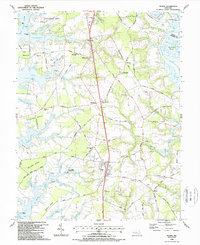 1988 Trappe1988 Print · USGSThe Eastern Shore of Maryland in the late eighties reveals a landscape of deep tidal necks and historic crossroads. Genealogists can trace family footprints at Ivytown, the Hole-in-the-Wall Cem, and the old maritime hub at Trappe Landing.
 - 1989 Map of Washington
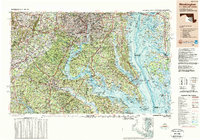 1989 Washington1989 Print · USGSThe Potomac River valley and Chesapeake Bay are shown in comprehensive detail during the late 1980s. Genealogists and historians can trace the transition from urban Alexandria to the rural Northern Neck, locating landmarks like Mount Vernon and Stratford Hall.
 - 2011 Map of Trappe, 2011 Print
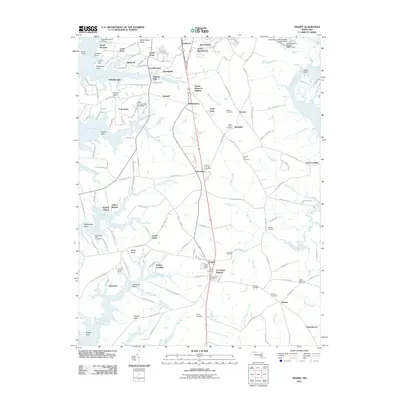 2011 Trappe2011 Print · USGSCoastal Maryland life south of Easton is defined by the tidal necks and landings along the Choptank River. Researchers can trace family history through a high density of local burial grounds, including Hole-in-the-Wall Cemetery and Queen Esther Cemetery.
 - 2014 Map of Trappe, 2014 Print
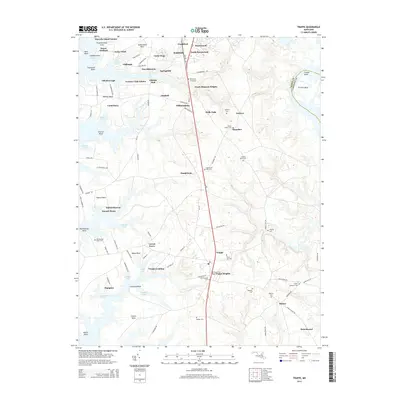 2014 Trappe2014 Print · USGSThe shorelines and farmsteads south of Easton are shown here during a period of modern residential growth. Genealogists can locate several smaller burial grounds such as Round Top Graveyard, Hole-in-the Wall Cem, and Landing Neck Cem.
 - 2016 Map of Trappe, 2016 Print
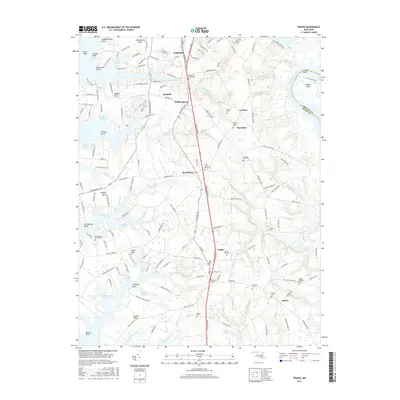 2016 Trappe2016 Print · USGSThe Eastern Shore of Maryland in the mid-2010s reveals a landscape of tidal creeks and long-established rural hamlets. Genealogists and local historians can trace family locations near Trappe or search for burial sites at Round Top Graveyard and Hole-in-the-Wall Cem.
 - 2019 Map of Trappe, 2019 Print
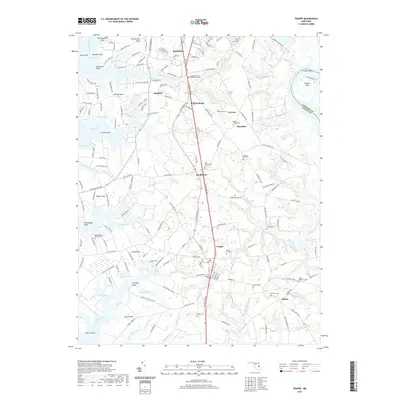 2019 Trappe2019 Print · USGSTalbot County’s tidal necks and historic hamlets are detailed in this recent survey of the Maryland Eastern Shore. Researchers can trace family sites at Little Round Top Church Graveyard or locate early settlements like Ivytown and Trappe.
 - 2023 Map of Trappe, 2023 Print
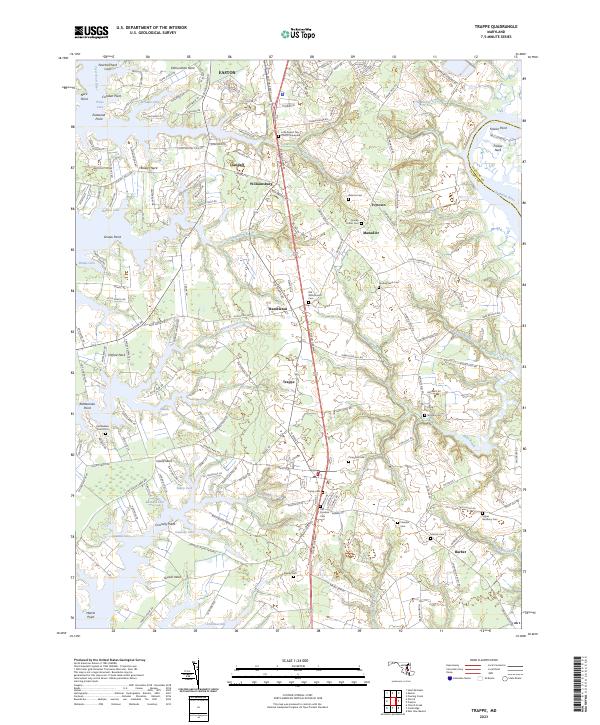 2023 Trappe2023 Print · USGSThe Eastern Shore of Maryland in 2023 reveals a landscape where historic crossroads and waterfront necks endure alongside modern thoroughfares. Researchers can trace family history through local landmarks like Old Whitemarsh Cem, Ivytown, and Little Round Top Church Graveyard.
End of results
Showing maps 1-16 of 16
Top cities near Ivytown
- Easton historical maps
- Cambridge historical maps
- Denton historical maps
- Hurlock historical maps
- Ridgely historical maps
- Trappe historical maps
See more
Frequently asked questions
- What are the different types of historical maps available for Ivytown?
- What is the oldest map of Ivytown?
- Where can I purchase historical maps of Ivytown for my home or office?
- Where can I download high-res historical maps of Ivytown?
- Are there historical topographic maps available for Ivytown?
- Is there historical aerial imagery available for Ivytown?
- Where are historical maps of Ivytown sourced from?