Old Maps of Itawamba County, Mississippi for Academic Research
Study the evolution of Itawamba County with 113 high-resolution historic maps. Whether you're teaching, researching, or modeling changes in land use, these maps provide essential visual documentation of urban, environmental, and geographic change.
- Analyze long-term change: Track patterns in development, transportation, and natural features.
- Ideal for environmental or urban studies: Support academic projects with primary historical map data.
- Use in the classroom or lab: Educators and researchers rely on these maps to bring historical context to life.
These maps are a powerful tool for teaching, research, and visualizing how Itawamba County has changed over the decades.
Itawamba County, MS maps
(113)- 1921 Map of Tupelo
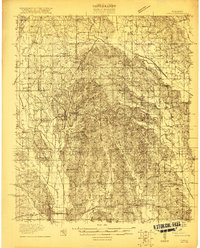 1921 Tupelo1921 Print · USGSNortheast Mississippi in the early twenties centers on the rail hub at Tupelo as it begins to connect with the fledgling Bankhead Highway system. Genealogists and local historians can trace rural family life through numerous landmarks like Campbelltown Cemetery, Clayton Store, and the Pratts School.2 unique versions available
 - 1923 Map of Tupelo
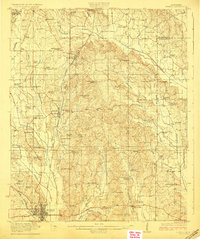 1923 Tupelo1923 Print · USGSLee County in the early twenties is a landscape of rural schoolhouses and rail junctions centered on the growing hub of Tupelo. Researchers can trace old family footprints at Campbelltown Cemetery or locate vanished sites like Kirks Gin and Beech Springs School.2 unique versions available
 - 1936 Map of Red Bay
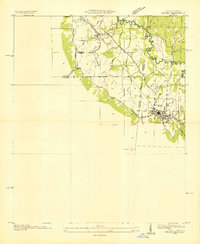 1936 Red Bay1936 Print · USGSRed Bay and the Franklin County borderlands appear here in the mid-thirties as the Tennessee Valley Authority began its regional transformations. Genealogists and local historians can trace family sites at Patterson Chapel, Burgess Cem, and the old rail stops along the Illinois Central line.
 - 1951 Map of Red Bay
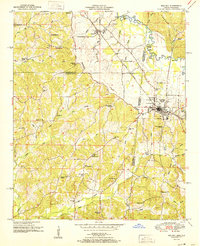 1951 Red Bay1951 Print · USGSRed Bay and the surrounding borderlands of Alabama and Mississippi are captured here in the early fifties. Local historians can trace the rail-side growth of Red Bay and locate rural landmarks like Banner Sch, Sims Memorial Church, and the Burgess Cem.3 unique versions available
 - 1956 Map of Tupelo, 1967 Print
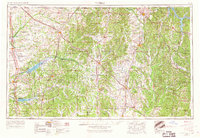 1956 Tupelo1967 Print · USGSNortheast Mississippi and parts of Tennessee and Alabama are shown here during the mid-fifties, a time of major reservoir construction and forestry management. Researchers can trace the St Louis-San Francisco RR through Tupelo or locate historic sites like Tishomingo State Park and the University.2 unique versions available
 - 1958 Map of Tupelo
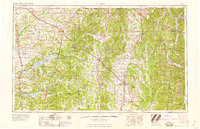 1958 Tupelo1958 Print · USGSNortheast Mississippi and neighboring Alabama and Tennessee appear here during the late fifties as a region defined by new reservoirs and historic rail lines. Genealogists can trace family locations near Sardis Lake, Woodall Mountain, and the St Louis-San Francisco Ry.
 - 1965 Map of Mooreville, 1966 Print
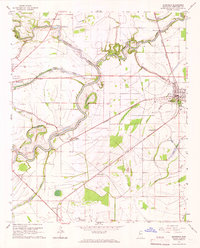 1965 Mooreville1966 Print · USGSThe Mississippi Delta's rail and river systems are on full display in the mid-1960s at the junction of two major lines. Genealogists and historians can trace family landmarks like Moorhead Cem or Swan Lake Ch and locate the old County Farm.
 - 1965 Map of Fulton SE, 1966 Print
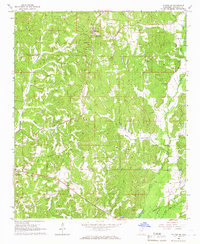 1965 Fulton SE1966 Print · USGSItawamba County in the mid-sixties is a landscape of winding creek valleys and high ridge lookouts. Researchers can find numerous country churches and cemeteries, from New Temple Ch to Palmetto Cem, and trace the rural roads around Fairview.2 unique versions available
 - 1965 Map of Fulton, 1966 Print
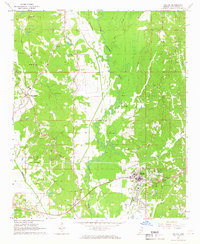 1965 Fulton1966 Print · USGSItawamba County is documented here in the mid-1960s as the river-and-rail economy of the Tombigbee River valley centered on Fulton. Genealogists and historians can trace numerous rural landmarks, including Warrens Chapel Cem, Indian Mounds, and the Mississippian railroad line.3 unique versions available
 - 1965 Map of Fulton NE, 1966 Print
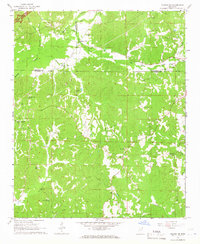 1965 Fulton NE1966 Print · USGSItawamba County and the surrounding tri-county area are shown in the mid-1960s as the modern parkway system began to reshape the landscape. Genealogists can locate numerous rural landmarks such as Moores Mill, Old Bethel Ch, and the Walker House Cem Ch.
 - 1965 Map of Kirkville, 1966 Print
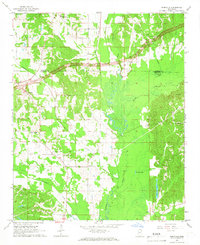 1965 Kirkville1966 Print · USGSNortheast Mississippi rural life and early parkway development are captured here in the mid-sixties. Trace family history through Kirkville and Sandy Springs, or find old community sites like Houston Sch and Gilmers Chapel.2 unique versions available
 - 1966 Map of Smithville, 1967 Print
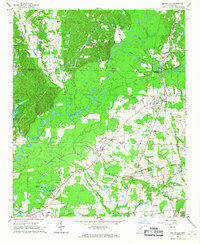 1966 Smithville1967 Print · USGSMonroe and Itawamba counties appear here in the mid-1960s, a landscape defined by the winding Tombigbee River and historic land lines. Genealogists can locate family landmarks like Dunlap Cem, Bethel Ch, and the distinct paths of the Old Indian Boundary.2 unique versions available
 - 1966 Map of Beans Ferry, 1967 Print
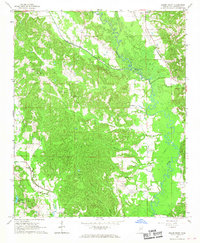 1966 Beans Ferry1967 Print · USGSThe Tombigbee River corridor in the mid-sixties shows a rural landscape of small settlements and family farms. Genealogists can locate family-named landmarks like Bean Cem and Wiygul Cem or historic community centers such as Beans Ferry and Hopewell Ch.
 - 1966 Map of Turon, 1967 Print
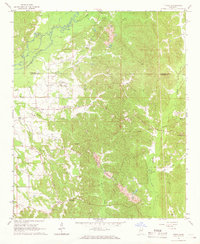 1966 Turon1967 Print · USGSUpper Monroe and Itawamba counties appear here in the mid-1960s, a rural landscape shaped by ancient treaty lines and small-scale mining. Local researchers can locate dozens of burial sites like Springfield Cem and Jones Cem, or trace the path of the Old Indian Treaty Boundary.2 unique versions available
 - 1966 Map of Nettleton, 1967 Print
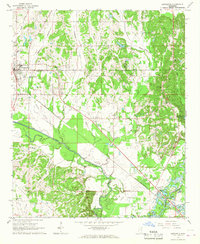 1966 Nettleton1967 Print · USGSNettleton and the Lee-Monroe county line are shown here in the mid-1960s, prior to significant modern development along the river. Genealogists can trace family landmarks like Siloam Sch, Union View Ch, and cemeteries such as Williams Cem and Goodwin Cem.2 unique versions available
 - 1966 Map of Evergreen, 1967 Print
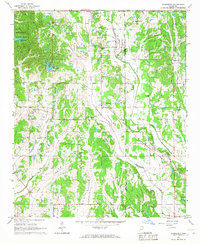 1966 Evergreen1967 Print · USGSThe rural borderlands of Lee and Itawamba counties appear here in the mid-1960s, showing a landscape defined by small-town life and church communities. Researchers can trace family history at sites like Wesley Chapel Cem or locate former schools and settlements such as Dorsey Sch and Ballardsville.3 unique versions available
 - 1966 Map of Tremont, 1967 Print
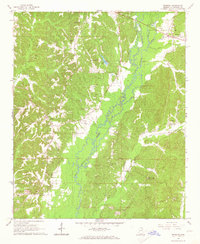 1966 Tremont1967 Print · USGSItawamba County in the mid-1960s reveals a landscape of winding creeks and rural crossroads on the Mississippi-Alabama line. Genealogists and historians can trace family locations near Tremont or find old burial grounds like Clover Ridge Cem and Maxey Cem.2 unique versions available
 - 1967 Map of Shottsville, 1968 Print
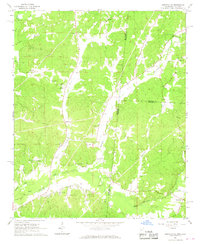 1967 Shottsville1968 Print · USGSThe Mississippi-Alabama borderlands come into focus in the late sixties, showing a landscape defined by small crossroads and family legacies. Researchers can trace the heritage of Shottsville and Bounds Crossroads or locate Spearman Cem and Pearly Gates Ch.
 - 1967 Map of Bexar, 1968 Print
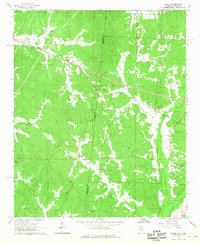 1967 Bexar1968 Print · USGSThe Alabama and Mississippi state line divides this quiet landscape of the late sixties, where small rural communities are anchored by local schools and churches. Genealogy researchers can find family sites like the Wigginton Cem and Ada Hanna High Sch.
 - 1967 Map of Detroit, 1968 Print
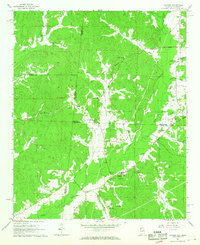 1967 Detroit1968 Print · USGSDetroit and its surrounding rural communities are captured here in the late sixties along the Alabama-Mississippi state line. Researchers can trace historic land divisions like the Old Indian Treaty Boundary or locate family sites such as Byrd Sch and Riggins Cem.3 unique versions available
 - 1973 Map of Mooreville, 1975 Print
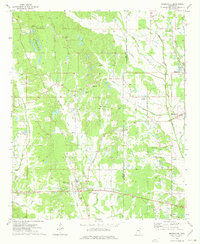 1973 Mooreville1975 Print · USGSThe rural landscapes of Lee and Itawamba Counties are captured here in the mid-1970s, showcasing a network of small farming settlements and creek-side communities. Family historians can trace long-standing landmarks like Hebron Ch, Gilvo Cem, and the old settlement at Mantachie.
 - 1973 Map of Ratliff, 1975 Print
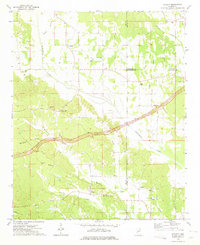 1973 Ratliff1975 Print · USGSNortheast Mississippi was a landscape of quiet crossroads and historic creek bottoms in the early seventies. Genealogists can trace family names and local landmarks like Ratliff, the Peterson Cem, and the Natchez Trace Parkway.
 - 1981 Map of Red Bay, 1982 Print
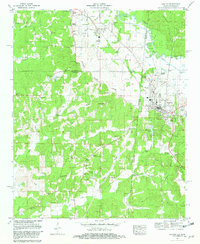 1981 Red Bay1982 Print · USGSThe Alabama-Mississippi borderlands come alive in the early eighties, centered on the growing town of Red Bay and the village of Belmont. Genealogists and local historians can trace family roots through numerous sites like New Carmel Church, Hodge Cem, and the Banner Community Center.
 - 1984 Map of Tupelo
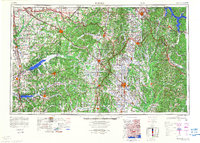 1984 Tupelo1984 Print · USGSNorth Mississippi in the 1980s is defined by its massive river basin reservoirs and the growing regional hubs of Tupelo and Oxford. Researchers can trace the legacy of the Pontotoc Ridge, find the University of Mississippi, and map early Interstate corridors near Sardis Lake.3 unique versions available
 - 1984 Map of Tupelo, 1985 Print
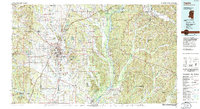 1984 Tupelo1985 Print · USGSNortheast Mississippi and the Alabama borderlands are shown in the mid-1980s as timber and river networks shaped the region. Trace local history through the Illinois Central Gulf rail line and sites like the Old Natchez Trace Parkway.
Showing maps 1-25 of 113
Top cities of Itawamba County
Frequently asked questions
- What are the different types of historical maps available for Itawamba County?
- What is the oldest map of Itawamba County?
- Where can I purchase historical maps of Itawamba County for my home or office?
- Where can I download high-res historical maps of Itawamba County?
- Are there historical topographic maps available for Itawamba County?
- Is there historical aerial imagery available for Itawamba County?
- Where are historical maps of Itawamba County sourced from?