Old Maps of Marion County, Mississippi for Metal Detecting
Plan your next treasure hunt with 123 historic maps of Marion County. Find old homesites, ghost towns, trails, and gathering spots that may be lost to time — perfect for identifying promising metal detecting locations.
- Locate forgotten sites: Uncover places like long-lost settlements, abandoned rail lines, or gathering spots.
- Plan better hunts: Use map overlays combined with LiDAR or satellite views to narrow in on historically rich areas.
- Made for detectorists: Thousands of hobbyists use these maps to discover relics, coins, and hidden history.
Use these historic maps to boost your research and find new opportunities beneath the surface of Marion County.
Marion County, MS maps
(123)- 1949 Map of Angie
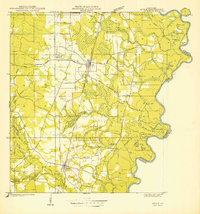 1949 Angie1949 Print · USGSNear the Pearl River in the late 1940s, this area of Washington Parish shows a landscape of timber and rail. Genealogists can locate family-named sites like Pleasant Valley Cem, Wesley Ray High Sch, and the community of Varnado.
 - 1953 Map of Hattiesburg, 1965 Print
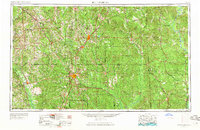 1953 Hattiesburg1965 Print · USGSSouth Mississippi and western Alabama are shown here during the mid-twentieth century as the timber and rail industries shaped the region. Genealogists and historians can trace rail lines like the Mississippi Central and locate rural centers such as Magee, Richton, and Mount Vernon.4 unique versions available
 - 1953 Map of Natchez, 1966 Print
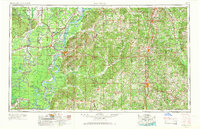 1953 Natchez1966 Print · USGSSouthwest Mississippi and the Louisiana border country come alive in this mid-century survey of the river valley and forest lands. Researchers can trace the rail lines of the Illinois Central RR and locate rural hubs like Gloster and Ferriday.3 unique versions available
 - 1953 Map of Mobile, 1968 Print
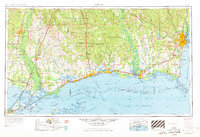 1953 Mobile1968 Print · USGSThe Gulf Coast comes alive in this mid-century survey, from the streets of Mobile to the marshes of New Orleans. Trace family roots in coastal towns like Pass Christian and Bayou La Batre or locate military landmarks including Keesler AFB.3 unique versions available
 - 1956 Map of Natchez
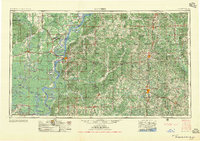 1956 Natchez1956 Print · USGSThe Mississippi River borderlands and the Pine Hills come alive in this mid-fifties study of the Natchez region. Genealogists and historians can trace rail-era towns along the Illinois Central RR and explore the oxbows of Lake Bruin and Lake Concordia.
 - 1957 Map of Mobile
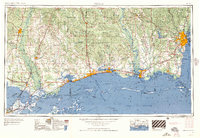 1957 Mobile1957 Print · USGSThe Gulf Coast in the mid-1950s reveals a bustling corridor of rail-and-river commerce connecting Alabama to Louisiana. Genealogists and historians can trace old settlements and military hubs from Keesler Afb to the coastal reaches of Ship Island and Bogalusa.3 unique versions available
 - 1958 Map of Hattiesburg
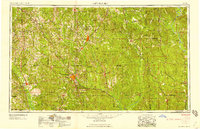 1958 Hattiesburg1958 Print · USGSSoutheastern Mississippi's timber and rail networks are at their peak during the late fifties, centered on the growing hubs of Hattiesburg and Laurel. Researchers can trace old family landmarks like Sims Chapel, the Busbey Game Refuge, and the vanished stops along the Mississippi Central railroad.2 unique versions available
 - 1959 Map of Natchez
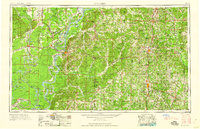 1959 Natchez1959 Print · USGSSouthwestern Mississippi and eastern Louisiana are captured in the late fifties, showing a landscape defined by the winding Mississippi River and the timbered Homochitto National Forest. Researchers can trace the sprawling Illinois Central RR and find rural landmarks like Union Church and Camp Van Dorn (Abandoned).
 - 1959 Map of Bogalusa, 1960 Print
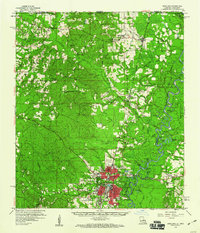 1959 Bogalusa1960 Print · USGSThe Pearl River valley and the industrial hub of Bogalusa are captured here in the late fifties. Genealogists can trace family names through dozens of rural sites like Mitchells Chapel, Old Live Oak Cem, and the Buck Branch School.2 unique versions available
 - 1959 Map of Poplarville, 1960 Print
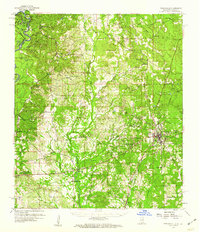 1959 Poplarville1960 Print · USGSPearl River County during the late fifties shows a rural landscape transitioning around the growing hub of Poplarville. Genealogists and historians can trace old community centers like White Sand, Wesley Chapel Cem, and Stewart Sch.3 unique versions available
 - 1960 Map of Mobile
 1960 Mobile1960 Print · USGSThe Gulf Coast at the dawn of the sixties shows a landscape of busy ports, military airbases, and barrier islands. Trace the rail lines of the Louisville & Nashville through BILOXI and Pascagoula or find family history in towns like Bayou La Batre and Poplarville.
 - 1963 Map of Mobile
 1963 Mobile1963 Print · USGSThe Gulf Coast at the dawn of the sixties shows a thriving maritime and military corridor from Louisiana to Alabama. Genealogists and historians can trace rail lines like the Louisville & Nashville RR and find landmarks from Brookley AFB to Fort Morgan.
 - 1965 Map of Mobile
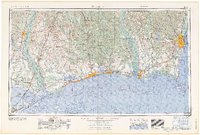 1965 Mobile1965 Print · USGSThe Gulf Coast at mid-century reveals a landscape of expanding ports and vital military installations from Louisiana to Alabama. Genealogists and historians can trace the growth of Biloxi, Pascagoula, and Mobile, alongside the sprawling De Soto National Forest.
 - 1969 Map of Baxterville SW, 1971 Print
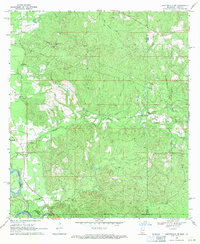 1969 Baxterville SW1971 Print · USGSThe Pearl River bottomlands and the sprawling Baxterville Oil and Gas Field meet here in the late sixties. Genealogists and local historians can trace rural roots at Sweet Home Ch, Howard Cem, and the small settlement of Rawls.4 unique versions available
 - 1969 Map of Pinebur, 1971 Print
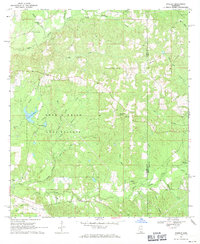 1969 Pinebur1971 Print · USGSMarion and Lamar Counties were primarily rural and forest-bound in the late sixties, centered on the Hugh L White Game Reserve. Genealogists and historians can trace the local landscape through landmarks like Breakfield Cem, Hollywood Spring, and the small community of Pinebur.2 unique versions available
 - 1970 Map of Columbia South, 1972 Print
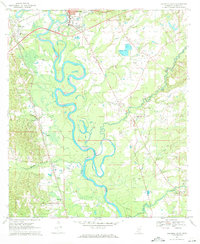 1970 Columbia South1972 Print · USGSMarion County's river-bottom landscape comes alive in the early seventies, centered on the winding Pearl River south of Columbia. Genealogists and local historians can locate early settlements like Foxworth and Pickwick, or trace the grounds of St Paul Ch and Sunflower Ch Cem.2 unique versions available
 - 1970 Map of Sandy Hook NW, 1972 Print
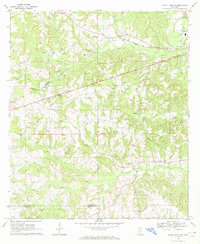 1970 Sandy Hook NW1972 Print · USGSThe rural borderlands of Marion and Walthall Counties are captured here in the early seventies, centered on the community of Foxworth. Genealogists and historians can trace local landmarks like Kokomo Sch, Terrys Chapel, and the Fernwood Columbia and Gulf railroad.3 unique versions available
 - 1970 Map of Kokomo, 1972 Print
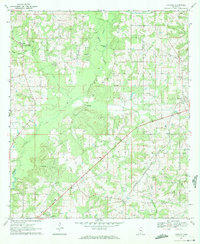 1970 Kokomo1972 Print · USGSThe rural border of Marion and Walthall counties is captured here in the early 1970s, showing a landscape of timber-land settlements and rising energy infrastructure. Researchers can trace family roots through Magees Creek Ch, Boyd Cem, and the community at Kokomo.
 - 1970 Map of Bunker Hill, 1972 Print
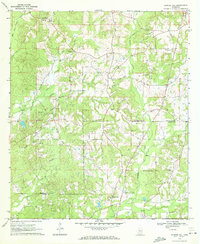 1970 Bunker Hill1972 Print · USGSJefferson Davis and Marion counties appear here during the transition into the 1970s, a period of quiet rural industry and established community life. Genealogists can trace family roots through several local burial grounds and churches, including Old Bassfield Cem, Thompson Chapel Cem, and Shorts Chapel.2 unique versions available
 - 1970 Map of Darbun, 1972 Print
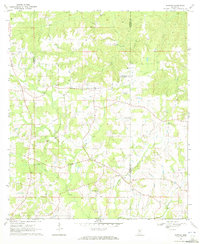 1970 Darbun1972 Print · USGSSouth Mississippi’s rural crossroads come into focus during the early seventies, where the borders of three counties meet. Researchers can trace family history through a concentration of country churches and burial grounds like Sartinville Ch, Darbun Ch, and Sauls Valley Cem.
 - 1970 Map of Dexter, 1972 Print
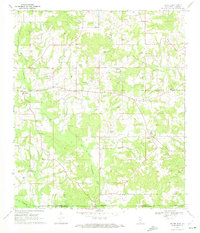 1970 Dexter1972 Print · USGSWalthall County, Mississippi, and Washington Parish, Louisiana, meet in this early 1970s survey of a landscape shaped by petroleum and timber. Genealogists and researchers can locate family sites like Fortenberry Cem and old rural churches such as Centerville Ch and Mt Olive Ch.
 - 1970 Map of Morgantown, 1972 Print
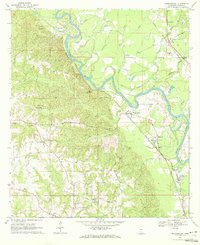 1970 Morgantown1972 Print · USGSMarion County at the start of the 1970s is a landscape of winding river bends and rural industry centered on the Pearl River. Genealogists and local historians can trace the foundations of communities like Morgantown and White Bluff, as well as rural landmarks like Mt Sinai Ch.
 - 1970 Map of Oak Vale, 1972 Print
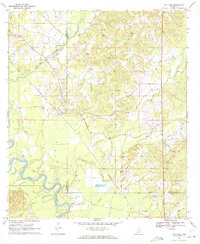 1970 Oak Vale1972 Print · USGSJefferson Davis County and the Pearl River basin are shown here in the early seventies as a hub of rail transit and rural industry. Researchers can trace the Illinois Central railroad through Oak Vale or locate historic sites like Hepzibah Ch and Bourne Cem.2 unique versions available
 - 1970 Map of Columbia North, 1972 Print
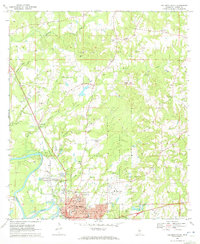 1970 Columbia North1972 Print · USGSColumbia was expanding into the Marion County hills during the late sixties, a period of transition between its rail-river roots and modern infrastructure. Researchers can trace family sites at Harmony Ch and Pope Cem or locate the old Drive-in Theater.3 unique versions available
 - 1970 Map of Tilton, 1972 Print
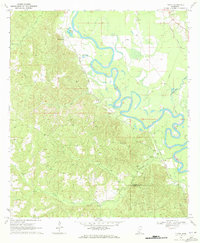 1970 Tilton1972 Print · USGSLawrence County during the late Vietnam era was defined by the winding Pearl River and its busy rail lines. Genealogists and historians can trace family locations near Robinwood, Chinalee Ch, and the Bozeman Cem.
Showing maps 1-25 of 123
Top cities of Marion County
Frequently asked questions
- What are the different types of historical maps available for Marion County?
- What is the oldest map of Marion County?
- Where can I purchase historical maps of Marion County for my home or office?
- Where can I download high-res historical maps of Marion County?
- Are there historical topographic maps available for Marion County?
- Is there historical aerial imagery available for Marion County?
- Where are historical maps of Marion County sourced from?