1960s Maps of Carter County, Missouri
Explore 16 historic maps of Carter County from the 1960s. These maps offer a rare glimpse into what life looked like during the 1960s — showing old roads, neighborhoods, homes, and landmarks that have changed or disappeared over time.
Whether you're researching your family's past, planning a metal detecting trip, or studying how Carter County's landscape evolved across the 1960s, these high-resolution maps are a powerful tool for exploring the history of this region.
- Focus on a specific era: All maps on this page are from the 1960s, giving you a focused view of this time period.
- See what’s changed: Compare century-old streets, trails, and buildings to today's modern landscape using overlays and satellite layers.
- Research with precision: Use these maps for genealogy, historical research, land use analysis, or educational projects.
- View, download, or print: Maps are fully viewable online in high resolution, and can be downloaded or printed for your own records.
Start exploring Carter County's history through authentic maps from the 1960s. This is your window into the past.
Carter County, MO maps
(16)- 1960 Map of Poplar Bluff
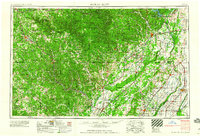 1960 Poplar Bluff1960 Print · USGSSoutheast Missouri and Northeast Arkansas are captured here during the post-war era, showing the transition from the Ozark highlands to the Delta. Genealogists and historians can trace rail corridors like the St. Louis Southwestern RR and remote settlements such as Birch Tree and Warm Springs.
 - 1960 Map of Rolla
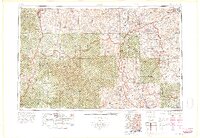 1960 Rolla1960 Print · USGSThe Ozark Highlands in the mid-twentieth century reveal a landscape of deep timber and heavy industry. Researchers can trace the rail-and-mine economy through the St Louis-San Francisco RR and the Iron Mountain Mine, alongside the growth of Fort Leonard Wood.
 - 1965 Map of Stegall Mountain, 1966 Print
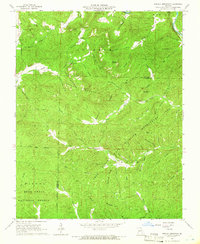 1965 Stegall Mountain1966 Print · USGSThe Missouri Ozarks are captured here in the mid-1960s, a time when conservation and forestry efforts defined the hills of Shannon and Carter Counties. Genealogists and hikers can locate Reed Cem, the Horner Church, and the distinctive Rocky Falls along Rocky Creek.3 unique versions available
 - 1965 Map of Van Buren North, 1966 Print
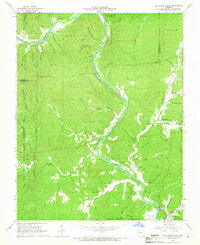 1965 Van Buren North1966 Print · USGSThe Current River valley north of Van Buren is shown here in the mid-1960s, a landscape defined by deep hollows and isolated Ozark settlements. Genealogists can locate family landmarks like Collins Cem, Galbraith Cem, and the Bible Ch tucked between the ridges.4 unique versions available
 - 1966 Map of Rolla
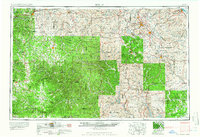 1966 Rolla1966 Print · USGSThe Missouri Ozarks are revealed here in the mid-1960s, showing the intersection of heavy industry and sprawling national forests. Trace the development of the Lead Belt near Flat River or locate family roots in vanished hamlets like Enough and Howes Mill.
 - 1968 Map of Grandin SW, 1969 Print
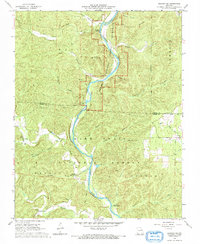 1968 Grandin SW1969 Print · USGSRipley and Carter counties are captured in the late sixties as the federal government solidified forest and river protections. Researchers can find family-named landmarks and rural outposts including Good Hope Ch, Hofstader Cem, and the Panther Lookout Tower.2 unique versions available
 - 1968 Map of Ellington SE, 1969 Print
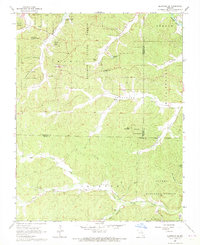 1968 Ellington SE1969 Print · USGSSoutheast Missouri in the late sixties reveals a landscape of state and national forests at the intersection of Carter and Reynolds counties. Genealogists can trace family roots through several remote burial sites like Bozarth Cem and Potter Cem, or locate the Devils Kitchen Mine.2 unique versions available
 - 1968 Map of Big Spring, 1969 Print
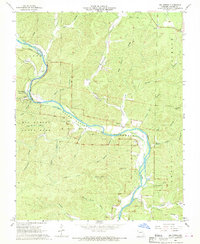 1968 Big Spring1969 Print · USGSThe Current River valley of Carter County was undergoing significant conservation efforts in the late sixties. Genealogists and researchers can trace family landmarks like Aldrich Valley Cemetery, the settlement of Chilton, and the Old Railroad Grade.3 unique versions available
 - 1968 Map of Wilderness, 1969 Print
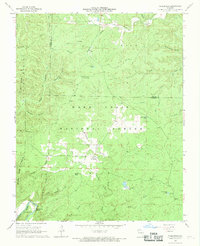 1968 Wilderness1969 Print · USGSThe Oregon County backcountry in the late sixties reveals a landscape of forestry and secluded hollows within the Mark Twain National Forest. Trace family roots near Wilderness or locate landmarks like Freeman Cem, Falling Spring, and the Sinking Creek Lookout Tower.2 unique versions available
 - 1968 Map of Fremont, 1969 Print
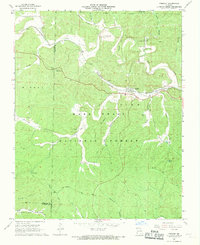 1968 Fremont1969 Print · USGSFremont and the surrounding Ozark woodlands appear here in the late sixties as the forest reclaimed former industrial grounds. Researchers can find the Site of Old Midco Iron Works, the Fremont Lookout Tower, and several family cemeteries like Evaline Cem.2 unique versions available
 - 1968 Map of Van Buren South, 1969 Print
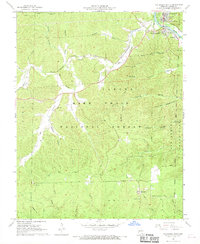 1968 Van Buren South1969 Print · USGSLife in the Missouri Ozarks centered on the Current River and the rail line during the late 1960s. Genealogists and historians can trace family locations through Turley Cem, Poca Cem, and the settlement at Chicopee.
 - 1968 Map of Hunter, 1969 Print
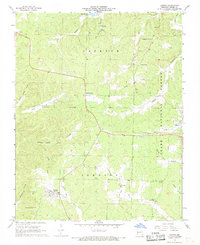 1968 Hunter1969 Print · USGSThe Missouri Ozarks during the late sixties reveal a landscape shaped by timber and mining history. Genealogists and historians can trace family sites like Smith Chapel Cem, the Old Railroad Grade, and the small settlement of Crites Corner.2 unique versions available
 - 1968 Map of Garwood, 1969 Print
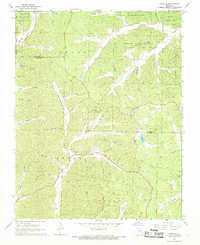 1968 Garwood1969 Print · USGSThe Ozark timberlands of Reynolds and Carter Counties are captured here in the late sixties as the region balanced forestry and small-town life. Genealogists and historians can locate several family cemeteries like Tedder Cem and landmarks such as the Garwood Lookout Tower and Miller Lake.2 unique versions available
 - 1968 Map of Mill Spring, 1969 Print
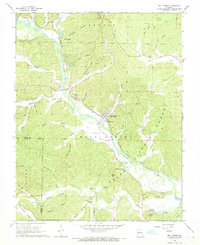 1968 Mill Spring1969 Print · USGSThe Black River valley and the rugged interior of the Mark Twain National Forest are captured here in the late sixties. Researchers can trace genealogies through numerous small burial grounds and rural landmarks like Leeper Cem, Shady Nook Ch, and the Missouri Pacific River rail line.2 unique versions available
 - 1968 Map of Grandin, 1969 Print
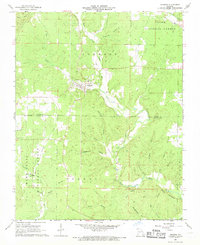 1968 Grandin1969 Print · USGSIn the Ozarks of the late 1960s, the town of Grandin sits at the junction of Carter and Ripley counties amidst a maze of river prongs and hollows. Genealogists can trace rural roots at Roan Cemetery, Shiloh Church, and along the banks of the North Prong Little Black River.
 - 1968 Map of Handy, 1970 Print
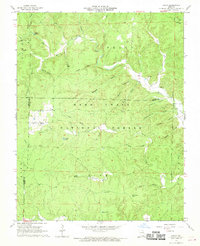 1968 Handy1970 Print · USGSThe Ozark highlands of Ripley and Carter counties are shown here in the late sixties, where small settlements like Handy persist within the Mark Twain National Forest. Local history researchers can trace old routes like the Tram and locate rural landmarks such as Big Barren Ch and the Bristol Cem.3 unique versions available
End of results
Showing maps 1-16 of 16
Top cities of Carter County
Frequently asked questions
- What are the different types of historical maps available for Carter County?
- What is the oldest map of Carter County?
- Where can I purchase historical maps of Carter County for my home or office?
- Where can I download high-res historical maps of Carter County?
- Are there historical topographic maps available for Carter County?
- Is there historical aerial imagery available for Carter County?
- Where are historical maps of Carter County sourced from?