1960s Maps of Iron County, Missouri
Explore 20 historic maps of Iron County from the 1960s. These maps offer a rare glimpse into what life looked like during the 1960s — showing old roads, neighborhoods, homes, and landmarks that have changed or disappeared over time.
Whether you're researching your family's past, planning a metal detecting trip, or studying how Iron County's landscape evolved across the 1960s, these high-resolution maps are a powerful tool for exploring the history of this region.
- Focus on a specific era: All maps on this page are from the 1960s, giving you a focused view of this time period.
- See what’s changed: Compare century-old streets, trails, and buildings to today's modern landscape using overlays and satellite layers.
- Research with precision: Use these maps for genealogy, historical research, land use analysis, or educational projects.
- View, download, or print: Maps are fully viewable online in high resolution, and can be downloaded or printed for your own records.
Start exploring Iron County's history through authentic maps from the 1960s. This is your window into the past.
Iron County, MO maps
(20)- 1960 Map of Rolla
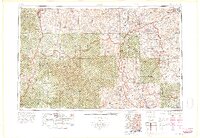 1960 Rolla1960 Print · USGSThe Ozark Highlands in the mid-twentieth century reveal a landscape of deep timber and heavy industry. Researchers can trace the rail-and-mine economy through the St Louis-San Francisco RR and the Iron Mountain Mine, alongside the growth of Fort Leonard Wood.
 - 1966 Map of Rolla
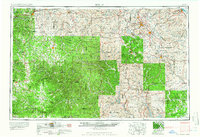 1966 Rolla1966 Print · USGSThe Missouri Ozarks are revealed here in the mid-1960s, showing the intersection of heavy industry and sprawling national forests. Trace the development of the Lead Belt near Flat River or locate family roots in vanished hamlets like Enough and Howes Mill.
 - 1967 Map of Greeley, 1968 Print
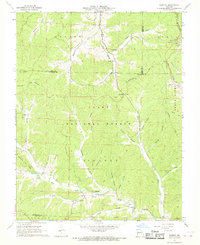 1967 Greeley1968 Print · USGSThe Missouri Ozarks are shown here in the late sixties, where the deep hollows of the Mark Twain National Forest meet industrial growth. Genealogists and hikers can trace the Karkaghne Trail past Greeley, Crossville, and the Buick Mine.3 unique versions available
 - 1967 Map of Viburnum East, 1968 Print
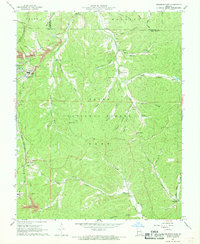 1967 Viburnum East1968 Print · USGSIron and Dent counties are shown here during the 1960s expansion of the Missouri New Lead Belt. Genealogists and local historians can trace the foundations of mining at the Viburnum Mine or locate family sites like Abbott Cem and the West End Sch.5 unique versions available
 - 1967 Map of Oates, 1968 Print
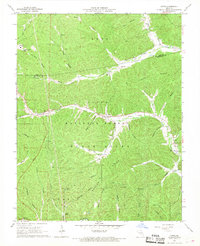 1967 Oates1968 Print · USGSThe northern Ozarks come into focus in the mid-1960s, showing a remote landscape of mining and forestry. Researchers can locate numerous family burial grounds like Trolinger Cem and Smith Cem or trace industry at the Buick Mine.2 unique versions available
 - 1967 Map of Viburnum West, 1968 Print
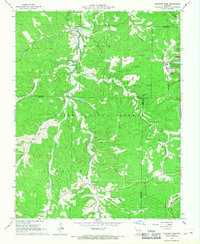 1967 Viburnum West1968 Print · USGSThe Missouri Ozarks during the mid-sixties reveal a landscape transitioning from timber and farming to industrial mining. Researchers can trace family history at Dillard Cem or locate old industrial infrastructure like the Old Railroad Grade and the St Louis-San Francisco line.5 unique versions available
 - 1968 Map of Brunot, 1969 Print
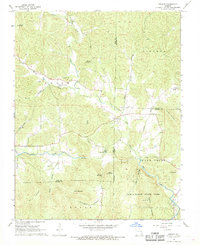 1968 Brunot1969 Print · USGSThe rural hills of Iron and Wayne counties are captured here in the late sixties as the local landscape remained deeply tied to its branching creek valleys. Genealogists and researchers can locate several remote burial sites such as Brewington Cem and Hunter Cem or trace the boundaries of Sam A Baker State Park.3 unique versions available
 - 1968 Map of Johnson Mountain, 1969 Print
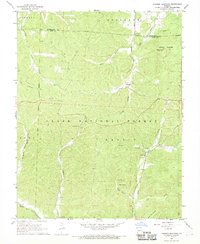 1968 Johnson Mountain1969 Print · USGSIron and Washington Counties in the late 1960s are characterized by the dense timber of the Clark National Forest and high Ozark peaks. Researchers can locate remote settlements like Enough and Redmondville alongside old landmarks like Ottery Ch and Rencehausen Cem.3 unique versions available
 - 1968 Map of Johnson Shut-Ins, 1969 Print
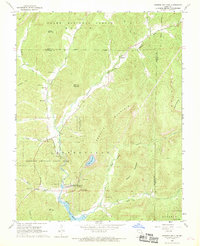 1968 Johnson Shut-Ins1969 Print · USGSThe Black River valley in the late sixties reveals the industrial contrast of a hydroelectric complex set within the St. Francois Mountains. Genealogists and local historians can locate several family cemeteries, such as Fitzgerald Cem, and early churches like Marys Chapel or New Hope Ch.4 unique versions available
 - 1968 Map of Glover, 1969 Print
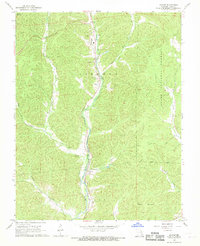 1968 Glover1969 Print · USGSIron County's river-and-rail corridor is captured here in the late sixties, showing the vital connection between local industry and the Ozark landscape. Researchers can locate family burial sites like Huff Cem and trace the operations of the Lead Smelter in Glover.
 - 1968 Map of Des Arc NE, 1969 Print
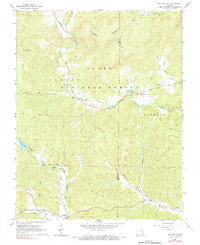 1968 Des Arc NE1969 Print · USGSIron and Madison County hills come into focus in the late 1960s, showing a backcountry landscape crisscrossed by jeep trails and water gaps. Genealogists can trace family connections through numerous sites like Shoemaker Cem and the settlement of Minimum.2 unique versions available
 - 1968 Map of Banner, 1969 Print
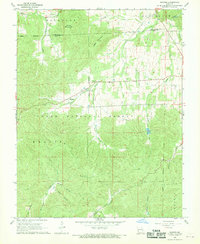 1968 Banner1969 Print · USGSIron County's rugged Ozark terrain is captured here in the late sixties, showing a landscape defined by forest boundaries and mountain peaks. Genealogists and local historians can trace family sites like Tullock Cem and Richardson Cem, or locate landmarks like Full Gospel Chapel and the Bell Mountain Lookout Tower.2 unique versions available
 - 1968 Map of Edgehill, 1969 Print
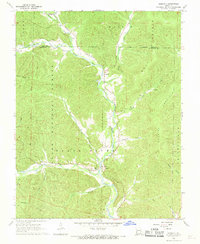 1968 Edgehill1969 Print · USGSThe Missouri Ozarks are captured here in the late sixties, showing the rugged topography where the Black River meets the Clark National Forest. Genealogists can trace family heritage through numerous burial sites like Goggins Cem and Black River Cem.2 unique versions available
 - 1968 Map of Graniteville, 1970 Print
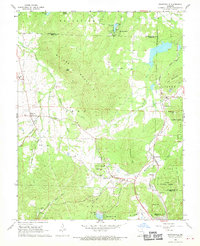 1968 Graniteville1970 Print · USGSThe Missouri Ozarks are captured here in the late sixties as the region's quarrying and mining heritage remains clearly visible. Genealogists and historians can trace family locations through Belleview Sch and Thomas Cem, or follow the industrial legacy of the Missouri Pacific near Graniteville.2 unique versions available
 - 1968 Map of Lake Killarney, 1970 Print
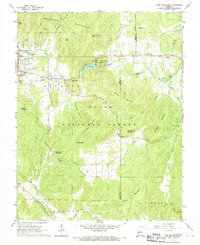 1968 Lake Killarney1970 Print · USGSThe adjoining communities of Ironton and Arcadia are captured here in the late sixties as they developed alongside the Clark National Forest. Researchers can locate numerous family burial sites like Sutton Cem and Allgier Cem or trace the early lakeside developments at Lake Killarney.2 unique versions available
 - 1968 Map of Iron Mountain Lake, 1970 Print
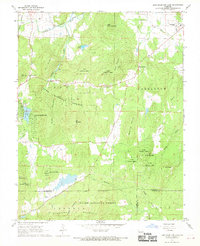 1968 Iron Mountain Lake1970 Print · USGSIn the Missouri Ozarks during the late 1960s, the terrain south of the St Francis River was a mix of national forest and active mining communities. Local historians can trace old property lines and cemetery locations like German Cem, or explore the rail network through Iron Mountain Lake and Doe Run.2 unique versions available
 - 1968 Map of Ironton, 1970 Print
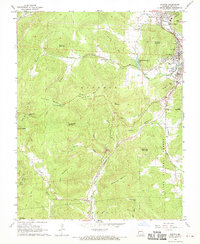 1968 Ironton1970 Print · USGSThe Arcadia Valley settlements flourished along the Missouri Pacific rail line in the late sixties. Genealogists can locate family landmarks like Schwab Cem and Victory Ch or trace industrial history at the Site of Ft Davidson and various mines.2 unique versions available
 - 1968 Map of Lesterville, 1971 Print
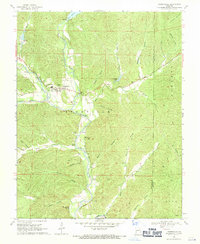 1968 Lesterville1971 Print · USGSLesterville and the surrounding Reynolds County hollows are captured here in the late sixties at the junction of the Black River forks. Genealogists and hikers can trace family sites at Shy Cem and Dobbins Cem, or locate landmarks like Wicks Cave and Warner Bay Spring.2 unique versions available
 - 1969 Map of Des Arc, 1970 Print
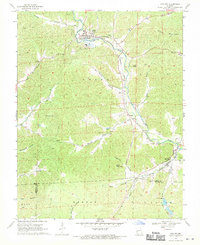 1969 Des Arc1970 Print · USGSIron County's river valleys and rail lines are captured here in the late sixties, showing the vital corridor through Annapolis and Des Arc. Genealogists and historians can trace numerous remote burial sites like Funk Cem and Sisk Cem or the industrial footprint of the Missouri Pacific and local Quarry sites.3 unique versions available
 - 1969 Map of Lesterville SE, 1971 Print
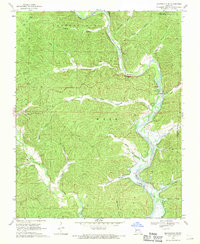 1969 Lesterville SE1971 Print · USGSReynolds County in the late sixties shows the impact of the Clearwater Dam on the Black River valley. Genealogists and local historians can trace family locations through numerous rural burial sites including Lewis Cem, Carpenter Cem, and the settlement of Mayberry.
End of results
Showing maps 1-20 of 20
Top cities of Iron County
- Ironton historical maps
- Viburnum historical maps
- Pilot Knob historical maps
- Arcadia historical maps
- Annapolis historical maps
- Des Arc historical maps
Frequently asked questions
- What are the different types of historical maps available for Iron County?
- What is the oldest map of Iron County?
- Where can I purchase historical maps of Iron County for my home or office?
- Where can I download high-res historical maps of Iron County?
- Are there historical topographic maps available for Iron County?
- Is there historical aerial imagery available for Iron County?
- Where are historical maps of Iron County sourced from?