Old Maps of McDonald County, Missouri for Hiking & Exploration
Hike through history with 123 historic maps of McDonald County. Explore old trails, ghost towns, and forgotten backroads — perfect for outdoor adventurers and local explorers.
- Rediscover forgotten places: Map out old mining camps, roads, and footpaths that no longer exist on modern maps.
- Layer with modern tools: Combine with LiDAR or satellite views to plan hikes through historical terrain.
- Made for exploration: Popular among hikers, overlanders, and local history lovers.
Use these maps to find adventure and explore the hidden past of McDonald County.
McDonald County, MO maps
(123)- 1899 Map of Fayetteville, 1954 Print
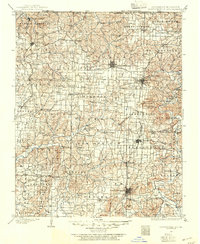 1899 Fayetteville1954 Print · USGSNorthwest Arkansas at the close of the nineteenth century was a land of expanding railroads and deep-rooted Civil War history. Genealogists and historians can trace the foundations of the Ozarks through landmarks like the Pea Ridge Battlefield, Rheas Mill, and the early rail stops at Avoca and Lowell.
 - 1899 Map of Siloam Springs, 1954 Print
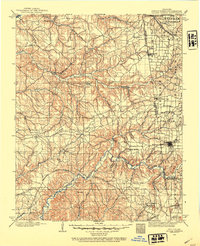 1899 Siloam Springs1954 Print · USGSThe borderlands of the Cherokee Nation and Northwest Arkansas come alive in this late nineteenth-century survey. Genealogists can trace early homesteads and community life through Shoaps Store, Round Spring Church, and the settlement of Maysville.
 - 1901 Map of Fayetteville
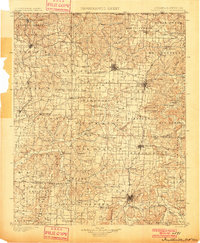 1901 Fayetteville1901 Print · USGSNorthwest Arkansas is seen here at the start of the twentieth century as railroads and trade began to reshape the Ozark foothills. Researchers can locate the Pea Ridge Battlefield and Elkhorn Tavern, or trace early industrial sites like Osage Mills and Rhea's Mill.4 unique versions available
 - 1903 Map of Siloam Springs, 1904 Print
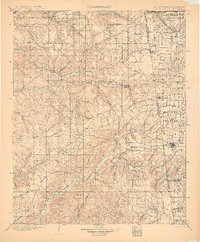 1903 Siloam Springs1904 Print · USGSThe border of Arkansas and the Cherokee Nation comes to life in this survey from the turn of the century. Genealogists and historians can trace the early layout of Siloam Springs or locate small landmarks like Shoaps Store and Round Spring Church.
 - 1904 Map of Siloam Springs
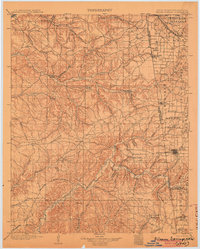 1904 Siloam Springs1904 Print · USGSThe Arkansas and Indian Territory borderlands are captured here at the turn of the century, prior to Oklahoma statehood. Researchers can trace the early layout of Siloam Springs and locate vanished landmarks like Shoaps Store or the Round Spring Church.7 unique versions available
 - 1904 Map of Fayetteville
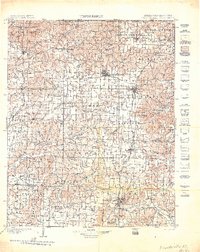 1904 Fayetteville1904 Print · USGSNorthwest Arkansas was a land of emerging railroads and Civil War memory at the turn of the century. Genealogists can locate family homesteads near Rhea's Mill, the Pea Ridge Battlefield, and early river crossings like Vanwinkle Ferry.
 - 1907 Map of Wyandotte, 1954 Print
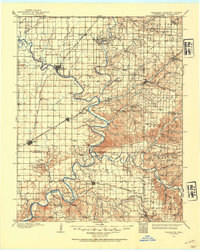 1907 Wyandotte1954 Print · USGSThe Tri-State border region at the start of the twentieth century shows a landscape of river ferries and early rail towns. Trace the locations of family landmarks like Hickory Grove Church, Goad Eagle Ferry, and rural schools from Afton to Seneca.2 unique versions available
 - 1909 Map of Wyandotte
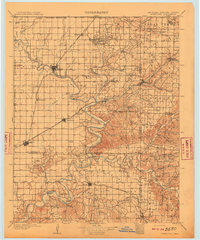 1909 Wyandotte1909 Print · USGSNortheastern Oklahoma’s river valleys and prairies are captured here just after statehood, during a period of rapid rail expansion and tribal land transition. Researchers can trace early river crossings like Rodwhite Ferry and locate historic community centers such as Hickory Grove Church or the Bluejacket School.2 unique versions available
 - 1916 Map of Neosho
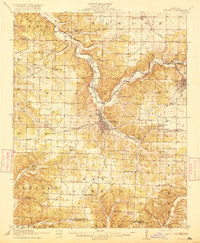 1916 Neosho1916 Print · USGSNewton County's rail and mining heart beat strong during the years before the Great War. Genealogists and local historians can trace forgotten rural schoolhouses like Possumtrot School and Jaybird School, or locate early lead workings such as the Tiger Mine near Granby.5 unique versions available
 - 1940 Map of Noel, 1955 Print
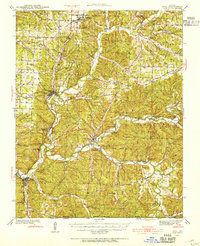 1940 Noel1955 Print · USGSSouthwest Missouri's river valleys and ridge-top communities are captured here just before the war, as the Kansas City Southern rail line connected the Ozark hills. Genealogists can trace family footprints through numerous local landmarks like Indian Springs Sch, Sugar Beach Cem, and the Riverside Inn.2 unique versions available
 - 1941 Map of Rocky Comfort, 1962 Print
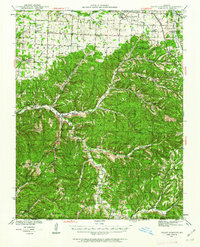 1941 Rocky Comfort1962 Print · USGSThe Missouri Ozarks are captured here in the early 1940s, showing a landscape defined by the winding Big Sugar Creek and the Missouri and Arkansas railroad. Researchers can trace rural life through dozens of local sites like Chitwood Cem, Rocky Comfort, and the Spring Hill Sch.2 unique versions available
 - 1943 Map of Ritchey
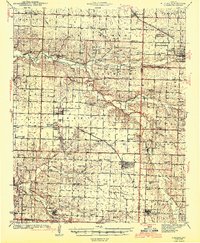 1943 Ritchey1943 Print · USGSSouthwest Missouri during the war years shows a landscape of busy railroads and emerging military sites. Genealogists can trace family roots through numerous local landmarks like Odd Fellows Cem, Dungy Mine, and rural centers such as Stark City.2 unique versions available
 - 1943 Map of Noel
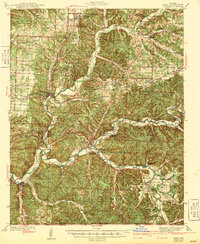 1943 Noel1943 Print · USGSThe Ozark river valleys of McDonald County are shown here in the early 1940s, just as the regional highway network was expanding. Genealogists can trace family names through dozens of rural landmarks like Bannock Cem, Christian Ch, and Moss Sch.2 unique versions available
 - 1943 Map of Rocky Comfort
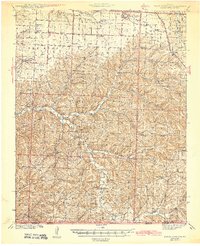 1943 Rocky Comfort1943 Print · USGSThe Ozark highlands of McDonald County come into sharp focus during the early 1940s, showing a landscape of deep hollows and high ridges. Genealogists can trace family roots through numerous rural landmarks like Seven Star Sch, Greason Cem, and the village of Powell.3 unique versions available
 - 1949 Map of Seneca, 1970 Print
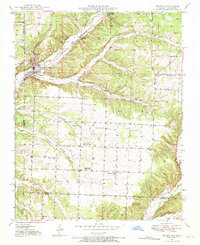 1949 Seneca1970 Print · USGSNewton County life in the late 1940s is centered on the town of Seneca and its proximity to the Oklahoma border. Genealogists can trace family footprints across several rural landmarks, including Gallemore Sch, Graves Cem, and Swars Prairie Baptist Ch.2 unique versions available
 - 1950 Map of Seneca
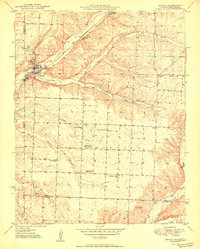 1950 Seneca1950 Print · USGSNewton County at the Missouri-Oklahoma line is shown here at mid-century, where the rail-linked town of Seneca meets the mineral-rich hills. Researchers can trace rural landmarks including the Tripoli Mine, Westview Sch, and Hollow Springs Ch.2 unique versions available
 - 1954 Map of Tulsa
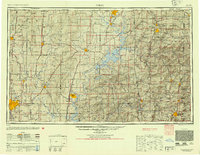 1954 Tulsa1954 Print · USGSNortheast Oklahoma and the Ozark border are shown here during a period of massive industrial and infrastructure growth. Researchers can trace the legacy of the Tri-State Mining District and the development of major reservoirs like Grand Lake O' The Cherokees.2 unique versions available
 - 1958 Map of Pea Ridge, 1959 Print
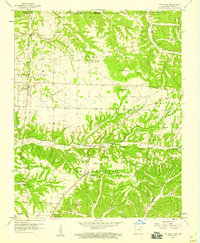 1958 Pea Ridge1959 Print · USGSBenton County, Arkansas, at the end of the 1950s reveals a rural landscape still anchored by its nineteenth-century history. Researchers can locate dozens of family burial sites and country churches, such as Buttrum Cem and Twelve Corners Ch, alongside the landmark Elkhorn Tavern.4 unique versions available
 - 1958 Map of Tulsa, 1968 Print
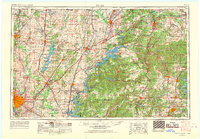 1958 Tulsa1968 Print · USGSNortheast Oklahoma and the Ozark borderlands are captured here during a massive era of reservoir construction and highway expansion. Researchers can trace the mid-century footprints of Tulsa, the sprawling Lake O' the Cherokees, and historical sites like Pea Ridge National Military Park.3 unique versions available
 - 1963 Map of Tulsa
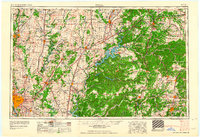 1963 Tulsa1963 Print · USGSThe Oklahoma and Arkansas borderlands are shown here in the early sixties, a time of massive reservoir construction and heavy mining. Genealogists can trace family roots through settlements like Nowata, Pryor, and Jay, or locate historical zinc and lead mines and coal mines.
 - 1965 Map of South West City, 1966 Print
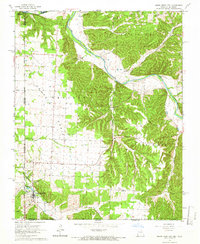 1965 South West City1966 Print · USGSThe tri-state border region of Missouri, Oklahoma, and Arkansas was a landscape of quiet prairie and river bluffs during the mid-sixties. Researchers can locate numerous family burial sites and rural congregations, from Williams-Hays Cem to Liberty Ch near South West City.
 - 1965 Map of Tiff City, 1966 Print
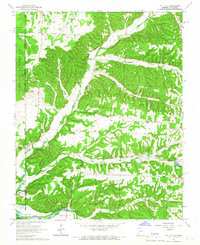 1965 Tiff City1966 Print · USGSMissouri and Oklahoma meet along these river valleys in the mid-1960s, a period of quiet rural life defined by small hill communities. Genealogists can locate family landmarks such as Keenon Cem, Hart Sch, and the Council House Indian Reservation.3 unique versions available
 - 1970 Map of Bentonville North, 1972 Print
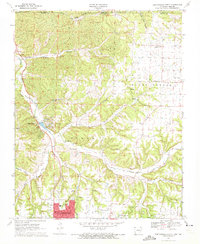 1970 Bentonville North1972 Print · USGSNorthwest Arkansas around the state line was beginning a period of rapid suburban growth in the early seventies. Genealogists and historians can trace the transition from rural hollows to established neighborhoods through sites like Wonderland Cave, Foster Cem, and Bella Vista.4 unique versions available
 - 1971 Map of Hiwasse, 1973 Print
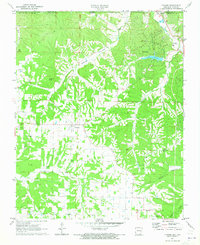 1971 Hiwasse1973 Print · USGSBenton County was undergoing a transformation in the early seventies as new developments met traditional rural life. Researchers can trace family sites at Keith Cem and Mt Olive Ch, or locate local landmarks like the Civil War Cave and Caverna.3 unique versions available
 - 1971 Map of Gravette, 1973 Print
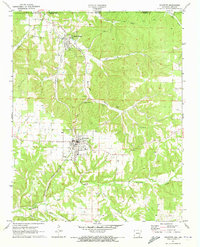 1971 Gravette1973 Print · USGSIn the early 1970s, the Benton County hills reveal a landscape of railway lines and deep caves along the Missouri border. Genealogists and historians can trace family roots at GAR Cem or explore landmarks like Spanish Treasure Cave and the KANSAS CITY SOUTHERN Railroad.2 unique versions available
Showing maps 1-25 of 123
Top cities of McDonald County
- Anderson historical maps
- Noel historical maps
- Goodman historical maps
- Southwest City historical maps
- Pineville historical maps
- Lanagan historical maps
See more
Frequently asked questions
- What are the different types of historical maps available for McDonald County?
- What is the oldest map of McDonald County?
- Where can I purchase historical maps of McDonald County for my home or office?
- Where can I download high-res historical maps of McDonald County?
- Are there historical topographic maps available for McDonald County?
- Is there historical aerial imagery available for McDonald County?
- Where are historical maps of McDonald County sourced from?