Old Maps of Osage County, Missouri for Hiking & Exploration
Hike through history with 118 historic maps of Osage County. Explore old trails, ghost towns, and forgotten backroads — perfect for outdoor adventurers and local explorers.
- Rediscover forgotten places: Map out old mining camps, roads, and footpaths that no longer exist on modern maps.
- Layer with modern tools: Combine with LiDAR or satellite views to plan hikes through historical terrain.
- Made for exploration: Popular among hikers, overlanders, and local history lovers.
Use these maps to find adventure and explore the hidden past of Osage County.
Osage County, MO maps
(118)- 1886 Map of Jefferson City
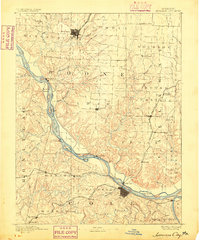 1886 Jefferson City1886 Print · USGSMid-Missouri was a bustling corridor of river traffic and rail expansion during the 1880s. You can trace the early tracks of the Missouri Pacific Railroad and locate vanished river landings like Nashville or Providence along the winding Missouri River.
 - 1888 Map of Tuscumbia
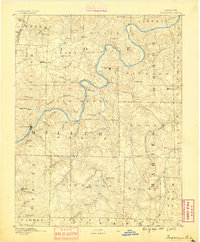 1888 Tuscumbia1888 Print · USGSThe Osage River valley comes to life in the 1880s, showcasing the intricate river bends and rugged hills of central Missouri. Genealogists and researchers can trace the original locations of early settlements like Tuscumbia, St. Elizabeth, and Iberia.
 - 1890 Map of Fulton
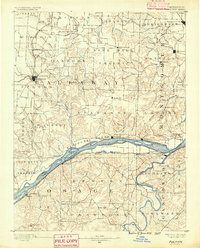 1890 Fulton1890 Print · USGSMid-Missouri river life and railroad expansion come into focus in this late nineteenth-century survey. Genealogists and historians can trace old township lines and early river towns like Chamois, Danville, and the bustling county seat at Fulton.5 unique versions available
 - 1894 Map of Tuscumbia
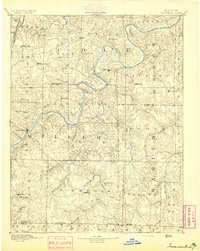 1894 Tuscumbia1894 Print · USGSCentral Missouri's river-and-rail landscape is captured here in the 1890s as the Osage River served as the region's main artery. Genealogists and historians can trace the early boundaries of communities like Tuscumbia, St. Elizabeth, and Iberia.3 unique versions available
 - 1894 Map of Jefferson City
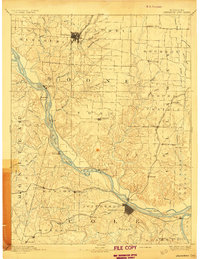 1894 Jefferson City1894 Print · USGSMid-Missouri during the late nineteenth century was a landscape of river landings and burgeoning rail towns. Genealogists and historians can trace early track layouts of the Missouri Pacific Railroad and locate interior settlements like Ashland, Millersburg, and Centretown.4 unique versions available
 - 1934 Map of Linn
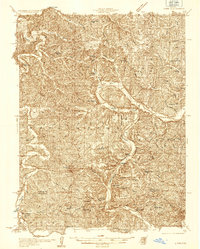 1934 Linn1934 Print · USGSThe Osage County hills and river valleys are shown in detail during the 1930s, featuring the early networks of rural schools and family cemeteries. Genealogists can trace family names and locations at Van Buren Cem, Mt Calvary Ch, and Rich Fountain.
 - 1934 Map of Bland, 1959 Print
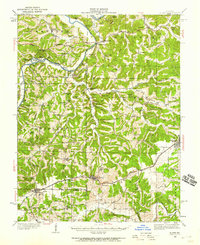 1934 Bland1959 Print · USGSMid-Missouri's ridge-and-hollow country is captured in the 1930s as the rail line drove the development of the Gasconade and Osage county borders. Researchers can locate dozens of country schools and churches like Cleavesville Sch, New Bethel Ch, and College Hill Cem.2 unique versions available
 - 1935 Map of Morrison
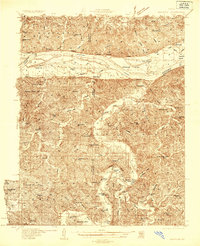 1935 Morrison1935 Print · USGSThe confluence of the Missouri and Gasconade rivers comes to life in the mid-1930s, showing a world of river-town commerce and rural homesteads. Trace ancestral roots at Townley Cem, find old river crossings like Feiglers Ferry, or locate the Mint Hill PO.
 - 1937 Map of Bland
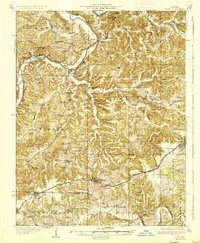 1937 Bland1937 Print · USGSMid-Missouri river bluffs and rail towns come to life in this mid-century survey of Gasconade and Maries counties. Local historians can trace the shift from river fords like Valentine Ford to the rail corridor connecting Belle, Bland, and Owensville.2 unique versions available
 - 1939 Map of Jefferson City, 1954 Print
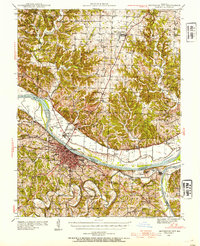 1939 Jefferson City1954 Print · USGSMissouri's capital and the surrounding river bluffs are captured here in the late thirties, showing the region's transition between rural farmland and state governance. Researchers can locate family landmarks like Providence Cem, the Algoa Reformatory, and various schools such as Sycamore Sch.2 unique versions available
 - 1942 Map of Jefferson City
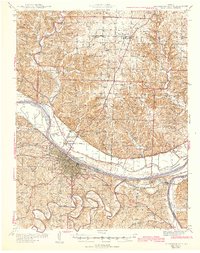 1942 Jefferson City1942 Print · USGSJefferson City and the surrounding river bluffs are captured in the early years of the war, when rail travel and state agriculture dominated the landscape. Genealogists can locate family-named landmarks and rural schools like Hall Sch, Williams Cem, and the small settlement of New Bloomfield.2 unique versions available
 - 1942 Map of Linn, 1959 Print
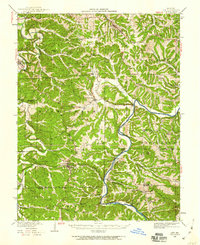 1942 Linn1959 Print · USGSOsage County in the 1940s is defined by its rugged river valleys and the steady pulse of the Rock Island line. Genealogists can trace family footprints at Van Buren Cem or identify old rural school sites like Winkelman Sch and Indian Creek Sch.2 unique versions available
 - 1942 Map of Morrison, 1961 Print
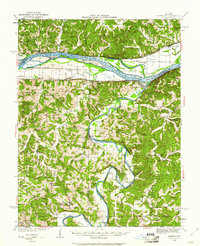 1942 Morrison1961 Print · USGSThe river valleys of mid-Missouri are captured here in the 1940s, highlighting the vital rail and ferry networks of the era. Genealogists can locate family landmarks such as Wittenbach Cem, rural schools like Mud Creek Sch, and the historic Starkenburg community.2 unique versions available
 - 1945 Map of Mokane
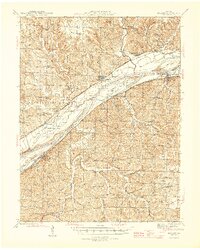 1945 Mokane1945 Print · USGSThe Missouri River valley near the Osage confluence comes alive in this mid-forties survey, showing a landscape defined by river-rail commerce and rural townships. Genealogists can trace family footprints at Frankenstein, Bonnots Mill, and numerous rural sites like Metabor Cem or Acorn Sch.3 unique versions available
 - 1945 Map of Morrison
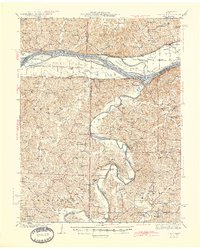 1945 Morrison1945 Print · USGSThe river valleys of central Missouri were still deeply tied to the water in the mid-1940s, as shown by this survey of the Missouri and Gasconade confluence. Genealogists can trace family roots through numerous country schools like Best Sch and river crossings such as Brown Shanty Ferry.2 unique versions available
 - 1945 Map of Linn
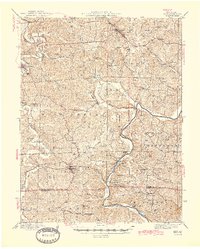 1945 Linn1945 Print · USGSOsage County in the mid-1940s was a landscape of river-valley settlements and rural schools connected by the Rock Island line. Researchers can trace ancestral locations near Westphalia and Freeburg, or locate historical river crossings like Daggetts Ford and Hoops Ford.2 unique versions available
 - 1947 Map of Jefferson City, 1949 Print
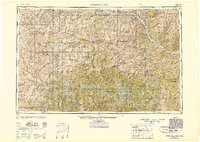 1947 Jefferson City1949 Print · USGSCentral Missouri and the northern Ozarks come into focus in this late 1940s survey of the river-and-rail landscape. Genealogists and historians can trace the growth of Jefferson City and Sedalia or locate family roots near Bagnell Dam and the Lake of the Ozarks.
 - 1948 Map of Meta, 1963 Print
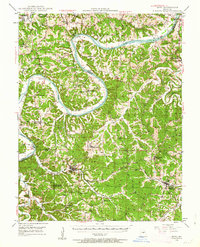 1948 Meta1963 Print · USGSThe Osage River valley in the late 1940s shows a landscape of river ferries and emerging rail hubs. Researchers can trace family sites like St Cecilia Cem & Ch, early river infrastructure at the US Lock & Dam, and rural centers such as Koeltztown.
 - 1949 Map of Saint Louis
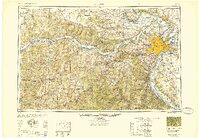 1949 Saint Louis1949 Print · USGSGreater St. Louis and its surrounding river valleys are captured here just after the war, showing the metropolitan core and the rural Ozark fringe. Researchers can trace the sprawling rail network of the Wabash RR or locate landmarks like Meramec Caverns Airport and Scott Air Force Base.2 unique versions available
 - 1950 Map of Meta
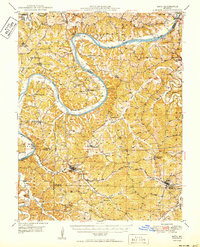 1950 Meta1950 Print · USGSMid-century life in the Missouri river hills centers on the winding Osage River and the small parish towns of the interior. Genealogists can trace family roots through several rural schools and burial grounds, including St Cecelia Cem and the Bodie Ferry (Aban'd).
 - 1954 Map of Jefferson City
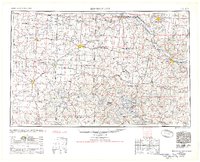 1954 Jefferson City1954 Print · USGSCentral Missouri in the early postwar years showcases a landscape defined by the winding Lake of the Ozarks and the state capital at Jefferson City. Researchers can trace the mid-century rail networks of the Missouri Pacific RR and locate rural communities like Tuscumbia, St Elizabeth, and St Anthony.2 unique versions available
 - 1955 Map of Jefferson City, 1967 Print
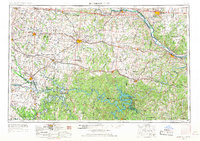 1955 Jefferson City1967 Print · USGSCentral Missouri in the mid-fifties is defined by the winding Missouri River and the expanding reach of Lake of the Ozarks. Researchers can trace the rail corridors of the Missouri Pacific or locate the early footprint of Whiteman AFB and Jefferson City.4 unique versions available
 - 1958 Map of Jefferson City
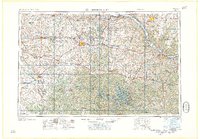 1958 Jefferson City1958 Print · USGSCentral Missouri in the late fifties shows a region transforming through the growth of Whiteman Air Force Base and the Lake of the Ozarks. Researchers can trace rail lines like the Missouri Pacific or find family roots at Enloe Cemetery and Mount Pleasant Cem.
 - 1959 Map of Jefferson City
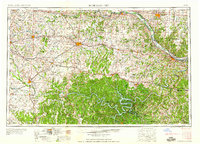 1959 Jefferson City1959 Print · USGSCentral Missouri is captured during the mid-fifties as the river economy and rail networks like the Missouri Pacific met the rise of the automobile. Local researchers can trace family landmarks and rural infrastructure from the Lake of the Ozarks up to Providence Cemetery and Knob Noster State Park.
 - 1962 Map of St. Louis
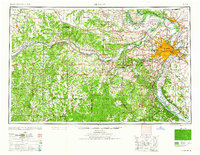 1962 St. Louis1962 Print · USGSThe mid-century gateway to the west shows the metropolitan expansion of St Louis alongside its critical river confluences. Genealogists and historians can trace the rail corridors of the Missouri Pacific RR and settlements from Fulton to De Soto.
Showing maps 1-25 of 118
Top cities of Osage County
- Linn historical maps
- Chamois historical maps
- Freeburg historical maps
- Westphalia historical maps
- Meta historical maps
Frequently asked questions
- What are the different types of historical maps available for Osage County?
- What is the oldest map of Osage County?
- Where can I purchase historical maps of Osage County for my home or office?
- Where can I download high-res historical maps of Osage County?
- Are there historical topographic maps available for Osage County?
- Is there historical aerial imagery available for Osage County?
- Where are historical maps of Osage County sourced from?