1950s Maps of Phelps County, Missouri
Explore 31 historic maps of Phelps County from the 1950s. These maps offer a rare glimpse into what life looked like during the 1950s — showing old roads, neighborhoods, homes, and landmarks that have changed or disappeared over time.
Whether you're researching your family's past, planning a metal detecting trip, or studying how Phelps County's landscape evolved across the 1950s, these high-resolution maps are a powerful tool for exploring the history of this region.
- Focus on a specific era: All maps on this page are from the 1950s, giving you a focused view of this time period.
- See what’s changed: Compare century-old streets, trails, and buildings to today's modern landscape using overlays and satellite layers.
- Research with precision: Use these maps for genealogy, historical research, land use analysis, or educational projects.
- View, download, or print: Maps are fully viewable online in high resolution, and can be downloaded or printed for your own records.
Start exploring Phelps County's history through authentic maps from the 1950s. This is your window into the past.
Phelps County, MO maps
(31)- 1950 Map of Tavern
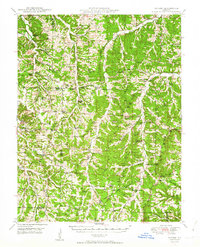 1950 Tavern1950 Print · USGSMaries County and the surrounding Missouri countryside appear here in the late 1940s, showing a landscape defined by river bends and rural schoolhouses. Researchers can locate family landmarks like Ricker Ch, Brinktown Sch, and Barnhart Cem.3 unique versions available
 - 1950 Map of Newburg, 1957 Print
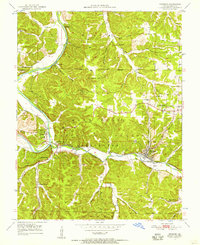 1950 Newburg1957 Print · USGSMid-century Phelps County comes to life along the river bends and rail lines during the early 1950s. Genealogists and historians can locate family landmarks such as Kitchell Cem and Hickory Point Sch, or trace the old paths of Boulware Ford and U.S. 66.4 unique versions available
 - 1950 Map of Kaintuck Hollow, 1959 Print
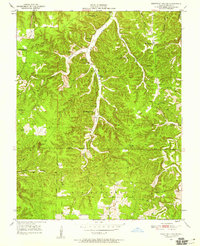 1950 Kaintuck Hollow1959 Print · USGSPhelps County, Missouri, is shown here as it appeared in the mid-1950s, dominated by the dense forests and hollows of the Ozarks. Researchers can trace the network of rural schools and churches, including Western Star Sch, Kaintuck Ch, and the high-elevation Knotwell Lookout Tower.3 unique versions available
 - 1950 Map of Yancy Mills, 1960 Print
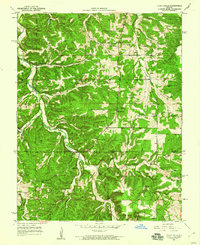 1950 Yancy Mills1960 Print · USGSMid-century Phelps and Dent Counties appear here as a network of ridge-top schools and creek-bottom settlements. Genealogists can locate family landmarks such as the Corn Creek Cem, Philadelphia Ch, and the rural community of Yancy Mills.6 unique versions available
 - 1951 Map of Yancy Mills
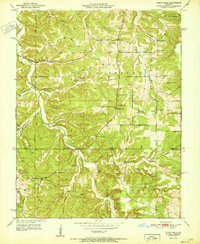 1951 Yancy Mills1951 Print · USGSPhelps County, Missouri, is captured here in the early 1950s as a landscape of rural schools, churches, and winding hollows. Genealogists and local historians can trace the foundations of the community through sites like Yancy Mills PO, Huskey Cem, and Grayson Sch.2 unique versions available
 - 1951 Map of Kaintuck Hollow
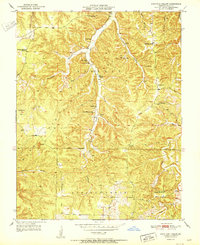 1951 Kaintuck Hollow1951 Print · USGSPhelps County in the early fifties shows a rugged Ozark landscape of remote schoolhouses and forest fire lookouts. Genealogists can locate family landmarks such as the Mill Creek Cem, Kaintuck Ch, and the defunct Western Star Sch.2 unique versions available
 - 1951 Map of Rolla
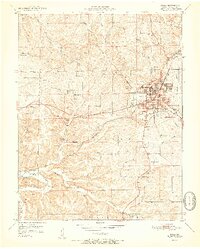 1951 Rolla1951 Print · USGSRolla and the surrounding Phelps County hills are shown here just after mid-century, centered on the growing campus of the Missouri School of Mines. Genealogists and researchers can trace old family landmarks like Strawhun Sch, Hirsche Sch, and the Beaver Creek Mine along the winding Ozark creeks.3 unique versions available
 - 1951 Map of Newburg
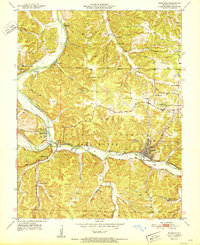 1951 Newburg1951 Print · USGSThe Phelps County river country is captured here in the early fifties, centering on the rail hub of Newburg. Genealogists and historians can trace the foundations of local life through rural landmarks like Kitchell Cem, Hickory Point Sch, and the riverside settlement of Jerome.
 - 1951 Map of Rolla, 1958 Print
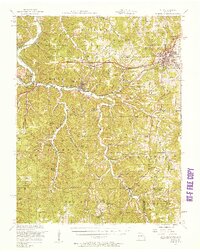 1951 Rolla1958 Print · USGSMid-century Phelps County centers on the growing hub of Rolla and the transit corridors of Route 66 and the St Louis-San Francisco railroad. Genealogists can trace family landmarks like New Rome Church, Yancy Mills Post Office, and the Light Cemetery.3 unique versions available
 - 1953 Map of Rolla
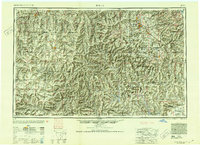 1953 Rolla1953 Print · USGSSoutheast Missouri’s mining towns and timberlands are seen here at the start of the 1950s. Genealogists and historians can trace the rail-and-river economy through local hubs like Fredericktown and the lead-mining heritage of Potosi and Desloge.
 - 1954 Map of Jefferson City
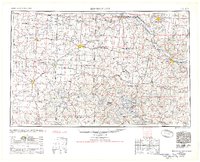 1954 Jefferson City1954 Print · USGSCentral Missouri in the early postwar years showcases a landscape defined by the winding Lake of the Ozarks and the state capital at Jefferson City. Researchers can trace the mid-century rail networks of the Missouri Pacific RR and locate rural communities like Tuscumbia, St Elizabeth, and St Anthony.2 unique versions available
 - 1954 Map of Springfield
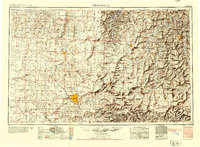 1954 Springfield1954 Print · USGSThe Missouri Ozarks are captured here during the post-war era, showing the expansion of Springfield and the surrounding river valleys. Genealogists and historians can trace local landmarks like Mount Comfort Cemetery and the Fort Leonard Wood military grounds.6 unique versions available
 - 1954 Map of Big Piney, 1958 Print
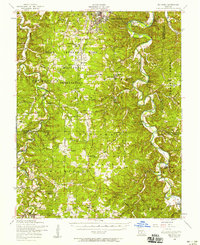 1954 Big Piney1958 Print · USGSThe mid-century Ozark highlands are captured here during a period of massive federal transition, as military expansion met traditional rural life. Researchers can trace family names and vanished sites through the Bloodland Cemetery, the Roby Lookout Tower, and several abandoned schoolhouses like Morman Valley School.3 unique versions available
 - 1954 Map of Waynesville, 1958 Print
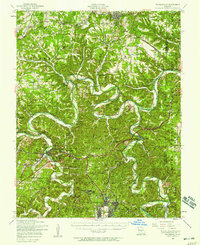 1954 Waynesville1958 Print · USGSThe Missouri Ozarks are captured here during the mid-fifties, showing the expansion of Fort Leonard Wood and the winding course of the Gasconade River. Researchers can locate dozens of country landmarks, from the Dixon Lookout Tower to rural sites like Wheeler Mill and the Pisgah School.2 unique versions available
 - 1954 Map of Edgar Springs, 1958 Print
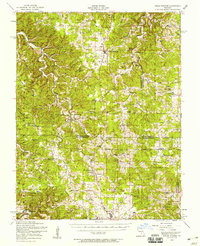 1954 Edgar Springs1958 Print · USGSThe northern Ozarks come alive in this mid-century survey of the Phelps, Dent, and Texas county borders. Trace the location of family landmarks and community centers like the Lady of Perpetual Help Church, West Point School, and Beulah Cemetery.2 unique versions available
 - 1954 Map of Edgar Springs, 1959 Print
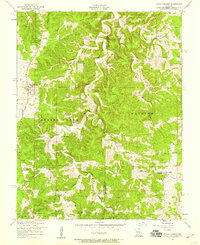 1954 Edgar Springs1959 Print · USGSThe Missouri Ozarks south of Rolla appear here in the mid-1950s, showing a landscape of hollows and ridge-top farms. Local historians can trace family roots through numerous remote burial grounds like Renaud Cem and old country schools including Evening Shade School.2 unique versions available
 - 1954 Map of Maples, 1959 Print
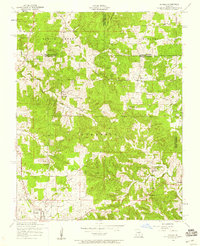 1954 Maples1959 Print · USGSThe rural borderlands of Texas and Dent counties are captured here in the mid-1950s. Researchers can trace dozens of family landmarks and local community centers, from Stoney Point School and Bethel Church to the early layout of Licking.2 unique versions available
 - 1954 Map of Devils Elbow, 1959 Print
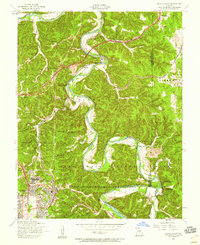 1954 Devils Elbow1959 Print · USGSMid-century Pulaski County is defined here by the winding Big Piney River and the sprawling footprint of a major military installation. Local historians can trace family sites like Spaulding Cem and the small rail siding at Hunt Siding along the river bluffs.5 unique versions available
 - 1954 Map of Big Piney, 1959 Print
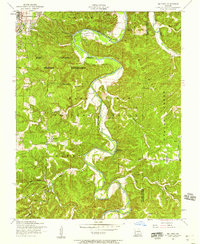 1954 Big Piney1959 Print · USGSPulaski County at the edge of the Mark Twain National Forest comes into sharp focus during the mid-fifties. Genealogists and historians can trace old homesteads and landmarks like Hopewell Church, the Democrat School, and the winding Big Piney River.6 unique versions available
 - 1954 Map of Beulah, 1959 Print
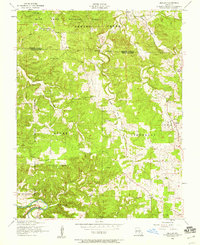 1954 Beulah1959 Print · USGSThe Ozark woodlands of Texas County were still dotted with one-room schools and family burial grounds in the mid-1950s. Trace the rural landscape through Beulah, find the Licking State Forest Nursery, or locate landmarks like Craddock School and Texas Lookout Tower.2 unique versions available
 - 1954 Map of Dixon, 1959 Print
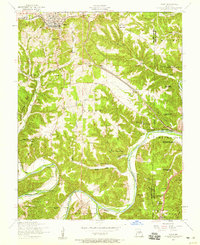 1954 Dixon1959 Print · USGSThe town of Dixon and the surrounding Ozark hills are captured in the mid-1950s as the rail line still defined the local economy. Genealogists and researchers can trace family landmarks like Egan Cemetery, Boiling Spring, and the Gaddy School (Abandoned).4 unique versions available
 - 1954 Map of Flat, 1959 Print
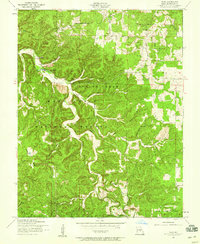 1954 Flat1959 Print · USGSThe Ozark hollows of Phelps County are captured here in the mid-1950s, showing a landscape defined by Spring Creek. Researchers can trace old family landmarks and rural centers like Rambo School, Trout Cem, and the settlement of Flat.2 unique versions available
 - 1954 Map of Slabtown Spring, 1959 Print
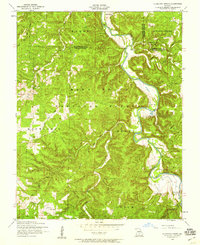 1954 Slabtown Spring1959 Print · USGSTexas County and the surrounding Ozark river valleys are shown in the mid-fifties, just as rural school consolidation began leaving landmarks like the Harmon Valley School behind. Genealogists can trace family sites at Omalley Cem or locate the riverside settlements of Slabtown and Hazleton.3 unique versions available
 - 1954 Map of Rolla, 1970 Print
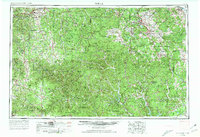 1954 Rolla1970 Print · USGSThe Missouri Ozarks and the historic Lead Belt are captured in the late sixties, showing a landscape of deep river hollows and industrial mines. Researchers can trace the routes of the Missouri Pacific RR to extraction sites like the Iron Mountain Mine or Pea Ridge Mine.2 unique versions available
 - 1955 Map of Jefferson City, 1967 Print
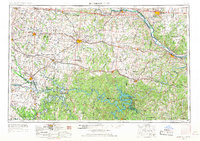 1955 Jefferson City1967 Print · USGSCentral Missouri in the mid-fifties is defined by the winding Missouri River and the expanding reach of Lake of the Ozarks. Researchers can trace the rail corridors of the Missouri Pacific or locate the early footprint of Whiteman AFB and Jefferson City.4 unique versions available
Showing maps 1-25 of 31
Top cities of Phelps County
- Rolla historical maps
- St. James historical maps
- Doolittle historical maps
- Newburg historical maps
- Edgar Springs historical maps
- Powellville historical maps
Frequently asked questions
- What are the different types of historical maps available for Phelps County?
- What is the oldest map of Phelps County?
- Where can I purchase historical maps of Phelps County for my home or office?
- Where can I download high-res historical maps of Phelps County?
- Are there historical topographic maps available for Phelps County?
- Is there historical aerial imagery available for Phelps County?
- Where are historical maps of Phelps County sourced from?