1900s (20th Century) Maps of Missoula, Montana
Explore 22 historic maps of Missoula from the 1900s (20th Century). These maps offer a rare glimpse into what life looked like during the 1900s — showing old roads, neighborhoods, homes, and landmarks that have changed or disappeared over time.
Whether you're researching your family's past, planning a metal detecting trip, or studying how Missoula's landscape evolved across the 1900s, these high-resolution maps are a powerful tool for exploring the history of this region.
- Focus on a specific era: All maps on this page are from the 1900s, giving you a focused view of this time period.
- See what’s changed: Compare century-old streets, trails, and buildings to today's modern landscape using overlays and satellite layers.
- Research with precision: Use these maps for genealogy, historical research, land use analysis, or educational projects.
- View, download, or print: Maps are fully viewable online in high resolution, and can be downloaded or printed for your own records.
Start exploring Missoula's history through authentic maps from the 1900s. This is your window into the past.
Missoula, MT maps
(22)- 1903 Map of Bonner
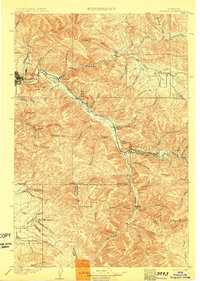 1903 Bonner1903 Print · USGSMissoula and the surrounding river canyons come to life in this turn-of-the-century survey during the height of early rail expansion. Trace the original path of the Northern Pacific through mountain passes and locate early settlements like Bonner, Potomac, and Clinton.4 unique versions available
 - 1912 Map of Missoula
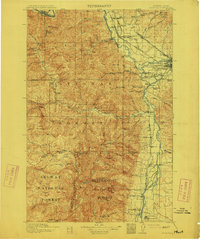 1912 Missoula1912 Print · USGSWestern Montana at the end of the frontier era shows a landscape of growing rail hubs and remote mountain outposts. Researchers can trace early river crossings like Alberts Ferry, the grounds of Ft Missoula, and vanished schools such as Big Flat School.4 unique versions available
 - 1947 Map of Butte, 1949 Print
 1947 Butte1949 Print · USGSWestern Montana at the peak of its rail-and-river era shows the vital connections between the mining and industrial centers of Butte and Helena. Researchers can trace the three major railroad lines serving mountain settlements like Garrison, Philipsburg, and Warm Springs.2 unique versions available
 - 1956 Map of Hamilton, 1970 Print
 1956 Hamilton1970 Print · USGSThe Bitterroot Valley and surrounding high country are captured here during the mid-fifties, showing the region's transition into a modern forest-and-rail hub. Genealogists and historians can trace family-named sites and early infrastructure from Fort Missoula to towns like Stevensville and Darby along the Northern Pacific line.2 unique versions available
 - 1958 Map of Butte
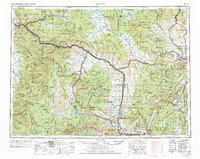 1958 Butte1958 Print · USGSWestern Montana's mining and rail corridors are captured in the late fifties, from the urban bustle of the Copper King cities to high mountain passes. Researchers can trace the path of the Milwaukee St Paul and Pacific through Deer Lodge and locate remote outposts like Potomac Post Office.5 unique versions available
 - 1959 Map of Hamilton
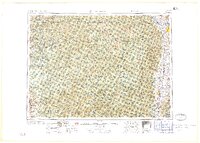 1959 Hamilton1959 Print · USGSThe Bitterroot Valley and surrounding wilderness are captured in the late fifties, showing a landscape defined by forestry and river-based settlement. Researchers can trace the Lolo Trail or locate historical points like Fort Missoula and the Fred Burr Reservoir.
 - 1960 Map of Butte
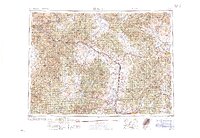 1960 Butte1960 Print · USGSWestern Montana at the dawn of the sixties is defined by its industrial mining hubs and the railroads that connect them. Genealogists and historians can trace the routes of the Milwaukee Road through Butte or locate smaller settlements like Southern Cross and Bearmouth.
 - 1960 Map of Hamilton
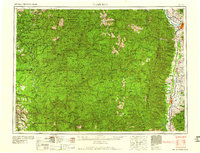 1960 Hamilton1960 Print · USGSThe Bitterroot Valley and surrounding high country are captured here during the late fifties, showing the region's transition into a modern forest and rail corridor. Researchers can trace the path of the Northern Pacific through Missoula or locate landmarks like Fort Missoula and Lake Como.
 - 1962 Map of Butte
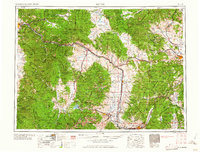 1962 Butte1962 Print · USGSWestern Montana in the early sixties remains a landscape of industrial muscle and high-mountain passes. Trace the rail lines of the Northern Pacific through Deer Lodge and the mining history around Anaconda and Philipsburg.
 - 1963 Map of Primrose, 1967 Print
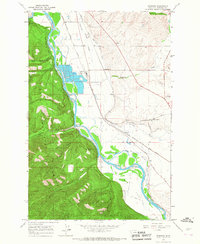 1963 Primrose1967 Print · USGSMissoula County at the start of the 1960s shows a landscape shaped by rail lines and irrigation networks. Genealogists and historians can trace the paths of two major railroads and locate local landmarks like Grass Valley Sch, Harper Bridge, and the settlement of Primrose.2 unique versions available
 - 1964 Map of Hamilton
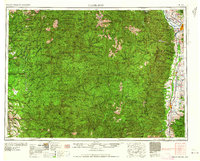 1964 Hamilton1964 Print · USGSThe Bitterroot Valley and its surrounding peaks are captured in detail during the mid-1960s, showing the early infrastructure of the Northern Rockies. Genealogists and historians can trace family roots in Hamilton and Stevensville or follow the historic Lolo Trail and Nez Perce Trail.
 - 1964 Map of Northwest Missoula, 1967 Print
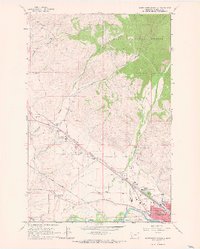 1964 Northwest Missoula1967 Print · USGSMissoula during the mid-sixties shows a growing city meeting the forest edge and a busy aviation corridor. Researchers can trace historic burial sites at the Indian Burial Ground and St Mary Cem, or locate landmarks like the US Forest Service Aerial Fire Depot.3 unique versions available
 - 1964 Map of Southeast Missoula, 1967 Print
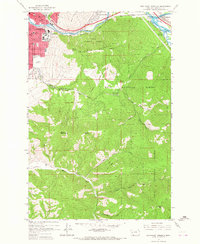 1964 Southeast Missoula1967 Print · USGSSoutheast Missoula and the Lolo National Forest are captured in the mid-1960s as the Interstate era begins to reshape the Clark Fork valley. Researchers can trace the growth of the University of Montana campus and locate early landmarks like the Milltown Dam and Hellgate High Sch.3 unique versions available
 - 1964 Map of Southwest Missoula, 1967 Print
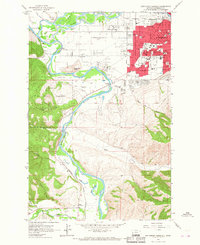 1964 Southwest Missoula1967 Print · USGSMissoula and the Bitterroot Valley are captured here in the mid-sixties, showing a city expanding into its orchard lands and river flats. Researchers can trace the grounds of Fort Missoula, numerous neighborhood schools, and local landmarks like the Maclay Bridge.2 unique versions available
 - 1964 Map of Northeast Missoula, 1967 Print
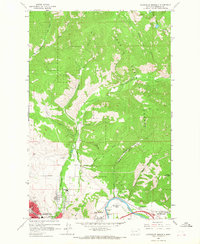 1964 Northeast Missoula1967 Print · USGSMissoula and its northeast foothills are captured in the mid-1960s, showing the city's reach toward the Lolo National Forest. Local historians can trace the early residential limits near St Mary Cem, the rural character of Bandmann Flats, and old irrigation works like Williams Ditch.3 unique versions available
 - 1981 Map of Missoula West
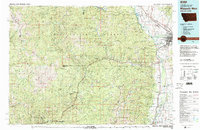 1981 Missoula West1981 Print · USGSThe Bitterroot Valley and the rugged Bitterroot Range are captured here in the early 1980s, documenting the expansion of Missoula and its outlying timber and river towns. Researchers can trace the Burlington Northern rail corridors or locate remote landmarks like Lolo Hot Springs and Lolo Pass.2 unique versions available
 - 1984 Map of Missoula East
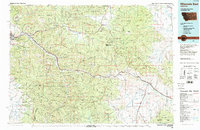 1984 Missoula East1984 Print · USGSThe Clark Fork valley and the Garnet Range are shown here in the mid-1980s as the region's timber and rail heritage remained prominent. Researchers can trace the Burlington Northern line and locate old mining sites like Garnet and the Copper Cliff Mine.
 - 1999 Map of Southeast Missoula, 2003 Print
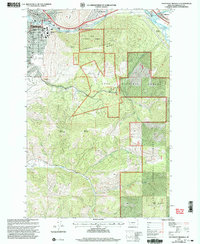 1999 Southeast Missoula2003 Print · USGSThe eastern edge of Missoula and the lower Clark Fork valley are captured here at the turn of the millennium. Researchers can trace the university campus, locate Milltown Dam, and find early local landmarks like Prescott Sch and Mount Sentinel.
 - 1999 Map of Northwest Missoula, 2003 Print
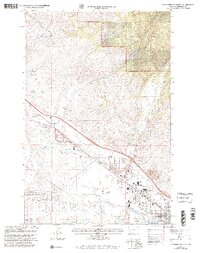 1999 Northwest Missoula2003 Print · USGSMissoula and its northwestern outskirts are captured in the 1990s as the city's industrial and residential zones pushed toward the Lolo National Forest. Researchers can trace old irrigation routes like Flynn Ditch or locate family histories at Missoula Cem and St Mary Cem.
 - 1999 Map of Northeast Missoula, 2003 Print
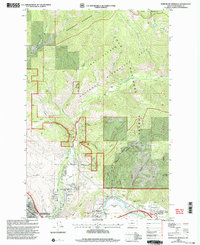 1999 Northeast Missoula2003 Print · USGSMissoula’s northeastern corridor at the close of the century shows a unique mix of wild forest boundaries and riverfront growth. Researchers can trace historic landmarks like St Mary Cem, the Marshall Ski Area, and the early settlement at East Missoula.
 - 1999 Map of Primrose, 2003 Print
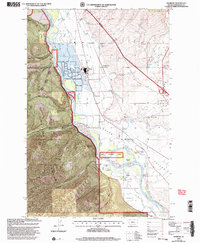 1999 Primrose2003 Print · USGSThe Clark Fork valley near Missoula is shown in the late 1990s as a hub of industry and heritage. Researchers can trace the river's path past Council Grove State Monument, the Schilling industrial site, and the Grass Valley Sch.
 - 1999 Map of Southwest Missoula, 2003 Print
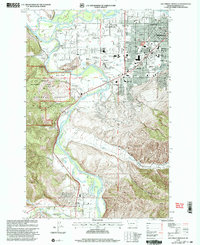 1999 Southwest Missoula2003 Print · USGSMissoula and the Bitterroot Valley are shown here in the late 1990s as the city expanded toward its forested western slopes. Researchers can trace historic routes like the Lewis and Clark Historic Trail or locate landmarks such as Fort Missoula and Maclay Bridge.
End of results
Showing maps 1-22 of 22
Top cities near Missoula
Top neighborhoods of Missoula
- BN Plaza historical maps
- Canyon River historical maps
- North Reserve historical maps
- Northside historical maps
- Riverfront historical maps
- Rose Park historical maps
See more
Frequently asked questions
- What are the different types of historical maps available for Missoula?
- What is the oldest map of Missoula?
- Where can I purchase historical maps of Missoula for my home or office?
- Where can I download high-res historical maps of Missoula?
- Are there historical topographic maps available for Missoula?
- Is there historical aerial imagery available for Missoula?
- Where are historical maps of Missoula sourced from?