1970s Maps of Phillips County, Montana
Explore 24 historic maps of Phillips County from the 1970s. These maps offer a rare glimpse into what life looked like during the 1970s — showing old roads, neighborhoods, homes, and landmarks that have changed or disappeared over time.
Whether you're researching your family's past, planning a metal detecting trip, or studying how Phillips County's landscape evolved across the 1970s, these high-resolution maps are a powerful tool for exploring the history of this region.
- Focus on a specific era: All maps on this page are from the 1970s, giving you a focused view of this time period.
- See what’s changed: Compare century-old streets, trails, and buildings to today's modern landscape using overlays and satellite layers.
- Research with precision: Use these maps for genealogy, historical research, land use analysis, or educational projects.
- View, download, or print: Maps are fully viewable online in high resolution, and can be downloaded or printed for your own records.
Start exploring Phillips County's history through authentic maps from the 1970s. This is your window into the past.
Phillips County, MT maps
(24)- 1971 Map of Crazyman Coulee, 1974 Print
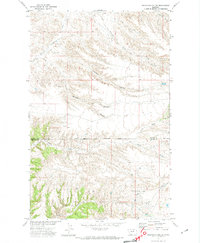 1971 Crazyman Coulee1974 Print · USGSBlaine and Phillips counties meet at the reservation line in the early 1970s. Trace old ranching water sources and land divisions along Crazyman Coulee, Brockie Spring, and Squaw Creek.
 - 1971 Map of Big Flat East, 1974 Print
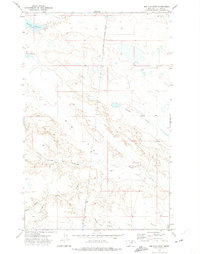 1971 Big Flat East1974 Print · USGSThe high plains of Phillips County and the eastern edge of the Fort Belknap Indian Reservation are documented here in the early 1970s. Researchers can trace the boundaries of the Fort Belknap Indian Reservation Boundary and drainage systems like Tressler Coulee and Wild Horse Creek.
 - 1971 Map of Bear Mountain, 1974 Print
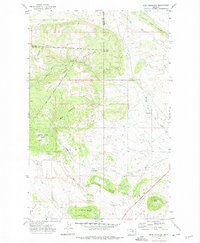 1971 Bear Mountain1974 Print · USGSThe Little Rocky Mountains of north-central Montana are shown in the early 1970s, where tribal lands meet high-country drainages. Researchers can trace the Fort Belknap Indian Reservation Boundary and locate local landmarks like the Baker Creek School and Burned Man Cave.
 - 1971 Map of Hays, 1974 Print
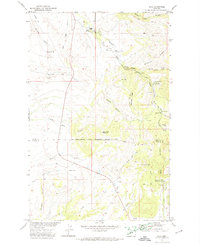 1971 Hays1974 Print · USGSThe Fort Belknap Indian Reservation comes into focus during the 1970s, centered on the community of Hays. Researchers can trace the grounds of St Pauls Mission, locate family sites at Laddusky Cem, or explore the foothills near Eagle Child Mountain.
 - 1971 Map of Robinson School, 1974 Print
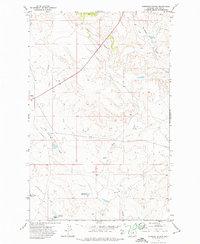 1971 Robinson School1974 Print · USGSCentral Phillips County ranch lands are captured here in the early seventies, showing a landscape defined by remote schoolhouses and water management. Trace local landmarks like Robinson School, Robinson Ranch, and the Big Sage Reservoir.
 - 1971 Map of Hays SE, 1974 Print
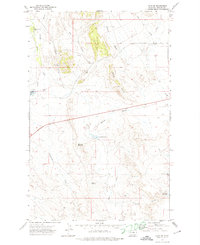 1971 Hays SE1974 Print · USGSPhillips County ranchlands are documented here in the early seventies, showing a landscape defined by water management and prairie drainages. Researchers can trace land use through named stock ponds like J D Reservoir and landmarks like Little Rockies Camp or the Grave Pit.
 - 1971 Map of Sawmill Creek, 1974 Print
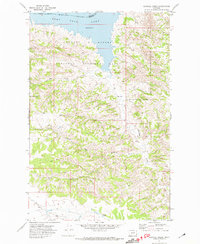 1971 Sawmill Creek1974 Print · USGSGarfield County ranching and conservation land are captured here in the early 1970s. Trace local water sources and land use across the Charles M Russell National Wildlife Range, Wilson Ranch, and Fort Peck Lake.
 - 1971 Map of Bison Bone Reservoir, 1974 Print
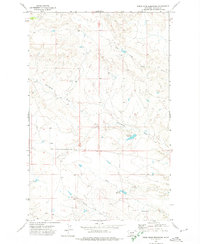 1971 Bison Bone Reservoir1974 Print · USGSPhillips County ranchland is captured here in the early 1970s, showing a landscape defined by seasonal water management and prairie drainage. Researchers can trace the winding paths of Beauchamp Creek and find water features like Bison Bone Reservoir and Pep Reservoir.
 - 1971 Map of Zortman, 1974 Print
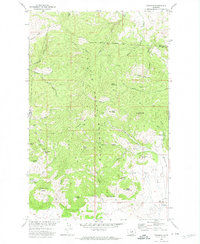 1971 Zortman1974 Print · USGSThe Little Rocky Mountains of Montana are captured in the early 1970s, showcasing a landscape shaped by persistent mining and high-elevation terrain. Researchers can trace the layout of mining camps like Zortman and Landusky alongside shafts such as the Little Ben Mine and Gold Bug Mine.
 - 1971 Map of John Coulee, 1974 Print
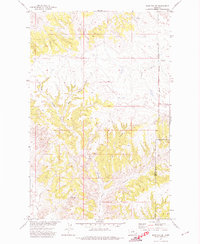 1971 John Coulee1974 Print · USGSBlaine and Phillips counties are captured here in the early 1970s at the edge of the Fort Belknap Indian Reservation Boundary. Researchers can trace the drainage patterns of the Badlands and find remote landmarks like John Coulee and a scattered Jeep Trail.
 - 1971 Map of Coburn Butte, 1974 Print
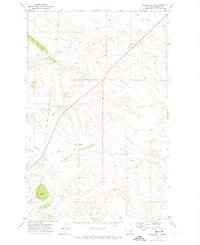 1971 Coburn Butte1974 Print · USGSPhillips County ranchlands and the reservation border are documented here during the early seventies. Local historians can trace the irrigation of Coburn Ditch and the grounds of Matador Ranch near Coburn Butte.
 - 1971 Map of Blizzard Reservoir, 1974 Print
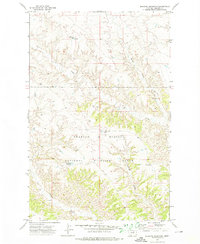 1971 Blizzard Reservoir1974 Print · USGSPhillips County ranching and conservation lands come into focus in the early 1970s. Map researchers can trace water sources like Blizzard Res and Flowing Well or locate the Nichols Coulee Camp within the wildlife range.
 - 1971 Map of D Y Junction, 1975 Print
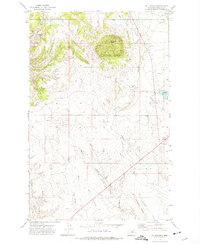 1971 D Y Junction1975 Print · USGSPhillips County, Montana, is shown in the early 1970s as a landscape of ridges and ranch-land infrastructure. Researchers can trace the development of local transit at DY Junction and locate water sources like Phillips Reservoir and Mud Spring.
 - 1971 Map of Kepple Bottoms, 1975 Print
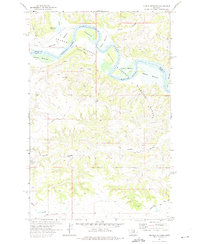 1971 Kepple Bottoms1975 Print · USGSCentral Montana ranching and river history are preserved here in the early seventies, where the Missouri River forms the boundary of Fergus and Phillips counties. Researchers can trace the Old Musselshell Trail and locate isolated outposts like Gar Ranch and Rindal Ranch.
 - 1971 Map of Swede Ridge, 1975 Print
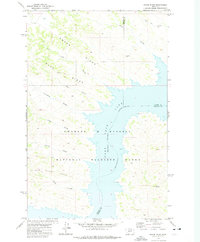 1971 Swede Ridge1975 Print · USGSThe Missouri River breaks of Montana are captured here during the 1970s, showing the intersection of three counties within the Charles M Russell National Wildlife Range. Researchers can trace the path of the Cart Trail or locate high-country landmarks like Rock Peak and Swede Ridge.
 - 1971 Map of Shetland Divide, 1975 Print
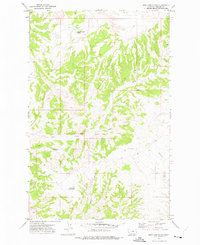 1971 Shetland Divide1975 Print · USGSThe northern Montana high plains are captured here in the early 1970s, defined by the prominent Shetland Divide. Researchers can trace old livestock routes and water improvements like Dead Cedar Reservoir and the Corral near Hideaway Coulee.
 - 1971 Map of Sagebrush Reservoir, 1975 Print
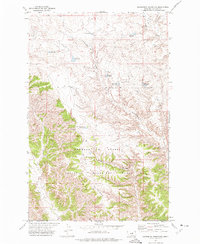 1971 Sagebrush Reservoir1975 Print · USGSThe Phillips County ranchlands and wildlife territory are documented here in the early 1970s. Trace the distribution of high-plains water sources like Whiteface Reservoir, Manning Corral Reservoir, and the complex coulees of the Wilder Ridge.
 - 1971 Map of Ball Coulee, 1975 Print
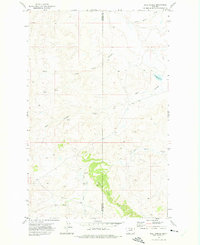 1971 Ball Coulee1975 Print · USGSThe Fort Belknap Indian Reservation in north-central Montana is shown in the early 1970s, focused on the breaks of the Judith River. Genealogists can locate several remote burial sites, including Messerly Cem, Kirkaldie Cem, and Chopwood Cem.
 - 1971 Map of Hanson Flat, 1975 Print
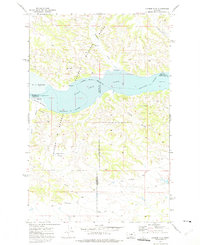 1971 Hanson Flat1975 Print · USGSThe Missouri and Musselshell Rivers converge here in the early 1970s within the sprawling protected lands of central Montana. Genealogists and historians can trace historic paths like the Old Musselshell Trail and locate the settlement of Fergus near Hanson Flat.
 - 1971 Map of Ester Lake, 1975 Print
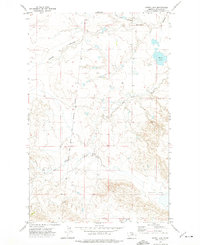 1971 Ester Lake1975 Print · USGSPhillips County ranchlands meet the Fort Belknap Indian Reservation Boundary in the early 1970s. Trace the seasonal waterways of Big Warm Creek and Sage Hen Coulee or locate the namesake Ester Lake.
 - 1971 Map of Big Flat West, 1975 Print
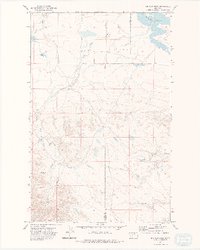 1971 Big Flat West1975 Print · USGSThe high plains of the Fort Belknap Indian Reservation are documented here in the early 1970s, showing the intersection of Blaine and Phillips counties. Researchers can trace the drainage of Big Flat through the network of Weigand Reservoir, Lone Tree Coulee, and Corral Coulee.2 unique versions available
 - 1973 Map of Whiskey Coulee, 1977 Print
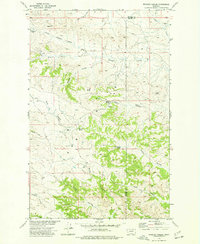 1973 Whiskey Coulee1977 Print · USGSRanching life in Phillips County during the early seventies is defined by isolated outposts and vital water sources. Trace family land at Anderson Ranch or Smith Ranch and locate geological landmarks like The Chimneys and Castle Butte.
 - 1973 Map of White Horse Coulee, 1977 Print
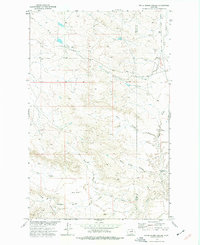 1973 White Horse Coulee1977 Print · USGSThe high prairie on the border of Phillips and Valley counties is captured here in the early seventies, showing a land of deep ravines and intermittent creeks. Researchers can trace the drainage of Black Coulee and Larb Creek or locate the Beartracks Reservoir.
 - 1978 Map of Fort Peck Lake West
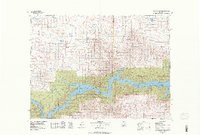 1978 Fort Peck Lake West1978 Print · USGSNorthern Montana plains and the Missouri River brakes are captured here in the late seventies. Researchers can trace remote outposts like Regina PO, the winding waters of Fort Peck Lake, and the solitary Coal Mine near the county line.2 unique versions available
End of results
Showing maps 1-24 of 24
Top cities of Phillips County
Frequently asked questions
- What are the different types of historical maps available for Phillips County?
- What is the oldest map of Phillips County?
- Where can I purchase historical maps of Phillips County for my home or office?
- Where can I download high-res historical maps of Phillips County?
- Are there historical topographic maps available for Phillips County?
- Is there historical aerial imagery available for Phillips County?
- Where are historical maps of Phillips County sourced from?