1980s Maps of Teton County, Montana
Explore 44 historic maps of Teton County from the 1980s. These maps offer a rare glimpse into what life looked like during the 1980s — showing old roads, neighborhoods, homes, and landmarks that have changed or disappeared over time.
Whether you're researching your family's past, planning a metal detecting trip, or studying how Teton County's landscape evolved across the 1980s, these high-resolution maps are a powerful tool for exploring the history of this region.
- Focus on a specific era: All maps on this page are from the 1980s, giving you a focused view of this time period.
- See what’s changed: Compare century-old streets, trails, and buildings to today's modern landscape using overlays and satellite layers.
- Research with precision: Use these maps for genealogy, historical research, land use analysis, or educational projects.
- View, download, or print: Maps are fully viewable online in high resolution, and can be downloaded or printed for your own records.
Start exploring Teton County's history through authentic maps from the 1980s. This is your window into the past.
Teton County, MT maps
(44)- 1981 Map of Hungry Horse Reservoir, 1982 Print
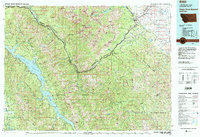 1981 Hungry Horse Reservoir1982 Print · USGSThe Flathead region in the early eighties shows a wilderness managed through rail and reservoir. Genealogists and historians can trace rail-stop settlements like Nyack, Essex, and Summit along the Burlington Northern line and the John F Stevens Canyon.
 - 1983 Map of Vaughn NE
 1983 Vaughn NE1983 Print · USGSThe high plains of Montana's Teton and Cascade counties are captured here in the early eighties, showing the expansive ranching country near the northern border. Local history researchers can pinpoint the Neuman School or trace the winding paths of Lake Creek and Flat Creek.2 unique versions available
 - 1983 Map of Fort Shaw
 1983 Fort Shaw1983 Print · USGSThe Sun River valley comes alive in the early 1980s, showing a landscape defined by frontier military history and an intricate irrigation network. Researchers can trace the Fort Shaw Military Reservation Boundary, the Old Railroad Grade, and settlements like Ashuelot.
 - 1983 Map of Fairfield
 1983 Fairfield1983 Print · USGSIn the early 1980s, Fairfield stood as a hub of the high Montana benches, shaped by a sophisticated network of canals and rail lines. Genealogists and historians can trace the Old Fort Shaw Military Reservation Boundary or locate families at Sunset Hills Cem.
 - 1983 Map of Cleiv
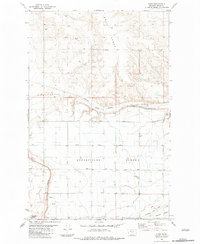 1983 Cleiv1983 Print · USGSTeton County ranching and irrigation systems are in full view during the early 1980s. Trace the rail-and-water economy at Cleiv or locate rural landmarks like St Paul Ch and the Fairfield Airport set against the Bole Bench.
 - 1983 Map of Sun River
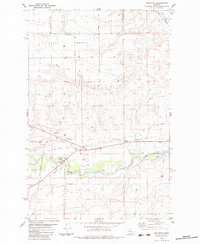 1983 Sun River1983 Print · USGSThe Sun River valley comes alive in the early eighties as an agricultural and irrigation hub. Researchers can trace the Old Railroad Grade and the Fort Shaw Military Reservation Boundary alongside the Sun River Valley Ch.
 - 1983 Map of Power
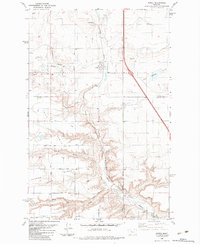 1983 Power1983 Print · USGSPower and the surrounding plains of Teton County are captured here in the early 1980s, showing a landscape defined by tiered benches and rail-side agriculture. Researchers can trace the Burlington Northern line through Power and find the Power Community Cem.
 - 1983 Map of Greenfield
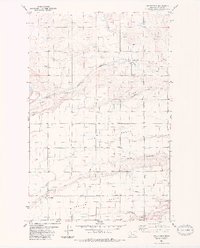 1983 Greenfield1983 Print · USGSHigh-plains agriculture in Teton County was deeply integrated with rail and water management in the early eighties. Genealogists and historians can trace the development of Greenfield and Cordova along the Burlington Northern and the extensive Main Canal.
 - 1984 Map of Conrad
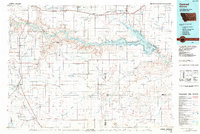 1984 Conrad1984 Print · USGSNorth-central Montana's high plains and river valleys come to life in this mid-eighties record of Pondera and Toole counties. Genealogists and historians can trace rail-stop towns along the Burlington Northern or locate rural landmarks like Favot and Alkali Springs.
 - 1984 Map of Choteau
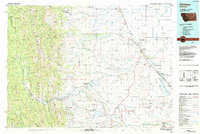 1984 Choteau1984 Print · USGSThe Teton River country comes to life in this mid-eighties record of the Montana plains and mountains. Trace the footprints of early ranching and farming settlements like Farmington and Eastham Junction, or explore the unique Hutterite settlements at Miller Colony and New Rockport Colony.
 - 1984 Map of Valier
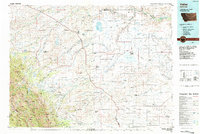 1984 Valier1984 Print · USGSNorthwestern Montana in the mid-1980s reveals a unique landscape of Hutterite agricultural colonies and high mountain wilderness. Genealogists and historians can trace the irrigation networks and rail stops from Valier to Birch Creek Colony and the Kellogg Mine.
 - 1985 Map of Agawam North, 1986 Print
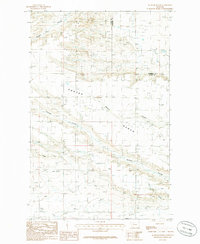 1985 Agawam North1986 Print · USGSThe high plains of the Teton and Pondera county line are captured here in the mid-1980s during a period of active energy and water development. Researchers can trace the sprawling Oil Field north of Agawam and the winding path of the Bynum Canal.
 - 1985 Map of Gallup City, 1986 Print
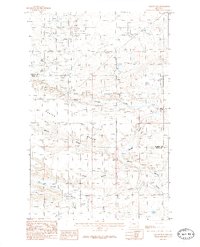 1985 Gallup City1986 Print · USGSGallup City and the oil fields of Teton and Pondera counties are captured here in the mid-eighties as a landscape of energy production and prairie ranching. Researchers can trace land features like Porter Bench or locate the local Cem and Aldrich Spring.
 - 1985 Map of Lone Man Coulee West, 1986 Print
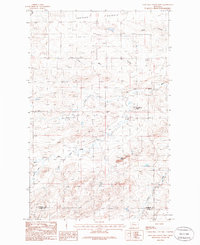 1985 Lone Man Coulee West1986 Print · USGSThe confluence of the Marias River forks in Montana was a vital landscape for water management and communal living in the mid-1980s. Researchers can trace the layout of the New Miami Colony and locate physical landmarks like Black Buttes and Frances Heights.
 - 1985 Map of Soap Creek, 1986 Print
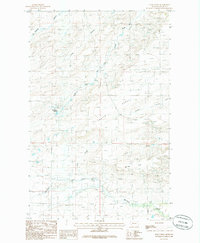 1985 Soap Creek1986 Print · USGSThe Teton County plains are captured in the mid-1980s, centered on the hutterite settlement at Rockport Colony. Researchers can trace irrigation infrastructure like the Bynum Canal and family-named landmarks including Jones Spring and Jensen Coulee.
 - 1985 Map of Dupuyer East, 1986 Print
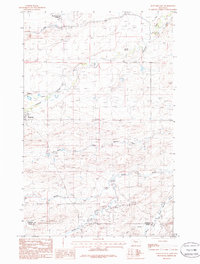 1985 Dupuyer East1986 Print · USGSThe Pondera and Teton county line area in the mid-1980s shows a landscape of wide-open ranch land and complex river forks. Trace the branching of the Dry Fork Marias River or locate local landmarks like Birch Creek Colony and Crocker Springs.
 - 1985 Map of Pendroy, 1986 Print
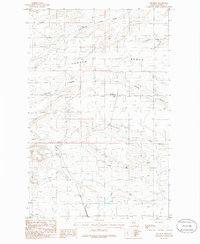 1985 Pendroy1986 Print · USGSPendroy and its surrounding Teton County prairie are captured here during the mid-1980s as the local water-management systems were fully established. Researchers can trace the path of the Bynum Canal and find local landmarks like Spring Hill and Porter Bench.
 - 1985 Map of Lone Man Coulee East, 1986 Print
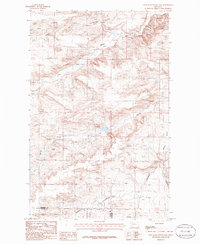 1985 Lone Man Coulee East1986 Print · USGSPondera and Teton County lands in the mid-1980s are defined by the winding course of the Marias River and its deep coulees. Researchers can trace land features like Castle Rock and Benton Bench alongside industrial Gravel Pits.
 - 1986 Map of Nunemaker Hill, 1987 Print
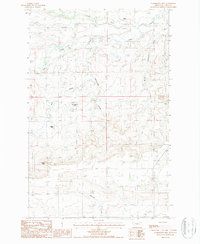 1986 Nunemaker Hill1987 Print · USGSTeton County ranching and drainage patterns are detailed in this mid-eighties survey of the high plains near Nunemaker Hill. Researchers can locate historic property footprints at Hodgkiss Ranch and Burch Ranch or trace the winding paths of Deep Creek and Hay Coulee.
 - 1986 Map of Split Rock Junction, 1987 Print
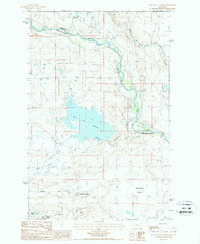 1986 Split Rock Junction1987 Print · USGSThe Montana high plains near the Sun River are captured in the mid-1980s, showcasing a landscape defined by irrigation and early transport. Researchers can trace the Old RR Grade and explore the water systems around Willow Creek Reservoir and Split Rock Junction.
 - 1987 Map of Bynum Reservoir
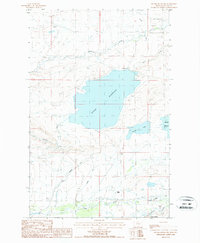 1987 Bynum Reservoir1987 Print · USGSTeton County ranchlands and water systems are captured in the late 1980s, showcasing the engineering of the Montana high plains. Researchers can trace historic water rights and homestead locations near the Teton River, Crary Ranch, and the expansive Bynum Reservoir.
 - 1987 Map of Golden Ridge
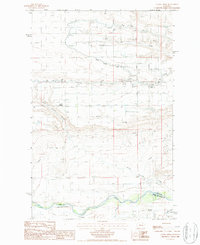 1987 Golden Ridge1987 Print · USGSThe Teton County plains are shown in the late eighties as a complex network of irrigation and river drainage. You can trace the vital water systems of the Spring Valley Canal and Sun River, alongside local landmarks like Golden Ridge.
 - 1987 Map of Watson Flats
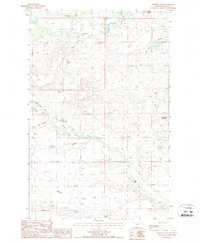 1987 Watson Flats1987 Print · USGSTeton County, Montana, was a landscape of wide-open ranching flats and intricate coulee systems during the late eighties. Genealogists and local historians can trace family land ties near Peebles Ranch or locate water features like Dougcliff Reservoir and Willow Creek.
 - 1987 Map of Lowry
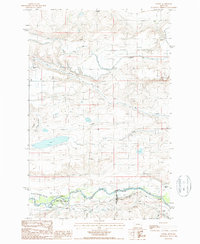 1987 Lowry1987 Print · USGSThe Montana high plains in the late eighties reveal a landscape defined by expansive irrigation projects and cattle ranching. Researchers can trace the path of the Greenfields Main Canal and locate rural landmarks like Lowry and the Hamilton Ranch.
 - 1987 Map of Choteau SE
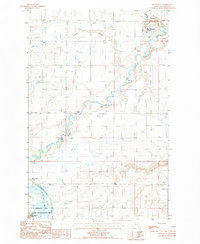 1987 Choteau SE1987 Print · USGSTeton County, Montana, is captured in the late eighties as a landscape of managed waters and high-plains agriculture. Researchers can trace the path of the Old RR Grade and locate local landmarks such as New Rockport Colony and Priest Butte.
Showing maps 1-25 of 44
Top cities of Teton County
Frequently asked questions
- What are the different types of historical maps available for Teton County?
- What is the oldest map of Teton County?
- Where can I purchase historical maps of Teton County for my home or office?
- Where can I download high-res historical maps of Teton County?
- Are there historical topographic maps available for Teton County?
- Is there historical aerial imagery available for Teton County?
- Where are historical maps of Teton County sourced from?