Old Maps of Ira, New York for Genealogy
Trace your family roots with 41 historic maps of Ira. These high-res maps reveal old neighborhoods, homesites, landmarks, and streets — helping you uncover where your ancestors lived and how the area evolved over time.
- Explore historic neighborhoods: Identify where your relatives may have lived in the 1800s or 1900s.
- Compare maps over time: Trace the changes in streets, buildings, and landmarks for multi-generational research.
- Perfect for genealogy & ancestry research: Used by family historians and researchers to map out lineage and migration.
These maps are an incredible resource for exploring your personal connection to Ira's past.
Ira, NY maps
(41)- 1900 Map of Baldwinsville
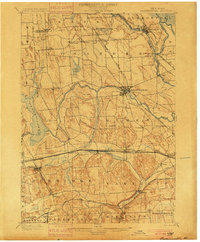 1900 Baldwinsville1900 Print · USGSOnondaga and Oswego counties are seen here at the close of the nineteenth century, when the Erie Canal still drove local commerce. Genealogists can trace family roots through canal towns like Jordan and river hubs like Baldwinsville and Phoenix.9 unique versions available
 - 1900 Map of Oswego
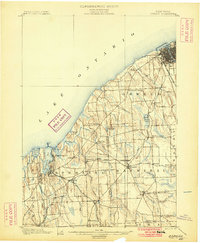 1900 Oswego1900 Print · USGSThe Lake Ontario shoreline in Oswego and Cayuga Counties at the turn of the century is a hub of maritime and rail commerce. Genealogists and historians can trace the paths of four major railroads serving lakefront communities like North Fairhaven and the historic grounds of Fort Ontario.8 unique versions available
 - 1900 Map of Fulton
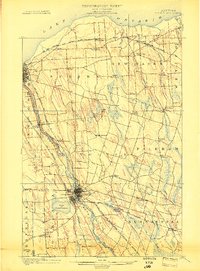 1900 Fulton1900 Print · USGSOswego County at the turn of the century shows a bustling corridor of industry and agriculture along the Oswego River. Researchers can trace the legacy of vanished depots and hamlets like Bundy Crossing, Gilbert Mills, and Seneca Hill during the height of the steam-rail era.7 unique versions available
 - 1902 Map of Weedsport
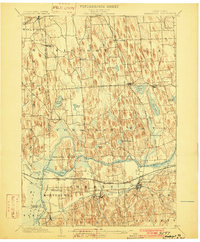 1902 Weedsport1902 Print · USGSCentral New York at the turn of the century reveals a landscape shaped by the Erie Canal and a dense network of early railroads. Genealogists and historians can trace the foundations of Weedsport and Port Byron, or locate landmarks like the Brick Church and the Canal Basin at Montezuma.10 unique versions available
 - 1943 Map of Lysander
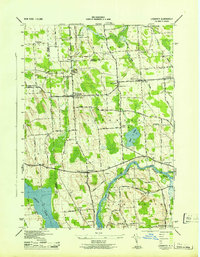 1943 Lysander1943 Print · USGSThe Seneca River valley in the early 1940s is shown here as a landscape of thriving rural hamlets and extensive canal infrastructure. Trace the network of old schoolhouses and cemeteries from Lysander to Plainville, or locate the family lands at Baird Corners.
 - 1943 Map of Cato
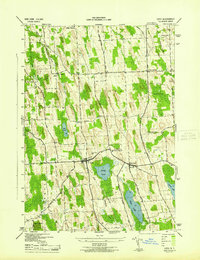 1943 Cato1943 Print · USGSNorthwestern Cayuga County in the 1940s shows a landscape of drumlins and dairy farms centered on the village of Cato. Researchers can trace the path of the Lehigh Valley railroad and find historic local sites like Union Hill Cem and School No 9.
 - 1943 Map of Hannibal
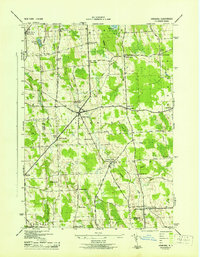 1943 Hannibal1943 Print · USGSOswego and Cayuga counties are shown here during the war years, when the landscape was a dense network of family farms and rural school districts. Genealogists can trace family footprints through numerous numbered schools and local landmarks like Bethel Cem, Martville, and the Lehigh Valley railroad line.2 unique versions available
 - 1943 Map of Fulton
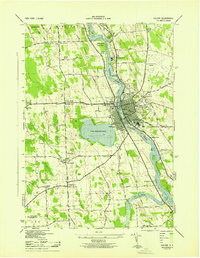 1943 Fulton1943 Print · USGSFulton and the Oswego River valley are shown in detail during the early 1940s, highlighting a landscape where industry and rural life meet. Local historians can trace the paths of three railroads or find family sites near Mt Adnah Cem and Lewis Corners.
 - 1954 Map of Hannibal, 1955 Print
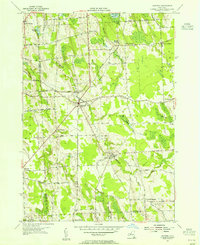 1954 Hannibal1955 Print · USGSThe Oswego and Cayuga County line comes alive in the mid-1950s, showing a landscape of rail-fed hamlets and agricultural crossroads. Researchers can trace family sites at Bethel Cem, follow the New York Central Railroad past Metcalf Siding, or explore small centers like Martville.2 unique versions available
 - 1954 Map of Cato, 1955 Print
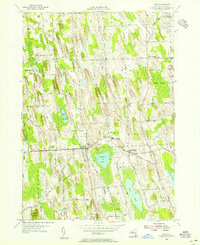 1954 Cato1955 Print · USGSMid-century Cayuga County is defined by its unique glacial topography and the growing rural hubs of Cato and Meridian. You can trace old family property lines along Brandt Road or find the White Cem and Cato-Meridian Central School.3 unique versions available
 - 1954 Map of Weedsport, 1961 Print
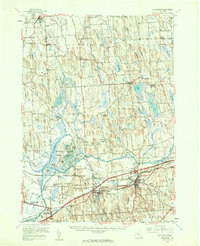 1954 Weedsport1961 Print · USGSMid-century Cayuga County is captured here as the new thruway begins to reshape the historic canal and rail corridor. Researchers can trace the legacy of the Erie Canal and New York Central through Port Byron, or locate family landmarks like Brick Ch and Schuler Farms Airfield.3 unique versions available
 - 1955 Map of Lysander, 1957 Print
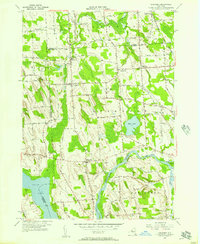 1955 Lysander1957 Print · USGSMid-century Onondaga and Oswego Counties meet here along the historic Seneca River and Erie Canal corridor. Researchers can trace family homesteads near old crossroads like Little Utica, The Kingdom, and the rural Merritt Cem.3 unique versions available
 - 1955 Map of Fulton, 1957 Print
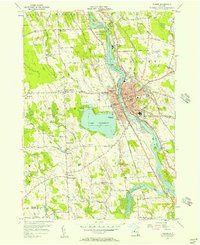 1955 Fulton1957 Print · USGSMid-century Fulton and the surrounding Oswego County countryside are captured here during a period of steady industrial and civic expansion. Researchers can trace historic family locations near Bowens Corners, old rural schoolhouses, and the rail corridors of the New York Central.4 unique versions available
 - 1956 Map of Fulton, 1961 Print
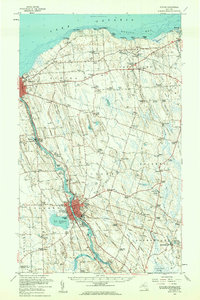 1956 Fulton1961 Print · USGSOswego County's industrial river corridor and lakeside hamlets are captured here during the mid-fifties. Researchers can trace the dual lines of the Erie Lackawanna Railroad and the New York Central Railroad past Lake Neatahwanta and through Fulton.2 unique versions available
 - 1957 Map of Baldwinsville, 1961 Print
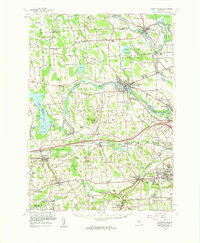 1957 Baldwinsville1961 Print · USGSBaldwinsville and the river-rife lands of Onondaga County are shown here in the late fifties as the New York State Thruway began to reshape travel. Genealogists and local historians can locate many rural burial grounds, including Kingdom Cem and Elbridge Rural Cem, alongside the industrial lines of the Lackawanna Railroad.
 - 1960 Map of Rochester
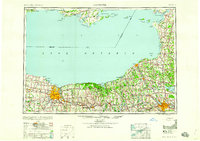 1960 Rochester1960 Print · USGSThe Lake Ontario shoreline in the late fifties was a bustling corridor of rail and water commerce. Genealogists and historians can trace the path of the New York Central through canal towns like Newark or explore the coastal landmarks around Sackets Harbor.2 unique versions available
 - 1960 Map of Oswego, 1961 Print
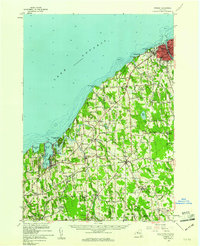 1960 Oswego1961 Print · USGSLake Ontario's southern shore and the busy port of Oswego are shown here during the early sixties. Researchers can trace the waterfront legacy of Fort Ontario, the New York Central tracks, and rural landmarks like St Joseph Chapel or School No 9.2 unique versions available
 - 1961 Map of Rochester, 1973 Print
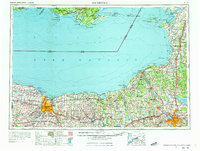 1961 Rochester1973 Print · USGSThe Lake Ontario shoreline and Finger Lakes frontier are shown here at the height of the mid-century infrastructure boom. Genealogists and historians can trace the rail-and-road evolution from Sackets Harbor down to the New York State Thruway, passing through centers like Pulaski and Adams Center.3 unique versions available
 - 1965 Map of Rochester
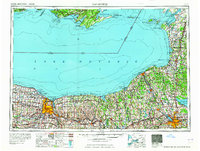 1965 Rochester1965 Print · USGSUpstate New York's industrial heartland is captured here during a period of significant growth between the Great Lakes and the Finger Lakes. Genealogists and historians can trace the evolution of canal towns and rail hubs from Rochester to Syracuse, noting features like the Erie Canal and the New York State Thruway.
 - 1978 Map of Hannibal
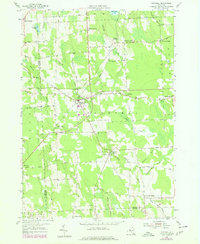 1978 Hannibal1978 Print · USGSThe intersection of Oswego and Cayuga counties comes into sharp focus during the late seventies, showing a landscape defined by crossroads hamlets and creek valleys. Researchers can trace local lineage through family sites like Mosher Cem and Bethel Cem, or locate landmarks such as Metcalf Siding and the Quarry.
 - 1985 Map of Syracuse
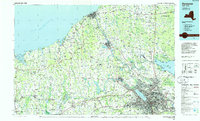 1985 Syracuse1985 Print · USGSCentral New York in the mid-eighties shows a landscape of established canal towns and growing metropolitan suburbs linked by rail and water. Researchers can trace the path of the Erie Canal, find the boundaries of Montezuma Marsh, and locate regional landmarks like Oneida Lake and Chimney Bluffs.3 unique versions available
 - 2010 Map of Fulton, 2010 Print
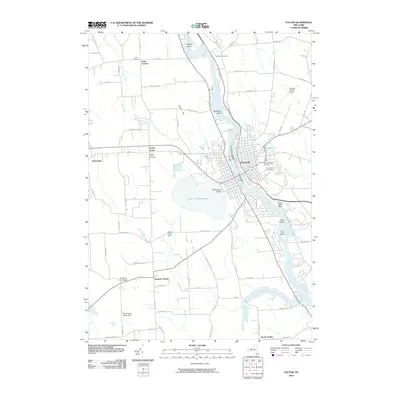 2010 Fulton2010 Print · USGSThe industrial corridor of the Oswego River and the Canal dominates this Central New York region during the early twenty-first century. Genealogists and local historians can trace legacy burial sites like Lewis Cemetery or explore the area's agricultural roots at Snow Valley Honey Farm.
 - 2010 Map of Hannibal, 2010 Print
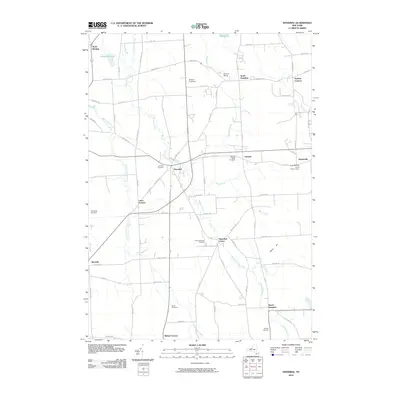 2010 Hannibal2010 Print · USGSOswego County's agricultural heritage and rural settlement patterns are preserved in this study from the early twenty-first century. Genealogists and local historians can trace family lines through numerous sites like Hannibal Center Cemetery, Bethel Corners, and Cains Corners.
 - 2010 Map of Lysander, 2010 Print
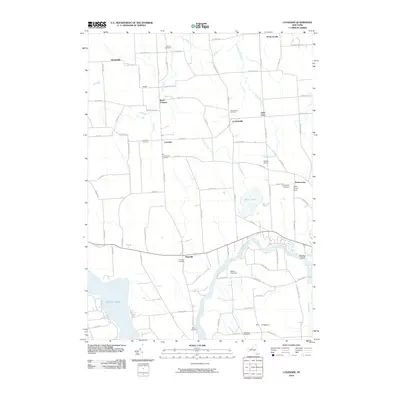 2010 Lysander2010 Print · USGSOnondaga County's riverfront hamlets and agricultural lands are documented here in the early twenty-first century. Genealogists can trace family roots through several local burial grounds including Kingdom Cemetery, Merritt Cemetery, and the Old Presbyterian Cemetery.
 - 2011 Map of Cato, 2011 Print
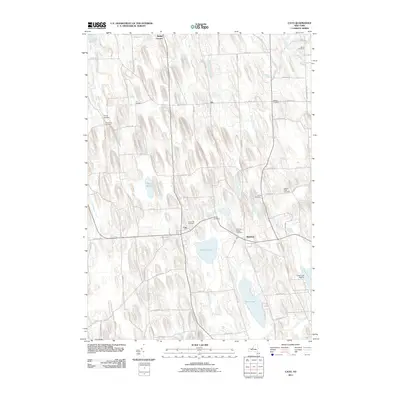 2011 Cato2011 Print · USGSCayuga County’s glacial drumlin fields are mapped here in the early 21st century, showing the established villages of Cato and Meridian. Genealogists can trace family names through numerous burial grounds like Marble Ridge Cemetery and Dutton Cemetery near Parker Pond.
Showing maps 1-25 of 41
Top cities near Ira
- Camillus historical maps
- Lysander historical maps
- Oswego historical maps
- Van Buren historical maps
- Fulton historical maps
- Schroeppel historical maps
See more
Top neighborhoods of Ira
Frequently asked questions
- What are the different types of historical maps available for Ira?
- What is the oldest map of Ira?
- Where can I purchase historical maps of Ira for my home or office?
- Where can I download high-res historical maps of Ira?
- Are there historical topographic maps available for Ira?
- Is there historical aerial imagery available for Ira?
- Where are historical maps of Ira sourced from?