Old Maps of Clarence, New York for Academic Research
Study the evolution of Clarence with 47 high-resolution historic maps. Whether you're teaching, researching, or modeling changes in land use, these maps provide essential visual documentation of urban, environmental, and geographic change.
- Analyze long-term change: Track patterns in development, transportation, and natural features.
- Ideal for environmental or urban studies: Support academic projects with primary historical map data.
- Use in the classroom or lab: Educators and researchers rely on these maps to bring historical context to life.
These maps are a powerful tool for teaching, research, and visualizing how Clarence has changed over the decades.
Clarence, NY maps
(47)- 1897 Map of Lockport
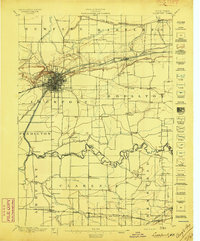 1897 Lockport1897 Print · USGSNiagara County was a powerhouse of canal and rail commerce during the 1890s, centered on the engineering marvels at Lockport. Genealogists and historians can trace the early foundations of Clarence Center, locate Swifts Mills, or follow the original path of the Erie Canal past Raynales Basin.
 - 1899 Map of Niagara
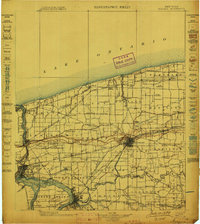 1899 Niagara1899 Print · USGSThe Niagara Frontier is mapped here in the late nineteenth century as a bustling corridor of trade and transport. Researchers can trace the path of the Erie Canal through Lockport or locate early rural settlements like Ransomville and the Tuscarora Indian Reservation.6 unique versions available
 - 1902 Map of Lockport
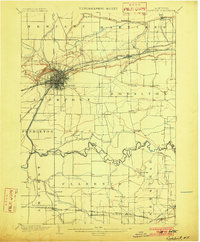 1902 Lockport1902 Print · USGSNiagara and Erie Counties thrived at the turn of the century as the Erie Canal and heavy rail transformed the region. Researchers can trace ancestral property near Lockport or locate vanished stops along the Batavia and Tonawanda Shore Line and near Reynales Basin.6 unique versions available
 - 1905 Map of Depew
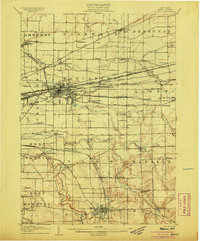 1905 Depew1905 Print · USGSEastern Erie County at the height of the steam era reveals a complex network of major rail lines and rural hamlets. Genealogists and historians can trace old property lines and rail stations like Looneyville, Grimesville, and the early development of Depew.6 unique versions available
 - 1905 Map of Lockport, 1906 Print
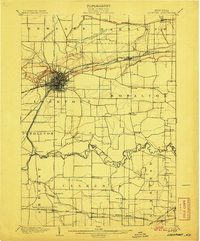 1905 Lockport1906 Print · USGSNiagara and Erie counties at the height of the canal and rail era show a landscape defined by the Erie Canal. Trace family roots in Lockport or explore early transit networks through Transit Sta., Akron, and the Electric R. R.
 - 1948 Map of Depew, 1953 Print
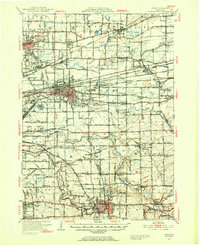 1948 Depew1953 Print · USGSErie County's industrial and civic heart comes into focus during this post-war era of rail and aviation expansion. Researchers can trace ancestral roots at Clarence Fillmore Cemetery or locate old schoolhouses like School No 1 and School No 8 across Harris Hill and Marilla.3 unique versions available
 - 1948 Map of Lockport, 1953 Print
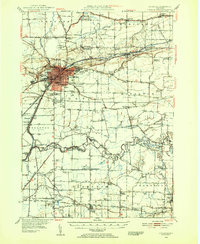 1948 Lockport1953 Print · USGSNiagara and Erie Counties are shown here during the late forties, when the canal and rail lines still anchored the regional economy. Researchers can locate numerous numbered rural schoolhouses and vanished stops like Hodgeville Sta or Akron Junction.3 unique versions available
 - 1950 Map of Wolcottsville
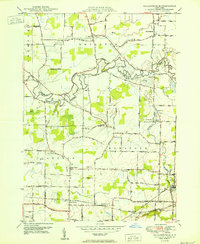 1950 Wolcottsville1950 Print · USGSNiagara and Erie Counties are captured here at the start of the 1950s, showing a transition from rural farming to structured township growth. Researchers can trace family history through numerous district schools and landmarks like Swifts Mills, Akron Junction, and the Clarence Center Church.
 - 1950 Map of Clarence Center
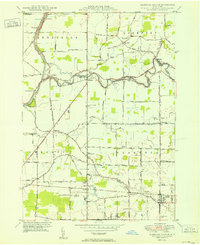 1950 Clarence Center1950 Print · USGSMidcentury Western New York is captured here as rural townships began to evolve around the Erie Canal and Tonawanda Creek. Genealogists and local historians can locate early district schools, the Sulphur Springs Guard Lock, and hamlets like Swormville and Hodgeville Sta.2 unique versions available
 - 1950 Map of Lancaster
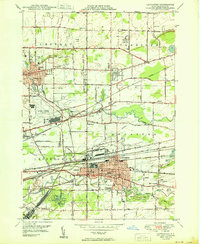 1950 Lancaster1950 Print · USGSErie County at the mid-century mark shows a landscape of burgeoning suburbs and vital rail corridors. Genealogists and researchers can trace family landmarks like St Marys High School, the Transit Cem, and old district sites like School No 8.
 - 1950 Map of Clarence
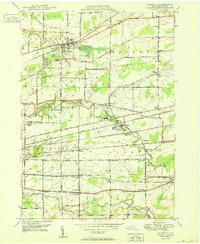 1950 Clarence1950 Print · USGSMid-century Erie County comes into focus through this survey of the rail-and-road network connecting Clarence and Alden. You can trace old property contexts via landmarks like Trinity Ch, Mt Olive Cem, and the various numbered schools scattered across the township lines.
 - 1952 Map of Toronto, 1954 Print
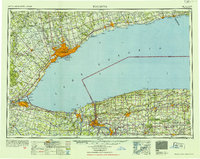 1952 Toronto1954 Print · USGSLake Ontario and the international border define this mid-century landscape of rapid industrial and suburban growth. Researchers can trace the vital shipping and rail corridors of the era, from the Welland Canal to the New York Central Railroad.
 - 1960 Map of Buffalo
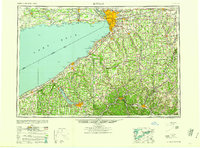 1960 Buffalo1960 Print · USGSWestern New York and the Niagara Peninsula thrive during the mid-twentieth century industrial peak. Genealogists and historians can trace family-named points and early settlements from Dunkirk Light to the Allegany Indian Reservation.
 - 1962 Map of Buffalo, 1980 Print
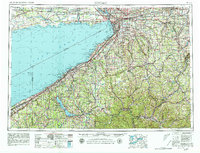 1962 Buffalo1980 Print · USGSThe Niagara Frontier and Western New York are captured here in the early sixties, showing the vital industrial and maritime nexus between the U.S. and Canada. Researchers can trace the path of the Welland Canal, locate the Allegany Indian Reservation, or find family sites near Chautauqua Lake.2 unique versions available
 - 1962 Map of Toronto, 1982 Print
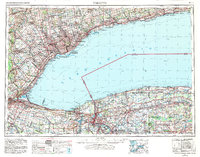 1962 Toronto1982 Print · USGSThe Golden Horseshoe and the Niagara Frontier meet in this early 1960s study of a growing international border region. Trace the path of the Welland Canal and locate land marks like the Scarborough Bluffs and Tuscarora Indian Reservation.
 - 1965 Map of Toronto
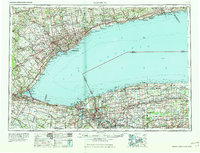 1965 Toronto1965 Print · USGSThe Golden Horseshoe and Niagara Frontier are shown in detail during the early sixties, highlighting the international shipping and transit networks. Trace the path of the Erie Canal, the Welland Canal, and rail lines connecting Toronto and Niagara Falls.2 unique versions available
 - 1965 Map of Clarence Center, 1967 Print
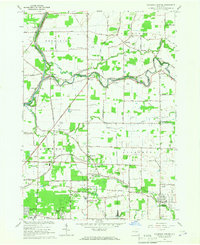 1965 Clarence Center1967 Print · USGSThe Niagara and Erie county line comes alive in the mid-1960s, showing the early suburban growth of townships like Amherst and Clarence. Genealogists and local historians can trace family roots through St Marys Cem or locate the historic Sulphur Springs Guard Lock along the Erie Canal.
 - 1965 Map of Wolcottsville, 1967 Print
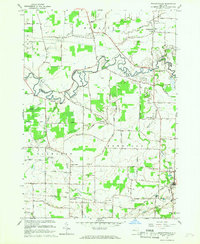 1965 Wolcottsville1967 Print · USGSThe rural borderlands between Erie and Niagara Counties are captured here in the mid-1960s as a network of small hamlets and agricultural crossroads. Researchers can trace family ties through St Michaels Ch, locate the Elridge Cem, or follow the old New York Central Railroad through Akron Junction.
 - 1965 Map of Clarence, 1967 Print
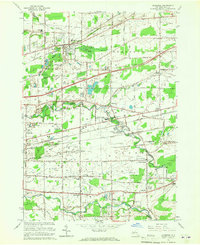 1965 Clarence1967 Print · USGSErie County in the mid-1960s reveals a transition from rural farming to expanding infrastructure between the townships of Clarence and Alden. Researchers can locate distinct landmarks such as the County Penitentiary, the Clarence Fillmore Cem, and the Town Line Station rail stop.
 - 1965 Map of Lancaster, 1967 Print
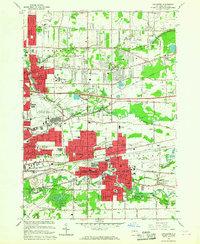 1965 Lancaster1967 Print · USGSErie County's eastern suburbs undergo rapid transformation in the mid-1960s as aviation and highways reshape the land. Researchers can trace family roots through numerous parish sites and cemeteries like the War of 1812 Cem and St Marys Cemetery.
 - 1967 Map of Buffalo
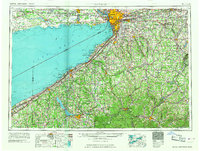 1967 Buffalo1967 Print · USGSWestern New York and the Lake Erie shoreline are shown here during the mid-1960s industrial peak. Researchers can trace the massive rail networks of the Erie Railroad, locate the Cattaraugus Indian Reservation, or find historic sites like Fort Erie.
 - 1973 Map of Buffalo
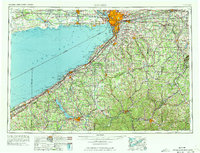 1973 Buffalo1973 Print · USGSWestern New York and Ontario's Golden Horseshoe meet in the early seventies, spanning from the industrial waterfronts of Buffalo to the hills of Allegany State Park. Trace the paths of the Welland Canal and Erie Lackawanna railroad through the lakefront towns of Dunkirk and Port Colborne.
 - 1980 Map of Clarence Center
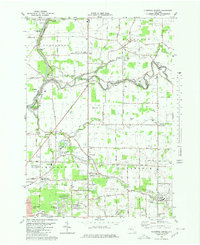 1980 Clarence Center1980 Print · USGSSuburban development meets rural Erie County during the early eighties as new residential tracts rise near established crossroads. Researchers can trace the Erie Canal near the Sulphur Springs Guard Lock or locate family roots at St Marys Cem and Clarence Center.
 - 1980 Map of Wolcottsville
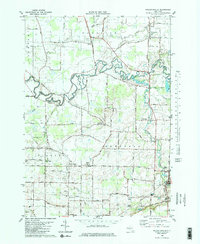 1980 Wolcottsville1980 Print · USGSThe rural borders of Erie and Niagara counties come alive in the late twentieth century as this survey follows the winding Tonawanda Creek. Trace the sites of Swifts Mills, Dancer Cem, and the old rail connections at Akron Junction.2 unique versions available
 - 1982 Map of Lancaster, 1983 Print
 1982 Lancaster1983 Print · USGSEastern Erie County in the early eighties shows a landscape of suburban growth and institutional heritage. Researchers can trace family sites near Lancaster Rural Cem, follow the Conrail rail lines, or locate the County Home and Infirmary.
Showing maps 1-25 of 47
Top cities near Clarence
- Buffalo historical maps
- Amherst historical maps
- Cheektowaga historical maps
- Tonawanda historical maps
- Hamburg historical maps
- West Seneca historical maps
See more
Top neighborhoods of Clarence
- Hunts Corners historical maps
- Millersport historical maps
- East Clarence historical maps
- East Amherst historical maps
- Wolcottsburg historical maps
- Harris Hill historical maps
See more
Frequently asked questions
- What are the different types of historical maps available for Clarence?
- What is the oldest map of Clarence?
- Where can I purchase historical maps of Clarence for my home or office?
- Where can I download high-res historical maps of Clarence?
- Are there historical topographic maps available for Clarence?
- Is there historical aerial imagery available for Clarence?
- Where are historical maps of Clarence sourced from?