Old Maps of Chateaugay, New York for Metal Detecting
Plan your next treasure hunt with 30 historic maps of Chateaugay. Find old homesites, ghost towns, trails, and gathering spots that may be lost to time — perfect for identifying promising metal detecting locations.
- Locate forgotten sites: Uncover places like long-lost settlements, abandoned rail lines, or gathering spots.
- Plan better hunts: Use map overlays combined with LiDAR or satellite views to narrow in on historically rich areas.
- Made for detectorists: Thousands of hobbyists use these maps to discover relics, coins, and hidden history.
Use these historic maps to boost your research and find new opportunities beneath the surface of Chateaugay.
Chateaugay, NY maps
(30)- 1915 Map of Chateaugay
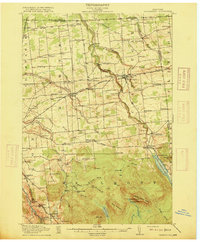 1915 Chateaugay1915 Print · USGSNorthern Franklin County appears here during the height of its rail-and-mill era, bordering the international boundary with Canada. Genealogists can trace family footprints through dozens of numbered schoolhouses, the White Church, and industrial sites like Cooks Mill or The Forge.4 unique versions available
 - 1943 Map of Chateaugay
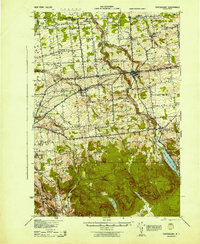 1943 Chateaugay1943 Print · USGSFranklin County sits at the international border during the early years of the war, showing a landscape of small dairy farms and rail-dependent hamlets. Researchers can trace the path of the Rutland Railroad through Chateaugay and find local landmarks like Cooks Mill and Brainardsville.
 - 1948 Map of Ogdensburg, 1973 Print
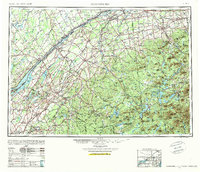 1948 Ogdensburg1973 Print · USGSThe international border along the St Lawrence River comes to life in the late 1940s, showing the vital rail and water connections between New York and Ontario. Researchers can trace the grounds of St Lawrence University, the massive Camp Drum military reservation, and the historic Rideau River and Canal.2 unique versions available
 - 1951 Map of Ogdensburg
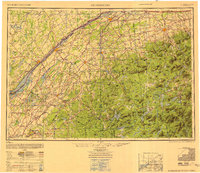 1951 Ogdensburg1951 Print · USGSThe St. Lawrence frontier and the North Country are captured here during the post-war era, from the river ports to the high Adirondacks. Genealogists and historians can trace the rail-and-river economy through Ogdensburg, the Rutland rail lines, and Potsdam.
 - 1953 Map of Ogdensburg
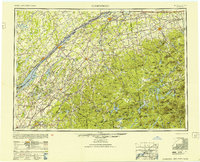 1953 Ogdensburg1953 Print · USGSThe North Country and St. Lawrence Valley are shown here in the early fifties, just as the region’s rail-and-river economy remained in full swing. Genealogists and historians can trace family-named corners and rural hubs along the Rutland railroad or locate heritage sites near Ogdensburg, Potsdam, and the St Regis Indian Reservation.
 - 1961 Map of Ogdensburg
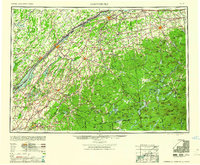 1961 Ogdensburg1961 Print · USGSThe St. Lawrence valley and the Adirondack high country meet in this early sixties survey during a peak era for rail and river commerce. Genealogists and historians can trace the paths of the New York Central railroad through remote settlements like Wanakena, Conifer, and Piercefield.
 - 1964 Map of Chateaugay, 1965 Print
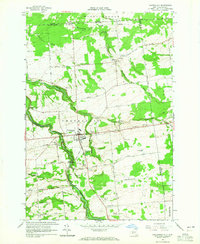 1964 Chateaugay1965 Print · USGSUpper New York State meets the Canadian border in the mid-1960s, a landscape defined by the Chateaugay River and its deep gorges. Genealogists can locate family-named roads and several burial sites including Evergreen Cem and Brayton Hollow Cem.3 unique versions available
 - 1964 Map of Burke, 1965 Print
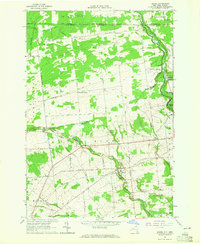 1964 Burke1965 Print · USGSNorthern Franklin County meets the Canadian border in the mid-1960s, showing a landscape of riverside villages and highland farms. Genealogists can trace family names across Burke Center, St George Ch, and cemeteries like Mitchell Cem.
 - 1964 Map of Brainardsville, 1966 Print
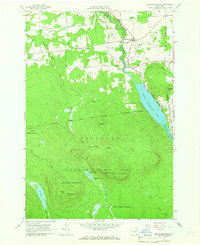 1964 Brainardsville1966 Print · USGSFranklin and Clinton counties meet here in the mid-sixties, where the northern Adirondack wilderness transitions into the Chateaugay River valley. Researchers can locate remote burial grounds like Bunker Hill Cem, industrial remnants at Blairs Kiln, and the shoreline of Lower Chateaugay Lake.2 unique versions available
 - 1977 Map of Chateaugay Port of Entry, 1978 Print
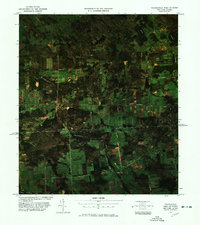 1977 Chateaugay Port of Entry1978 Print · USGSThe international border between New York and Quebec is shown here in the mid-1970s, revealing a landscape of remote farms and woodlots. Researchers can trace the Canada United States line between Earlville and Herdman, and locate the Chateaugay Port of Entry U S Customs and nearby Cem.
 - 1977 Map of Jamiesons Line Station, 1978 Print
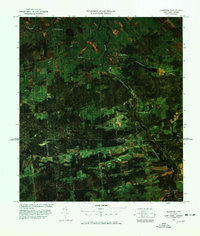 1977 Jamiesons Line Station1978 Print · USGSThe international border near Franklin, New York, is captured in the late seventies as a quiet landscape of cross-border hamlets and farms. Researchers can locate remote family landmarks like Cooks Mill, Sandy Knoll Cem, and the Jamieson Line Station U S Customs.
 - 1985 Map of Massena
 1985 Massena1985 Print · USGSNorthern New York at the mid-eighties shows a landscape of river-driven industry and high mountain wilderness along the Canadian border. Researchers can trace the legacy of iron working and milling in Brasher Iron Works or follow the Raquette River through Massena and Potsdam.
 - 1993 Map of Burke, 1995 Print
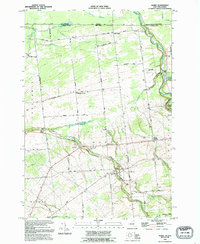 1993 Burke1995 Print · USGSIn the 1990s, the rural borderlands of northern New York maintained a quiet network of family farms and small hamlets along the Canadian line. Genealogists can trace family names through numerous burial grounds like St George Cem, Mitchell Cem, and Pike Cem.
 - 1993 Map of Chateaugay, 1995 Print
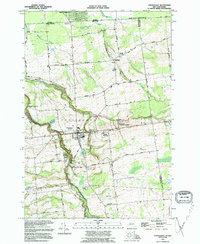 1993 Chateaugay1995 Print · USGSAlong the Canadian border in the early nineties, this northern New York frontier landscape centers on the river-carved Chateaugay Chasm. Researchers can locate several burial grounds like Brayton Hollow Cem and landmarks such as the CHATEAUGAY STATE FISH HATCHERY and St Patricks Ch.
 - 1994 Map of Massena
 1994 Massena1994 Print · USGSThe St. Lawrence River valley and northern Adirondacks meet in the mid-1990s, revealing a landscape of international shipping, rail corridors, and dense state forests. Genealogists and historians can trace the foundations of Massena, the St Regis Indian Reservation, and small hamlets like Brasher Iron Works.
 - 2010 Map of Brainardsville, 2010 Print
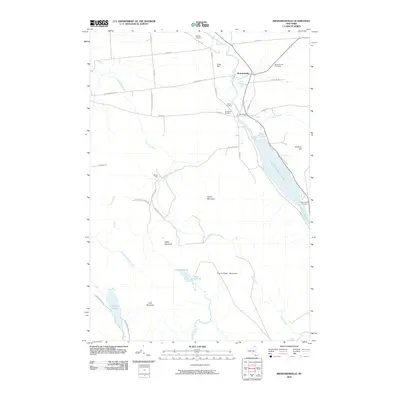 2010 Brainardsville2010 Print · USGSUpper New York state at the edge of the wilderness is mapped here in detail during the early twenty-first century. Genealogists and historians can locate numerous burial grounds like Bigelow Cemetery and trace industrial remnants at Blairs Kiln.
 - 2010 Map of Chateaugay, 2010 Print
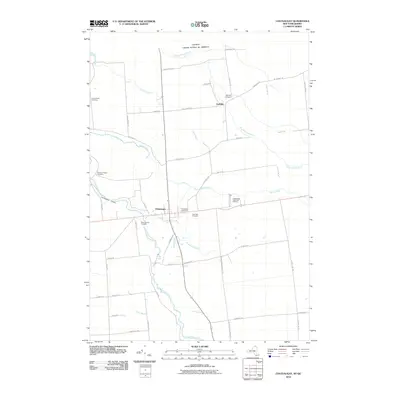 2010 Chateaugay2010 Print · USGSThe northern New York borderlands near the Canadian line appear here in the early twenty-first century, centered on the river-cut landscape of the Chateaugay area. Researchers can trace historic family burial sites at Saint Patricks Cemetery and Brayton Hollow Cemetery or locate the Chateaugay State Fish Hatchery along the Marble River.
 - 2011 Map of Burke, 2011 Print
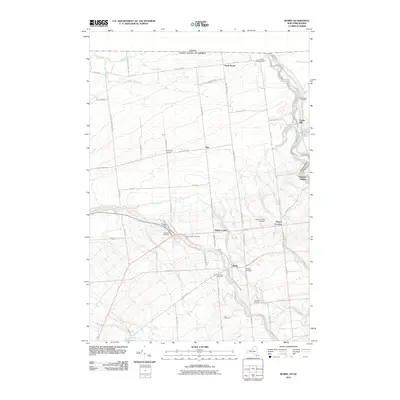 2011 Burke2011 Print · USGSNorthern New York at the start of the 2010s is a landscape of rural hamlets and family histories along the international border. Genealogists can trace deep local roots through a network of burial sites like Sandy Knoll Cemetery and Mitchell Cemetery, or locate the historic settlement at Cooks Mill.
 - 2013 Map of Brainardsville, 2013 Print
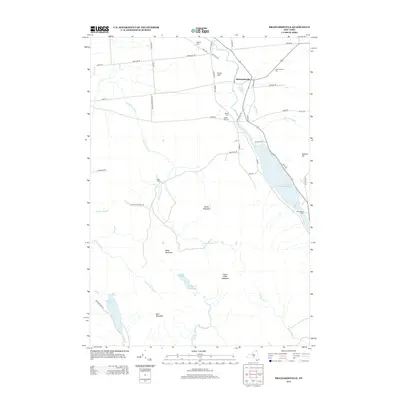 2013 Brainardsville2013 Print · USGSUpper Clinton County in the early twenty-first century remains a landscape of high peaks and river valleys shaped by early industry. Trace genealogy and local history through Blairs Kiln, the Brainardsville Cem, and the shores of Lower Chateaugay Lake.
 - 2013 Map of Burke, 2013 Print
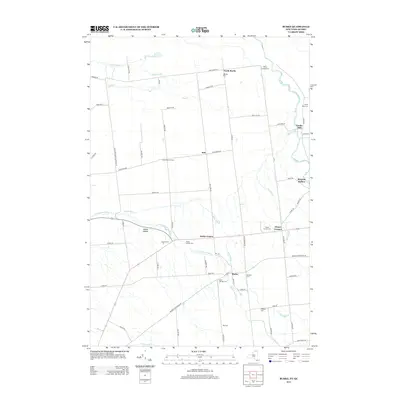 2013 Burke2013 Print · USGSFranklin County's northern agricultural landscape is captured here in the early twenty-first century, showing the enduring settlement patterns of the region. Genealogists and local historians can trace family-named sites like Cooks Mill, Coveytown Corners, and Howard Cem.
 - 2013 Map of Chateaugay, 2013 Print
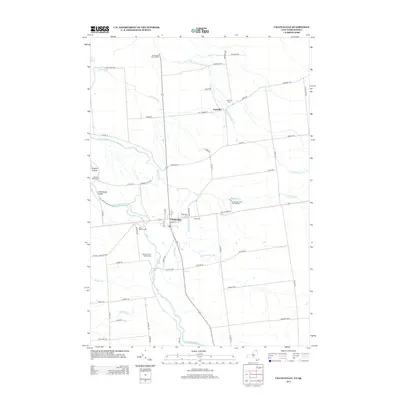 2013 Chateaugay2013 Print · USGSThe northern New York borderlands near the village of Chateaugay come to life in this detailed 2013 survey. Genealogists and local historians can trace family roots through several local burial grounds like Saint Patricks Cem and Earlville Cem, or explore landmarks like Chateaugay Chasm.
 - 2016 Map of Brainardsville, 2016 Print
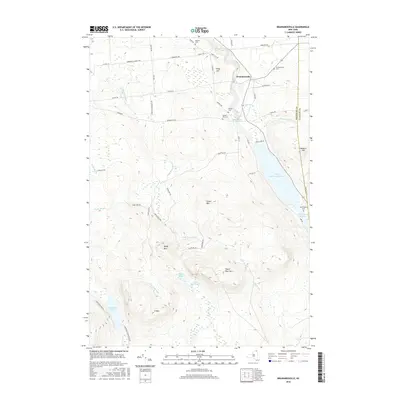 2016 Brainardsville2016 Print · USGSThe northern Adirondack foothills come alive in this survey of the Brainardsville area during the mid-2010s. Genealogists can trace family names through several rural burying grounds like Merrill Cem and find historical markers such as Snow Schoolhouse Rd.
 - 2016 Map of Burke, 2016 Print
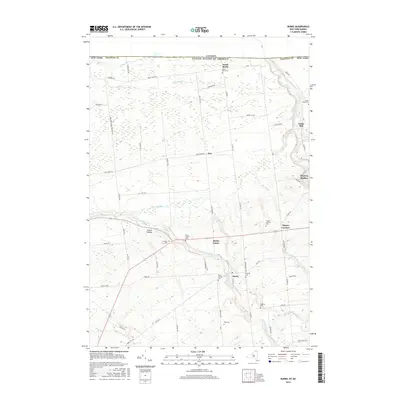 2016 Burke2016 Print · USGSThis rural Franklin County landscape near the Canadian border shows a late-century snapshot of a historic farming and milling region. Researchers can trace local lineage through numerous burial grounds like Saint George Cem or locate the site of Cooks Mill.
 - 2016 Map of Chateaugay, 2016 Print
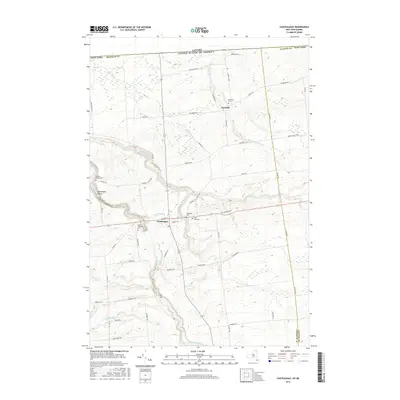 2016 Chateaugay2016 Print · USGSThe village of Chateaugay and the Canadian border define this North Country landscape in the early twenty-first century. Researchers can trace family history through several local burial grounds like Evergreen Cem and follow the river to Chateaugay Chasm and High Falls.
 - 2019 Map of Chateaugay, 2019 Print
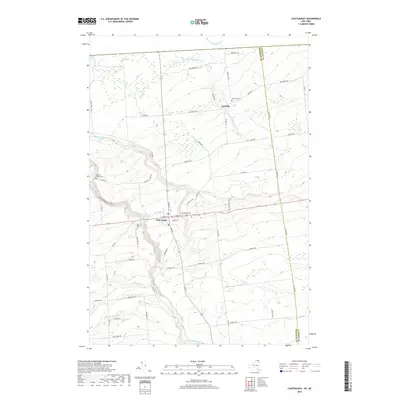 2019 Chateaugay2019 Print · USGSThe northern New York borderlands are detailed here in the late twenty-tens, showing the deeply incised valleys of the Chateaugay River. Local historians can trace family roots at Saint Patricks Cem or explore the geography of Chateaugay Chasm and Earlville.
Showing maps 1-25 of 30
Top cities near Chateaugay
- Malone historical maps
- Malone historical maps
- Dannemora historical maps
- Saranac historical maps
- Ellenburg historical maps
- Constable historical maps
See more
Top neighborhoods of Chateaugay
- Earlville historical maps
- Brayton Hollow historical maps
- Cooks Mill historical maps
- Chateaugay historical maps
Frequently asked questions
- What are the different types of historical maps available for Chateaugay?
- What is the oldest map of Chateaugay?
- Where can I purchase historical maps of Chateaugay for my home or office?
- Where can I download high-res historical maps of Chateaugay?
- Are there historical topographic maps available for Chateaugay?
- Is there historical aerial imagery available for Chateaugay?
- Where are historical maps of Chateaugay sourced from?