Old Maps of McDowell County, North Carolina for Hiking & Exploration
Hike through history with 131 historic maps of McDowell County. Explore old trails, ghost towns, and forgotten backroads — perfect for outdoor adventurers and local explorers.
- Rediscover forgotten places: Map out old mining camps, roads, and footpaths that no longer exist on modern maps.
- Layer with modern tools: Combine with LiDAR or satellite views to plan hikes through historical terrain.
- Made for exploration: Popular among hikers, overlanders, and local history lovers.
Use these maps to find adventure and explore the hidden past of McDowell County.
McDowell County, NC maps
(131)- 1900 Map of Mount Mitchell, 1963 Print
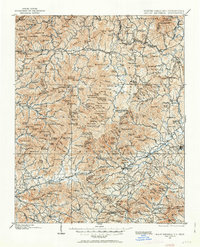 1900 Mount Mitchell1963 Print · USGSWestern North Carolina at the turn of the century shows a landscape of high peaks and isolated river settlements before the arrival of modern highways. Genealogists and mountain historians can trace early homesteads along the Cane River or follow the Southern RR through Old Fort and Black Mountain.3 unique versions available
 - 1902 Map of Mount Mitchell, 1937 Print
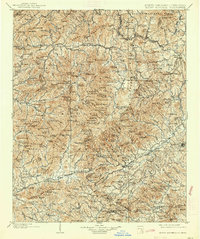 1902 Mount Mitchell1937 Print · USGSThe high peaks of Western North Carolina are captured here at the start of the twentieth century, showing the rail and river corridors that shaped the region. Trace early settlements like Burnsville, Montreat, and the winding Southern Railway.3 unique versions available
 - 1905 Map of Morganton, 1941 Print
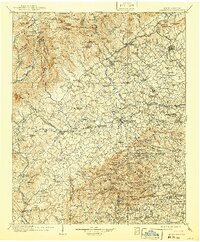 1905 Morganton1941 Print · USGSThe foothills and high peaks of the Blue Ridge come alive in the early twentieth century, centered on the growing towns of Morganton and Lenoir. Genealogists and historians can trace the early rail corridor of the Southern Railway and locate vanished landmarks like Arneys Store and Rutherford College.2 unique versions available
 - 1934 Map of Spruce Pine
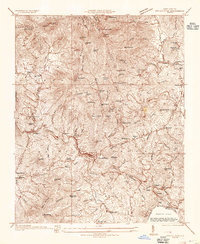 1934 Spruce Pine1934 Print · USGSMitchell County industrial and mountain life are captured in the mid-1930s as the local mining economy thrived. Genealogists and historians can trace families near Spruce Pine, locate the Prison Camp, and identify remote sites like Wolfden Mine and Hunter Chapel.
 - 1934 Map of Parts Of Celo And Black Brothers
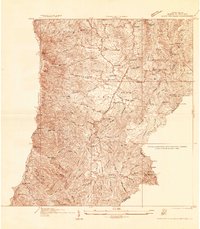 1934 Parts Of Celo And Black Brothers1934 Print · USGSYancey County's high-country settlements and forest boundaries are meticulously detailed in this mid-1930s survey. Researchers can locate community hubs like Harvard Sch and Edges Store or trace the steep terrain of Mt Mitchell.
 - 1934 Map of Parts Of Old Fort and Montreat
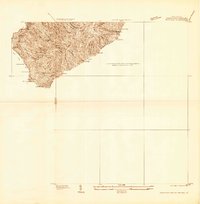 1934 Parts Of Old Fort and Montreat1934 Print · USGSThe Black Mountains reached a turning point in the mid-1930s as state and national parklands began to formalize. You can trace the early Blue Ridge Parkway, find the remote Loftis Cabin, and locate the Green Knob Fire Tower.
 - 1934 Map of Linville Falls
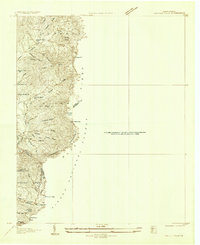 1934 Linville Falls1934 Print · USGSAvery County mountain life in the mid-thirties centered on the North Toe River and its rugged ridges. Genealogists can locate family landmarks like Walnut Grove Ch, Brushy Creek Sch, and the Hemphill Mine near the crossing at Heffner Gap.
 - 1935 Map of Montreat
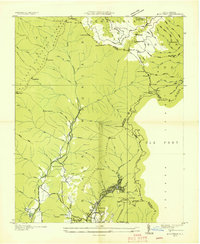 1935 Montreat1935 Print · USGSMontreat and the surrounding Black Mountains are shown here in the mid-1930s, documenting the area's religious centers and early park development. Genealogists and hikers can trace the Toll Road up to Clingmans Peak or locate old community landmarks like Brookside Sch and Homers Chapel.
 - 1935 Map of Black Mountain
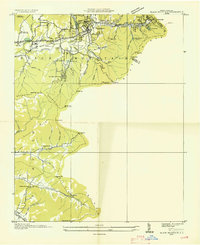 1935 Black Mountain1935 Print · USGSBuncombe County in the mid-1930s reveals a landscape shaped by mountain transit and social institutions. Genealogists can locate family landmarks like Tabernacle Ch, Pleasant Grove Sch, and the remote Mountain Orphanage along the rail-and-river corridor.
 - 1941 Map of Black Mountain, 1957 Print
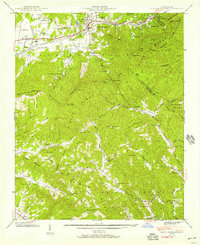 1941 Black Mountain1957 Print · USGSThe Swannanoa Valley and the Blue Ridge crest come alive in this early 1940s survey. Genealogists can trace the institutional history of the State Hospital or locate family landmarks like Tabernacle Ch and Curteys Chapel.6 unique versions available
 - 1942 Map of Montreat, 1957 Print
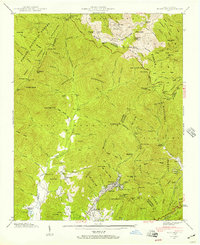 1942 Montreat1957 Print · USGSThe high peaks of Buncombe County are captured in the early 1940s, showing the settled valleys of Montreat and Walkertown before postwar development. Genealogists and historians can trace local landmarks like Mtn View Cem, find family-named points like Allen Mtn, and locate the Southern Railway route through Jarrett Tunnel.5 unique versions available
 - 1943 Map of Black Mountain
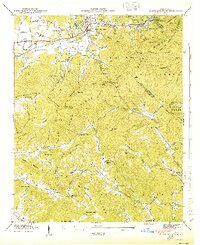 1943 Black Mountain1943 Print · USGSThe Black Mountain area in the early 1940s served as a critical hub for mountain institutions, from religious retreats to state health facilities. Researchers can trace the path of the Southern Railway through the Swannanoa Gap or locate family-named landmarks like Isinglass Ridge and Garren Mountain.
 - 1943 Map of Montreat
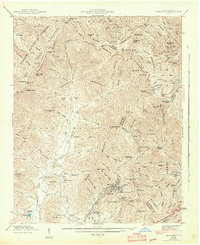 1943 Montreat1943 Print · USGSBuncombe County's mountain coves and the Blue Ridge Parkway are detailed here during the mid-1940s. Researchers can trace the early grounds of Black Mtn College, locate families near Walkertown, or find industrial sites like the Graphite mine.2 unique versions available
 - 1953 Map of Charlotte, 1968 Print
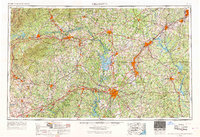 1953 Charlotte1968 Print · USGSThe North Carolina Piedmont and South Carolina borderlands are shown in detail during a period of significant growth and reservoir development. Trace the rail corridors of the Southern Railway or find family roots in towns like China Grove, Misenheimer, and Lincolnton.3 unique versions available
 - 1954 Map of Charlotte
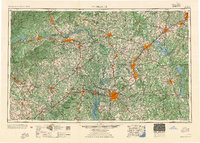 1954 Charlotte1954 Print · USGSThe North Carolina Piedmont in the mid-1950s shows a region of rapid growth and industrial expansion centered around Charlotte. Trace the era's infrastructure through the Southern railroad lines and locate significant landmarks like the Charlotte Naval Ammunition Depot and Lake Norman.2 unique versions available
 - 1955 Map of Knoxville
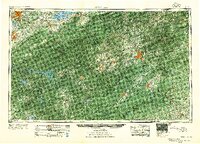 1955 Knoxville1955 Print · USGSThe Southern Appalachians and the Smoky Mountains are shown here at a peak of mid-century development and conservation. Genealogists and historians can trace the early road networks connecting Gatlinburg, Waynesville, and the Cherokee Indian Reservation across the high ridges.
 - 1956 Map of Ashford, 1958 Print
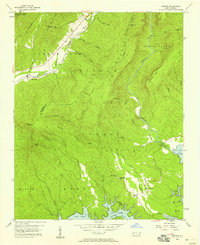 1956 Ashford1958 Print · USGSThe Linville Gorge and Pisgah National Forest meet in the mid-1950s as the river valleys transition to mountain wilderness. Trace family roots at South Mtn Institute, Brown Cem, or the old settlement of North Cove.3 unique versions available
 - 1956 Map of Linville Falls, 1958 Print
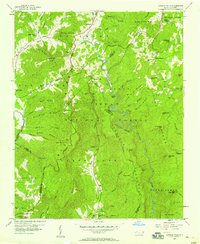 1956 Linville Falls1958 Print · USGSThe High Country of western North Carolina in the mid-fifties is captured here during the development of the Blue Ridge Parkway. Genealogists and hikers can locate Wise Cem, Walnut Grove Ch, and the subterranean depths of Linville Caverns.4 unique versions available
 - 1956 Map of Linville Falls, 1962 Print
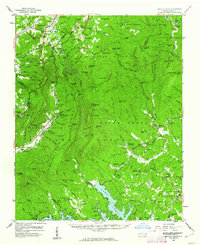 1956 Linville Falls1962 Print · USGSThe North Carolina high country is captured here during the mid-fifties, centered on the steep descent of the Linville River. Genealogists and hikers can trace old mountain communities and landmarks like the South Mtn Institute, Linville Caverns, and Wise Cem.2 unique versions available
 - 1957 Map of Knoxville, 1966 Print
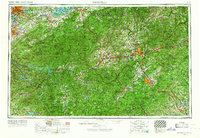 1957 Knoxville1966 Print · USGSThe Southern Appalachians of Tennessee and North Carolina are mapped here during the mid-twentieth century as new highways reached the high country. Genealogists and historians can trace the topography between Knoxville and Asheville, locating family landmarks near Fontana Lake or along the Blue Ridge Parkway.4 unique versions available
 - 1960 Map of Knoxville
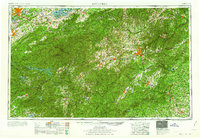 1960 Knoxville1960 Print · USGSThe Southern Appalachians come alive in the 1950s, showing the intersection of new national park tourism and deep-rooted mountain industry. Trace old rail lines like the Clinchfield RR and find high-altitude landmarks from Mt Le Conte to the Cherokee Indian Reservation.2 unique versions available
 - 1960 Map of Charlotte
 1960 Charlotte1960 Print · USGSMid-century North Carolina and South Carolina meet in this 1960 survey of the Piedmont's industrial and textile heartland. Trace the growth of Charlotte alongside historic landmarks like Kings Mountain National Military Park and the Charlotte Naval Ammunition Depot.2 unique versions available
 - 1960 Map of Celo, 1962 Print
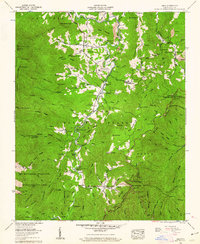 1960 Celo1962 Print · USGSYancey County's high-mountain terrain and river valley settlements are documented here in the early sixties. Genealogists and local historians can trace family locations through numerous sites like Robinson Cem, Estatoe Ch, and the South Toe River Sch.4 unique versions available
 - 1960 Map of Spruce Pine, 1962 Print
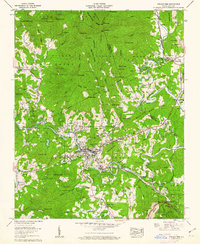 1960 Spruce Pine1962 Print · USGSSpruce Pine and the Toe River valley were bustling with mountain industry and rail transport in the early sixties. Genealogists and historians can trace family names and old landmarks across the Pisgah National Forest, including Altapass, the Clinchfield RR, and the Chestnut Flats Mine.5 unique versions available
 - 1960 Map of Little Switzerland, 1962 Print
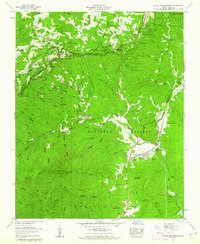 1960 Little Switzerland1962 Print · USGSThe Blue Ridge high country is captured here during the mid-century, defined by the winding parkway and the heavy engineering of the Clinchfield railroad. Local historians can trace a dozen mountain tunnels and visit remote landmarks like the Woods Mountain Lookout Tower and Collis Cem.5 unique versions available
Showing maps 1-25 of 131
Top cities of McDowell County
Frequently asked questions
- What are the different types of historical maps available for McDowell County?
- What is the oldest map of McDowell County?
- Where can I purchase historical maps of McDowell County for my home or office?
- Where can I download high-res historical maps of McDowell County?
- Are there historical topographic maps available for McDowell County?
- Is there historical aerial imagery available for McDowell County?
- Where are historical maps of McDowell County sourced from?