1950s Maps of St. Michael District, North Dakota
Explore 12 historic maps of St. Michael District from the 1950s. These maps offer a rare glimpse into what life looked like during the 1950s — showing old roads, neighborhoods, homes, and landmarks that have changed or disappeared over time.
Whether you're researching your family's past, planning a metal detecting trip, or studying how St. Michael District's landscape evolved across the 1950s, these high-resolution maps are a powerful tool for exploring the history of this region.
- Focus on a specific era: All maps on this page are from the 1950s, giving you a focused view of this time period.
- See what’s changed: Compare century-old streets, trails, and buildings to today's modern landscape using overlays and satellite layers.
- Research with precision: Use these maps for genealogy, historical research, land use analysis, or educational projects.
- View, download, or print: Maps are fully viewable online in high resolution, and can be downloaded or printed for your own records.
Start exploring St. Michael District's history through authentic maps from the 1950s. This is your window into the past.
St. Michael District, ND maps
(12)- 1950 Map of Tokio, 1952 Print
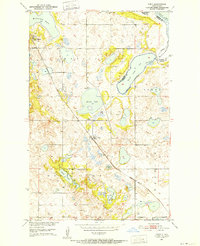 1950 Tokio1952 Print · USGSBenson County at the start of the 1950s was a landscape defined by the shifting waters of the Devils Lake basin and the lifeline of the railroad. Researchers can trace the mid-century footprints of Saint Michael and Tokio, or find local landmarks like Wood Lake Ch and Devils Heart Butte.
 - 1950 Map of Devils Lake, 1959 Print
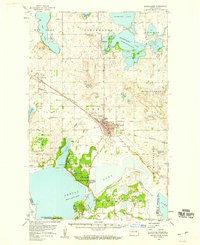 1950 Devils Lake1959 Print · USGSDevils Lake and the surrounding North Dakota prairies are captured mid-century, showing a landscape shaped by rail lines and regional institutions. Genealogists can locate several schools and cemeteries, including the Grand Harbor Cem, Grove Sch, and the military grounds at Camp Grafton.2 unique versions available
 - 1951 Map of Crary
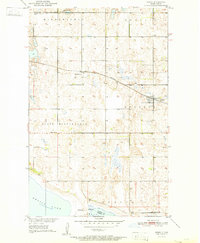 1951 Crary1951 Print · USGSRamsey County's prairie landscape was still a patchwork of small school districts and family farms in the mid-twentieth century. Trace local genealogy and rail history through the Great Northern tracks, Crary Cem, and rural landmarks like School No 1.
 - 1951 Map of Devils Lake
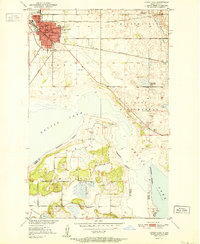 1951 Devils Lake1951 Print · USGSDevils Lake in the early fifties shows a thriving regional center defined by its institutions and the rail lines of the Great Northern. Researchers can trace the footprints of the Odd Fellows Home, St Marys Academy, and several rural sites like School No 1.2 unique versions available
 - 1951 Map of Camp Grafton
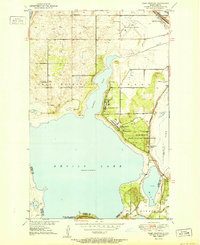 1951 Camp Grafton1951 Print · USGSDevils Lake at the mid-century reveals a landscape of military training and conservation efforts on the shores of Ramsey and Benson counties. Researchers can trace the Great Northern rail line past Fort Totten Station and find local landmarks like Grove Sch and Camp Grafton.2 unique versions available
 - 1951 Map of Free Peoples Lake
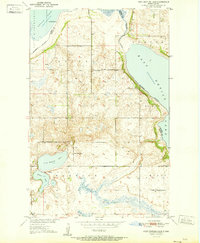 1951 Free Peoples Lake1951 Print · USGSBenson and Ramsey Counties show their mid-century rural character before shifting water levels altered the landscape. Genealogists and local historians can trace specific district boundaries and find the locations of early rural landmarks like Free Peoples School, School No 8, and Free Peoples Lake.2 unique versions available
 - 1951 Map of Fort Totten, 1953 Print
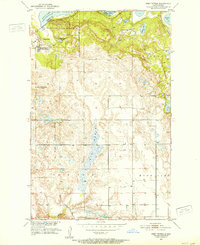 1951 Fort Totten1953 Print · USGSBenson and Ramsey Counties were undergoing significant transitions in the early fifties along the shores of Devils Lake. Genealogists and local historians can locate the Fort Totten Indian Agency, the Great Northern rail line, and rural landmarks like Lone Tree Sch No 1.2 unique versions available
 - 1951 Map of Tokio, 1959 Print
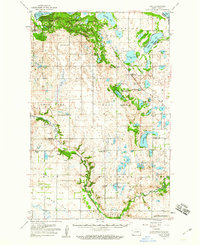 1951 Tokio1959 Print · USGSBenson County in the early 1950s is a landscape defined by the intersection of military history, tribal lands, and glacial lakes. Genealogists and historians can trace old routes like the Old Indian Military Road or locate family sites near Tokio, Saint Michael, and Wood Lake Ch.
 - 1952 Map of New Rockford, 1968 Print
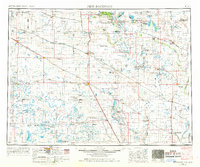 1952 New Rockford1968 Print · USGSThe North Dakota prairie during the mid-1950s was a landscape of rail-dependent farm towns and vast wildlife refuges. Genealogists and historians can trace the foundations of local communities at Fort Totten Indian Agenc, Concordia Lutheran Church, and the Bowdon Country Church and Cemetery.3 unique versions available
 - 1953 Map of Devils Lake, 1968 Print
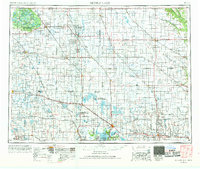 1953 Devils Lake1968 Print · USGSNorth Dakota's northern plains are captured here in the mid-fifties, showing a landscape of rail-fed grain elevators and prairie wetlands. Genealogists can locate family landmarks like Rose Hill School, Hurricane Lake Church, and the Turtle Mountain Indian Reservation.3 unique versions available
 - 1956 Map of New Rockford
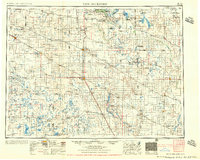 1956 New Rockford1956 Print · USGSMid-century central North Dakota is captured here as a landscape of prairie rail towns and vast wildlife refuges. Trace family roots at the Bowdon Country Church and Cemetery or locate the old St Michael Mission School and Fort Totten.
 - 1956 Map of Devils Lake
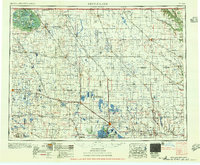 1956 Devils Lake1956 Print · USGSNorthern North Dakota is shown at a mid-century peak of rail-driven agriculture, where the Soo Line and Great Northern railroads cross the prairie. Trace the borders of the Turtle Mountain Indian Reservation and locate local landmarks like Rose Hill School or Camp Grafton.
End of results
Showing maps 1-12 of 12
Top cities near St. Michael District
Top neighborhoods of St. Michael District
Frequently asked questions
- What are the different types of historical maps available for St. Michael District?
- What is the oldest map of St. Michael District?
- Where can I purchase historical maps of St. Michael District for my home or office?
- Where can I download high-res historical maps of St. Michael District?
- Are there historical topographic maps available for St. Michael District?
- Is there historical aerial imagery available for St. Michael District?
- Where are historical maps of St. Michael District sourced from?