1950s Maps of Cass County, North Dakota
Explore 12 historic maps of Cass County from the 1950s. These maps offer a rare glimpse into what life looked like during the 1950s — showing old roads, neighborhoods, homes, and landmarks that have changed or disappeared over time.
Whether you're researching your family's past, planning a metal detecting trip, or studying how Cass County's landscape evolved across the 1950s, these high-resolution maps are a powerful tool for exploring the history of this region.
- Focus on a specific era: All maps on this page are from the 1950s, giving you a focused view of this time period.
- See what’s changed: Compare century-old streets, trails, and buildings to today's modern landscape using overlays and satellite layers.
- Research with precision: Use these maps for genealogy, historical research, land use analysis, or educational projects.
- View, download, or print: Maps are fully viewable online in high resolution, and can be downloaded or printed for your own records.
Start exploring Cass County's history through authentic maps from the 1950s. This is your window into the past.
Cass County, ND maps
(12)- 1952 Map of Grand Forks, 1967 Print
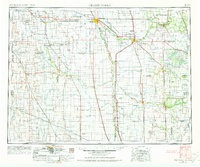 1952 Grand Forks1967 Print · USGSThe Red River Valley in the early fifties is shown here at the height of its rail-and-river agricultural economy. Researchers can locate small-town landmarks like the Pleasant View School, the Immanuel Lutheran Church, and trace the path of the Soo Line Railroad.3 unique versions available
 - 1953 Map of Fargo, 1965 Print
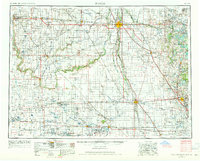 1953 Fargo1965 Print · USGSThe Red River Valley in the mid-fifties was a bustling rail and agricultural corridor during a period of steady prairie growth. Genealogists and historians can trace the intricate rail networks of the Great Northern and Soo Line connecting local hubs like Casselton and Wahpeton.2 unique versions available
 - 1956 Map of Fargo
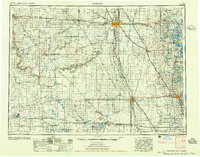 1956 Fargo1956 Print · USGSThe Red River Valley's agricultural heartland is documented here in the mid-fifties as the rail-and-road network expanded across the plains. Genealogists can trace family roots through numerous small railroad towns and local landmarks like Casselton, Sheyenne Valley Church, and Sisseton Indian Res.
 - 1956 Map of Grand Forks
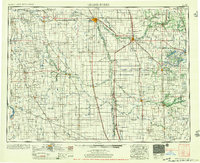 1956 Grand Forks1956 Print · USGSThe Red River Valley in the mid-fifties is captured here as a thriving corridor of grain elevators and rail-linked towns along the North Dakota and Minnesota border. Researchers can trace historic church sites like Immanuel Lutheran Church, vanished rail stops at Tilde Junction, and the boundaries of the White Earth Indian Reservation.
 - 1959 Map of Kindred
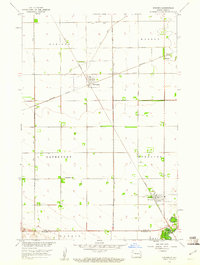 1959 Kindred1959 Print · USGSEastern North Dakota's fertile prairie is captured here in the late fifties, showcasing the vital rail intersections of the Red River Valley. Genealogists and local historians can trace the foundations of Davenport and Kindred, as well as rural sites like Christiania Ch and the German Cem.
 - 1959 Map of Leonard, 1960 Print
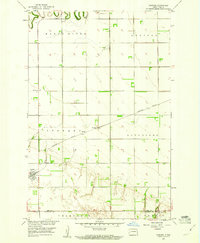 1959 Leonard1960 Print · USGSEastern North Dakota's prairie townships are captured here in the late fifties as the Northern Pacific railroad still defined the local economy. Genealogists and researchers can locate family landmarks such as Bethel Ch, West Prairie Ch, and the brick-industry footprints at the Claypit.
 - 1959 Map of Fargo North, 1960 Print
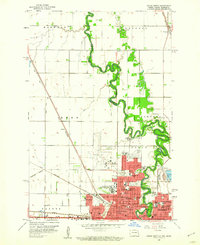 1959 Fargo North1960 Print · USGSThe Red River valley in the late fifties shows the post-war expansion of Fargo and Moorhead along their shared river border. Genealogists can locate family sites near Riverside Cem or trace the early campus of the North Dakota Agriculture College.4 unique versions available
 - 1959 Map of South West Fargo, 1960 Print
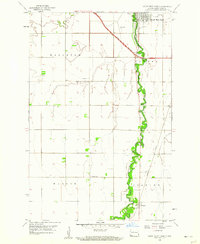 1959 South West Fargo1960 Print · USGSCass County agriculture and the serpentine Sheyenne River define this area just before the interstate era transformed the outskirts of Fargo. Genealogists can locate St Johns Ch and rural burials at Horace Cem and Brink Cem.3 unique versions available
 - 1959 Map of Fargo South, 1960 Print
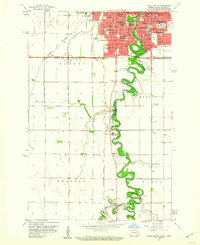 1959 Fargo South1960 Print · USGSFargo and Moorhead appear at a pivotal moment of mid-century growth as the Red River of the North defines the state line. Genealogists and local historians can locate early institutions like Concordia College, Sacred Heart Convent, and Riverside Cemetery.4 unique versions available
 - 1959 Map of Hickson, 1960 Print
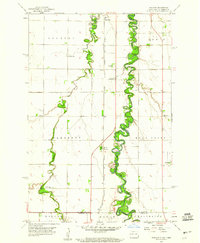 1959 Hickson1960 Print · USGSThe Red River Valley's rich agricultural borderlands are captured here in the late fifties, showcasing the intricate meanders of the Red River of the North. Genealogists can locate rural landmarks like St Benedict, Hickson, and the North Pleasant Cem.3 unique versions available
 - 1959 Map of West Fargo, 1960 Print
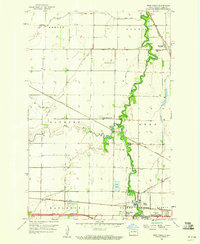 1959 West Fargo1960 Print · USGSThe Red River Valley's agricultural and rail heartland is captured during a period of growth near West Fargo and South West Fargo. Genealogists and historians can trace local landmarks like Maple-Sheyenne Ch and the Oak Wood Cem.3 unique versions available
 - 1959 Map of Norman, 1960 Print
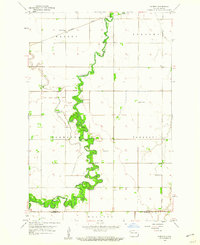 1959 Norman1960 Print · USGSSoutheastern North Dakota's agricultural heartland is documented here in the late fifties, dominated by the winding path of the Sheyenne River. Genealogists and historians can locate rural landmarks like Norman Cem and several numbered schoolhouses.2 unique versions available
End of results
Showing maps 1-12 of 12
Top cities of Cass County
- Fargo historical maps
- West Fargo historical maps
- Casselton historical maps
- Horace historical maps
- Harwood historical maps
- Mapleton historical maps
See more
Frequently asked questions
- What are the different types of historical maps available for Cass County?
- What is the oldest map of Cass County?
- Where can I purchase historical maps of Cass County for my home or office?
- Where can I download high-res historical maps of Cass County?
- Are there historical topographic maps available for Cass County?
- Is there historical aerial imagery available for Cass County?
- Where are historical maps of Cass County sourced from?