Old Maps of Richland County, North Dakota for Metal Detecting
Plan your next treasure hunt with 298 historic maps of Richland County. Find old homesites, ghost towns, trails, and gathering spots that may be lost to time — perfect for identifying promising metal detecting locations.
- Locate forgotten sites: Uncover places like long-lost settlements, abandoned rail lines, or gathering spots.
- Plan better hunts: Use map overlays combined with LiDAR or satellite views to narrow in on historically rich areas.
- Made for detectorists: Thousands of hobbyists use these maps to discover relics, coins, and hidden history.
Use these historic maps to boost your research and find new opportunities beneath the surface of Richland County.
Richland County, ND maps
(298)- 1895 Map of Fargo, 1954 Print
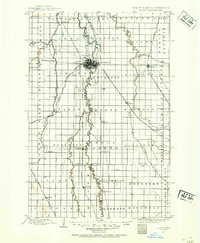 1895 Fargo1954 Print · USGSThe Red River Valley thrived as a rail and agricultural frontier during the 1890s, where North Dakota and Minnesota meet. Genealogists can trace family roots through pioneer settlements and rail stops like Kurtz (Elmer Sta.), Wild Rice, and Christine.3 unique versions available
 - 1895 Map of Casselton, 1961 Print
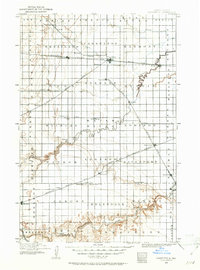 1895 Casselton1961 Print · USGSNorth Dakota's Red River Valley rail network is in full bloom in the 1890s, with towns emerging at every major junction. Trace early post offices and depots at Chaffee P.O., Embden, and Ripon along the Northern Pacific R. R.
 - 1897 Map of Fargo
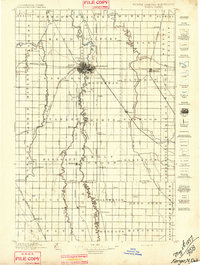 1897 Fargo1897 Print · USGSThe Red River Valley at the close of the nineteenth century was a bustling intersection of rail lines and river commerce. Genealogists and historians can trace the early footprints of Fargo and Moorhead, or find smaller depots like Kurtz (Elmer Sta.) and Wild Rice.12 unique versions available
 - 1897 Map of Casselton
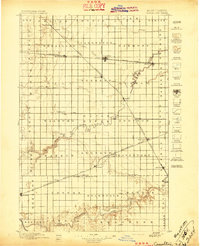 1897 Casselton1897 Print · USGSCass County’s agricultural heartland is captured here in the 1890s, when new rail lines were defining the North Dakota prairie. Genealogists can trace family locations near early hubs like Casselton, the Chaffee P.O. settlement, and the banks of the Maple River.3 unique versions available
 - 1904 Map of Wahpeton
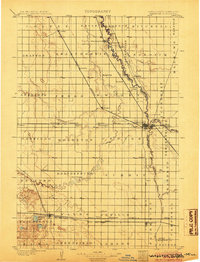 1904 Wahpeton1904 Print · USGSThe Red River Valley at the start of the century was a landscape of burgeoning rail towns and river commerce along the Minnesota border. Genealogists can trace early homesteads and transport hubs between Wahpeton and Breckenridge, or follow the rail lines through Hankinson and Abercrombie.2 unique versions available
 - 1907 Map of Wyndmere
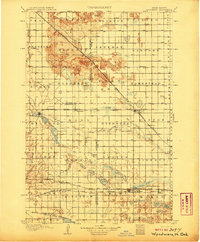 1907 Wyndmere1907 Print · USGSRichland and Sargent counties are seen here in the early 1900s during the height of the prairie railroad boom. Genealogists and historians can trace the paths of five different rail lines serving early towns like Milnor, Wyndmere, and Sandoun Mc Leod P O.2 unique versions available
 - 1915 Map of White Rock, 1954 Print
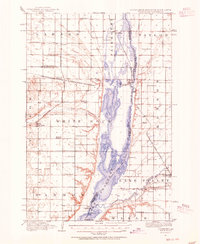 1915 White Rock1954 Print · USGSThe tri-state border region of the Dakotas and Minnesota comes alive in the early twentieth century as a hub of rail lines and prairie schools. Trace early settlements like White Rock and Rosholt or locate family landmarks such as Knutson School and Teare School.2 unique versions available
 - 1917 Map of New Effington
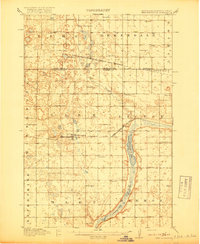 1917 New Effington1917 Print · USGSThe Dakota borderlands come alive in this survey from the mid-1910s, capturing the early rail-and-reservation era. Genealogists can locate family-named landmarks like Shafts School and Wymen School along the Minneapolis St Paul and Sault Ste Marie line.2 unique versions available
 - 1918 Map of White Rock
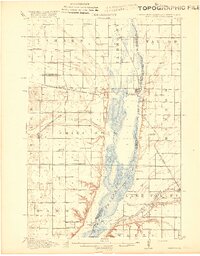 1918 White Rock1918 Print · USGSThe tri-state borderlands of South Dakota, Minnesota, and North Dakota are frozen in time just before the end of the Great War. Researchers can trace the Sisseton and Wahpeton Indian Reservation boundary or locate early schools like Teare School and Knutson School.4 unique versions available
 - 1953 Map of Milbank, 1958 Print
 1953 Milbank1958 Print · USGSThe tri-state border region of South Dakota, North Dakota, and Minnesota is shown here during the early fifties, a landscape defined by glacial lakes and the Sisseton Indian Reservation. Researchers can trace the legacy of the western railroads, locating old stops along the Great Northern and settlements like Milbank, Webster, and Sisseton.3 unique versions available
 - 1953 Map of Fargo, 1965 Print
 1953 Fargo1965 Print · USGSThe Red River Valley in the mid-fifties was a bustling rail and agricultural corridor during a period of steady prairie growth. Genealogists and historians can trace the intricate rail networks of the Great Northern and Soo Line connecting local hubs like Casselton and Wahpeton.2 unique versions available
 - 1956 Map of Fargo
 1956 Fargo1956 Print · USGSThe Red River Valley's agricultural heartland is documented here in the mid-fifties as the rail-and-road network expanded across the plains. Genealogists can trace family roots through numerous small railroad towns and local landmarks like Casselton, Sheyenne Valley Church, and Sisseton Indian Res.
 - 1958 Map of Milbank
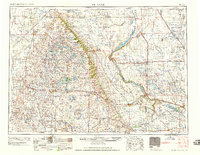 1958 Milbank1958 Print · USGSThe northern Great Plains in the late fifties show a landscape of glacial lakes and reservation lands shaped by the Great Northern railroad. Genealogists and local historians can trace the grid of settlements from Britton to Milbank and locate landmarks like Enemy Swim Lake and the Sisseton Indian Reservation.
 - 1958 Map of Veblen NE, 1959 Print
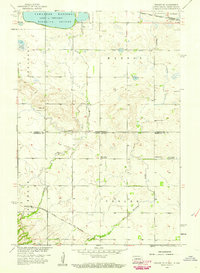 1958 Veblen NE1959 Print · USGSThe Dakota borderlands come alive in this late-fifties survey of a landscape shaped by glacial waters and iron rails. Genealogists can locate rural landmarks like Palestina Ch and Bergen Cem or trace the Minneapolis St Paul and Sault Ste Marie line.3 unique versions available
 - 1958 Map of Hamlin, 1960 Print
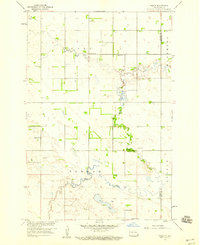 1958 Hamlin1960 Print · USGSSargent County prairie life in the late fifties is centered on the winding Wild Rice River and the small hub of Hamlin. Local historians can trace early community structures like Immanuel Ch and several rural schoolhouses such as School No 1.2 unique versions available
 - 1958 Map of Geneseo, 1960 Print
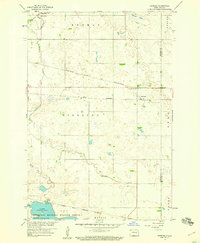 1958 Geneseo1960 Print · USGSSargent County prairie life in the late fifties centered on the rail junction at Geneseo and the winding Wild Rice River. Genealogists and local historians can trace the Sisseton Indian Reservation Boundary and locate St Martin Cem or the rural School No 3.
 - 1959 Map of Kindred
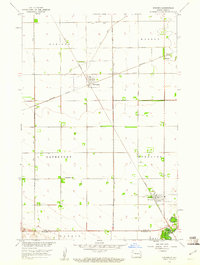 1959 Kindred1959 Print · USGSEastern North Dakota's fertile prairie is captured here in the late fifties, showcasing the vital rail intersections of the Red River Valley. Genealogists and local historians can trace the foundations of Davenport and Kindred, as well as rural sites like Christiania Ch and the German Cem.
 - 1959 Map of Leonard, 1960 Print
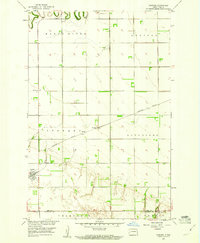 1959 Leonard1960 Print · USGSEastern North Dakota's prairie townships are captured here in the late fifties as the Northern Pacific railroad still defined the local economy. Genealogists and researchers can locate family landmarks such as Bethel Ch, West Prairie Ch, and the brick-industry footprints at the Claypit.
 - 1959 Map of Wyndmere NE, 1960 Print
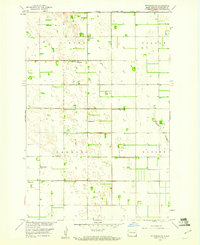 1959 Wyndmere NE1960 Print · USGSRichland County at the end of the fifties reveals a landscape of organized townships and scattered prairie farmsteads. Genealogists and local historians can locate rural landmarks like Viking Ch, Tuholke Cem, and several numbered schools including School No 1.
 - 1959 Map of Mooreton NW, 1960 Print
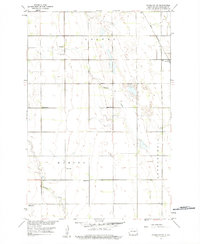 1959 Mooreton NW1960 Print · USGSRichland County, North Dakota, is captured here in the late fifties, showing a rural landscape defined by township lines and the railroad. Genealogists can locate family landmarks like Stearns Cem, Zion Ch, and numerous rural schoolhouses including Ista Sch.2 unique versions available
 - 1959 Map of Hickson, 1960 Print
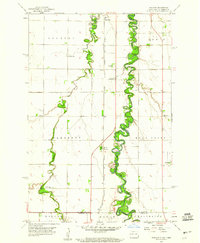 1959 Hickson1960 Print · USGSThe Red River Valley's rich agricultural borderlands are captured here in the late fifties, showcasing the intricate meanders of the Red River of the North. Genealogists can locate rural landmarks like St Benedict, Hickson, and the North Pleasant Cem.3 unique versions available
 - 1959 Map of Walcott, 1960 Print
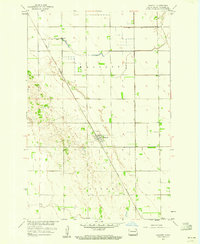 1959 Walcott1960 Print · USGSRichland County at the close of the fifties reveals a landscape shaped by the iron rails and the township grid. Genealogists and local historians can trace the development of the Walcott township and the path of the Great Northern railroad during this period of rural stability.2 unique versions available
 - 1959 Map of Christine, 1960 Print
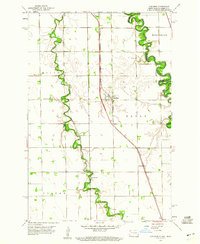 1959 Christine1960 Print · USGSThe Red River Valley landscape of the late fifties is captured here as a network of rail-side settlements and winding river loops. Genealogists can locate family landmarks like South Pleasant Cem, Richland Ch, and the small siding at Lithia.2 unique versions available
 - 1959 Map of Norman, 1960 Print
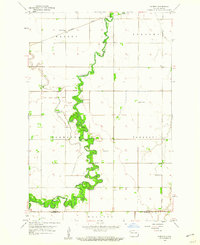 1959 Norman1960 Print · USGSSoutheastern North Dakota's agricultural heartland is documented here in the late fifties, dominated by the winding path of the Sheyenne River. Genealogists and historians can locate rural landmarks like Norman Cem and several numbered schoolhouses.2 unique versions available
 - 1960 Map of Galchutt, 1961 Print
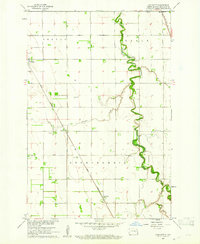 1960 Galchutt1961 Print · USGSRichland County, North Dakota, is captured here in the early sixties as a settled landscape of rail-side hamlets and meandering prairie rivers. Genealogists and historians can locate rural landmarks like Bethany Ch and trace the paths of the Great Northern and C M St P & P railroads.
Showing maps 1-25 of 298
Top cities of Richland County
- Wahpeton historical maps
- Hankinson historical maps
- Lidgerwood historical maps
- Wyndmere historical maps
- Fairmount historical maps
- Abercrombie historical maps
See more
Frequently asked questions
- What are the different types of historical maps available for Richland County?
- What is the oldest map of Richland County?
- Where can I purchase historical maps of Richland County for my home or office?
- Where can I download high-res historical maps of Richland County?
- Are there historical topographic maps available for Richland County?
- Is there historical aerial imagery available for Richland County?
- Where are historical maps of Richland County sourced from?