1970s Maps of Slope County, North Dakota
Explore 16 historic maps of Slope County from the 1970s. These maps offer a rare glimpse into what life looked like during the 1970s — showing old roads, neighborhoods, homes, and landmarks that have changed or disappeared over time.
Whether you're researching your family's past, planning a metal detecting trip, or studying how Slope County's landscape evolved across the 1970s, these high-resolution maps are a powerful tool for exploring the history of this region.
- Focus on a specific era: All maps on this page are from the 1970s, giving you a focused view of this time period.
- See what’s changed: Compare century-old streets, trails, and buildings to today's modern landscape using overlays and satellite layers.
- Research with precision: Use these maps for genealogy, historical research, land use analysis, or educational projects.
- View, download, or print: Maps are fully viewable online in high resolution, and can be downloaded or printed for your own records.
Start exploring Slope County's history through authentic maps from the 1970s. This is your window into the past.
Slope County, ND maps
(16)- 1973 Map of Black Butte, 1976 Print
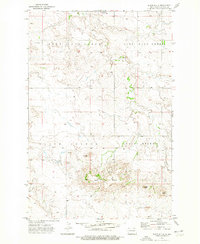 1973 Black Butte1976 Print · USGSSlope County's high plains come into focus in the early 1970s, showcasing a landscape of prominent peaks and prairie drainages. Researchers can trace land formations like Chalky Butte and Black Butte, or follow the courses of West Sand Creek and Deep Creek.
 - 1973 Map of White Lake, 1976 Print
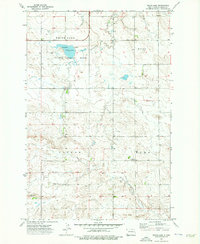 1973 White Lake1976 Print · USGSSlope County's high plains are captured here in the early seventies, centered on the vital waters of the White Lake National Wildlife Refuge. Researchers can pinpoint local landmarks like Norman Church, the Connor Sch No 1, and the headwaters of the Cannonball River.
 - 1973 Map of Warnke Hill, 1976 Print
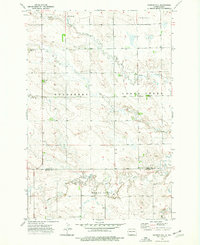 1973 Warnke Hill1976 Print · USGSThe northern Great Plains of southwestern North Dakota are documented here in the early 1970s, showcasing a landscape of high-prairie ranching and townships. Researchers can locate family landmarks like Pierce Cem, the Bob Denny Hills, and the settlement of Warnke.
 - 1973 Map of Mineral Springs, 1976 Print
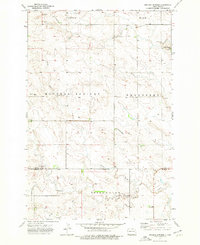 1973 Mineral Springs1976 Print · USGSThe rural plains of Slope and Bowman Counties are mapped here in the early seventies, centered on the local hub of Mineral Springs. Researchers can locate the Mineral Springs School and trace the meandering North Fork Cedar Creek through the Bob Denny Hills.
 - 1973 Map of Amidon SE, 1977 Print
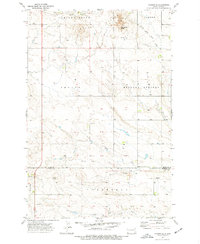 1973 Amidon SE1977 Print · USGSSlope and Bowman counties appear in the early seventies, a time when the prairie landscape was defined by its water sources and high buttes. Local historians can trace family ties via the Cem and the geographic markers of Chalky Buttes and Rattlesnake Butte.
 - 1973 Map of Cedar Lake, 1977 Print
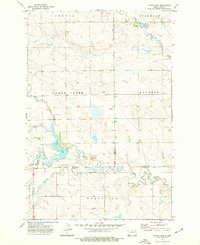 1973 Cedar Lake1977 Print · USGSThe western North Dakota plains in the early 1970s reveal a landscape of managed waterways and remote homesteads. Genealogists and historians can trace local landmarks like Cedar Lake, the small Cem, and the prairie waters of Rustan Lake.
 - 1973 Map of Stewart Lake, 1977 Print
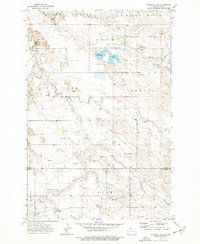 1973 Stewart Lake1977 Print · USGSThe high plains of Slope and Bowman Counties are captured in the early 1970s, showcasing a landscape of wildlife conservation and rugged prairie. Researchers can trace the boundaries of the Stewart Lake National Wildlife Refuge and locate rural landmarks like Cottage and Chalky Butte.
 - 1973 Map of Amidon, 1977 Print
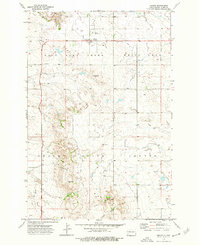 1973 Amidon1977 Print · USGSAmidon and the high plains of Slope County appear in the early 1970s as a landscape of isolated homesteads and striking geological formations. Researchers can locate community anchors like the County Fairground and Lebanon Cem, or trace the rugged breaks around White Butte.
 - 1973 Map of New England NW, 1977 Print
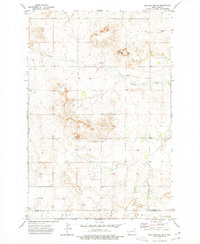 1973 New England NW1977 Print · USGSThe western North Dakota prairie in the early seventies shows a landscape of wide-open ranch land at the meeting of three counties. Genealogists and historians can trace the course of Antelope Creek past local landmarks like Brown and a solitary marked Grave.
 - 1973 Map of West Rainy Butte, 1977 Print
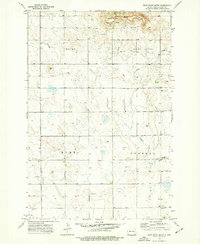 1973 West Rainy Butte1977 Print · USGSSlope County rangeland and the prominent rise of West Rainy Butte are captured in this early 1970s survey. Genealogists and local historians can locate the DeSart Cem and trace the drainage of Chanta Peta Creek across the townships.
 - 1973 Map of East Rainy Butte, 1977 Print
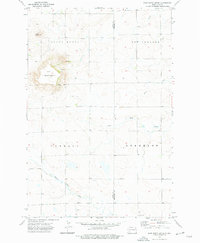 1973 East Rainy Butte1977 Print · USGSThe high plains of Slope and Hettinger counties are captured in the early 1970s, dominated by the landforms of East Rainy Butte and Baldy Butte. Researchers can trace the small settlement at De Sart, find Johnson Cemetery, and locate the water sources for local ranching along Chanta Peta Creek.
 - 1973 Map of New England SW, 1977 Print
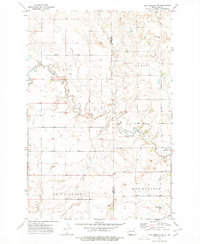 1973 New England SW1977 Print · USGSThe North Dakota prairie during the 1970s reveals a landscape shaped by the Cannonball River and the towering heights of Rainy Butte. Researchers can trace the border of Slope County, locate the Schmidt Cem, and explore the rural outskirts of New England.
 - 1979 Map of Deep Creek North
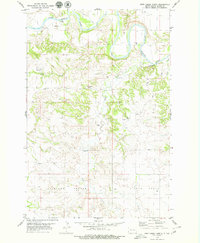 1979 Deep Creek North1979 Print · USGSThe Little Missouri River badlands of Slope County are captured here in the late 1970s, a period of quiet ranching life on the high plains. Researchers can locate remote landmarks like the Logging Camp Ranch, Walser Crossing, and the Bullion View Sch school site.
 - 1979 Map of Three V Crossing
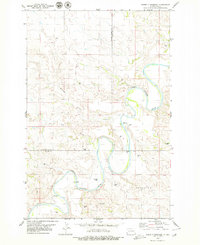 1979 Three V Crossing1979 Print · USGSThe ranching country of western North Dakota is captured here in the late seventies as the river winds through the county line. Researchers can locate remote landmarks like the Three V Ranch, the river ford at Three V Crossing, and various water sources including Deer Creek.
 - 1979 Map of Ives, 1980 Print
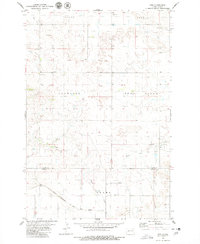 1979 Ives1980 Print · USGSThe borderlands of Slope and Bowman counties are shown in the late 1970s as the regional rail economy persists. Researchers can trace the path of the Chicago Milwaukee St Paul and Pacific railroad past Ives and the St Paul Cem.
 - 1979 Map of Bullion Butte, 1984 Print
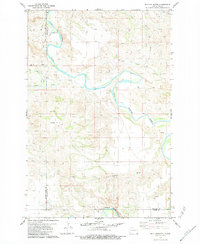 1979 Bullion Butte1984 Print · USGSThe North Dakota badlands come alive in this 1970s survey, dominated by the massive Bullion Butte and the winding Little Missouri River. Genealogists and local historians can locate the Connell Cem and trace old access routes like Pipeline Road.
End of results
Showing maps 1-16 of 16
Top cities of Slope County
Frequently asked questions
- What are the different types of historical maps available for Slope County?
- What is the oldest map of Slope County?
- Where can I purchase historical maps of Slope County for my home or office?
- Where can I download high-res historical maps of Slope County?
- Are there historical topographic maps available for Slope County?
- Is there historical aerial imagery available for Slope County?
- Where are historical maps of Slope County sourced from?