1960s Maps of Garvin County, Oklahoma
Explore 16 historic maps of Garvin County from the 1960s. These maps offer a rare glimpse into what life looked like during the 1960s — showing old roads, neighborhoods, homes, and landmarks that have changed or disappeared over time.
Whether you're researching your family's past, planning a metal detecting trip, or studying how Garvin County's landscape evolved across the 1960s, these high-resolution maps are a powerful tool for exploring the history of this region.
- Focus on a specific era: All maps on this page are from the 1960s, giving you a focused view of this time period.
- See what’s changed: Compare century-old streets, trails, and buildings to today's modern landscape using overlays and satellite layers.
- Research with precision: Use these maps for genealogy, historical research, land use analysis, or educational projects.
- View, download, or print: Maps are fully viewable online in high resolution, and can be downloaded or printed for your own records.
Start exploring Garvin County's history through authentic maps from the 1960s. This is your window into the past.
Garvin County, OK maps
(16)- 1963 Map of Ardmore
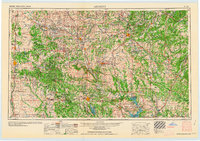 1963 Ardmore1963 Print · USGSSouthern Oklahoma during the early sixties shows a landscape defined by the Arbuckle Mountains and a booming energy economy. Genealogists and historians can trace family-named sites across the Ardmore Oil Field, find old schools like Southeastern State College, or locate historic markers such as Boggy Depot State Park.2 unique versions available
 - 1964 Map of Byars, 1966 Print
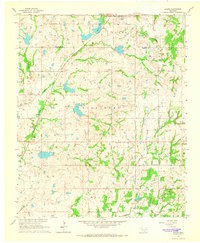 1964 Byars1966 Print · USGSOklahoma's central plains during the mid-sixties show a landscape of active extraction and old prairie settlements. Trace family roots through local landmarks like Dixon Chapel, Byars Cem, and the rail-side community of Boudinot along the Atchison Topeka and Santa Fe.2 unique versions available
 - 1965 Map of Pauls Valley NE, 1966 Print
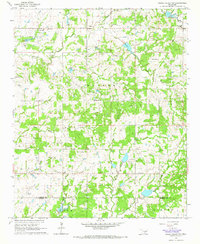 1965 Pauls Valley NE1966 Print · USGSGarvin County was a landscape of active petroleum production and rural community life in the mid-1960s. Genealogists and local historians can trace the exact locations of Cottrells Mission, Lewis Cem, and schools like Oak Dale Sch.2 unique versions available
 - 1965 Map of Byars SW, 1966 Print
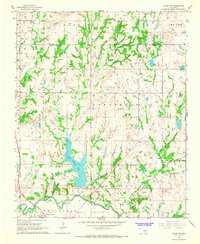 1965 Byars SW1966 Print · USGSGarvin County's river-and-rail landscape is captured here in the mid-1960s as oil production and water management reshaped the plains. Researchers can locate the Indian Meridian, the Pauls Valley Oil Field, and rural landmarks like Civit and Blue Branch Cem.3 unique versions available
 - 1965 Map of Pauls Valley, 1966 Print
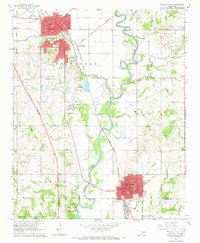 1965 Pauls Valley1966 Print · USGSGarvin County's river-and-rail corridor is captured here in the mid-sixties as the local economy balances agriculture with a thriving petroleum industry. Genealogists and historians can trace family-named landmarks including Mt Olive Cemetery, Oaklawn Cem, and the Hoover Oil Field.3 unique versions available
 - 1965 Map of Maysville, 1966 Print
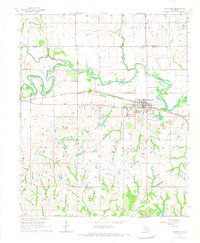 1965 Maysville1966 Print · USGSMaysville and the surrounding Washita River valley are captured in the mid-sixties during a period of steady industrial and agricultural activity. Genealogists and local historians can trace family locations near the Story Sch, Maysville Cemetery, and the local Refinery.3 unique versions available
 - 1965 Map of Joy, 1966 Print
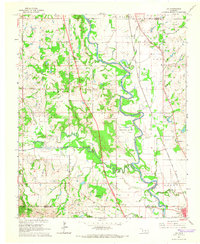 1965 Joy1966 Print · USGSThe Arbuckle Mountains and Washita River valley are captured here in the mid-1960s, showing a landscape defined by oil production and frontier history. Researchers can locate the Fort Arbuckle Ruins, trace the Gulf Colorado and Santa Fe rail line, or find family names at Butterfly Cem and Chigley.2 unique versions available
 - 1965 Map of Paoli, 1966 Print
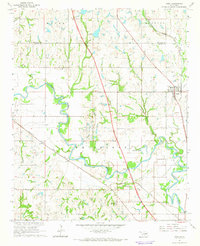 1965 Paoli1966 Print · USGSGarvin County's river valley and oil country are well-defined in the mid-sixties, showing the growth of Paoli and Whitebead. Researchers can trace the path of the Atchison Topeka and Santa Fe railroad or locate family sites like Florence Cem.2 unique versions available
 - 1966 Map of Lindsay, 1967 Print
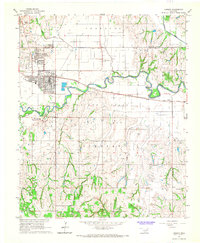 1966 Lindsay1967 Print · USGSThe Washita River valley in the mid-1960s was a landscape defined by the intersection of traditional farming and the petroleum boom. Local researchers can trace the Golden Trend Oil Field infrastructure alongside old landmarks like Erin Springs, the Hughes Sch, and Green Hill Cemetery.2 unique versions available
 - 1966 Map of Lindsay SW, 1967 Print
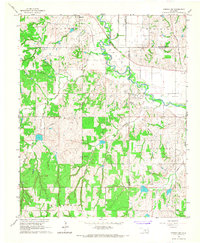 1966 Lindsay SW1967 Print · USGSMid-century life in the Oklahoma plains is captured here as the river-bottom farms meet the growing energy infrastructure of the 1960s. Researchers can locate an Old Railroad Grade near Bradley, a local Cem, and a Refinery along the Washita River.3 unique versions available
 - 1967 Map of Stratford, 1968 Print
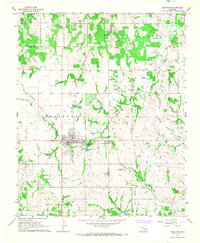 1967 Stratford1968 Print · USGSThe town of Stratford is captured in the late sixties as a rail-centered hub during the height of local energy production. Researchers can trace the Atchison Topeka and Santa Fe line, locate numerous Oil Wells, and find family history at Midland Cem.3 unique versions available
 - 1967 Map of Hart, 1968 Print
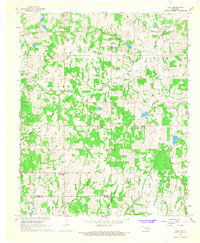 1967 Hart1968 Print · USGSGarvin County's rural landscape is captured here in the mid-1960s, showing a region shaped by winding creek systems and early oil exploration. Genealogists can locate family landmarks like Corley Cem, Hart Cem, and the Prairie View Mission near the town of Hart.2 unique versions available
 - 1969 Map of Hennepin, 1971 Print
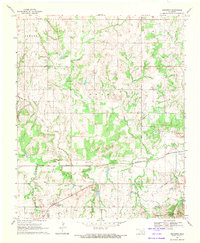 1969 Hennepin1971 Print · USGSSouthern Oklahoma at the end of the sixties reveals a landscape shaped by petroleum production and deep-rooted rural settlements. Researchers can locate the Fort Arbuckle Ruins and trace the boundaries of the Elmore Oil Field near Hennepin.2 unique versions available
 - 1969 Map of Elmore City NE, 1971 Print
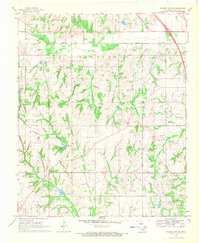 1969 Elmore City NE1971 Print · USGSGarvin County's rural landscape is captured here in the late sixties during a period of steady petroleum production. Genealogists and local historians can trace family roots at Klondike Cem or locate community centers like Love Ch and Fair Oak Ch.3 unique versions available
 - 1969 Map of Elmore City North, 1971 Print
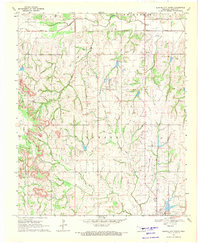 1969 Elmore City North1971 Print · USGSGarvin County was defined by its petroleum and agricultural industries in the late 1960s. Researchers can locate specific wells within the Lindsay Oil Field and trace family roots near Antioch Cem or the Elmore City waterworks.2 unique versions available
 - 1969 Map of Elmore City South, 1971 Print
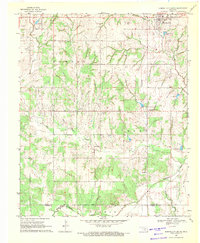 1969 Elmore City South1971 Print · USGSElmore City and the surrounding Garvin County oil fields are captured here in the late sixties at the height of regional production. Researchers can locate family landmarks like Little Flock Ch, trace the Elmore Field infrastructure, and find the now-obscured Refinery and Satterwhite settlement.
End of results
Showing maps 1-16 of 16
Top cities of Garvin County
- Pauls Valley historical maps
- Lindsay historical maps
- Wynnewood historical maps
- Stratford historical maps
- Maysville historical maps
- Elmore City historical maps
See more
Frequently asked questions
- What are the different types of historical maps available for Garvin County?
- What is the oldest map of Garvin County?
- Where can I purchase historical maps of Garvin County for my home or office?
- Where can I download high-res historical maps of Garvin County?
- Are there historical topographic maps available for Garvin County?
- Is there historical aerial imagery available for Garvin County?
- Where are historical maps of Garvin County sourced from?