1960s Maps of Grady County, Oklahoma
Explore 18 historic maps of Grady County from the 1960s. These maps offer a rare glimpse into what life looked like during the 1960s — showing old roads, neighborhoods, homes, and landmarks that have changed or disappeared over time.
Whether you're researching your family's past, planning a metal detecting trip, or studying how Grady County's landscape evolved across the 1960s, these high-resolution maps are a powerful tool for exploring the history of this region.
- Focus on a specific era: All maps on this page are from the 1960s, giving you a focused view of this time period.
- See what’s changed: Compare century-old streets, trails, and buildings to today's modern landscape using overlays and satellite layers.
- Research with precision: Use these maps for genealogy, historical research, land use analysis, or educational projects.
- View, download, or print: Maps are fully viewable online in high resolution, and can be downloaded or printed for your own records.
Start exploring Grady County's history through authentic maps from the 1960s. This is your window into the past.
Grady County, OK maps
(18)- 1963 Map of Ardmore
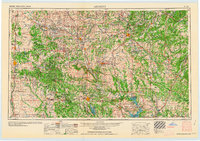 1963 Ardmore1963 Print · USGSSouthern Oklahoma during the early sixties shows a landscape defined by the Arbuckle Mountains and a booming energy economy. Genealogists and historians can trace family-named sites across the Ardmore Oil Field, find old schools like Southeastern State College, or locate historic markers such as Boggy Depot State Park.2 unique versions available
 - 1963 Map of Oklahoma City
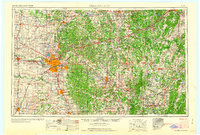 1963 Oklahoma City1963 Print · USGSCentral Oklahoma in the early sixties showcases a landscape of rapid suburban growth and established oil production. Researchers can trace historic rail lines like the Chicago Rock Island and Pacific RR or locate rural landmarks such as Mayflower School and Bethel Church.
 - 1965 Map of Dibble, 1966 Print
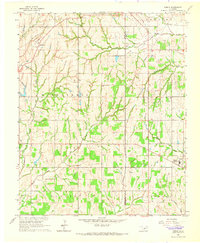 1965 Dibble1966 Print · USGSOklahoma prairie life across the Grady and McClain county line is captured here in the mid-1960s. Researchers can locate family roots at Hale Cem and Naples Cem, or trace the early energy industry through the North Dibble Oil Field.2 unique versions available
 - 1965 Map of Blanchard, 1966 Print
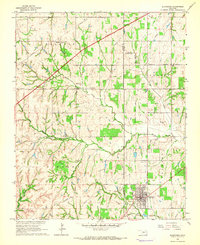 1965 Blanchard1966 Print · USGSBlanchard and the McClain County borderlands are captured here in the mid-1960s as new highways began to reshape the rural landscape. Researchers can trace the Old Railroad Grade or locate historic sites like Bridge Creek Sch and Blanchard Cem.5 unique versions available
 - 1965 Map of Oklahoma City SW, 1967 Print
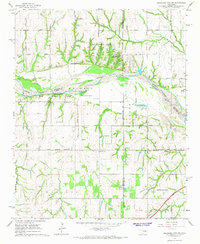 1965 Oklahoma City SW1967 Print · USGSSouthwest of the capital in the mid-sixties, this landscape shows the meeting point of three counties along the Canadian River. Genealogists and historians can trace the early footprints of Tuttle and Newcastle near sites like Snow Hill Ch and Camp Kickapoo.3 unique versions available
 - 1966 Map of Chickasha, 1967 Print
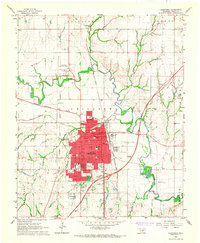 1966 Chickasha1967 Print · USGSChickasha flourished as a vital rail and educational center in central Oklahoma during the mid-sixties. Local researchers can trace the Indian Territory Boundary Line and locate historic sites like the Oklahoma College for Women and Rose Hill Cemetery.2 unique versions available
 - 1966 Map of Lindsay SW, 1967 Print
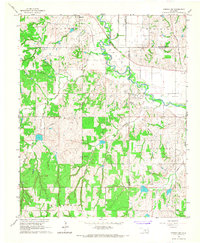 1966 Lindsay SW1967 Print · USGSMid-century life in the Oklahoma plains is captured here as the river-bottom farms meet the growing energy infrastructure of the 1960s. Researchers can locate an Old Railroad Grade near Bradley, a local Cem, and a Refinery along the Washita River.3 unique versions available
 - 1966 Map of Pocasset, 1967 Print
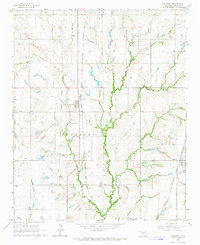 1966 Pocasset1967 Print · USGSGrady County's agricultural heartland is captured here in the mid-sixties, dominated by the rail-lines that fueled its growth. Researchers can trace the Old Indian Territory Boundary Line or locate family sites near Pocasset Cem and the small community of Amber.2 unique versions available
 - 1966 Map of Union City, 1967 Print
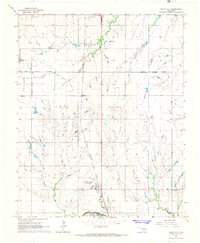 1966 Union City1967 Print · USGSUnion City and the surrounding Canadian County prairie were defined by the rail and river economy of the mid-sixties. Local researchers can trace the historic footprints of St Josephs church, the Chicago Rock Island and Pacific rail line, and the Mustang Field airstrip.2 unique versions available
 - 1966 Map of Tabler, 1967 Print
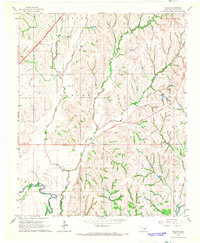 1966 Tabler1967 Print · USGSGrady County rural life in the mid-1960s is centered around the Washita River and the crossroads at Tabler. Researchers can trace the path of an Old Railroad Grade or locate historic settlement sites like Lucille, Naples, and Middleberg.2 unique versions available
 - 1966 Map of Minco, 1967 Print
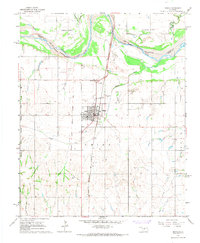 1966 Minco1967 Print · USGSMinco and the surrounding Grady County prairie are captured here in the mid-1960s, framed by the wide Canadian River. Researchers can trace the Old Oklahoma Indian Territory Boundary Line and locate local landmarks like Evergreen Cem and the rail corridor.2 unique versions available
 - 1966 Map of Chickasha NE, 1967 Print
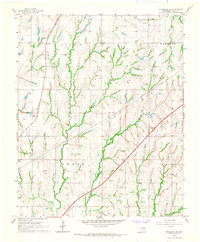 1966 Chickasha NE1967 Print · USGSGrady County in the mid-1960s shows a landscape of rural school districts and evolving transit corridors. You can trace the path of the H E Bailey Toll Road Turnpike or locate the Amber Sch and the settlement of Sooner.2 unique versions available
 - 1966 Map of Bradley, 1967 Print
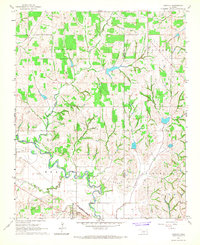 1966 Bradley1967 Print · USGSMid-century life in Grady County centers on the oil economy and the winding Washita River. Genealogists and local historians can trace the Golden Trend Oil Field, the Laflin Cem, and the small-town layout of Bradley.2 unique versions available
 - 1966 Map of Tuttle, 1967 Print
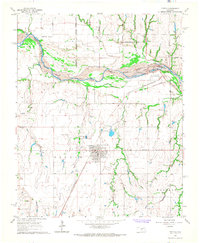 1966 Tuttle1967 Print · USGSOklahoma's central river valleys were undergoing significant municipal expansion in the 1960s as corporate boundaries shifted. Researchers can trace the rail corridor of the St Louis - San Francisco, locate Riverside Cem, and explore the industrial landscape of Tuttle.3 unique versions available
 - 1968 Map of Cogar SE, 1969 Print
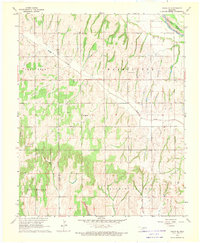 1968 Cogar SE1969 Print · USGSCaddo and Grady counties are documented here in the late sixties, showcasing a landscape defined by creek drainages and section-line roads. Researchers can locate rural landmarks such as Hazel Dell Ch, Center View Cem, and the Canadian River bend.
 - 1968 Map of Anadarko NE, 1969 Print
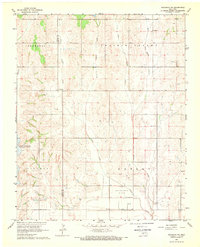 1968 Anadarko NE1969 Print · USGSGrady and Caddo Counties are captured here in the late sixties, showing a landscape of rural homesteads and emerging energy production. Researchers can locate the settlement of Dutton and trace family sites near Friendship Ch or the Northeast Verden Oil Field.
 - 1968 Map of Cogar NE, 1969 Print
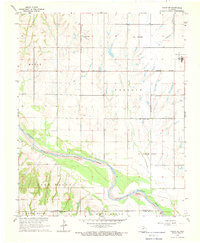 1968 Cogar NE1969 Print · USGSThe Canadian River valley and the rural edges of El Reno and Union City are captured in this late sixties survey. Genealogists can locate Buena Vista Cem, Heaston Ch, and family landmarks across Maple Prairie.2 unique versions available
 - 1968 Map of Verden, 1969 Print
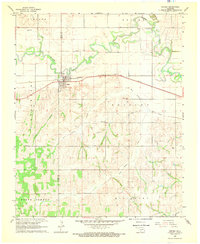 1968 Verden1969 Print · USGSThe town of Verden and the winding Washita River define this Oklahoma landscape in the late sixties. Researchers can trace the path of the Chicago Rock Island and Pacific railroad or locate local landmarks like the Mennonite Ch and Elderberry Ch.
End of results
Showing maps 1-18 of 18
Top cities of Grady County
- Chickasha historical maps
- Tuttle historical maps
- Minco historical maps
- Rush Springs historical maps
- Ninnekah historical maps
- Verden historical maps
See more
Frequently asked questions
- What are the different types of historical maps available for Grady County?
- What is the oldest map of Grady County?
- Where can I purchase historical maps of Grady County for my home or office?
- Where can I download high-res historical maps of Grady County?
- Are there historical topographic maps available for Grady County?
- Is there historical aerial imagery available for Grady County?
- Where are historical maps of Grady County sourced from?