1900s (20th Century) Maps of Oklahoma City, Oklahoma
Explore 53 historic maps of Oklahoma City from the 1900s (20th Century). These maps offer a rare glimpse into what life looked like during the 1900s — showing old roads, neighborhoods, homes, and landmarks that have changed or disappeared over time.
Whether you're researching your family's past, planning a metal detecting trip, or studying how Oklahoma City's landscape evolved across the 1900s, these high-resolution maps are a powerful tool for exploring the history of this region.
- Focus on a specific era: All maps on this page are from the 1900s, giving you a focused view of this time period.
- See what’s changed: Compare century-old streets, trails, and buildings to today's modern landscape using overlays and satellite layers.
- Research with precision: Use these maps for genealogy, historical research, land use analysis, or educational projects.
- View, download, or print: Maps are fully viewable online in high resolution, and can be downloaded or printed for your own records.
Start exploring Oklahoma City's history through authentic maps from the 1900s. This is your window into the past.
Oklahoma City, OK maps
(53)- 1904 Map of Chickasha
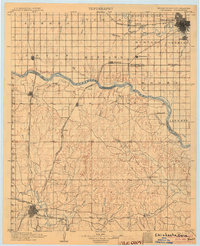 1904 Chickasha1904 Print · USGSIndian Territory and Oklahoma Territory meet in this detailed 1904 survey, showing the region just years before statehood. Genealogists can trace the early rail stops at Minco and Tuttle or locate family homesteads near Womack and Dibble.4 unique versions available
 - 1909 Map of Luther
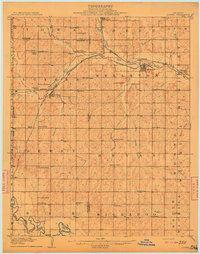 1909 Luther1909 Print · USGSDuring the final years of the Oklahoma Territory, this area saw rapid growth as railroads connected towns like Luther and Wellston. Genealogists and historians can locate dozens of early community sites, from the German Church to rural schoolhouses like Peach Grove School and Arbuckle School.2 unique versions available
 - 1930 Map of McLoud
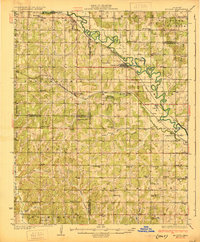 1930 McLoud1930 Print · USGSCentral Oklahoma is captured in the late 1920s as a landscape of rural school districts and river crossings. Researchers can trace early settlements and family landmarks like the Kickapoo Mission, Sweeney Bridge, and the Moore & Nordin Gin.2 unique versions available
 - 1934 Map of Crutcho Creek
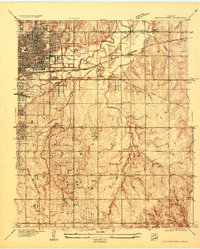 1934 Crutcho Creek1934 Print · USGSOklahoma City and its eastern fringes are captured in the mid-1930s as industrial sites and schools began to dot the landscape. Genealogists can locate family names and sites like Sunny Lane Cemetery, Foster High Sch, and the Oklahoma County Farm.
 - 1934 Map of Moore, 1959 Print
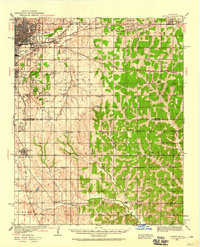 1934 Moore1959 Print · USGSOklahoma City and its surrounding rural townships are shown in the mid-thirties just as the region’s oil and rail economy was maturing. Genealogists can locate family landmarks like Sunnylane Cemetery or rural community hubs such as Nicoma Park and Hollywood Corners.
 - 1935 Map of Spencer
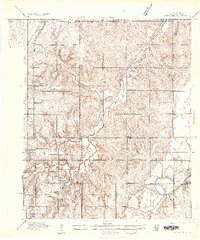 1935 Spencer1935 Print · USGSOklahoma County in the mid-1930s shows a landscape of small rural settlements and schoolhouse districts before the post-war expansion. Researchers can trace family sites near Spencer or locate early landmarks like Harrison Sch (Colored) and the Oklahoma Electric Highway.
 - 1935 Map of Edmond
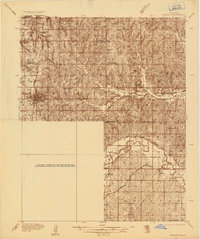 1935 Edmond1935 Print · USGSEdmond and its surrounding townships are captured in the mid-1930s as a vital transportation hub for central Oklahoma. Genealogists and historians can trace the early path of U S Highway No 66 and locate numerous rural landmarks like Wagner Cem and Mount Zion Sch.2 unique versions available
 - 1938 Map of Moore
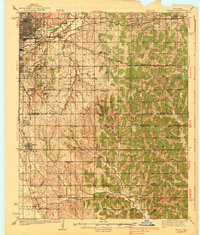 1938 Moore1938 Print · USGSOklahoma City and its southern neighbors were at a rail and oil crossroads in the 1930s. Genealogists can trace early rural life through a dense network of country schools like Foster High Sch and family-named sites such as Burk Burnett Cem.2 unique versions available
 - 1940 Map of Edmond
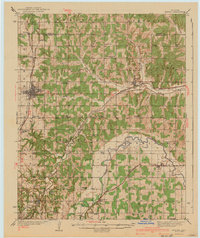 1940 Edmond1940 Print · USGSOklahoma and Logan Counties are captured here in the years leading up to the war, showing a rural landscape anchored by rail towns. Researchers can trace family history through a dense network of country schools and cemeteries like Sunnyside Sch and Rose Hill Cem.2 unique versions available
 - 1951 Map of Britton, 1952 Print
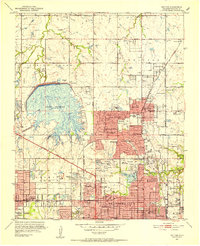 1951 Britton1952 Print · USGSOklahoma City's northern suburbs were rapidly evolving in the early fifties as residential tracts began to surround the massive Lake Hefner. Genealogists and historians can trace the growth of Britton, Nichols Hills, and Warr Acres alongside landmarks like Rose Hill Burial Park and the Wiley Post Airport.6 unique versions available
 - 1954 Map of Oklahoma City
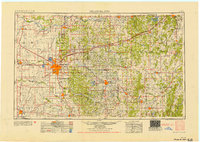 1954 Oklahoma City1954 Print · USGSOklahoma City and its surrounding counties are captured here in the early fifties during a period of significant postwar growth. Researchers can trace the development of the Turner Turnpike and locate aviation hubs like Tinker Field or Will Rogers Field.
 - 1955 Map of Jones, 1957 Print
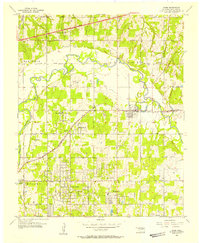 1955 Jones1957 Print · USGSOklahoma County in the mid-1950s shows a landscape of river-bottom industry and expanding rural townships. Genealogists can trace early neighborhood landmarks like Green Pastures, Rose Hill Sch, and the Odd Fellows Cem.4 unique versions available
 - 1956 Map of Choctaw, 1957 Print
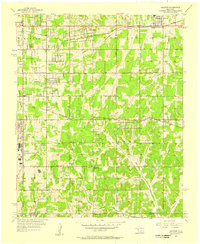 1956 Choctaw1957 Print · USGSIn the mid-fifties, eastern Oklahoma County was a landscape of expanding aviation interests and established rail towns. Local researchers can trace the footprint of Tinker Air Force Base and find vanished rural landmarks like Barnes Sch (Abandoned) and Schwartz Cem.3 unique versions available
 - 1956 Map of Midwest City, 1957 Print
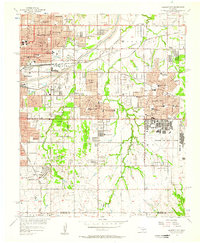 1956 Midwest City1957 Print · USGSOklahoma City and its eastern suburbs were rapidly transforming in the mid-fifties as military and industrial growth reshaped the county line. Researchers can trace the development of Tinker Air Force Base and dozens of local schools like Monroney Jr High Sch and Edison Sch.3 unique versions available
 - 1956 Map of Moore, 1957 Print
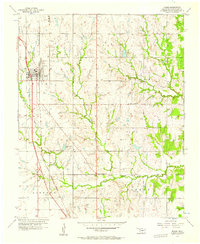 1956 Moore1957 Print · USGSCleveland County emerges in the mid-1950s as a region of rail-connected towns and developing rural industry. Genealogists and local historians can trace family locations near Smith Cem, the old Grotts Sch, and the riverside crossroads at Hollywood Corners.3 unique versions available
 - 1956 Map of Oklahoma City, 1957 Print
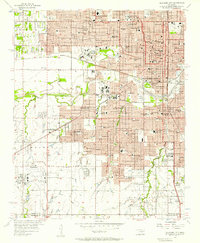 1956 Oklahoma City1957 Print · USGSOklahoma City emerges as a bustling mid-century hub at the intersection of major rail lines and early aviation history. Genealogists and historians can trace the development of urban neighborhoods and local institutions from Fairlawn Cemetery to the Will Rogers Municipal Airport.3 unique versions available
 - 1956 Map of Franklin, 1957 Print
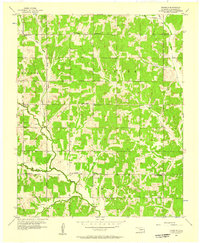 1956 Franklin1957 Print · USGSCleveland County was a landscape of small schoolhouses and country churches in the mid-1950s. Researchers can trace the rural community through locations like Franklin, Blackburn Cem, and several local schools like Robinson Sch.4 unique versions available
 - 1956 Map of Harrah, 1957 Print
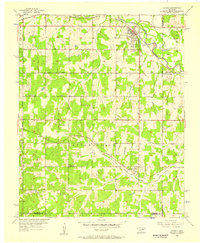 1956 Harrah1957 Print · USGSOklahoma county lines and the winding river bottom highlight this mid-fifties survey of the frontier between central and eastern Oklahoma. Researchers can trace the path of the Indian Meridian and locate landmarks like Newalla, Texas Sch (Abandoned), and the oil wells scattered near the Cleveland County border.4 unique versions available
 - 1956 Map of Oklahoma City, 1957 Print
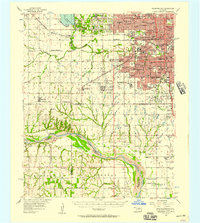 1956 Oklahoma City1957 Print · USGSCentral Oklahoma in the mid-fifties shows the transition from a rail-centered capital to a modern aviation and oil hub. Researchers can trace family roots through neighborhood landmarks like St Patricks Sch, Fairlawn Cem, and the old Union Station.2 unique versions available
 - 1956 Map of Oklahoma City SE, 1957 Print
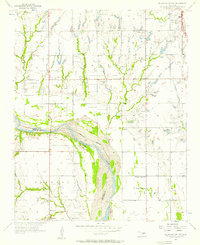 1956 Oklahoma City SE1957 Print · USGSSouth of Oklahoma City in the mid-fifties, the landscape transitions from busy airfields to the oil-rich river bottoms. Trace family roots at Antioch Ch and Moore Cem, or locate early aviation sites like Country Club Airport.3 unique versions available
 - 1956 Map of Horseshoe Lake, 1957 Print
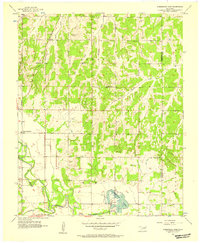 1956 Horseshoe Lake1957 Print · USGSOklahoma and Lincoln Counties appear here in the mid-fifties, centered on the river-fed industrial infrastructure near Harrah. Genealogists and local historians can locate early landmarks like Mt Carmel Cem, the St Louis - San Francisco rail line, and the State Center Sch.4 unique versions available
 - 1956 Map of Stella, 1957 Print
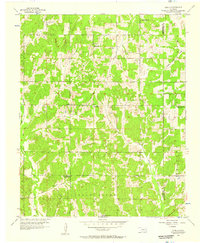 1956 Stella1957 Print · USGSCleveland County in the mid-1950s reveals a rural landscape shaped by the Little River and early oil exploration. Researchers can locate family landmarks like Stella Cem and several older sites such as the Red Hill Sch and Keebles Cem.5 unique versions available
 - 1956 Map of Spencer, 1957 Print
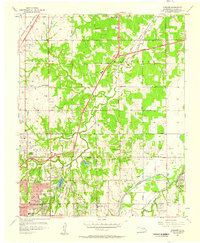 1956 Spencer1957 Print · USGSNortheast Oklahoma City was a landscape of burgeoning suburbs and active oil fields during the mid-fifties. Genealogists and historians can locate numerous burial grounds like Arlington Memorial Park Cemetery and schools such as Oakdale Sch or Harrison Sch.3 unique versions available
 - 1957 Map of Oklahoma City, 1969 Print
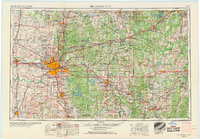 1957 Oklahoma City1969 Print · USGSCentral Oklahoma is captured here in a period of significant mid-century growth and industrialization. Researchers can trace family roots through numerous rural markers like Memory Lane Cem, New Hope School, and the sprawling grounds of Tinker Air Force Base.3 unique versions available
 - 1963 Map of Oklahoma City
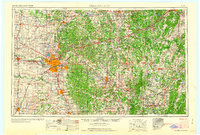 1963 Oklahoma City1963 Print · USGSCentral Oklahoma in the early sixties showcases a landscape of rapid suburban growth and established oil production. Researchers can trace historic rail lines like the Chicago Rock Island and Pacific RR or locate rural landmarks such as Mayflower School and Bethel Church.
Showing maps 1-25 of 53
Top cities near Oklahoma City
- Norman historical maps
- Edmond historical maps
- Midwest City historical maps
- Moore historical maps
- Del City historical maps
- Bethany historical maps
See more
Top neighborhoods of Oklahoma City
- Witcher historical maps
- Green Pastures historical maps
- Flynn historical maps
- Wheatland historical maps
- Poole historical maps
- Stella historical maps
See more
Frequently asked questions
- What are the different types of historical maps available for Oklahoma City?
- What is the oldest map of Oklahoma City?
- Where can I purchase historical maps of Oklahoma City for my home or office?
- Where can I download high-res historical maps of Oklahoma City?
- Are there historical topographic maps available for Oklahoma City?
- Is there historical aerial imagery available for Oklahoma City?
- Where are historical maps of Oklahoma City sourced from?