Old Maps of Rogers County, Oklahoma for Academic Research
Study the evolution of Rogers County with 128 high-resolution historic maps. Whether you're teaching, researching, or modeling changes in land use, these maps provide essential visual documentation of urban, environmental, and geographic change.
- Analyze long-term change: Track patterns in development, transportation, and natural features.
- Ideal for environmental or urban studies: Support academic projects with primary historical map data.
- Use in the classroom or lab: Educators and researchers rely on these maps to bring historical context to life.
These maps are a powerful tool for teaching, research, and visualizing how Rogers County has changed over the decades.
Rogers County, OK maps
(128)- 1896 Map of Pryor, 1963 Print
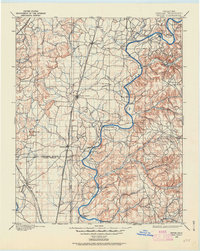 1896 Pryor1963 Print · USGSThe Cherokee Nation comes into focus during the late nineteenth century as railroads began to transform the Indian Territory landscape. Genealogists and historians can trace essential river crossings like Sixkiller Ferry and Adams Ford or locate early settlements such as Bushyhead and Mazie.
 - 1901 Map of Claremore
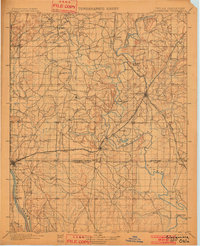 1901 Claremore1901 Print · USGSThe Cherokee, Osage, and Creek Nations converge in the Indian Territory during this era of rapid railroad expansion. Researchers can trace early settlements and tribal boundaries, locating the Island Ferry, the junction at Claremore, and early Tulsa.4 unique versions available
 - 1901 Map of Nowata
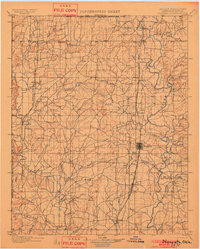 1901 Nowata1901 Print · USGSThe Cherokee Nation in Indian Territory is captured here at the start of the twentieth century, showing the lands that would soon become northeast Oklahoma. Researchers can trace early rail-town growth in Nowata and Bartlesville or locate smaller settlements like Alluwe and Coodys Bluff.2 unique versions available
 - 1901 Map of Vinita
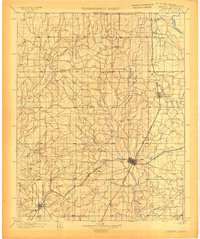 1901 Vinita1901 Print · USGSIndian Territory at the turn of the century shows a landscape of burgeoning railroad towns and Cherokee Nation settlements. Genealogists can trace family roots in early townsites like Vinita, Bluejacket, and Chelsea or locate rural homesteads near Cabin Creek.2 unique versions available
 - 1901 Map of Pryor
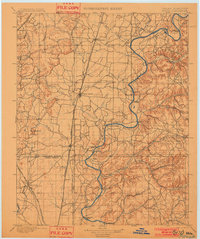 1901 Pryor1901 Print · USGSIndian Territory at the turn of the century shows a landscape transitioning from tribal lands to a rail-connected frontier. Genealogists and historians can trace early river crossings like Markham Ferry and Dirteater Ford alongside frontier settlements like Choteau and Bushyhead.5 unique versions available
 - 1913 Map of Vinita
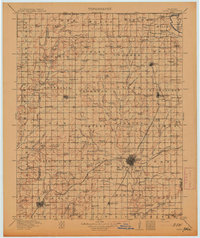 1913 Vinita1913 Print · USGSNortheast Oklahoma at the height of its rail-and-ranch era is meticulously detailed here just as the state was entering its second decade. Genealogists can trace family roots through dozens of local landmarks like W H School, Big Cabin, and the Blue Hawk School.3 unique versions available
 - 1914 Map of Nowata
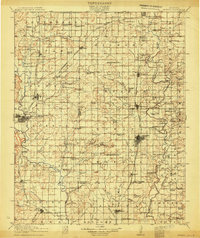 1914 Nowata1914 Print · USGSNortheastern Oklahoma at the height of its early statehood growth is documented here as the railroad network expanded across the Verdigris River valley. Genealogists can locate dozens of country schools like Go-back School and vanished post offices such as Avelia Wayside PO.5 unique versions available
 - 1914 Map of Claremore, 1959 Print
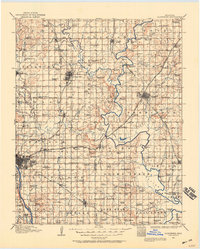 1914 Claremore1959 Print · USGSNortheastern Oklahoma was a landscape of river crossings and rail towns in the years just before the Great War. Genealogists and researchers can trace the locations of dozens of vanished rural schools like Elm Ridge School, river landmarks such as Thomas Ferry, and the early footprints of Broken Arrow and Tulsa.
 - 1916 Map of Claremore
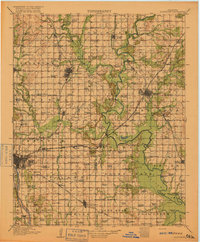 1916 Claremore1916 Print · USGSThe Verdigris River valley and the burgeoning rail hubs of Rogers and Tulsa counties are captured here just after Oklahoma statehood. Genealogists can locate family homesteads near dozens of early schools like Fair Valley School or early churches such as Greenwood Chapel.4 unique versions available
 - 1954 Map of Tulsa
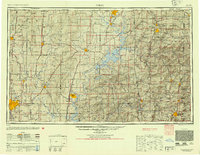 1954 Tulsa1954 Print · USGSNortheast Oklahoma and the Ozark border are shown here during a period of massive industrial and infrastructure growth. Researchers can trace the legacy of the Tri-State Mining District and the development of major reservoirs like Grand Lake O' The Cherokees.2 unique versions available
 - 1955 Map of Mingo, 1956 Print
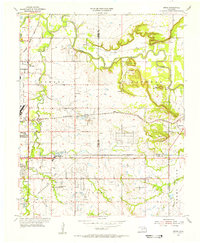 1955 Mingo1956 Print · USGSThe eastern edges of Tulsa and the surrounding Rogers County countryside are captured here in the mid-1950s. Researchers can locate vanished landmarks and rural community centers like Garnett, the Plainview Ch, and the original footprint of Tulsa Municipal Airport.5 unique versions available
 - 1956 Map of Collinsville, 1957 Print
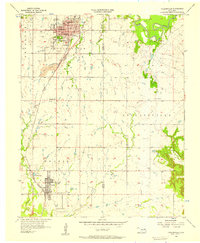 1956 Collinsville1957 Print · USGSIn the mid-1950s, the corridor between Collinsville and Owasso was a landscape of growing towns and industrial coal work. Researchers can trace family sites at Ridgelawn Cem, locate the Central High Sch, or find the massive Strip Mine works.3 unique versions available
 - 1958 Map of Tulsa, 1968 Print
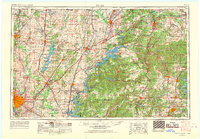 1958 Tulsa1968 Print · USGSNortheast Oklahoma and the Ozark borderlands are captured here during a massive era of reservoir construction and highway expansion. Researchers can trace the mid-century footprints of Tulsa, the sprawling Lake O' the Cherokees, and historical sites like Pea Ridge National Military Park.3 unique versions available
 - 1959 Map of Collinsville NE, 1961 Print
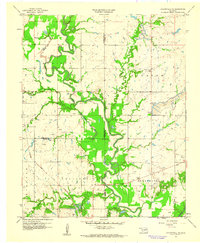 1959 Collinsville NE1961 Print · USGSNortheastern Oklahoma at the end of the fifties is a landscape of river bends and industrial growth. Researchers can trace the Caney River floodplain or locate rural landmarks like Zion Hill Ch and the strip mine operations.3 unique versions available
 - 1963 Map of Tulsa
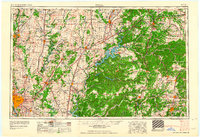 1963 Tulsa1963 Print · USGSThe Oklahoma and Arkansas borderlands are shown here in the early sixties, a time of massive reservoir construction and heavy mining. Genealogists can trace family roots through settlements like Nowata, Pryor, and Jay, or locate historical zinc and lead mines and coal mines.
 - 1963 Map of Neodesha, 1964 Print
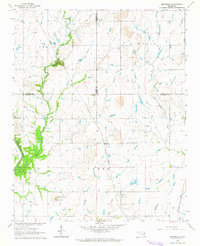 1963 Neodesha1964 Print · USGSWagoner County and its neighbors are captured in the early sixties, showing the rural landscape just as mid-century infrastructure was maturing. Genealogists can locate Lone Star Ch, Willow Cem, and the tracks of the Missouri Pacific railroad.2 unique versions available
 - 1963 Map of Sageeyah, 1964 Print
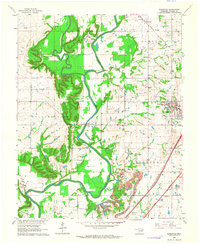 1963 Sageeyah1964 Print · USGSRogers County in the early sixties reveals a landscape of river-bottom agriculture and emerging heavy transit. Researchers can locate vanished landmarks like the Oklahoma Military Academy and rural schoolhouses such as Lone Elm Sch and South Limestone Sch.3 unique versions available
 - 1963 Map of Catoosa, 1964 Print
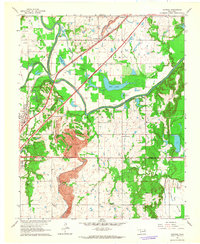 1963 Catoosa1964 Print · USGSThe Verdigris River valley in the early sixties shows a landscape of growing infrastructure and heavy industry. Genealogists and researchers can trace rural life through the Keeton Sch, Timber Ridge Cem, and the massive Strip Mine south of Catoosa.4 unique versions available
 - 1963 Map of Claremore, 1964 Print
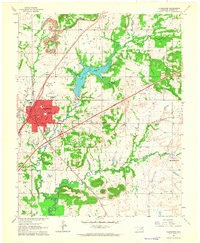 1963 Claremore1964 Print · USGSClaremore and its rural surroundings thrive in the early sixties as the Will Rogers Turnpike brings new infrastructure to the Verdigris Hills. Researchers can trace family sites like Lowrance Ranch, local schools including Justus Sch, and the grounds of Woodlawn Cem.3 unique versions available
 - 1963 Map of Catoosa SE, 1964 Print
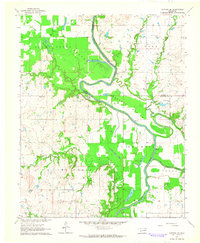 1963 Catoosa SE1964 Print · USGSThe Verdigris River valley in the early sixties reveals a landscape of oxbow lakes and bottomland agriculture. Genealogists and historians can trace the rural community through landmarks like Childers Cem, Thomas Ch, and the small settlement of Adams.4 unique versions available
 - 1963 Map of Inola, 1964 Print
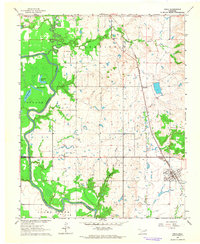 1963 Inola1964 Print · USGSNortheastern Oklahoma’s agricultural and industrial landscape is captured here in the early sixties, as the Verdigris River valley transitions toward Rogers and Wagoner counties. Genealogists and historians can locate rural landmarks like Sweeten Cemetery, Gregory School, and the Missouri Pacific rail corridor.3 unique versions available
 - 1970 Map of Bushyhead, 1971 Print
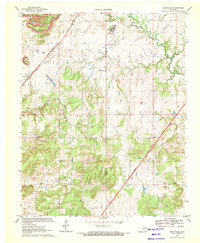 1970 Bushyhead1971 Print · USGSNorth of Claremore in the early seventies, this Rogers County landscape shows a mix of traditional prairie life and heavy industry. Genealogists can trace family landmarks like Dawes Cem and Beck Cem, while mapping the impact of the Strip Mine operations and the St Louis - San Francisco railroad.2 unique versions available
 - 1970 Map of Chelsea, 1972 Print
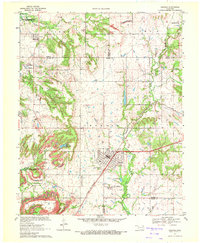 1970 Chelsea1972 Print · USGSNortheast Oklahoma's extraction landscape is on full display during the early 1970s, as coal and oil operations surround the town of Chelsea. Researchers can trace family history at Shady Grove Cem and Snider Cem or locate industrial sites like the many Strip Mines and the St Louis - San Francisco rail line.3 unique versions available
 - 1970 Map of Osage Hills, 1972 Print
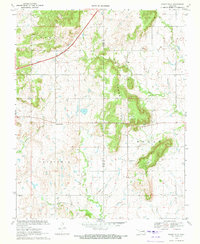 1970 Osage Hills1972 Print · USGSNortheast Oklahoma's rural landscape is captured here in the early seventies, showing the intersection of new infrastructure and established local settlements. Genealogists and historians can trace family-named sites like Vann Cem and Union Chapel, or explore the development around Harmony Star and the Will Rogers Toll Road.2 unique versions available
 - 1970 Map of Bartlesville SE, 1972 Print
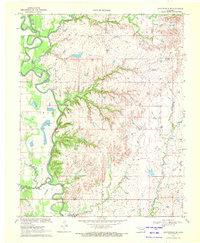 1970 Bartlesville SE1972 Print · USGSThe tri-county borderlands of northeastern Oklahoma are captured here in the early 1970s, showcasing a landscape of winding river bends and prairie creeks. Researchers can locate infrastructure of the local economy, including the Tyner Dam, a riverside Oil Well, and the Gravel Pit.2 unique versions available
Showing maps 1-25 of 128
Top cities of Rogers County
- Claremore historical maps
- Catoosa historical maps
- Verdigris historical maps
- Chelsea historical maps
- Inola historical maps
- Justice historical maps
See more
Frequently asked questions
- What are the different types of historical maps available for Rogers County?
- What is the oldest map of Rogers County?
- Where can I purchase historical maps of Rogers County for my home or office?
- Where can I download high-res historical maps of Rogers County?
- Are there historical topographic maps available for Rogers County?
- Is there historical aerial imagery available for Rogers County?
- Where are historical maps of Rogers County sourced from?