Old Maps of Johnson Crossing, Oregon for Academic Research
Study the evolution of Johnson Crossing with 18 high-resolution historic maps. Whether you're teaching, researching, or modeling changes in land use, these maps provide essential visual documentation of urban, environmental, and geographic change.
- Analyze long-term change: Track patterns in development, transportation, and natural features.
- Ideal for environmental or urban studies: Support academic projects with primary historical map data.
- Use in the classroom or lab: Educators and researchers rely on these maps to bring historical context to life.
These maps are a powerful tool for teaching, research, and visualizing how Johnson Crossing has changed over the decades.
Johnson Crossing, OR maps
(18)- 1915 Map of Hillsboro
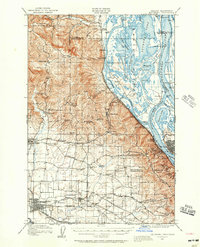 1915 Hillsboro1915 Print · USGSThe Tualatin Valley and the confluence of the Columbia and Willamette rivers are shown here at the peak of the electric rail era. Researchers can trace historic family schoolhouses like Mason Hill School and vanished landings such as Blurock Landing.
 - 1918 Map of Hillsboro
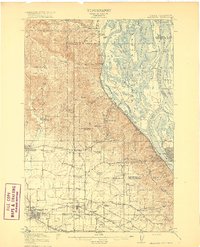 1918 Hillsboro1918 Print · USGSThe Tualatin Valley and Columbia riverfront are seen here during the heyday of the electric interurban and steam rail era. Researchers can trace family sites at Mason Hill School, identify the river life of Sauvie Island, or locate vanished stops like Cornelius Pass.4 unique versions available
 - 1940 Map of Hillsboro
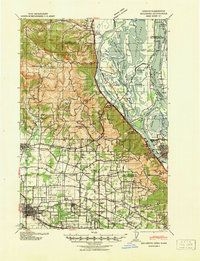 1940 Hillsboro1940 Print · USGSThe Tualatin Valley and the Columbia River confluence meet in this 1940 survey of the Hillsboro and North Portland region. Researchers can trace early twentieth-century rail lines like the Oregon Electric or locate historic rural landmarks such as Mountain View Cemetery and the Mason Hill School.
 - 1948 Map of Vancouver, 1957 Print
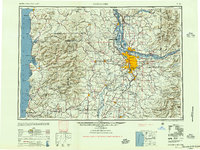 1948 Vancouver1957 Print · USGSPost-war growth transforms the river valleys of the Pacific Northwest as the timber and rail economy thrives. Trace family roots in Tillamook or Oregon City, and locate vanished landmarks like the spit at Bayocean or the Skamania Mine.
 - 1950 Map of Vancouver
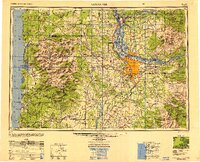 1950 Vancouver1950 Print · USGSCoastal Oregon and the lower Columbia River valley are captured in detail just after the war. Researchers can trace historic rail routes like the Southern Pacific or locate early settlements such as Vernonia, Gaston, and the Grand Ronde Indian Reservation.
 - 1950 Map of Vancouver, 1951 Print
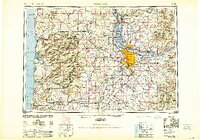 1950 Vancouver1951 Print · USGSThe Pacific Northwest urban corridor meets the rugged coast in the years following the war, showing the expansion of Portland and Vancouver. Genealogists and historians can trace the reach of the Southern Pacific RR and locate coastal communities like Tillamook, Seaside, and Tolovana Park.
 - 1953 Map of Dixie Mountain, 1956 Print
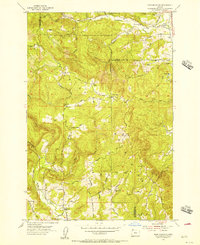 1953 Dixie Mountain1956 Print · USGSThe Tualatin Mountains in the early 1950s were a landscape of high ranches and small rural schools along the tri-county border. Genealogists and historians can trace family-named routes like Moreland Road to find Mountain View Cemetery or the site of Mason Hill Sch (Aban'd).
 - 1958 Map of Vancouver, 1968 Print
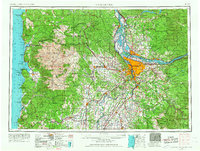 1958 Vancouver1968 Print · USGSThe Lower Columbia and Willamette valleys thrive in the late sixties as major rail and river hubs. Genealogists and historians can trace the development of Portland, identify the grounds of Camp Withycombe, and locate coastal landmarks from Tillamook Head to Garibaldi.3 unique versions available
 - 1961 Map of Dixie Mountain
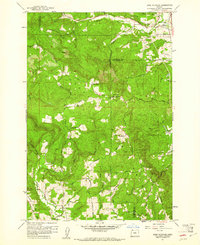 1961 Dixie Mountain1961 Print · USGSThe rural highlands where Columbia and Washington counties meet are captured here in the early sixties. Researchers can locate family landmarks like Dixie Ranch, the Saint Wenceslaus Cem, and the old Wallace Sch among the timbered ridges.4 unique versions available
 - 1961 Map of Hillsboro, 1963 Print
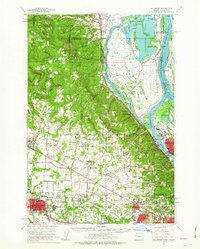 1961 Hillsboro1963 Print · USGSThe Tualatin Valley and Columbia River bottomlands appear in the early sixties as industrial expansion meets established farm country. Trace old rail lines and family history at Tualatin Plains Cem, North Plains, and the Meeks Land Claim Historical Marker.2 unique versions available
 - 1964 Map of Vancouver
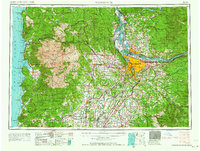 1964 Vancouver1964 Print · USGSThe Pacific Northwest interior and coast are shown here in the 1960s, from the Portland metropolitan hub to the rugged Pacific shoreline. Researchers can trace the legacy of the Grand Ronde Indian Reservation, the early layout of McMinnville, and the maritime approaches near Tillamook Head.
 - 1979 Map of Vancouver, 1980 Print
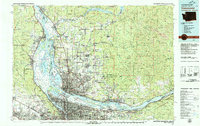 1979 Vancouver1980 Print · USGSThe Portland and Vancouver metropolitan area is captured here in the late seventies, showing the dense nexus of river, rail, and air transit. Genealogists and local historians can trace the footprints of Vancouver Barracks, Lincoln Memorial Park Cem, and the old rail lines of the Burlington Northern.2 unique versions available
 - 1990 Map of Dixie Mountain, 1995 Print
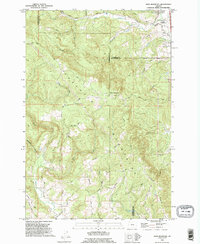 1990 Dixie Mountain1995 Print · USGSThe northern Tualatin Mountains near the turn of the millennium were a landscape of steep timbered ridges and pioneer-era roads. Researchers can find old family sites and burial grounds like Saint Wenceslaus Cemetery, Fairview Cem, and landmarks along Skyline Boulevard.
 - 2011 Map of Dixie Mountain, 2011 Print
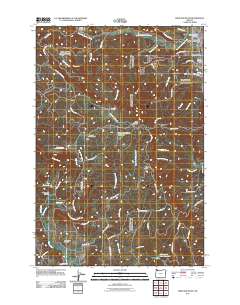 2011 Dixie Mountain2011 Print · USGSThe highlands west of the Willamette Valley are captured here in the early twenty-first century as the rural character of South Scappoose remains intact. Genealogists can locate family sites like Saint Wenceslaus Cemetery, Johnson Crossing, and Shadybrook Cemetery.
 - 2014 Map of Dixie Mountain, 2014 Print
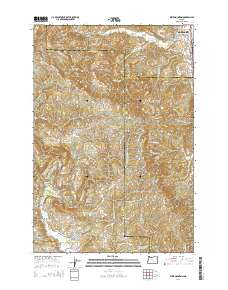 2014 Dixie Mountain2014 Print · USGSThe upland terrain between Scappoose and the Tualatin Valley comes into focus in this recent survey. Researchers can trace rural cemeteries and waterworks like Saint Wenceslaus Cem, Johnson Crossing, and Kay Reservoir.
 - 2017 Map of Dixie Mountain, 2017 Print
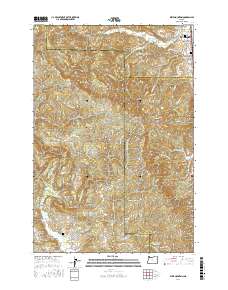 2017 Dixie Mountain2017 Print · USGSScappoose and the surrounding Tualatin Mountains are captured in this recent survey of the Columbia and Multnomah county lines. Researchers can locate family plots at Saint Wenceslaus Cem and trace the rural reaches of Pumpkin Ridge and Johnson Crossing.
 - 2020 Map of Dixie Mountain, 2020 Print
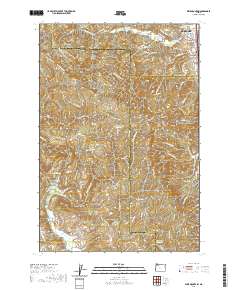 2020 Dixie Mountain2020 Print · USGSThe outskirts of Scappoose transition into the Tualatin Mountains in this contemporary look at the Oregon landscape. Genealogists and local historians can trace burial sites at Saint Wenceslaus Cem and Shadybrook Cem or follow the paths of Dutch Canyon and Pumpkin Ridge.
 - 2023 Map of Dixie Mountain, 2023 Print
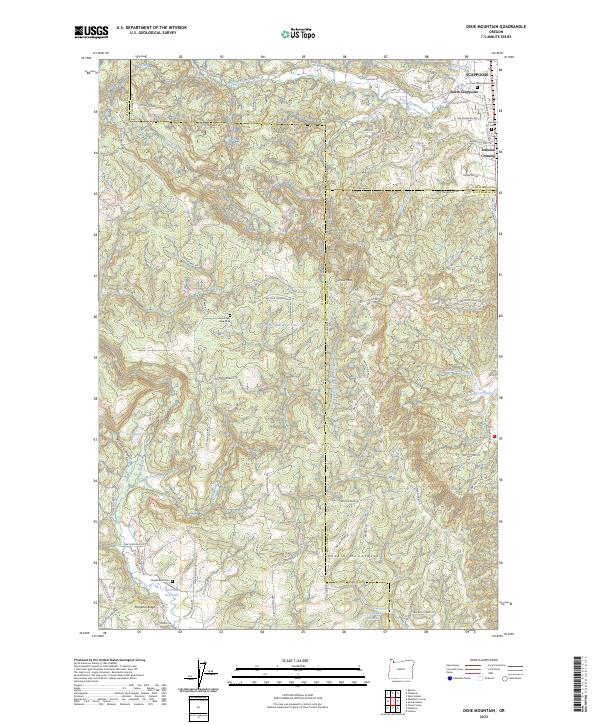 2023 Dixie Mountain2023 Print · USGSThe Tualatin Mountains and the outskirts of Scappoose are captured here in the early twenty-first century. Genealogists and local historians can trace family sites at Saint Wenceslaus Cem, Pumpkin Ridge, and Johnson Crossing.
End of results
Showing maps 1-18 of 18
Top cities near Johnson Crossing
- Portland historical maps
- Vancouver historical maps
- Hillsboro historical maps
- Beaverton historical maps
- Forest Grove historical maps
- Saint Helens historical maps
See more
Frequently asked questions
- What are the different types of historical maps available for Johnson Crossing?
- What is the oldest map of Johnson Crossing?
- Where can I purchase historical maps of Johnson Crossing for my home or office?
- Where can I download high-res historical maps of Johnson Crossing?
- Are there historical topographic maps available for Johnson Crossing?
- Is there historical aerial imagery available for Johnson Crossing?
- Where are historical maps of Johnson Crossing sourced from?