1950s Maps of Marion County, Oregon
Explore 31 historic maps of Marion County from the 1950s. These maps offer a rare glimpse into what life looked like during the 1950s — showing old roads, neighborhoods, homes, and landmarks that have changed or disappeared over time.
Whether you're researching your family's past, planning a metal detecting trip, or studying how Marion County's landscape evolved across the 1950s, these high-resolution maps are a powerful tool for exploring the history of this region.
- Focus on a specific era: All maps on this page are from the 1950s, giving you a focused view of this time period.
- See what’s changed: Compare century-old streets, trails, and buildings to today's modern landscape using overlays and satellite layers.
- Research with precision: Use these maps for genealogy, historical research, land use analysis, or educational projects.
- View, download, or print: Maps are fully viewable online in high resolution, and can be downloaded or printed for your own records.
Start exploring Marion County's history through authentic maps from the 1950s. This is your window into the past.
Marion County, OR maps
(31)- 1950 Map of Vancouver
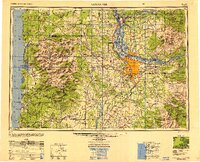 1950 Vancouver1950 Print · USGSCoastal Oregon and the lower Columbia River valley are captured in detail just after the war. Researchers can trace historic rail routes like the Southern Pacific or locate early settlements such as Vernonia, Gaston, and the Grand Ronde Indian Reservation.
 - 1950 Map of Vancouver, 1951 Print
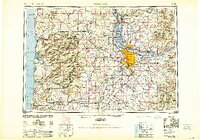 1950 Vancouver1951 Print · USGSThe Pacific Northwest urban corridor meets the rugged coast in the years following the war, showing the expansion of Portland and Vancouver. Genealogists and historians can trace the reach of the Southern Pacific RR and locate coastal communities like Tillamook, Seaside, and Tolovana Park.
 - 1951 Map of Lyons, 1953 Print
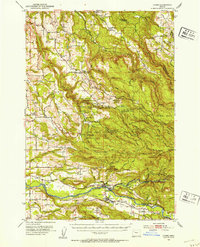 1951 Lyons1953 Print · USGSThe North Santiam River valley and the cataracts of the Silver Creek watershed are captured here in the early 1950s. Genealogists and hikers can trace the original sites of Silver Falls City, the Fox Valley Cem, and the historic Couch Mansion.4 unique versions available
 - 1951 Map of Snow Peak, 1953 Print
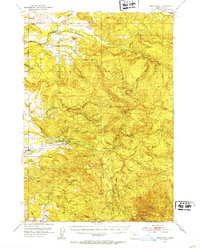 1951 Snow Peak1953 Print · USGSThe foothills of the Oregon Cascades come into focus during the early fifties, showing a landscape defined by forestry and small valley settlements. Researchers can locate family landmarks like St Benedicts School, Lacomb Cem, and the Snow Peak Lookout.3 unique versions available
 - 1953 Map of Salem
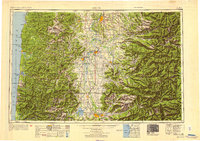 1953 Salem1953 Print · USGSMid-century Oregon comes to life through this detailed survey of the Willamette Valley and the adjacent Pacific coastline. Researchers can trace the rail lines of the Southern Pacific RR, visit rural hubs like Fairview School, or locate coastal landmarks like the Yaquina Head Lighthouse.
 - 1954 Map of Salem
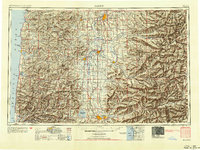 1954 Salem1954 Print · USGSMid-century Western Oregon is centered on the productive Willamette River valley as its cities and infrastructure expand toward the mountains. Genealogists and historians can trace the rail lines of the Southern Pacific RR and Oregon Electric Ry through towns like Dallas, Independence, and Brownsville.
 - 1954 Map of Scotts Mills, 1956 Print
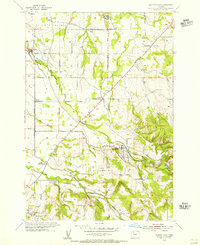 1954 Scotts Mills1956 Print · USGSThe Oregon countryside near the Clackamas and Marion county line is documented here in the mid-fifties as rural life centered on timber and farming. Genealogists can locate family landmarks like Jacks Bridge, rural schoolhouses such as Evans Valley School, and the Maplewood Cem.3 unique versions available
 - 1954 Map of Sherwood, 1957 Print
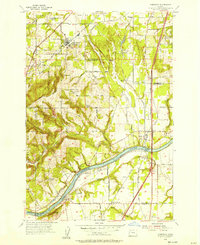 1954 Sherwood1957 Print · USGSThe northern Willamette Valley comes to life in the mid-1950s as the rail-and-river economy transitions toward highway development. Genealogists and local historians can trace family roots through the Pleasant Hill Cemetery, St Paul School, and the early riverfront layout of Butteville.
 - 1954 Map of Newberg, 1957 Print
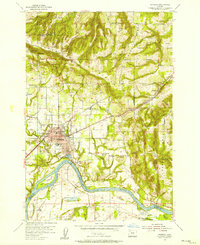 1954 Newberg1957 Print · USGSNewberg and the northern Willamette Valley are captured in the mid-1950s as a landscape of river-bend orchards and mountain-foothill farms. You can locate family-named sites like Gibbs Cemetery, trace the Southern Pacific tracks through Rex, and explore the grounds of Champoeg State Park.
 - 1954 Map of Canby, 1957 Print
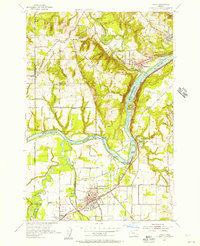 1954 Canby1957 Print · USGSThe north Willamette Valley is captured here in the mid-fifties, showing a landscape defined by its river forks and developing towns. Genealogists can locate family sites at Robert Bird Cemetery, Zoar Cemetery, or the rural crossroads of Advance.
 - 1955 Map of Yoder
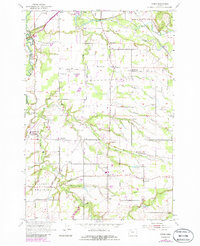 1955 Yoder1955 Print · USGSThe rural prairies south of Canby are captured here in the mid-1950s, showing a landscape of small farming communities and country schools. Genealogists can locate family landmarks like the Norwegian Cem, Whiskey Hill, and the settlement of Rural Dell.3 unique versions available
 - 1955 Map of Wilhoit, 1957 Print
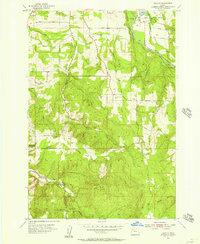 1955 Wilhoit1957 Print · USGSClackamas and Marion counties are captured here in the mid-fifties, showing a landscape of timber ponds and rural schoolhouses. Genealogists can locate family landmarks like Dart Cemetery and historical school sites including Beaver Lake School and Koke Corner.4 unique versions available
 - 1955 Map of Mill City, 1958 Print
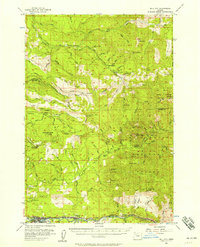 1955 Mill City1958 Print · USGSThe Santiam River canyon and its timber towns come alive in the mid-fifties, just as the valley's industrial landscape was shifting. Local historians can trace early settlements like Minto and Niagara, or locate the numerous high-country workings of the Black Eagle Mine and Crown Mine.3 unique versions available
 - 1955 Map of Bend, 1964 Print
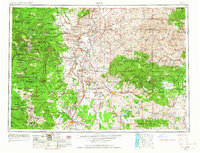 1955 Bend1964 Print · USGSCentral Oregon was undergoing significant growth in the mid-1960s as irrigation and infrastructure transformed the high desert. Researchers can trace the path of the Oregon Trunk Line, locate old stops like Gateway, and find landmarks like Lava Butte or the Grange.3 unique versions available
 - 1956 Map of Dundee, 1957 Print
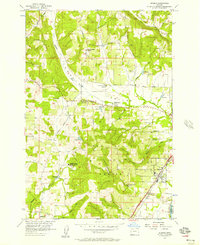 1956 Dundee1957 Print · USGSDundee and the surrounding agricultural valleys are captured here in the mid-fifties as the local railroad and school networks shaped the community. Genealogists and researchers can trace local landmarks like the Noble Cemetery, the Ribbon Ridge School, and the Trappist Abbey of Our Lady of Guadalupe.3 unique versions available
 - 1956 Map of St. Paul, 1958 Print
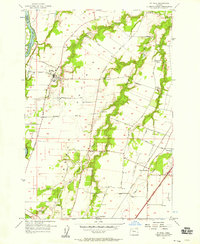 1956 St. Paul1958 Print · USGSThe Willamette Valley in the mid-fifties shows a rural landscape transitioning toward a modern highway era. Genealogists can trace the location of community anchors like Champoeg Cem, the St Louis School, and the now-abandoned Arbor Grove School.4 unique versions available
 - 1956 Map of Silverton, 1958 Print
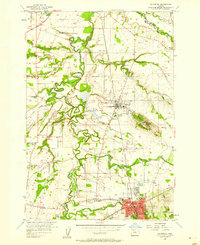 1956 Silverton1958 Print · USGSThe fertile Willamette Valley lowlands are captured here in the mid-fifties, centered on the railroad corridor between Silverton and Mount Angel. Genealogists can trace family names and local landmarks like St Benedict Abbey, Bethany Pioneer Cemetery, and the Gallonhouse Bridge.4 unique versions available
 - 1956 Map of Quartzville, 1958 Print
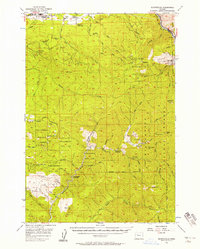 1956 Quartzville1958 Print · USGSThe northern Cascades come alive in the mid-1950s, showing the intersection of industrial mining and national forest management. Researchers can locate the Quartzville (Site) and Albany Mine, or trace the development of the Detroit Res.3 unique versions available
 - 1956 Map of Battle Ax, 1958 Print
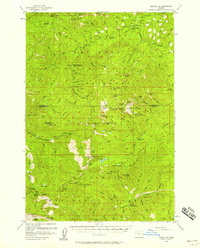 1956 Battle Ax1958 Print · USGSThe high Cascades at the mid-century were a landscape of remote fire lookouts, early forest camps, and hidden mines. Genealogists and hikers can trace the original Nohorn Trail to historic sites like Bagby Hot Springs and the Battle Ax Lookout.4 unique versions available
 - 1956 Map of Woodburn, 1958 Print
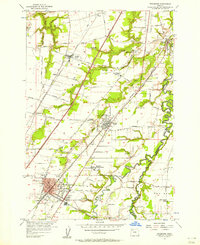 1956 Woodburn1958 Print · USGSMarion County agriculture and transportation were evolving rapidly in the mid-fifties as the new freeway cut across the fertile valley floor. Researchers can trace historic family landmarks from Hopewell Cemetery to rural schoolhouses like the Elliott Prairie School or the tracks of the Oregon Electric Railroad.4 unique versions available
 - 1956 Map of Detroit, 1958 Print
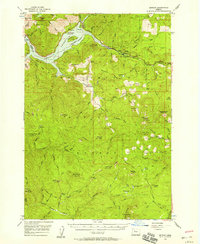 1956 Detroit1958 Print · USGSThe Oregon Cascades transition into the reservoir era in the mid-1950s as the newly formed Detroit Reservoir reshapes the canyon. Trace the original footprints of Detroit and Idanha or locate early wilderness lookouts like those at Minniece Point and Coffin Mtn.2 unique versions available
 - 1957 Map of Bend
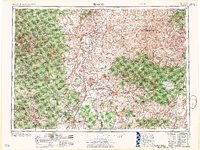 1957 Bend1957 Print · USGSCentral Oregon in the mid-fifties is a landscape of transition between the high Cascades and the arid volcanic plateau. Local historians can trace the rail corridors of the Oregon Trunk and locate early settlements like Ashwood, Odin Falls, and Camp Sherman.
 - 1957 Map of Gervais, 1958 Print
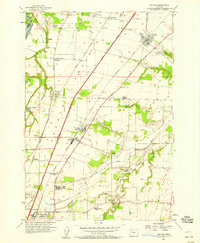 1957 Gervais1958 Print · USGSMid-century Marion County farming life centers on the rich soils of French Prairie and the transition of Lake Labish into agricultural land. Researchers can trace the layout of the U S Indian School Chemawa or locate family roots near St Louis and Labish Village.3 unique versions available
 - 1957 Map of Mission Bottom, 1958 Print
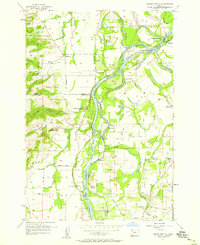 1957 Mission Bottom1958 Print · USGSThe Willamette Valley in the late fifties is captured here through its river landings and rich prairie lands. Genealogists can trace family landmarks like Claggett Cem or follow the path of the Wheatland Ferry and the Oregon Electric railroad.4 unique versions available
 - 1957 Map of Lebanon, 1959 Print
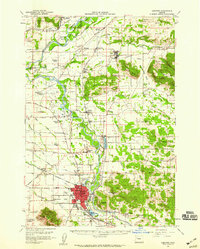 1957 Lebanon1959 Print · USGSThe mid-century Santiam River Valley comes to life in this survey of the Lebanon and Scio areas as they appeared in the late fifties. Researchers can trace the legacy of rural education and community at the Tennessee School, Richardson Gap Grange, and IOOF-Masonic Cemetery.3 unique versions available
Showing maps 1-25 of 31
Top cities of Marion County
- Salem historical maps
- Keizer historical maps
- Woodburn historical maps
- Silverton historical maps
- Stayton historical maps
- Mount Angel historical maps
See more
Frequently asked questions
- What are the different types of historical maps available for Marion County?
- What is the oldest map of Marion County?
- Where can I purchase historical maps of Marion County for my home or office?
- Where can I download high-res historical maps of Marion County?
- Are there historical topographic maps available for Marion County?
- Is there historical aerial imagery available for Marion County?
- Where are historical maps of Marion County sourced from?