1950s Maps of Wallowa County, Oregon
Explore 16 historic maps of Wallowa County from the 1950s. These maps offer a rare glimpse into what life looked like during the 1950s — showing old roads, neighborhoods, homes, and landmarks that have changed or disappeared over time.
Whether you're researching your family's past, planning a metal detecting trip, or studying how Wallowa County's landscape evolved across the 1950s, these high-resolution maps are a powerful tool for exploring the history of this region.
- Focus on a specific era: All maps on this page are from the 1950s, giving you a focused view of this time period.
- See what’s changed: Compare century-old streets, trails, and buildings to today's modern landscape using overlays and satellite layers.
- Research with precision: Use these maps for genealogy, historical research, land use analysis, or educational projects.
- View, download, or print: Maps are fully viewable online in high resolution, and can be downloaded or printed for your own records.
Start exploring Wallowa County's history through authentic maps from the 1950s. This is your window into the past.
Wallowa County, OR maps
(16)- 1954 Map of Cornucopia, 1958 Print
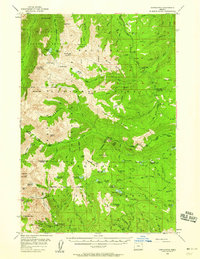 1954 Cornucopia1958 Print · USGSThe Wallowa Mountains are shown in the mid-1950s during a peak era for high-country mining and forest administration. Researchers can locate the Cornucopia Mines, trace the trails to Nebo Lookout, and find remote outposts like Fish Lake Guard Sta.4 unique versions available
 - 1954 Map of Imnaha, 1958 Print
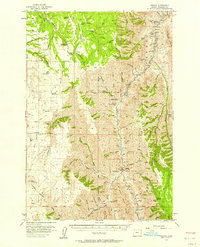 1954 Imnaha1958 Print · USGSNortheast Oregon ranching and canyon country are captured here during the mid-1950s, showing the intersection of private homesteads and national forest land. Researchers can find old landmarks like Zumwalt, the Imnaha School, and the Chesnimnus Cow Camp among the deep draws.2 unique versions available
 - 1954 Map of Kernan Point, 1958 Print
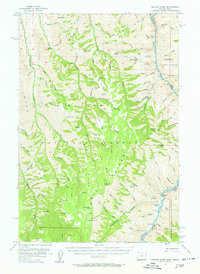 1954 Kernan Point1958 Print · USGSThe Snake River canyon and the Oregon-Idaho border are captured here in the mid-1950s, showing a landscape defined by isolated ranching life. Genealogists and historians can trace the remote Litch Ranch, Somers Ranch, and the Kneeland Place during this era.3 unique versions available
 - 1954 Map of Eagle Cap, 1958 Print
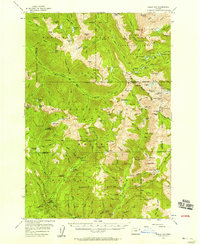 1954 Eagle Cap1958 Print · USGSThe Wallowa Mountains are captured here in the mid-fifties, showing a landscape of alpine lakes and high-country outposts. You can trace early trails and mining sites like the Basin Mine, or locate backcountry landmarks such as Boulder Park Resort and the Two Color Guard Sta.4 unique versions available
 - 1954 Map of Harl Butte, 1958 Print
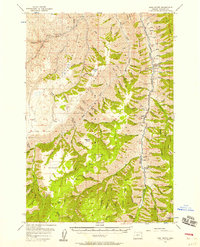 1954 Harl Butte1958 Print · USGSWallowa County's high country is captured here during the mid-fifties, showing the remote ridges and schoolhouses of the Imnaha River region. Genealogists and local historians can locate Freezout Sch, the Imnaha Grange, and family-named landmarks like Needham Butte.3 unique versions available
 - 1955 Map of Pullman, 1963 Print
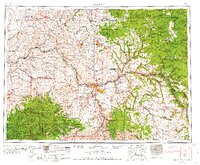 1955 Pullman1963 Print · USGSThe Palouse and Clearwater regions are captured here in the mid-1950s, showing the height of the rail-and-river economy. Genealogists and historians can trace rail lines like the Camas Prairie RR, find local landmarks like Whitman County Memorial Cem, and locate early academic centers at Washington State University and the University of Idaho.3 unique versions available
 - 1955 Map of Grangeville, 1964 Print
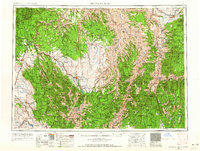 1955 Grangeville1964 Print · USGSThe high country of the Idaho-Oregon border comes alive in the mid-1950s, showing the deep river canyons and mountain peaks. Trace the Union Pacific RR through the valleys or locate settlements like Grangeville, Joseph, and the shoreline of Wallowa Lake.4 unique versions available
 - 1957 Map of Enterprise
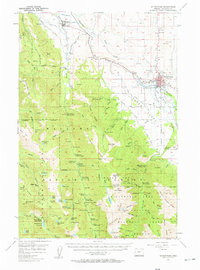 1957 Enterprise1957 Print · USGSWallowa County at the mid-century shows the transition from valley ranching to the high peaks of the WALLOWA MOUNTAINS. Genealogists and historians can trace local landmarks like the Chief Joseph Monument, the Joseph Cem, and the remote Lapover Ranch.2 unique versions available
 - 1957 Map of Joseph
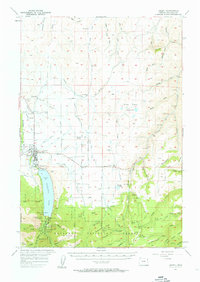 1957 Joseph1957 Print · USGSThe high valley and rugged mountain peaks of Wallowa County are captured here in the late fifties as agriculture and irrigation reshaped the landscape. Researchers can trace family sites at Pratt Sch and Liberty Grange or locate the historic Chief Joseph Cem near the shores of Wallowa Lake.3 unique versions available
 - 1957 Map of He Devil, 1958 Print
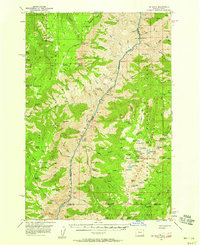 1957 He Devil1958 Print · USGSThe high country of the Idaho-Oregon border is mapped here in the late fifties, centered on the dramatic Snake River Canyon. Trace the footprint of local history through outposts like Horse Creek Cabin and the site of the Rankin Mill (Aband).4 unique versions available
 - 1957 Map of Cuprum, 1958 Print
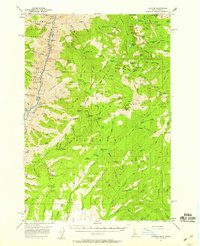 1957 Cuprum1958 Print · USGSThe Seven Devils Mountains of Idaho are captured here during the 1950s, showing the intersection of forest management and declining copper mining. Genealogists and historians can locate old mining sites like Bluejacket Mine and the remnants of former settlements at Landore and Helena.3 unique versions available
 - 1957 Map of Homestead, 1958 Print
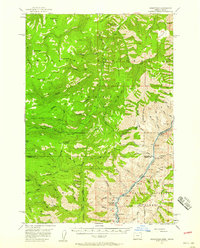 1957 Homestead1958 Print · USGSThe Snake River canyon and the high Wallowa wilderness are captured in the late 1950s as a landscape of isolated outposts and steep timberlands. Local historians can trace the remote Homestead settlement, the winding Kleinschmidt Grade, and the Coverdale Guard Station.3 unique versions available
 - 1957 Map of Sled Springs, 1959 Print
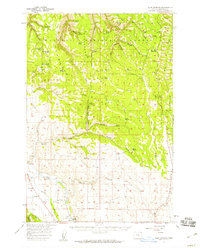 1957 Sled Springs1959 Print · USGSWallowa County during the late 1950s was a land of high mountain ridges and remote forest camps. Researchers can trace the path of the Union Pacific Railroad near Evans, locate the Wallowa Cem, or find the Feagin Ranch and Sled Springs Guard Sta.2 unique versions available
 - 1957 Map of Elk Mountain, 1959 Print
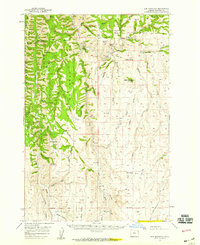 1957 Elk Mountain1959 Print · USGSThe high timber and ranchlands of Wallowa County come to life in the late 1950s, showing a landscape of forest camps and isolated buttes. Genealogists and historians can trace local landmarks like Lewis Sch, the Hinton Ranch, and the remote Chico outpost.3 unique versions available
 - 1958 Map of Pullman
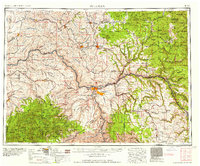 1958 Pullman1958 Print · USGSThe Palouse and Clearwater regions are captured here in the late fifties, showing the vital river-and-rail connection between eastern Washington and northern Idaho. Local historians can trace the paths of the Camas Prairie RR and Union Pacific RR as they serve towns like Colfax, Kamiah, and Nezperce.2 unique versions available
 - 1959 Map of Grangeville
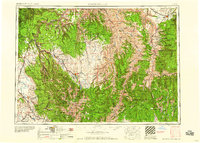 1959 Grangeville1959 Print · USGSThe high alpine peaks and deep river canyons of the Idaho-Oregon borderlands are captured in the late fifties. Researchers can trace the Union Pacific RR through the valleys to settlements like Enterprise, Union, and Grangeville.2 unique versions available
End of results
Showing maps 1-16 of 16
Top cities of Wallowa County
Frequently asked questions
- What are the different types of historical maps available for Wallowa County?
- What is the oldest map of Wallowa County?
- Where can I purchase historical maps of Wallowa County for my home or office?
- Where can I download high-res historical maps of Wallowa County?
- Are there historical topographic maps available for Wallowa County?
- Is there historical aerial imagery available for Wallowa County?
- Where are historical maps of Wallowa County sourced from?