1950s Maps of Bedford County, Pennsylvania
Explore 16 historic maps of Bedford County from the 1950s. These maps offer a rare glimpse into what life looked like during the 1950s — showing old roads, neighborhoods, homes, and landmarks that have changed or disappeared over time.
Whether you're researching your family's past, planning a metal detecting trip, or studying how Bedford County's landscape evolved across the 1950s, these high-resolution maps are a powerful tool for exploring the history of this region.
- Focus on a specific era: All maps on this page are from the 1950s, giving you a focused view of this time period.
- See what’s changed: Compare century-old streets, trails, and buildings to today's modern landscape using overlays and satellite layers.
- Research with precision: Use these maps for genealogy, historical research, land use analysis, or educational projects.
- View, download, or print: Maps are fully viewable online in high resolution, and can be downloaded or printed for your own records.
Start exploring Bedford County's history through authentic maps from the 1950s. This is your window into the past.
Bedford County, PA maps
(16)- 1950 Map of Frostburg, 1960 Print
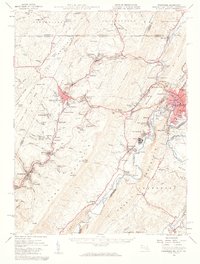 1950 Frostburg1960 Print · USGSMid-century Allegany County is defined here by its intensive coal mining operations and the intricate rail network of the Western Maryland and other lines. Researchers can trace the lineage of vanished mining hamlets and local landmarks like Borden Shaft, Klondike, and the scenic heights of Lovers Leap.3 unique versions available
 - 1950 Map of Artemas, 1960 Print
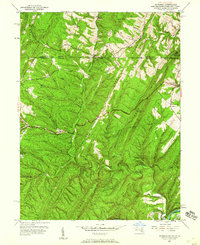 1950 Artemas1960 Print · USGSAllegany County and the Pennsylvania border are shown here in the mid-twentieth century as a landscape of deep hollows and narrow ridge farming. Researchers can trace the Mason and Dixon Line and find sites like White Sulphur Spring and St Patrick Ch.6 unique versions available
 - 1950 Map of Flintstone, 1972 Print
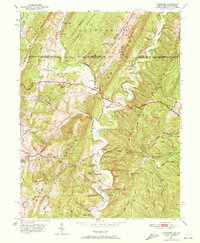 1950 Flintstone1972 Print · USGSAllegany County and the Maryland-Pennsylvania border are captured here just as post-war infrastructure began to overlay traditional mountain life. Genealogists and historians can trace family locations through Oakdale Cem, the Paradise Ch, and the remote farmsteads of Possum Hollow.5 unique versions available
 - 1951 Map of Cumberland
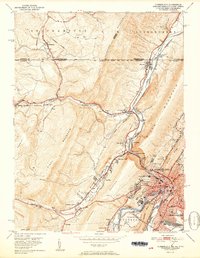 1951 Cumberland1951 Print · USGSThe industrial and rail hub of Cumberland is captured here at mid-century, where the Potomac River meets a complex web of mountain ridges and state lines. Genealogists and local historians can trace family roots through St Patricks Cem, the streets of Mount Savage, or the historic route of the National Pike.3 unique versions available
 - 1951 Map of Flintstone
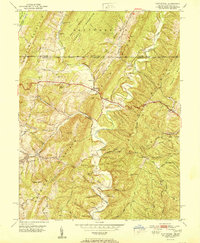 1951 Flintstone1951 Print · USGSThe Allegany County highlands and the Pennsylvania border are captured here in the early fifties, showing the mountain gaps and valley farms. Genealogists can trace family landmarks like Fairview Cem and Odd Fellows Cem, or locate rural schools such as Flintstone Creek Sch.2 unique versions available
 - 1951 Map of Artemas
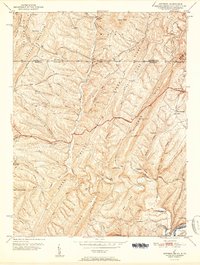 1951 Artemas1951 Print · USGSThe Western Maryland ridges and the Pennsylvania borderlands are shown here in the early fifties, following the heavy timber and rail eras. Genealogists can trace family landmarks along the Mason and Dixon Line and locate sites like St Patrick Ch and Piney Plains Sch.2 unique versions available
 - 1951 Map of Evitts Creek
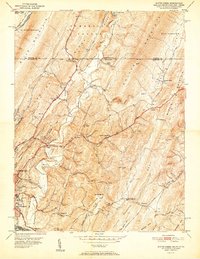 1951 Evitts Creek1951 Print · USGSMid-century Cumberland and the surrounding Allegany County ridges are captured here as they appeared just after the war. Researchers can locate family landmarks like Zion Ch, trace the old National Pike, or explore the rail yards of the Western Maryland Railway.2 unique versions available
 - 1951 Map of Bellegrove, 1952 Print
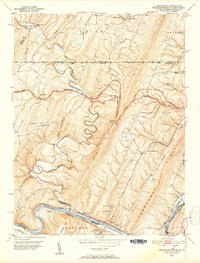 1951 Bellegrove1952 Print · USGSThe Maryland and Pennsylvania borderlands come alive in this mid-century survey of the ridges along the Potomac River. Genealogists and historians can trace family locations near Piney Plains Ch, the Woodmont Club, or the river landing at Pearre.7 unique versions available
 - 1951 Map of Frostburg, 1966 Print
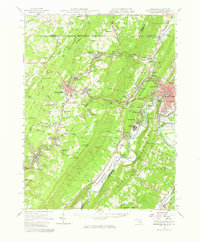 1951 Frostburg1966 Print · USGSThe coal and rail corridor of Maryland's Allegany County comes into focus at mid-century, from the heights of Savage Mountain to the Potomac River. Genealogists and historians can trace industrial roots at Borden Shaft, Lonaconing, and Mount Savage.
 - 1952 Map of Cumberland
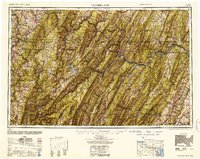 1952 Cumberland1952 Print · USGSThe Potomac Highlands and the Shenandoah Valley are revealed in this early 1950s survey of the Appalachian interior. Researchers can trace the river-and-rail corridors connecting Cumberland, Winchester, and the recreational waters of Deep Creek Lake.
 - 1953 Map of Pittsburgh
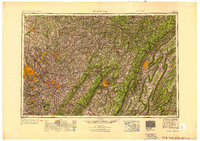 1953 Pittsburgh1953 Print · USGSWestern Pennsylvania's industrial landscape at the start of the fifties shows the steel and rail corridors between Pittsburgh and Altoona. Trace family roots in river towns like Tarentum or follow the Pennsylvania Turnpike across Laurel Hill.
 - 1954 Map of Pittsburgh
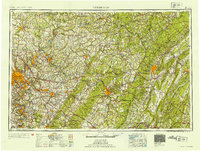 1954 Pittsburgh1954 Print · USGSWestern Pennsylvania in the early fifties remains a powerhouse of heavy industry and vital transit corridors. Genealogists and historians can trace the rail-and-river network connecting Pittsburgh, Johnstown, and Altoona via the Pennsylvania RR and the Lincoln Highway.2 unique versions available
 - 1956 Map of Cumberland, 1966 Print
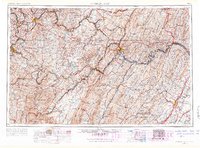 1956 Cumberland1966 Print · USGSThe tri-state Highlands in the mid-1950s show a landscape shaped by coal, timber, and the massive presence of the Baltimore & Ohio RR. Researchers can trace the industrial corridor from Cumberland through the Allegheny Mountains to mountain retreats like Deep Creek Lake.6 unique versions available
 - 1957 Map of Cumberland
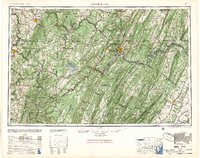 1957 Cumberland1957 Print · USGSThe Potomac River valley and the ridges of the Allegheny Front define this mid-century landscape at the intersection of Maryland, West Virginia, and Pennsylvania. Trace the steam-era rail lines of the Baltimore and Ohio RR or locate rural landmarks like St Stephens Church and Stony River Dam.
 - 1958 Map of Pittsburgh
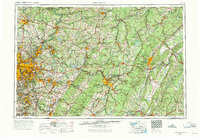 1958 Pittsburgh1958 Print · USGSWestern Pennsylvania in the late fifties shows an industrial heartland defined by the confluence of the Allegheny River and Monongahela River. Researchers can trace the sprawling rail networks of the Pennsylvania RR and find established towns like Butler, Latrobe, and Windber.5 unique versions available
 - 1959 Map of Pittsburgh
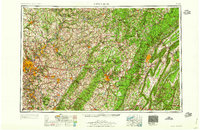 1959 Pittsburgh1959 Print · USGSWestern Pennsylvania in the late fifties is captured here at the height of its industrial era. Genealogists and historians can trace the riverfront growth of Pittsburgh, the rail works at Altoona, and the mountain gaps of Laurel Hill.
End of results
Showing maps 1-16 of 16
Top cities of Bedford County
- Bedford historical maps
- Napier Township historical maps
- Everett historical maps
- Hyndman historical maps
- Saxton historical maps
- Pavia Township historical maps
See more
Frequently asked questions
- What are the different types of historical maps available for Bedford County?
- What is the oldest map of Bedford County?
- Where can I purchase historical maps of Bedford County for my home or office?
- Where can I download high-res historical maps of Bedford County?
- Are there historical topographic maps available for Bedford County?
- Is there historical aerial imagery available for Bedford County?
- Where are historical maps of Bedford County sourced from?