Old Maps of Pike Township, Pennsylvania for Academic Research
Study the evolution of Pike Township with 47 high-resolution historic maps. Whether you're teaching, researching, or modeling changes in land use, these maps provide essential visual documentation of urban, environmental, and geographic change.
- Analyze long-term change: Track patterns in development, transportation, and natural features.
- Ideal for environmental or urban studies: Support academic projects with primary historical map data.
- Use in the classroom or lab: Educators and researchers rely on these maps to bring historical context to life.
These maps are a powerful tool for teaching, research, and visualizing how Pike Township has changed over the decades.
Pike Township, PA maps
(47)- 1903 Map of Curwensville
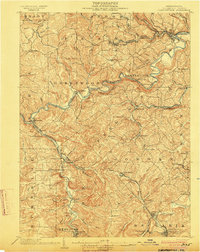 1903 Curwensville1903 Print · USGSThe West Branch Susquehanna River region was a hub of timber and rail activity in the early twentieth century. Researchers can trace the development of riverside towns like Lumber City, locate the Wister Mine near Irvona, and follow the winding routes of the New York Central and Hudson River RR.4 unique versions available
 - 1903 Map of Houtzdale, 1959 Print
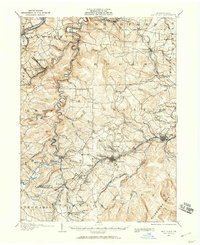 1903 Houtzdale1959 Print · USGSClearfield County was a hub of rail and river activity at the turn of the century as industrial towns expanded along the Allegheny Mts. Researchers can trace the early layout of Houtzdale, find family-named post offices like Oshanter P.O. Mitchells, and follow the winding Clearfield Creek.
 - 1905 Map of Houtzdale
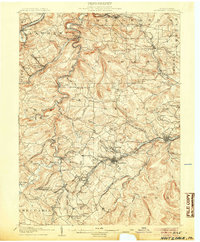 1905 Houtzdale1905 Print · USGSHoutzdale and the surrounding Clearfield County coalfields are captured here during their industrial prime at the turn of the century. Genealogists and historians can trace rail-dependent settlements and local post offices like Kephart P.O., Belsena Mills, and Brisbin.5 unique versions available
 - 1929 Map of Clearfield
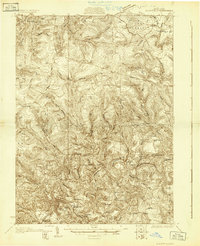 1929 Clearfield1929 Print · USGSThe riverfront and rail lines of central Pennsylvania come alive in this late 1920s survey of the West Branch Susquehanna River valley. Genealogists and historians can trace the foundations of local society through landmarks like the Leonard Waterford Sch and the rural crossroads of LeContes Mills.2 unique versions available
 - 1929 Map of Penfield, 1954 Print
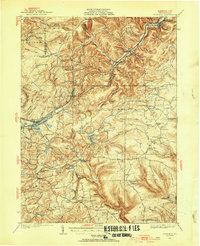 1929 Penfield1954 Print · USGSCentral Pennsylvania's rugged plateau and coal regions are mapped here in the late twenties, showing the intersection of major rail lines and isolated mountain communities. Genealogists can locate family landmarks like the Hoover Farm and several vanished rural schoolhouses including Hickory Sch and Laborde Sch.3 unique versions available
 - 1932 Map of Clearfield
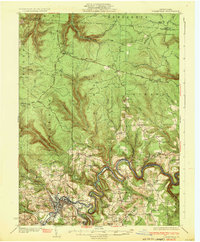 1932 Clearfield1932 Print · USGSClearfield and the West Branch of the Susquehanna are captured here in the early 1930s as a vital hub of rail and river industry. Researchers can trace ancestral locations through numerous rural landmarks like Lecontes Mills, Goshen Ch, and Mt Sinai Sch.4 unique versions available
 - 1932 Map of Penfield
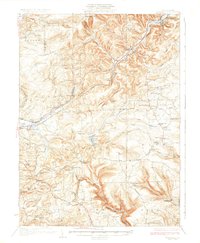 1932 Penfield1932 Print · USGSClearfield County is shown in the early thirties at a time when mountain railroads and forest management defined the region. Local historians can trace the paths of the Pennsylvania RR through Penfield or locate schools such as Coal Hill Sch and Hickory Sch.3 unique versions available
 - 1939 Map of Curwensville, 1952 Print
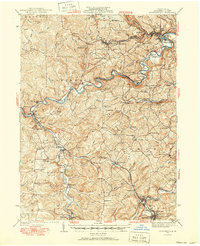 1939 Curwensville1952 Print · USGSClearfield County in the late 1930s is defined by a dense rail-and-river network where the West Branch of the Susquehanna meets Curwensville. Local historians can trace dozens of rural schoolhouses and family burial sites like Friends Cem and Glendale Sch.2 unique versions available
 - 1942 Map of Curwensville
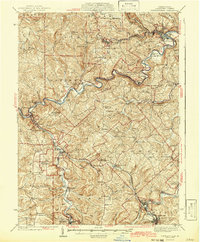 1942 Curwensville1942 Print · USGSClearfield County settlements and river-side industries are documented here in the early years of the war. Genealogists and historians can trace family roots through landmarks like Fruit Hill Ch, Friends Cem, and the Oakland Sch in the hills above the Susquehanna River.
 - 1943 Map of Punxsutawney
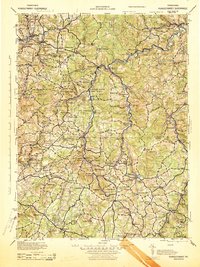 1943 Punxsutawney1943 Print · USGSThe Pennsylvania coal country around the turn of the century and through the war years is captured in this detailed survey of Jefferson, Indiana, and Clearfield counties. Researchers can trace the rail-reliant economy through Findley Mills, Rossiter Junction, and landmarks like the St Lawrence Fire Tower.
 - 1944 Map of Glen Richey, 1956 Print
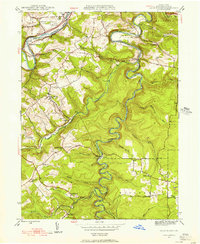 1944 Glen Richey1956 Print · USGSClearfield County is shown during the mid-1940s as a landscape of winding creeks and ridge-top settlements connected by the B & O railroad. Genealogists can trace family names at Baughman Cem or locate long-gone rural schools like Evergreen Sch and Pleasant Ridge Sch.5 unique versions available
 - 1946 Map of Glen Richey
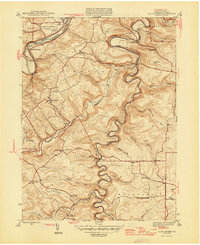 1946 Glen Richey1946 Print · USGSClearfield County's upland valleys and winding waterways are captured here at the end of World War II. Genealogists and local historians can trace rural family sites from Glen Richey to Boardman, including numerous schools like Bethlehem Sch and several cemeteries.2 unique versions available
 - 1953 Map of Pittsburgh
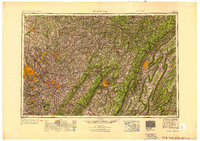 1953 Pittsburgh1953 Print · USGSWestern Pennsylvania's industrial landscape at the start of the fifties shows the steel and rail corridors between Pittsburgh and Altoona. Trace family roots in river towns like Tarentum or follow the Pennsylvania Turnpike across Laurel Hill.
 - 1954 Map of Pittsburgh
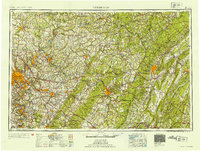 1954 Pittsburgh1954 Print · USGSWestern Pennsylvania in the early fifties remains a powerhouse of heavy industry and vital transit corridors. Genealogists and historians can trace the rail-and-river network connecting Pittsburgh, Johnstown, and Altoona via the Pennsylvania RR and the Lincoln Highway.2 unique versions available
 - 1957 Map of Warren, 1964 Print
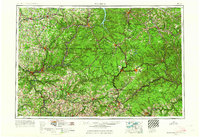 1957 Warren1964 Print · USGSThe northern Pennsylvania oil and timber country comes into focus in the mid-fifties, showing the region before modern highway expansions. Trace the industrial rail networks of the Pennsylvania RR and the early Allegheny River Reservoir near Warren and Oil City.4 unique versions available
 - 1958 Map of Pittsburgh
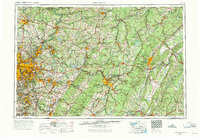 1958 Pittsburgh1958 Print · USGSWestern Pennsylvania in the late fifties shows an industrial heartland defined by the confluence of the Allegheny River and Monongahela River. Researchers can trace the sprawling rail networks of the Pennsylvania RR and find established towns like Butler, Latrobe, and Windber.5 unique versions available
 - 1958 Map of Warren
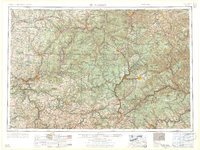 1958 Warren1958 Print · USGSNorthern Pennsylvania’s timber and oil country is captured here during the late fifties, showing the interplay of industrial valleys and vast state forests. Genealogists can trace family connections across the Cornplanter Indian Reservation or through rail hubs like Oil City and Saint Marys.
 - 1959 Map of Warren
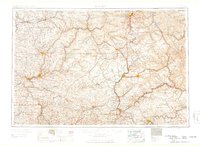 1959 Warren1959 Print · USGSNorthern Pennsylvania's oil and timber country comes alive in this late-fifties study of the forest-clad plateaus. Trace the historic Cornplanter (Indian Reservation), the sprawling Oil Field, and the rail lines of the Pennsylvania RR.2 unique versions available
 - 1959 Map of Pittsburgh
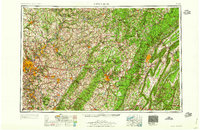 1959 Pittsburgh1959 Print · USGSWestern Pennsylvania in the late fifties is captured here at the height of its industrial era. Genealogists and historians can trace the riverfront growth of Pittsburgh, the rail works at Altoona, and the mountain gaps of Laurel Hill.
 - 1959 Map of Elliott Park, 1960 Print
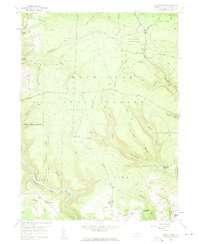 1959 Elliott Park1960 Print · USGSThe Clearfield County high country is documented here in the late fifties as coal extraction and reforestation shaped the landscape. Genealogists and historians can trace family locations near Greenville, Pleasant Grove Ch, and numerous Strip Mines.5 unique versions available
 - 1959 Map of Curwensville, 1960 Print
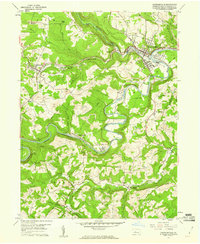 1959 Curwensville1960 Print · USGSThe West Branch Susquehanna River region in the late 1950s shows a landscape of deep valleys and coal mining. Genealogists and historians can trace rail lines to settlements like Lumber City and Grampian, or locate sites like Zion Ch and Oak Hill Cemetery.5 unique versions available
 - 1959 Map of Clearfield, 1961 Print
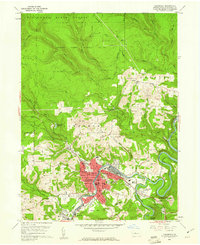 1959 Clearfield1961 Print · USGSClearfield and the Susquehanna River valley are captured here at a peak of industrial activity in the late fifties. Genealogists and historians can trace family-named sites like the Baney Settlement or locate records at Hillcrest Cem and St Francis Sch.5 unique versions available
 - 1964 Map of Pittsburgh
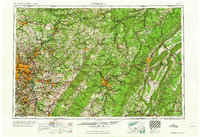 1964 Pittsburgh1964 Print · USGSWestern Pennsylvania in the late fifties and early sixties shows a landscape of powerful river industries and expanding highways. Genealogists and historians can trace the rail corridors of the Pennsylvania RR through industrial hubs like Johnstown, Altoona, and Nanty Glo.
 - 1971 Map of Warren
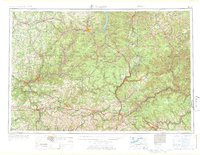 1971 Warren1971 Print · USGSNorth Central Pennsylvania is captured here in the early seventies, showing a landscape defined by industrial centers and massive state forests. Genealogists and historians can trace the rail lines of the Penn Central and Erie Lackawanna connecting towns like Warren, Kane, and Du Bois.
 - 1983 Map of Clearfield, 1984 Print
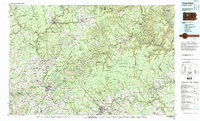 1983 Clearfield1984 Print · USGSPennsylvania's coal and timber heartland is captured in the early eighties as industrial hubs like Du Bois and Saint Marys thrived among the state forests. Genealogists can locate family landmarks like Morningside Cemetery, the old works at Dagus Mines, and the rural community of Byrnedale.
Showing maps 1-25 of 47
Top cities near Pike Township
- Sandy Township historical maps
- DuBois historical maps
- Clearfield historical maps
- Curwensville historical maps
- Beccaria Township historical maps
- Houtzdale historical maps
See more
Top neighborhoods of Pike Township
Frequently asked questions
- What are the different types of historical maps available for Pike Township?
- What is the oldest map of Pike Township?
- Where can I purchase historical maps of Pike Township for my home or office?
- Where can I download high-res historical maps of Pike Township?
- Are there historical topographic maps available for Pike Township?
- Is there historical aerial imagery available for Pike Township?
- Where are historical maps of Pike Township sourced from?