1950s Maps of Charleston County, South Carolina
Explore 20 historic maps of Charleston County from the 1950s. These maps offer a rare glimpse into what life looked like during the 1950s — showing old roads, neighborhoods, homes, and landmarks that have changed or disappeared over time.
Whether you're researching your family's past, planning a metal detecting trip, or studying how Charleston County's landscape evolved across the 1950s, these high-resolution maps are a powerful tool for exploring the history of this region.
- Focus on a specific era: All maps on this page are from the 1950s, giving you a focused view of this time period.
- See what’s changed: Compare century-old streets, trails, and buildings to today's modern landscape using overlays and satellite layers.
- Research with precision: Use these maps for genealogy, historical research, land use analysis, or educational projects.
- View, download, or print: Maps are fully viewable online in high resolution, and can be downloaded or printed for your own records.
Start exploring Charleston County's history through authentic maps from the 1950s. This is your window into the past.
Charleston County, SC maps
(20)- 1954 Map of Augusta
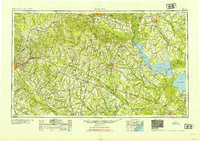 1954 Augusta1954 Print · USGSThe Savannah River valley and South Carolina Midlands are captured here during a period of post-war growth. Researchers can trace the rail-and-river economy through the Southern RR corridor and locate historic settlements like Aiken, Orangeburg, and Sumter.
 - 1956 Map of Edisto Beach, 1957 Print
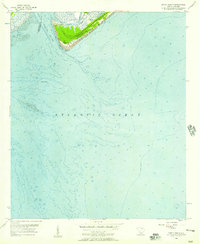 1956 Edisto Beach1957 Print · USGSThe South Carolina coast near Edisto Beach is captured in the mid-1950s, showing the intersection of the South Edisto River and the sea. Researchers can trace the early layout of Edisto Beach State Park and locate landmarks like The Mounds.2 unique versions available
 - 1957 Map of Mount Holly, 1959 Print
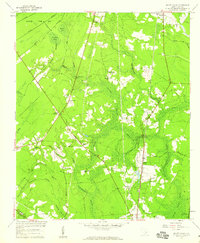 1957 Mount Holly1959 Print · USGSBerkeley County was characterized by dense swamplands and rural railroad hamlets in the mid-1950s. Genealogists can trace family roots through numerous local landmarks, including Varner Sch, Driggerstown, and the Groomsville Cem.4 unique versions available
 - 1957 Map of Stallsville, 1959 Print
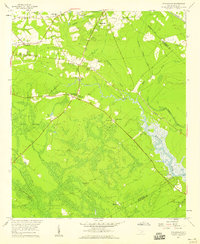 1957 Stallsville1959 Print · USGSThe Ashley River corridor and Dorchester County appear here in the late fifties as a landscape of colonial landmarks and private hunt clubs. Genealogists and historians can trace family-named sites such as St Lukes Ch, Old Fort Dorchester, and the riverfront at Middleton Gardens.3 unique versions available
 - 1957 Map of Augusta, 1966 Print
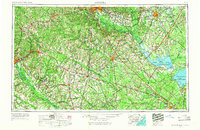 1957 Augusta1966 Print · USGSThe Savannah River and Santee basins are captured here during a period of massive military and industrial expansion in the late fifties. Genealogists can trace family footprints across Four Hole Swamp or near the Savannah River Plant.3 unique versions available
 - 1957 Map of Savannah, 1967 Print
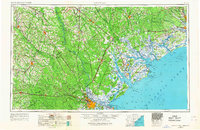 1957 Savannah1967 Print · USGSThe Lowcountry and Georgia coastal plain are shown here in the late fifties, prior to modern expansion. Researchers can trace the rail-and-river economy through the Central of Georgia lines and the Ogeechee River wetlands.4 unique versions available
 - 1958 Map of Augusta
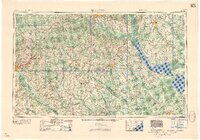 1958 Augusta1958 Print · USGSThe borderlands between Georgia and South Carolina come alive in the 1950s, showing the early footprint of the Savannah River Plant. Genealogists and historians can trace rail-dependent towns and rural landmarks from Orangeburg to the Fort Jackson Military Reservation.
 - 1958 Map of North Charleston, 1959 Print
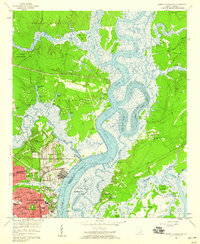 1958 North Charleston1959 Print · USGSNorth Charleston in the late fifties shows a booming industrial and military hub defined by its riverfront access. Researchers can trace the mid-century development of Park Circle, the massive Port Terminal, and community cornerstones like the Orphanage and Oak Terrace Sch.4 unique versions available
 - 1958 Map of Johns Island, 1959 Print
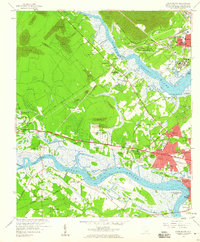 1958 Johns Island1959 Print · USGSThe Lowcountry landscape west of Charleston comes to life in the late fifties, showing a mix of historic river estates and postwar growth. Genealogists and historians can trace local landmarks like Drayton Hall, Fort Bull, and the Stono Sta rail stop.5 unique versions available
 - 1958 Map of Charleston, 1959 Print
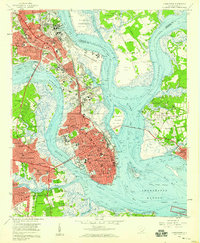 1958 Charleston1959 Print · USGSCharleston and its surrounding coastal islands are shown here in the late fifties as the city expanded northward and across its rivers. Researchers can locate long-standing institutions like The Citadel or trace family roots through historic sites like Magnolia Cem and Whipper Barony.5 unique versions available
 - 1958 Map of Summerville, 1959 Print
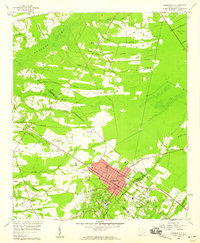 1958 Summerville1959 Print · USGSSummerville and its surrounding Lowcountry reaches appear here in the late fifties as a network of rail-side settlements and vast wetlands. Trace local history through landmarks like Jedburg, the Alston Schools, and the winding Cypress Swamp.4 unique versions available
 - 1958 Map of Ladson, 1959 Print
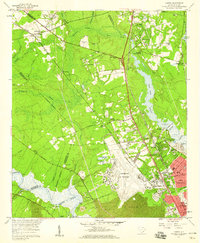 1958 Ladson1959 Print · USGSCoastal South Carolina is captured here in a moment of rapid military and industrial growth during the late fifties. You can trace the expansion of North Charleston and the Charleston Air Force Base alongside historic riverfront landmarks like Magnolia Gardens.4 unique versions available
 - 1958 Map of Cainhoy, 1960 Print
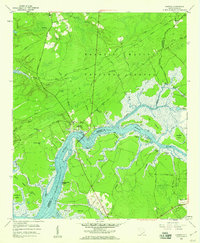 1958 Cainhoy1960 Print · USGSCoastal South Carolina is captured here in the late fifties, where the river-and-marsh economy still dictates the local geography. Researchers can trace historic family landmarks and burial grounds like McDowell Cem, St Pauls Ch, and Martins Point Landing.3 unique versions available
 - 1959 Map of Legareville, 1960 Print
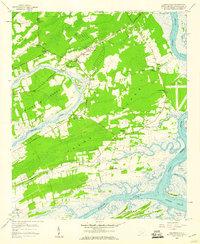 1959 Legareville1960 Print · USGSJohns Island and the surrounding South Carolina Lowcountry are captured in the late fifties, showing a rural landscape of tidal creeks and church-centered communities. Genealogists and historians can trace family locations near Legareville, Fenwick Crossroads, and several schools including Haut Gap Sch.3 unique versions available
 - 1959 Map of James Island, 1960 Print
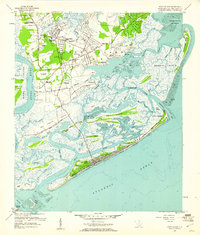 1959 James Island1960 Print · USGSThe coastal marshlands and barrier islands of the Charleston area are captured here during a period of mid-century growth. Genealogists and historians can trace family-named sites and landmarks like Secessionville, Sol Legare Island, and the Loran Coast Guard Station.4 unique versions available
 - 1959 Map of Bull Island, 1960 Print
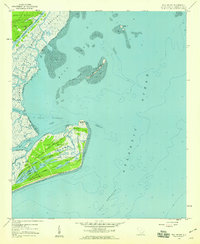 1959 Bull Island1960 Print · USGSThe South Carolina coast near Charleston appears in the late fifties as a landscape of protected marshes and maritime forests. Genealogists and historians can trace family sites at Wilson Cem or explore the wild paths of Cape Romain Island along Old Fort Road.3 unique versions available
 - 1959 Map of Fort Moultrie, 1960 Print
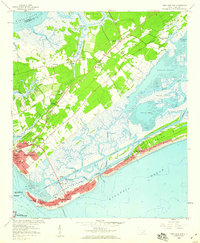 1959 Fort Moultrie1960 Print · USGSThe Charleston coast comes into focus during the late fifties, showing the established waterfront communities and defensive landmarks of the harbor. Genealogists and historians can trace local landmarks like Christ Church, the Confederate Cem, and Fort Moultrie.5 unique versions available
 - 1959 Map of Sewee Bay, 1960 Print
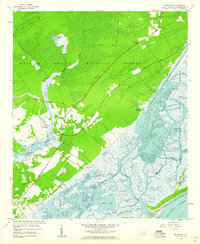 1959 Sewee Bay1960 Print · USGSThe South Carolina Lowcountry coastline in the late fifties is captured here through the dense forests and expansive tidal marshes of Charleston County. Genealogists and researchers can trace community roots through Wappetaw Cem, Sewee Ch, and the small settlement at Woodville.4 unique versions available
 - 1959 Map of Capers Inlet, 1960 Print
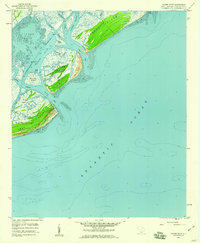 1959 Capers Inlet1960 Print · USGSThe South Carolina Lowcountry coastline appears in its mid-century state, documenting the barrier islands and tidal reaches of Charleston County. Trace the historical shoreline and navigation channels through Copahee Sound, Dewees Inlet, and the Intracoastal Waterway.3 unique versions available
 - 1959 Map of Kiawah Island, 1960 Print
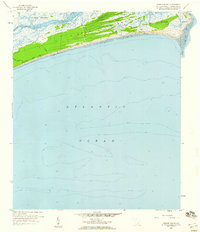 1959 Kiawah Island1960 Print · USGSCoastal South Carolina remains largely untouched in the late fifties, prior to the island's modern development. Trace the original footprints of Kiawah Island Drive and the natural winding paths of Cinder Creek and the Kiawah River.3 unique versions available
End of results
Showing maps 1-20 of 20
Top cities of Charleston County
- Mount Pleasant historical maps
- Hollywood historical maps
- Isle of Palms historical maps
- Ravenel historical maps
- Folly Beach historical maps
- Seabrook Island historical maps
See more
Frequently asked questions
- What are the different types of historical maps available for Charleston County?
- What is the oldest map of Charleston County?
- Where can I purchase historical maps of Charleston County for my home or office?
- Where can I download high-res historical maps of Charleston County?
- Are there historical topographic maps available for Charleston County?
- Is there historical aerial imagery available for Charleston County?
- Where are historical maps of Charleston County sourced from?