1940s Maps of Blount County, Tennessee
Explore 19 historic maps of Blount County from the 1940s. These maps offer a rare glimpse into what life looked like during the 1940s — showing old roads, neighborhoods, homes, and landmarks that have changed or disappeared over time.
Whether you're researching your family's past, planning a metal detecting trip, or studying how Blount County's landscape evolved across the 1940s, these high-resolution maps are a powerful tool for exploring the history of this region.
- Focus on a specific era: All maps on this page are from the 1940s, giving you a focused view of this time period.
- See what’s changed: Compare century-old streets, trails, and buildings to today's modern landscape using overlays and satellite layers.
- Research with precision: Use these maps for genealogy, historical research, land use analysis, or educational projects.
- View, download, or print: Maps are fully viewable online in high resolution, and can be downloaded or printed for your own records.
Start exploring Blount County's history through authentic maps from the 1940s. This is your window into the past.
Blount County, TN maps
(19)- 1940 Map of Concord
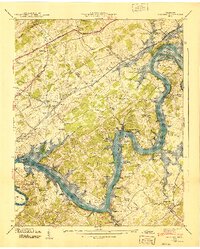 1940 Concord1940 Print · USGSThe Tennessee River valley near Concord and Friendsville is captured here just as the TVA was transforming the local landscape. Researchers can locate early family sites like Prater Cem, the historic Ft Loudoun site, and the Leeper Ferry (Abandoned).4 unique versions available
 - 1940 Map of Meadow
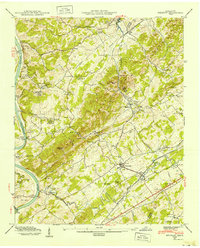 1940 Meadow1940 Print · USGSLoudon and Blount Counties appear here in the early 1940s, just as the local river-and-rail economy defined daily life. Genealogists and researchers can trace historic river crossings like Morganton Ferry or find rural landmarks like Axley Chapel and Greenback.
 - 1940 Map of Bearden
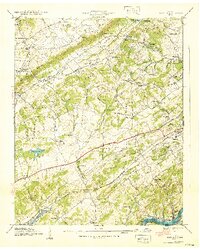 1940 Bearden1940 Print · USGSKnox County just before the completion of Fort Loudoun Lake shows a landscape of ridge-top farms and growing rail-side communities. Genealogists can locate family names at Edgewood Cem, Karns Sch, and the settlements of Bearden or Rocky Hill.2 unique versions available
 - 1940 Map of Shooks Gap
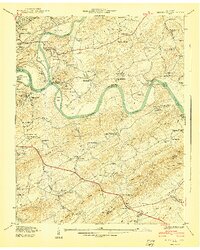 1940 Shooks Gap1940 Print · USGSThe confluence of the French Broad and Holston rivers defines this 1940 Knox County landscape just east of Knoxville. Genealogists can trace family sites at Asbury Cem, find the Riverdale Ferry crossing, or locate old schoolhouses like New Prospect Sch.3 unique versions available
 - 1940 Map of Tapoco, 1956 Print
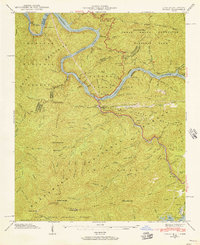 1940 Tapoco1956 Print · USGSThe Tennessee and North Carolina borderlands come alive in the 1940s as hydroelectric power and federal forest conservation reshape the mountains. Trace historic family sites and early infrastructure including Orr Cemetery, Beers School, and the Calderwood Dam.5 unique versions available
 - 1941 Map of Wildwood
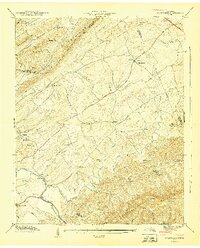 1941 Wildwood1941 Print · USGSBlount County and the surrounding ridges come alive in this pre-war survey of the rural Tennessee valley. Researchers can trace family ties through numerous local landmarks like Keeble Chapel, Eusebia Ch, and the Old Chilhowee Sch.
 - 1941 Map of Louisville
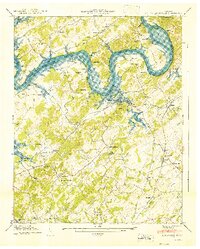 1941 Louisville1941 Print · USGSBlount and Knox counties are captured in the early 1940s as the Tennessee River valley prepared for the flooding of the Fort Loudoun Reservoir. Genealogists and historians can trace family locations near Miser Station, Mahoney Mill, and Pumpkin Center.
 - 1941 Map of Kinzel Springs
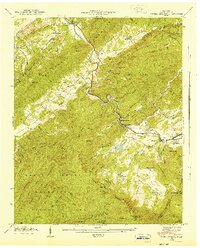 1941 Kinzel Springs1941 Print · USGSBlount County at the opening of the 1940s shows the mountain communities of Townsend and Walland along the Little River. Genealogists can locate family landmarks such as Walker Chapel, Caylor Sch, and Lawson Crossroads.
 - 1941 Map of Walden Creek
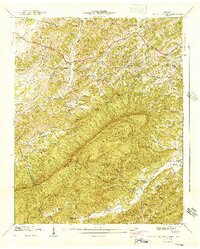 1941 Walden Creek1941 Print · USGSSevier County in the early 1940s is a landscape of mountain ridges and remote valley settlements. Genealogists can locate family landmarks like the Harrison Chilhowee Academy, Dupont Cem, and numerous rural schoolhouses such as Laurel Grove Sch.2 unique versions available
 - 1941 Map of Binfield
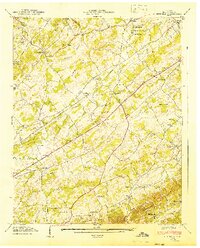 1941 Binfield1941 Print · USGSBlount County’s rural valleys are shown at the dawn of the 1940s, highlighting a landscape of family farms and local schools. Researchers can trace the Louisville and Nashville rail line past CCC Camp No. 47 and locate ancestral sites like Baker Creek Ch or Seceder Cem.2 unique versions available
 - 1941 Map of Tapoco
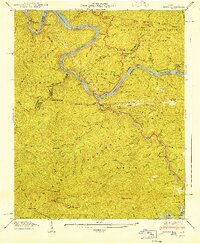 1941 Tapoco1941 Print · USGSThe Little Tennessee River border between North Carolina and Tennessee is captured here during the 1940s buildup of hydroelectric power. Genealogists and hikers can trace the Appalachian Trail through Deals Gap or locate remote sites like Beers Sch and Orr Cem.
 - 1941 Map of Maryville
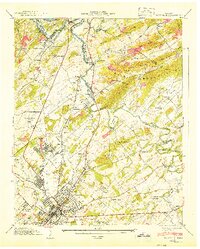 1941 Maryville1941 Print · USGSMaryville and Alcoa were industrial and educational hubs on the eve of the Second World War. Genealogists can trace family names through dozens of rural landmarks like Mt Moriah Ch, Everett Sch, and the riverside settlement of Rockford.2 unique versions available
 - 1941 Map of Tallassee, 1959 Print
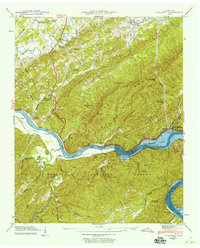 1941 Tallassee1959 Print · USGSThe Little Tennessee River valley is shown during its mid-century transformation as the rising waters of Chilhowee Lake began to reshape the landscape. Researchers can locate vanished river crossings like Tallassee Ferry and quiet rural centers such as Wellsville or the Citico Sch.
 - 1941 Map of Vonore, 1960 Print
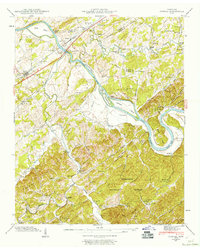 1941 Vonore1960 Print · USGSThe Little Tennessee River valley comes alive in the early 1940s, showing a landscape of ferry crossings and river islands before modern flooding. Researchers can trace family roots through Toqua Sch, Bacon Ferry, and landmarks like Fort Loudon.5 unique versions available
 - 1942 Map of Tallassee
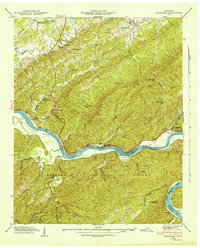 1942 Tallassee1942 Print · USGSThe Little Tennessee River corridor comes alive in the early 1940s, showing a landscape of mountain gaps and river ferries. Genealogists can trace family sites like Quaker Cem, Williamson Chapel, and river crossings at Tallassee Ferry.
 - 1942 Map of Knoxville
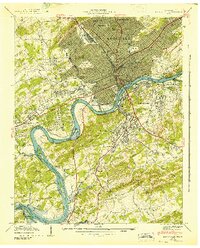 1942 Knoxville1942 Print · USGSKnoxville and its riverfront neighborhoods are shown here at the start of the 1940s, just as the reservoir system began to reshape the valley. Genealogists can trace family roots through numerous burial grounds like Old Gray Cem and Wells Cem, or locate landmarks such as the University of Tennessee.
 - 1942 Map of Vonore
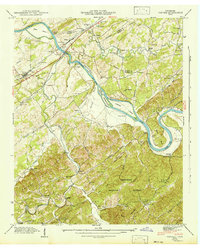 1942 Vonore1942 Print · USGSMonroe County's river valleys are shown here in the early 1940s, just as the Tennessee Valley Authority was reshaping the region's waters. Genealogists can trace family footprints at Shaddon Mill, Montgomery Cem, and the old river crossing at Bacon Ferry.
 - 1942 Map of Wear Cove
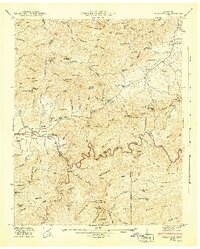 1942 Wear Cove1942 Print · USGSThe valleys and ridges of Blount and Sevier Counties are mapped here in the early 1940s, just inside the Great Smoky Mountains National Park. Genealogists can trace family sites like Mattox Cem, Park Settlement, and the Wearwood School near Wear Cove Church.2 unique versions available
 - 1942 Map of Blockhouse
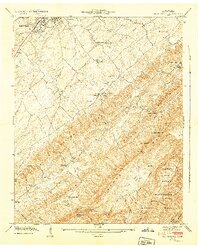 1942 Blockhouse1942 Print · USGSBlount County at the edge of the Smokies in the early 1940s reveals a landscape of ridge-top lookouts and valley settlements. Researchers can trace rural life through landmarks like Montvale Springs, Piney Grove Ch, and the high vantage point at Look Rock.2 unique versions available
End of results
Showing maps 1-19 of 19
Top cities of Blount County
- Maryville historical maps
- Alcoa historical maps
- Louisville historical maps
- Friendsville historical maps
- Rockford historical maps
- Townsend historical maps
Frequently asked questions
- What are the different types of historical maps available for Blount County?
- What is the oldest map of Blount County?
- Where can I purchase historical maps of Blount County for my home or office?
- Where can I download high-res historical maps of Blount County?
- Are there historical topographic maps available for Blount County?
- Is there historical aerial imagery available for Blount County?
- Where are historical maps of Blount County sourced from?