Old Maps of Austin County, Texas for Hiking & Exploration
Hike through history with 127 historic maps of Austin County. Explore old trails, ghost towns, and forgotten backroads — perfect for outdoor adventurers and local explorers.
- Rediscover forgotten places: Map out old mining camps, roads, and footpaths that no longer exist on modern maps.
- Layer with modern tools: Combine with LiDAR or satellite views to plan hikes through historical terrain.
- Made for exploration: Popular among hikers, overlanders, and local history lovers.
Use these maps to find adventure and explore the hidden past of Austin County.
Austin County, TX maps
(127)- 1919 Map of Fayettsville
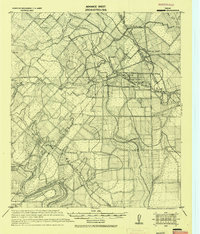 1919 Fayettsville1919 Print · USGSFayette and Colorado counties are captured here in the years following the Great War, showing a landscape defined by the railroad and the river. Researchers can trace the routes of the Missouri Kansas and Texas Railway to historic hubs like Fayetteville and Ellinger.
 - 1930 Map of Brenham, 1937 Print
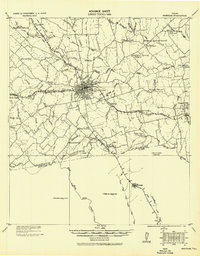 1930 Brenham1937 Print · USGSBrenham and Chapel Hill appear here during the interwar years as vital rail and agricultural centers for Washington County. Researchers can trace rural life through numerous labeled landmarks like the County Farm, Harrison Spring Church, and Polaski School.
 - 1953 Map of Seguin, 1965 Print
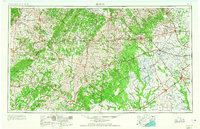 1953 Seguin1965 Print · USGSSouth Texas in the early fifties shows a thriving river-and-rail economy across the Guadalupe and Colorado basins. Genealogists and historians can trace rail routes like the Southern Pacific through Seguin, locate oil wells, or find the Gary AAF near San Marcos.4 unique versions available
 - 1954 Map of Austin, 1964 Print
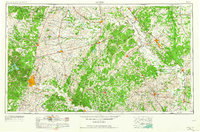 1954 Austin1964 Print · USGSCentral Texas is captured during a period of steady growth as the capital city and its neighboring farm towns began to modernize. Researchers can trace historic rail corridors like the Southern Pacific RR or locate landmarks such as Bergstrom Air Force Base and Pilot Knob.4 unique versions available
 - 1956 Map of Bellville
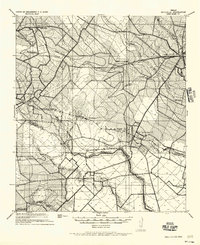 1956 Bellville1956 Print · USGSTexas farming life in the mid-fifties is captured here as small communities and rural school districts thrive along the San Bernard River. Genealogists can trace early homesteads near Industry, New Ulm, and the Cat Springs Sch.
 - 1956 Map of Sealy
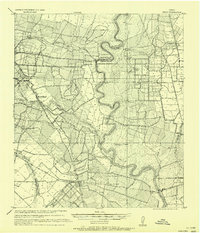 1956 Sealy1956 Print · USGSThe Brazos River valley between Austin and Waller counties is shown here as it transitioned through the early twentieth century. Researchers can locate early post offices at Burleigh PO and Browntown, trace ferry crossings, or find the Cotton Gin and Wesley Chapel.
 - 1956 Map of Hempstead
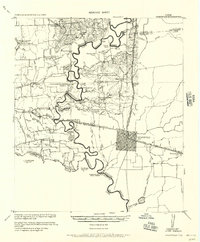 1956 Hempstead1956 Print · USGSSoutheast Texas river country comes alive in this survey of the Brazos valley at the dawn of the motorized age. Genealogists and historians can trace the foundations of local society through schools like Pauls School, post offices at Howth P.O., and the path of the Houston and Texas Central Railroad.
 - 1956 Map of Brenham
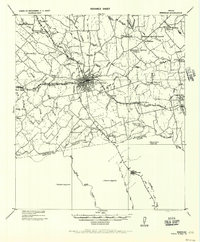 1956 Brenham1956 Print · USGSWashington County during the early twentieth century was a landscape of rail-connected towns and rural parish life. Genealogists can trace family locations near landmarks like Harrison Spring Church, Polaski School, and the County Farm.
 - 1956 Map of Wallis
 1956 Wallis1956 Print · USGSThe Brazos and San Bernard rivers dominate this coastal prairie landscape during the early twentieth century. Trace family roots and vanished rail stops through Wallis, Chesterville, and Lissie along the Gulf Colorado and Santa Fe Railway.
 - 1957 Map of Eagle Lake
 1957 Eagle Lake1957 Print · USGSTexas coastal prairie life in the early twentieth century is defined here by the convergence of major rail lines and the namesake Eagle Lake. Genealogists and historians can trace the development of localized junctions and settlements like Alleyton, Altair, and Rice Land.
 - 1958 Map of Seguin
 1958 Seguin1958 Print · USGSSouth Texas in the late fifties was a network of river-valley settlements and active oilfields tied together by major rail lines. Genealogists and historians can trace family-named sites across Rabb Prairie, locate the Behring Store, or follow the Southern Pacific through Schulenburg.
 - 1958 Map of Industry, 1959 Print
 1958 Industry1959 Print · USGSThe Austin and Fayette county lines intersect in the late fifties, revealing a rural landscape of German settlements and family farms. Trace local heritage at Industry, New Ulm, and Cherry Chapel, or follow the MISSOURI KANSAS TEXAS rail line.
 - 1958 Map of Greenvine, 1959 Print
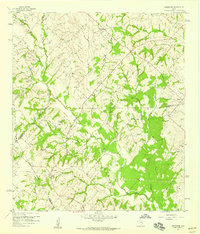 1958 Greenvine1959 Print · USGSThe rural Texas borderlands of Washington and Austin counties come into focus in the late fifties. Genealogists can trace family heritage through numerous pioneer burial sites and small settlements like Latium, Wesley, and the David Shelby Grave.2 unique versions available
 - 1958 Map of Bernardo, 1959 Print
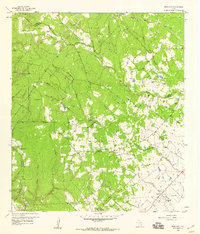 1958 Bernardo1959 Print · USGSThe rural borderlands of Colorado and Austin counties come alive in this late fifties survey of the San Bernard River valley. Genealogists can trace family heritage through a remarkable number of local burial sites like Hinsley Cem and Gadecke Cem, or locate the historic Bernardo Sch.2 unique versions available
 - 1960 Map of Lissie, 1961 Print
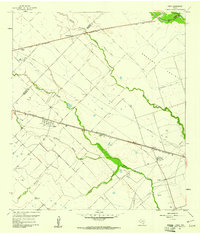 1960 Lissie1961 Print · USGSWharton County agricultural and industrial life is captured here in the early sixties, showing the expansion of oil and gas alongside traditional rice farming. Trace the rail-and-canal network between Lissie and Nottawa, or locate the Rice Mill and Chesterville Oil Field.2 unique versions available
 - 1960 Map of Wallis, 1961 Print
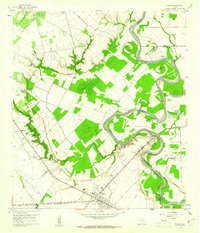 1960 Wallis1961 Print · USGSThe Brazos River bottomlands in the early sixties reveal a landscape shaped by rail junctions and small farming communities. Genealogists can trace family roots through sites like Hartville Cem, Mount Olive Ch, and the intersection of two major railroads in Wallis.3 unique versions available
 - 1960 Map of San Felipe, 1961 Print
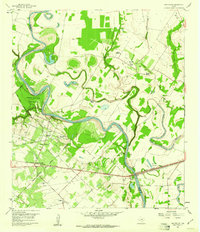 1960 San Felipe1961 Print · USGSThe Brazos River valley in the early 1960s reveals a landscape of colonial heritage and oil-era industry. Genealogists can trace family names through numerous rural sites like Rosses Cem, Wesley Chapel, and the community of Frydek.5 unique versions available
 - 1960 Map of East Bernard, 1961 Print
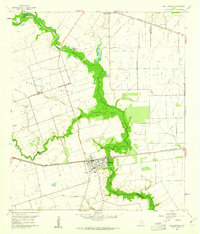 1960 East Bernard1961 Print · USGSCoastal prairie life in the early sixties centers on the junction of the San Bernard River and the Southern Pacific rail line. Genealogists can trace family footprints at Guardian Angel Cem, National Cem, and the rural Bernard Prairie Sch.3 unique versions available
 - 1960 Map of Rexville, 1961 Print
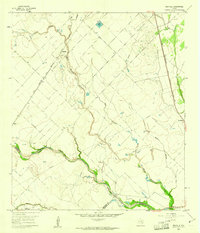 1960 Rexville1961 Print · USGSThe rural borderlands of Austin and Wharton Counties are captured here in the early sixties as the oil and gas industry matured. Trace old rail lines like the Gulf Colorado and Santa Fe through Rexville or locate the Chesterville Oil Field.2 unique versions available
 - 1960 Map of Sealy, 1961 Print
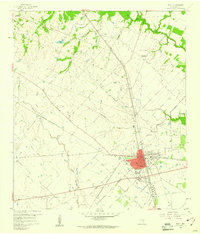 1960 Sealy1961 Print · USGSSealy served as a vital rail crossroads in the early sixties, where major lines met amidst the rolling ranch land and creek bottoms. Local researchers can locate Macedonia Cem, the Hospital, and the path of the Old Railroad Grade.3 unique versions available
 - 1960 Map of Sunny Side, 1961 Print
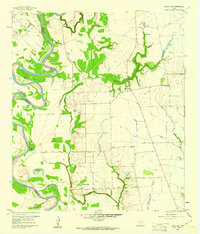 1960 Sunny Side1961 Print · USGSWaller County's riverfront landscape is shown here in the early sixties, defined by the winding Brazos and the local oil industry. Genealogists and researchers can locate family landmarks like Harper Cem, Mt Zion Ch, and the Sunny Side PO.3 unique versions available
 - 1961 Map of Burleigh, 1962 Print
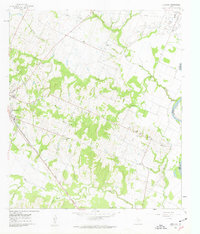 1961 Burleigh1962 Print · USGSThe Austin County countryside in the early sixties is captured here, centered on the community of Burleigh. Researchers can trace family sites like Coshatte Cem, the Coshatte Agricultural Society Hall, and several local rural schools.2 unique versions available
 - 1961 Map of Hempstead, 1963 Print
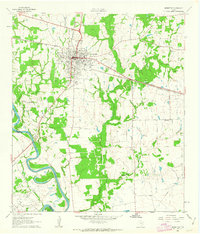 1961 Hempstead1963 Print · USGSHempstead and the surrounding Waller County prairie are captured here in the early sixties as a center of rail commerce and petroleum production. Genealogists can locate family landmarks such as Greater Wyatt Chapel, the Brenham Cem, and the Raccoon Bend Oil Field.4 unique versions available
 - 1962 Map of Buckhorn, 1963 Print
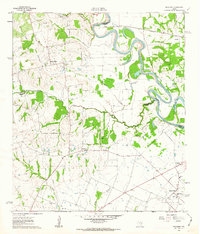 1962 Buckhorn1963 Print · USGSThe Brazos River loop forms the heart of this rural Texas landscape in the early sixties, where oil extraction meets traditional farming. Trace family roots and local industry through the Raccoon Bend Oil Field, Sauney Stand, and the Apperson Cem.2 unique versions available
 - 1963 Map of New Ulm, 1965 Print
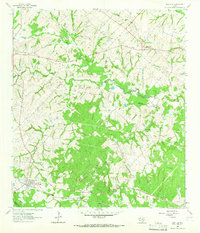 1963 New Ulm1965 Print · USGSThe rolling hills of Austin County are captured here in the early sixties, showing a landscape of established farmsteads and rural hamlets. Genealogists can trace family lines through National Cemetery and Zettle Cemetery, or locate the old Missouri Kansas Texas rail line.2 unique versions available
Showing maps 1-25 of 127
Top cities of Austin County
- Sealy historical maps
- Bellville historical maps
- Wallis historical maps
- San Felipe historical maps
- Industry historical maps
- Brazos Country historical maps
Frequently asked questions
- What are the different types of historical maps available for Austin County?
- What is the oldest map of Austin County?
- Where can I purchase historical maps of Austin County for my home or office?
- Where can I download high-res historical maps of Austin County?
- Are there historical topographic maps available for Austin County?
- Is there historical aerial imagery available for Austin County?
- Where are historical maps of Austin County sourced from?