1980s Maps of Hardeman County, Texas
Explore 23 historic maps of Hardeman County from the 1980s. These maps offer a rare glimpse into what life looked like during the 1980s — showing old roads, neighborhoods, homes, and landmarks that have changed or disappeared over time.
Whether you're researching your family's past, planning a metal detecting trip, or studying how Hardeman County's landscape evolved across the 1980s, these high-resolution maps are a powerful tool for exploring the history of this region.
- Focus on a specific era: All maps on this page are from the 1980s, giving you a focused view of this time period.
- See what’s changed: Compare century-old streets, trails, and buildings to today's modern landscape using overlays and satellite layers.
- Research with precision: Use these maps for genealogy, historical research, land use analysis, or educational projects.
- View, download, or print: Maps are fully viewable online in high resolution, and can be downloaded or printed for your own records.
Start exploring Hardeman County's history through authentic maps from the 1980s. This is your window into the past.
Hardeman County, TX maps
(23)- 1983 Map of Warrior Hollow, 1984 Print
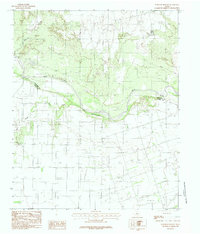 1983 Warrior Hollow1984 Print · USGSThe Pease River borderlands in the early 1980s come to life on this topographic study of the Foard County line. Researchers can locate the settlement of Thalia, a local Cem, and a Historical Marker situated near Mule Creek.
 - 1983 Map of Tolbert, 1984 Print
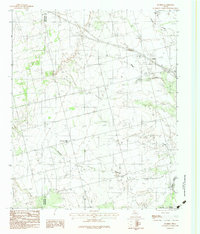 1983 Tolbert1984 Print · USGSThe rural landscape of Wilbarger County in the early eighties shows a transition from prairie farmsteads to the banks of the Pease River. Researchers can locate the settlement of Tolbert along the Burlington Northern rail line and trace family sites near Farmers Valley.2 unique versions available
 - 1983 Map of Rayland, 1984 Print
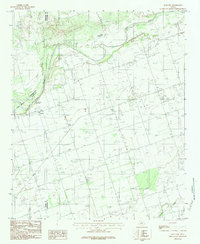 1983 Rayland1984 Print · USGSWilbarger County ranchlands and the winding Pease River are captured in the early eighties. Genealogists can trace family homesteads near Rayland or locate the rural Cem and Antelope Springs tucked into the breaks.2 unique versions available
 - 1983 Map of Big Mound, 1984 Print
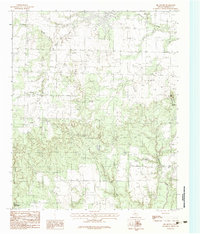 1983 Big Mound1984 Print · USGSHardeman County, Texas, is documented here in the early 1980s, highlighting the unique geological peaks of the eastern Rolling Plains. Trace the natural topography around Medicine Mounds, Lake Pauline, and the breaks of Copper Breaks State Park.
 - 1983 Map of Margaret, 1984 Print
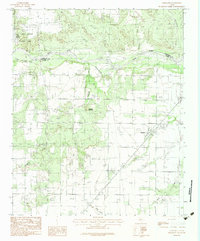 1983 Margaret1984 Print · USGSFoard County at the start of the eighties shows a landscape of ranching and river management. Trace the settlement at Margaret, the red-clay canyons of Copper Breaks State Park, and the winding course of the Pease River.2 unique versions available
 - 1983 Map of Medicine Mound, 1984 Print
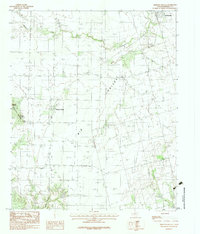 1983 Medicine Mound1984 Print · USGSHardeman County, Texas, was characterized by its cattle-ranching landscape and distinctive geological rises in the early eighties. Genealogists and historians can trace the roads around Medicine Mound, the streets of Chillicothe, and landmarks like Cedar Mound.
 - 1984 Map of Teacup Mountain, 1985 Print
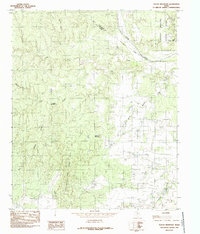 1984 Teacup Mountain1985 Print · USGSThe broken red-rock country of Foard County comes into focus in the mid-1980s, centered on the Pease River and Copper Breaks State Park. Genealogists and local historians can trace named natural landmarks like Teacup Mountain, Sugarloaf Mountain, and Bowley Canyon.
 - 1984 Map of Quanah NE, 1985 Print
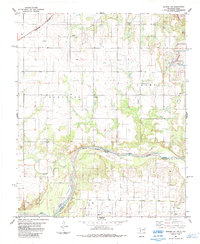 1984 Quanah NE1985 Print · USGSThe Oklahoma-Texas borderlands are captured here in the mid-1980s, documenting the rural landscape along the Red River. Genealogists and local historians can locate the Odema Cem and trace industrial sites like the Creta Mine or the Burlington Northern rail line.
 - 1984 Map of Quanah West, 1985 Print
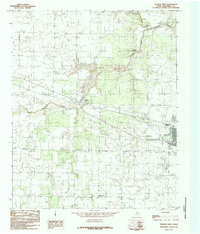 1984 Quanah West1985 Print · USGSHardeman County, Texas, was defined by its railroad arteries and creek drainage systems in the 1980s. Genealogists and local historians can trace the paths of the Burlington Northern Railroad, the settlement at Acme, and the legacy of the Old RR Grade.
 - 1984 Map of Maybell Canyon, 1985 Print
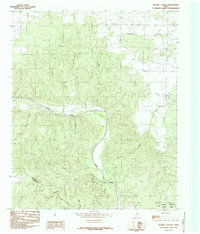 1984 Maybell Canyon1985 Print · USGSThe Pease River corridor in Hardeman and Foard Counties is shown here as it appeared in the late seventies. Researchers can trace the rugged breaks of Maybell Canyon, the boundaries of Copper Breaks State Park, and several named tributaries like Arkansos Creek.
 - 1984 Map of Goodlett, 1985 Print
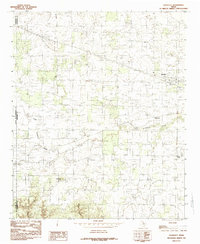 1984 Goodlett1985 Print · USGSHardeman County in the late seventies is captured here at the transition between the rolling plains and the rugged breaks. Genealogists can trace the rural layouts of Goodlett, Wheatland, and Lazare, while exploring local landmarks like Hepsidam Hill.
 - 1984 Map of Quanah East, 1985 Print
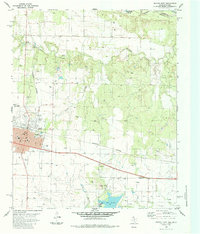 1984 Quanah East1985 Print · USGSQuanah and the surrounding Hardeman County plains are captured in the mid-1980s, showcasing a landscape of rail transit and oil production. Genealogists and historians can locate Quanah, the Conley Oil Field, and Memorial Park (Cem) near the Red River border.
 - 1984 Map of Chillicothe, 1985 Print
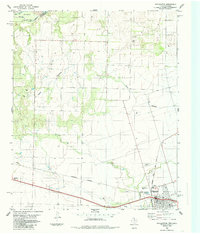 1984 Chillicothe1985 Print · USGSChillicothe sat at a strategic rail crossroads in the mid-1980s, where the Burlington Northern and Atchison Topeka and Santa Fe lines met. You can trace industrial landmarks like the Grain Elevator, local Oil Wells, and the path of Wanderers Creek.
 - 1984 Map of Willams, 1985 Print
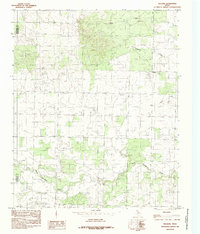 1984 Willams1985 Print · USGSThe Texas Panhandle borderlands are captured here in the late 1970s, showing the rural landscape around the settlement of Williams. Genealogists and local historians can trace the creek-side terrain of North Groesbeck Creek and Tepee Creek as it crosses from Hardeman Co into Childress Co.
 - 1984 Map of Cactus Creek, 1985 Print
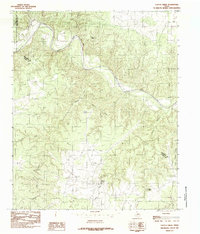 1984 Cactus Creek1985 Print · USGSTexas ranching country along the Hardeman and Foard county lines is captured here in the mid-1980s. Local researchers can trace the winding Pease River and locate remote water landmarks like Dripping Springs and Willow Tank.
 - 1984 Map of Eldorado, 1985 Print
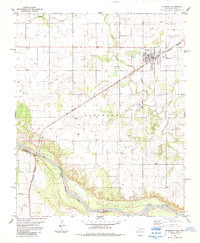 1984 Eldorado1985 Print · USGSEldorado and the surrounding plains of Jackson County are captured here in the mid-1980s, right at the state line. Researchers can trace the path of the Burlington Northern railroad or locate family burial sites at Antioch Cem and Durham Cem.
 - 1985 Map of North Groesbeck
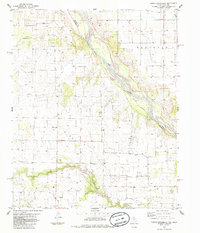 1985 North Groesbeck1985 Print · USGSThe Oklahoma-Texas borderlands are defined by the winding Red River and the rural plains of Hardeman County in the mid-1980s. Genealogists and researchers can trace the roads around North Groesbeck or locate the northern community of Lincoln.
 - 1985 Map of Ayers Island
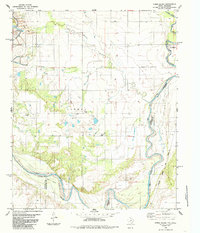 1985 Ayers Island1985 Print · USGSThe Red River valley at the Texas-Oklahoma border comes into focus in the late seventies, showing a landscape of mineral mining and rail transport. Researchers can trace family sites like Carmel Cem and Boggy Cem or locate industrial landmarks such as the Creta Mine.
 - 1985 Map of Altus
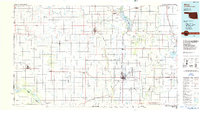 1985 Altus1985 Print · USGSSouthwestern Oklahoma in the mid-eighties shows a vast agricultural and military landscape shaped by the Red River forks. Trace the intersections of the Atchison Topeka and Santa Fe railroad with rural points like Fairmount Cem and Duke.2 unique versions available
 - 1985 Map of Hollis SW
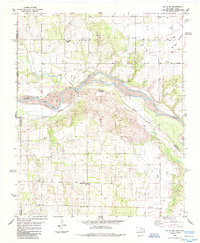 1985 Hollis SW1985 Print · USGSThe Oklahoma and Texas state line meets at the confluence of the Red River in the mid-1980s. Genealogists and local historians can locate Halsmith Cemetery, Hooleyan Church, and the winding path of the Prairie Dog Town Fork Red River.
 - 1985 Map of Louis
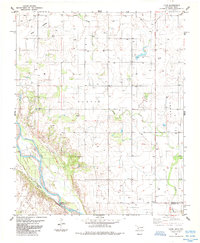 1985 Louis1985 Print · USGSThe Oklahoma-Texas borderlands along the Red River are shown here in the mid-1980s, documenting a landscape of rural homesteads and river-valley ranching. Genealogists and local historians can locate several family landmarks and burial sites, including Liberty Cem, Louis Cem, and the community of Snider.
 - 1985 Map of Odell, 1986 Print
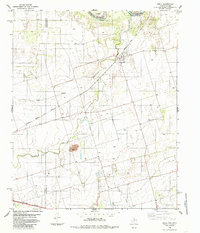 1985 Odell1986 Print · USGSThe Texas-Oklahoma borderlands in the mid-1980s come into focus here, showing the rural community of Odell at the intersection of rail and river. Genealogists and historians can trace the paths of the Atchison Topeka and Santa Fe railroad or locate family operations near the local Oil Field and Wanderers Creek.
 - 1986 Map of Vernon
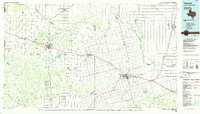 1986 Vernon1986 Print · USGSNorth Texas and Southern Oklahoma meet along the river in the mid-1980s, revealing a landscape defined by ranching, oil production, and rail transport. Researchers can locate distinct landmarks such as Medicine Mound, the Conley Oil Field, and the community of Punkin Center.
End of results
Showing maps 1-23 of 23
Top cities of Hardeman County
Frequently asked questions
- What are the different types of historical maps available for Hardeman County?
- What is the oldest map of Hardeman County?
- Where can I purchase historical maps of Hardeman County for my home or office?
- Where can I download high-res historical maps of Hardeman County?
- Are there historical topographic maps available for Hardeman County?
- Is there historical aerial imagery available for Hardeman County?
- Where are historical maps of Hardeman County sourced from?