Old Maps of Hardin County, Texas for Hiking & Exploration
Hike through history with 175 historic maps of Hardin County. Explore old trails, ghost towns, and forgotten backroads — perfect for outdoor adventurers and local explorers.
- Rediscover forgotten places: Map out old mining camps, roads, and footpaths that no longer exist on modern maps.
- Layer with modern tools: Combine with LiDAR or satellite views to plan hikes through historical terrain.
- Made for exploration: Popular among hikers, overlanders, and local history lovers.
Use these maps to find adventure and explore the hidden past of Hardin County.
Hardin County, TX maps
(175)- 1926 Map of Lakeview
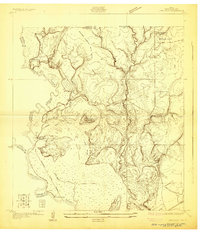 1926 Lakeview1926 Print · USGSThe Neches River lowlands are captured here in the mid-1920s, showing a landscape defined by marshy sloughs and emerging industry. Genealogists and historians can locate family landmarks like the Williamson Church or trace old routes to Colliers Ferry.
 - 1932 Map of Beaumont
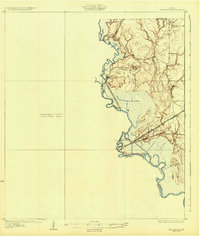 1932 Beaumont1932 Print · USGSThe Neches River lowlands and the growing settlement of Vidor are captured here during the early thirties. Genealogists can locate family landmarks like Magnolia Grove Sch, Williamson Ch, and the river crossing at Colliers Ferry.2 unique versions available
 - 1943 Map of Liberty
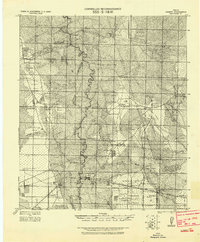 1943 Liberty1943 Print · USGSLiberty and the surrounding Big Thicket are documented here during the early twentieth-century boom in timber and oil. Researchers can locate vanished landmarks such as the Yellow School House, trace family lands like Mears Ranch, and follow the path of the Old Tram through the river bottomlands.
 - 1954 Map of Beaumont, 1964 Print
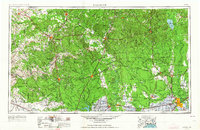 1954 Beaumont1964 Print · USGSSoutheast Texas in the mid-fifties reveals a landscape of massive national forests, emerging reservoirs, and a booming oil economy. Genealogists and researchers can trace rural settlements like Dallardsville and Village Mills or locate early drilling sites at Sour Lake Oil Field.3 unique versions available
 - 1955 Map of Daisetta, 1956 Print
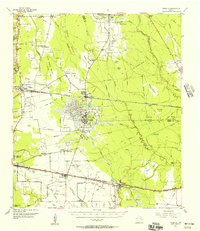 1955 Daisetta1956 Print · USGSLiberty County was undergoing an industrial transition in the 1950s as oil fields and drainage canals reshaped the coastal prairie. Researchers can trace the development of salt dome operations near Daisetta or locate rural landmarks like Ames Cem and Sacred Heart Ch.3 unique versions available
 - 1955 Map of Saratoga, 1956 Print
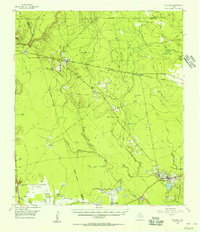 1955 Saratoga1956 Print · USGSHardin County oil and timber industries are on full display in the mid-fifties, showing the region's dense baygalls and rail towns. Genealogists and historians can trace family sites at Mt Calvary Ch or the Saratoga Oil Field.4 unique versions available
 - 1955 Map of Silsbee, 1956 Print
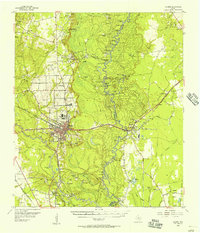 1955 Silsbee1956 Print · USGSSoutheast Texas in the mid-fifties is captured here as a landscape of timber and oil, where the Neches River meanders through the piney woods. Genealogists and historians can trace community roots through Peaceful Rest Cem, Good Shepherd Ch, and the rail stops at Lumberton and Fletcher.3 unique versions available
 - 1955 Map of Kountze, 1956 Print
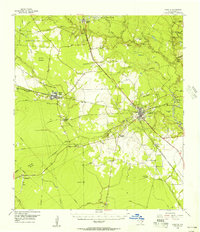 1955 Kountze1956 Print · USGSIn the mid-1950s, the Hardin County lumber and oil landscape centered on Kountze was a network of rail-side settlements and active fields. Researchers can trace the Kirby Lumber Tram or locate family roots near Honey Island, Old Hardin, and Providence Ch.4 unique versions available
 - 1955 Map of Sour Lake, 1956 Print
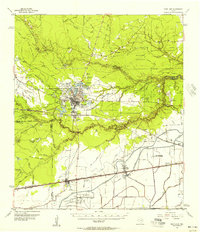 1955 Sour Lake1956 Print · USGSCoastal Texas prairies and oil fields are captured here in the mid-1950s as petroleum production shaped the local economy. Genealogists can locate family landmarks like Pine Ridge Ch, Henderson Sch, and the Grayburg Cem along the old rail lines.2 unique versions available
 - 1957 Map of Beaumont
 1957 Beaumont1957 Print · USGSSoutheast Texas in the mid-fifties is defined by the timber-rich lands between the Trinity River and Beaumont. Trace the history of the Alabama and Coushatti Indian Reservation or locate early campus sites like Prairie View College.
 - 1958 Map of Segno, 1960 Print
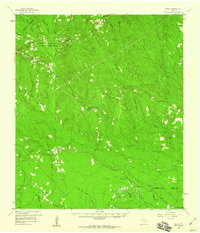 1958 Segno1960 Print · USGSDeep in the East Texas Piney Woods during the late fifties, this area shows the intersection of tribal lands and the burgeoning oil industry. Genealogists can locate family sites near Indian Village, Segno, and the Midway Cem.2 unique versions available
 - 1958 Map of Warren, 1960 Print
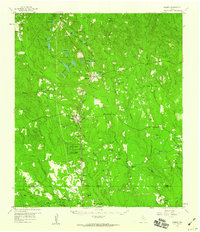 1958 Warren1960 Print · USGSSoutheast Texas timber and oil lands come to life in this late fifties survey of Tyler and Hardin counties. Genealogists and researchers can trace the Southern Pacific rail line to settlements like Warren and landmarks such as the Red Oak Sch.3 unique versions available
 - 1958 Map of Spurger, 1960 Print
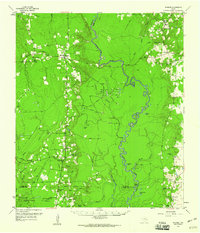 1958 Spurger1960 Print · USGSSoutheast Texas in the late fifties was a landscape of river bottomlands and emerging oil fields. Researchers can trace the legacy of timber and oil through the Old Railroad Grade and Joes Lake Oil Field, or find family roots at Withers Cem and Spring Hill Ch.2 unique versions available
 - 1960 Map of Voth, 1962 Print
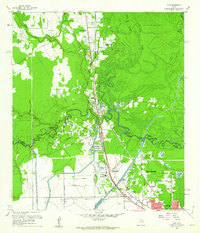 1960 Voth1962 Print · USGSThe Hardin and Jefferson county line comes alive in the early sixties as the suburbs of Beaumont meet the oil fields and bayous. Researchers can trace family roots through the Voth-Rosedale Sch, the Ariola Oil Field, and the Mt Sinai Ch.3 unique versions available
 - 1960 Map of Pine Forest, 1962 Print
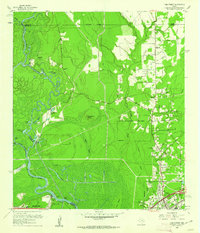 1960 Pine Forest1962 Print · USGSSoutheast Texas near the Neches River was undergoing significant industrial and suburban growth in the early sixties. Researchers can trace family history at Williamson Cem or locate early landmarks like Colliers Ferry (Site) and Vidor.3 unique versions available
 - 1984 Map of Beaumont
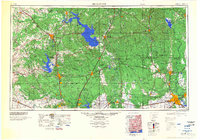 1984 Beaumont1984 Print · USGSSoutheast Texas in the late seventies and early eighties shows a landscape of expanding reservoirs and deep timber industry. Researchers can trace the development of the Sam Houston National Forest or locate regional landmarks like Grabbs Prairie and the Wynne State Prison Farm.3 unique versions available
 - 1984 Map of Jacks Creek South
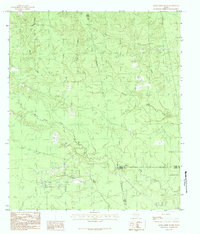 1984 Jacks Creek South1984 Print · USGSDeep in the Piney Woods during the early eighties, this area shows the intersection of the energy industry and East Texas timberlands. Genealogists and historians can trace property lines near the Oil Field and along the banks of Big Sandy Creek or Cypress Creek.
 - 1984 Map of Nome, 1985 Print
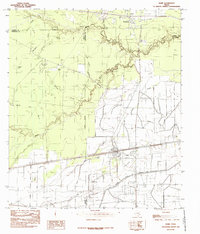 1984 Nome1985 Print · USGSThe Jefferson and Hardin county line comes alive in the mid-1970s, showing a landscape of coastal prairies and rail-side settlements. Genealogists and local researchers can trace the roads around Nome and Grayburg or locate landmarks like the Southern Pacific line and Swift Prairie.
 - 1984 Map of Sour Lake, 1985 Print
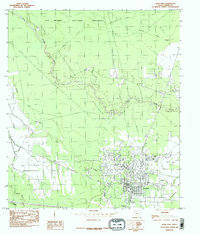 1984 Sour Lake1985 Print · USGSSoutheast Texas petroleum and prairie life are captured here in the mid-seventies, showing the industrial core of Sour Lake and Grayburg. Researchers can map out the extensive Oil Field operations, the borders of the Big Thicket National Preserve, and local landmarks like Pelt Prairie and Bud Crossing.2 unique versions available
 - 1984 Map of Bevil Oaks, 1985 Print
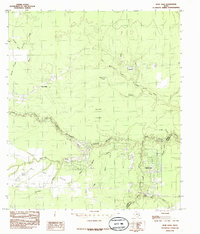 1984 Bevil Oaks1985 Print · USGSSoutheast Texas in the mid-eighties was a landscape where suburban growth at Bevil Oaks met the dense woodlands of the Big Thicket National Preserve. You can trace family-named sites and water features like Pine Ridge, Bonwell, and Fertitta Lake.2 unique versions available
 - 1984 Map of Saratoga, 1985 Print
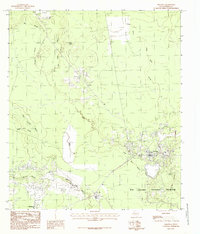 1984 Saratoga1985 Print · USGSSaratoga and Batson are captured during the mid-eighties as industry and nature meet in the Texas Big Thicket. Researchers can trace the footprint of the Oil Field or locate landmarks like the Lookout Tower and Griffin Pond amidst the bayous.
 - 1984 Map of Arizona Creek, 1985 Print
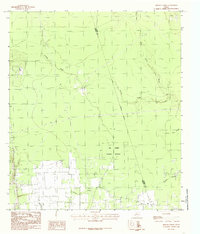 1984 Arizona Creek1985 Print · USGSThe boundary between Hardin and Liberty counties in the mid-1980s shows a landscape of deep Texas piney woods and bayous. Researchers can trace the hydrology of Big Thicket National Preserve and find local landmarks like Batiste and Arizona Creek.
 - 1984 Map of Potato Patch Lake, 1985 Print
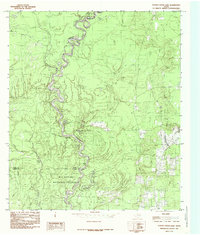 1984 Potato Patch Lake1985 Print · USGSThe Neches River bottomlands in the mid-eighties show a landscape defined by seasonal floods and shifting channels. Researchers can trace the wild oxbows of Horseshoe Lake, the heights of Yellow Bluff, and the boundaries of the Big Thicket National Preserve.
 - 1984 Map of Silsbee, 1985 Print
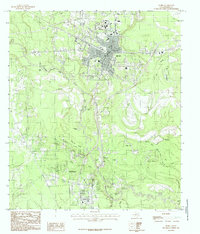 1984 Silsbee1985 Print · USGSHardin County during the mid-eighties shows a period of residential expansion between the rail hub at Silsbee and the growing community of Lumberton. Genealogists and researchers can trace local landmarks like Coeffield Ridge, the Atchison Topeka and Santa Fe line, and family-named features like Patterson Lake.2 unique versions available
 - 1984 Map of Hardin, 1985 Print
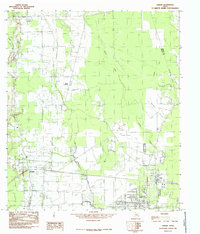 1984 Hardin1985 Print · USGSIn the mid-1980s, the oil-rich coastal plains of East Texas were a grid of industrial pipelines and rural settlements. Genealogists and researchers can trace the limits of Hardin, Hull, and the Tanner Settlement alongside the expansive Daisetta Swamp.
Showing maps 1-25 of 175
Top cities of Hardin County
- Lumberton historical maps
- Silsbee historical maps
- Kountze historical maps
- Sour Lake historical maps
- Rose Hill Acres historical maps
Frequently asked questions
- What are the different types of historical maps available for Hardin County?
- What is the oldest map of Hardin County?
- Where can I purchase historical maps of Hardin County for my home or office?
- Where can I download high-res historical maps of Hardin County?
- Are there historical topographic maps available for Hardin County?
- Is there historical aerial imagery available for Hardin County?
- Where are historical maps of Hardin County sourced from?