1900s (20th Century) Maps of Hays County, Texas
Explore 49 historic maps of Hays County from the 1900s (20th Century). These maps offer a rare glimpse into what life looked like during the 1900s — showing old roads, neighborhoods, homes, and landmarks that have changed or disappeared over time.
Whether you're researching your family's past, planning a metal detecting trip, or studying how Hays County's landscape evolved across the 1900s, these high-resolution maps are a powerful tool for exploring the history of this region.
- Focus on a specific era: All maps on this page are from the 1900s, giving you a focused view of this time period.
- See what’s changed: Compare century-old streets, trails, and buildings to today's modern landscape using overlays and satellite layers.
- Research with precision: Use these maps for genealogy, historical research, land use analysis, or educational projects.
- View, download, or print: Maps are fully viewable online in high resolution, and can be downloaded or printed for your own records.
Start exploring Hays County's history through authentic maps from the 1900s. This is your window into the past.
Hays County, TX maps
(49)- 1910 Map of Austin
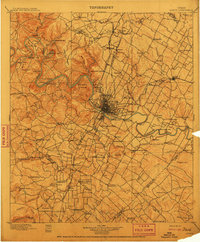 1910 Austin1910 Print · USGSAustin and the surrounding Travis County hill country are captured here at the start of the twentieth century. Genealogists and researchers can locate pioneer landmarks like Anderson Mill, Mc.Kinney Falls, and numerous river crossings including Lohmann Ford.3 unique versions available
 - 1911 Map of San Marcos
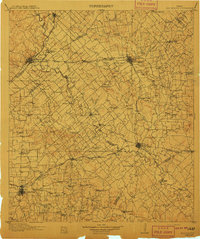 1911 San Marcos1911 Print · USGSCentral Texas at the peak of the railroad era shows a landscape of small farming communities and country schools. Genealogists can trace family footprints across Comanche Flat or locate long-gone sites like Highpoint School and Bethany Church.2 unique versions available
 - 1919 Map of San Marcos
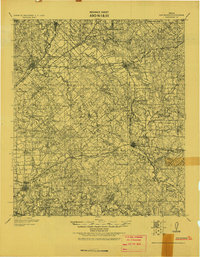 1919 San Marcos1919 Print · USGSTexas at the close of the Great War was a landscape of river-fed farms and emerging rail corridors between San Marcos and Lockhart. Genealogists can trace family footprints through numerous rural landmarks like Clark Chapel, High Prairie School, and Larremore.
 - 1929 Map of Hunter
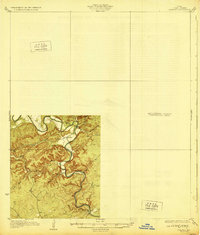 1929 Hunter1929 Print · USGSComal County was a landscape of deep limestone valleys and winding river bends in the late twenties. Genealogists and local historians can trace the early layout of Sattler or locate family landmarks near Waco Spring and Mountain Creek.2 unique versions available
 - 1930 Map of Lockhart
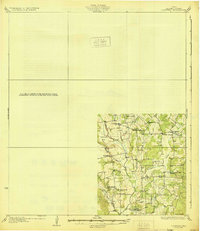 1930 Lockhart1930 Print · USGSCaldwell County is captured here in the mid-twenties, showing a landscape defined by small farming communities and a high density of rural schoolhouses. Researchers can trace family-named landmarks like McMahan and Seawillow or locate community centers such as Tilmon Sch and Clark Chapel.2 unique versions available
 - 1953 Map of Seguin, 1965 Print
 1953 Seguin1965 Print · USGSSouth Texas in the early fifties shows a thriving river-and-rail economy across the Guadalupe and Colorado basins. Genealogists and historians can trace rail routes like the Southern Pacific through Seguin, locate oil wells, or find the Gary AAF near San Marcos.4 unique versions available
 - 1954 Map of Llano, 1964 Print
 1954 Llano1964 Print · USGSThe Texas Hill Country and Highland Lakes appear in the mid-fifties, just as new reservoirs began reshaping the landscape. Trace ranching history and river routes from Mason to Llano, or follow the Gulf Colorado and Santa Fe RR past Buchanan Lake.2 unique versions available
 - 1954 Map of San Antonio, 1964 Print
 1954 San Antonio1964 Print · USGSSan Antonio and the Texas Hill Country are captured here in the mid-fifties, showing a landscape defined by massive military air bases and the rising Canyon Reservoir. Trace family ties through historic rail towns like D'Hanis and Castroville or explore the Cold War footprint of Lackland AFB and Randolph AFB.3 unique versions available
 - 1954 Map of Austin, 1964 Print
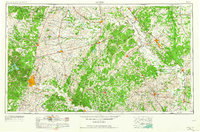 1954 Austin1964 Print · USGSCentral Texas is captured during a period of steady growth as the capital city and its neighboring farm towns began to modernize. Researchers can trace historic rail corridors like the Southern Pacific RR or locate landmarks such as Bergstrom Air Force Base and Pilot Knob.4 unique versions available
 - 1955 Map of Llano
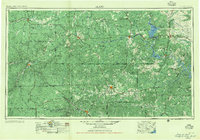 1955 Llano1955 Print · USGSCentral Texas and the Hill Country are seen here during the mid-1950s growth of the Highland Lakes. Trace old settlements and geologic landmarks from Enchanted Rock and Longhorn Cavern to the small community of Luckenbach.
 - 1955 Map of Oak Hill, 1956 Print
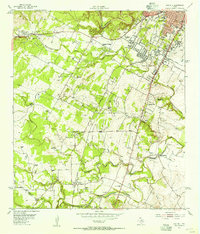 1955 Oak Hill1956 Print · USGSSouthwest of Austin in the mid-fifties, this area shows a landscape of rural schoolhouses and family farms before the suburban boom. Genealogists can locate family landmarks like the Oak Hill Cem, the St Elmo Sch (Aband), and the Kenchion settlement.
 - 1955 Map of Montopolis, 1956 Print
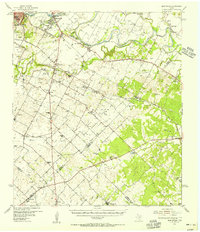 1955 Montopolis1956 Print · USGSThe area southeast of Austin in the mid-fifties reveals a transition from river-bottom farming to active resource extraction. Researchers can locate family landmarks such as Assumption Cemetery, the Elroy Oil Field, and rural centers like Moores Crossing.2 unique versions available
 - 1956 Map of Llano, 1976 Print
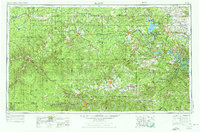 1956 Llano1976 Print · USGSThe Texas Hill Country comes alive in this mid-seventies survey of the Llano Uplift and Colorado River lakes. Genealogists and historians can trace family roots through settlements like Luckenbach and Castell or locate the famed L B J Ranch and Enchanted Rock.
 - 1957 Map of San Antonio
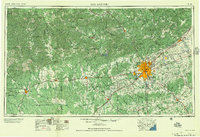 1957 San Antonio1957 Print · USGSSan Antonio and the Texas Hill Country are shown here during the mid-fifties, capturing the region's expanding post-war military and transportation footprint. Genealogists and local historians can trace the early residential boundaries of Alamo Heights or locate rural landmarks like St Hedwig and Medina Lake.
 - 1958 Map of Seguin
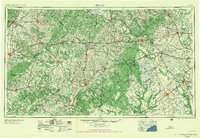 1958 Seguin1958 Print · USGSSouth Texas in the late fifties was a network of river-valley settlements and active oilfields tied together by major rail lines. Genealogists and historians can trace family-named sites across Rabb Prairie, locate the Behring Store, or follow the Southern Pacific through Schulenburg.
 - 1958 Map of Buda, 1960 Print
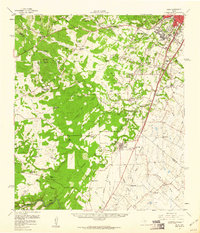 1958 Buda1960 Print · USGSBuda and the southern reaches of Travis and Hays Counties are seen here in the late fifties during a period of steady ranching and early suburban growth. Genealogists and local historians can trace family ranch lands and historic sites like Science Hall, Goforth, and the Old San Antonio Road.2 unique versions available
 - 1963 Map of Dripping Springs, 1965 Print
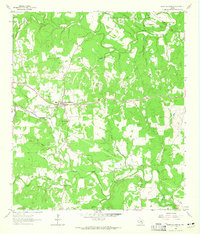 1963 Dripping Springs1965 Print · USGSDripping Springs and the Hays County backcountry are captured in the early sixties as a region of winding creeks and limestone hills. Researchers can trace family history at Fitzhugh Cem and Phillips Cem, or locate landmarks like Camp Ben McCulloch and Walnut Spring.2 unique versions available
 - 1963 Map of Rough Hollow, 1965 Print
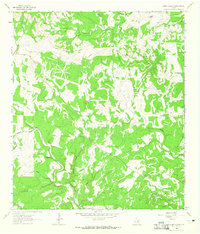 1963 Rough Hollow1965 Print · USGSThe Texas Hill Country comes alive in this early 1960s survey of the Blanco River valley. Trace family history at Mt Sharp Cem or locate the artesian flow of Jacobs Well (Flowing) and the historic Pleasant Valley Crossing.3 unique versions available
 - 1963 Map of Yeager Creek, 1965 Print
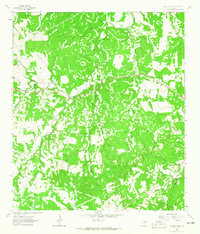 1963 Yeager Creek1965 Print · USGSBlanco County in the early sixties is shown here as a landscape of interconnected ranchlands and winding waterways. Researchers can trace historical property boundaries along Miller Creek, Yeager Creek, and the headwaters of Onion Creek.2 unique versions available
 - 1963 Map of Henly, 1965 Print
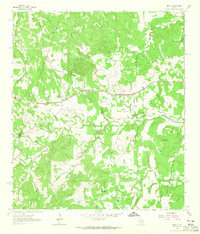 1963 Henly1965 Print · USGSHays County during the early sixties is captured here as a landscape of small family cemeteries and winding creek branches. Genealogists can locate several family plots including Middlebrooks Cem and Moore Cem near the community of Henly.4 unique versions available
 - 1963 Map of Payton, 1965 Print
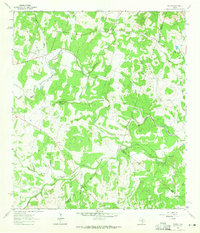 1963 Payton1965 Print · USGSIn the early sixties, the Texas Hill Country around the Blanco River remained a landscape of quiet rural communities and perennial springs. Researchers can trace the civic heart of Payton through its Payton Sch, Payton Cem, and the unique topography of The Narrows.3 unique versions available
 - 1963 Map of Devils Backbone, 1965 Print
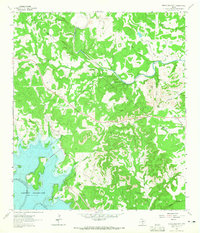 1963 Devils Backbone1965 Print · USGSThe Comal and Hays county line near the Guadalupe River is shown here in the early sixties, just as the basin began filling. Researchers can locate family landmarks like Valley Ford Cemetery, El Rancho Cima, and the ridge road along the Devils Backbone.3 unique versions available
 - 1963 Map of Lockhart North, 1966 Print
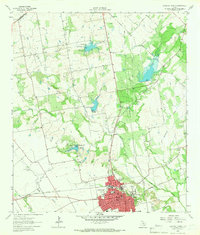 1963 Lockhart North1966 Print · USGSCaldwell County's landscape in the early sixties showcases a growing Lockhart integrated with a sophisticated network of flood control reservoirs and rail lines. Family historians can trace rural roots through Ohlendorf Cem, Polonia Cem, and the Carver High Sch.3 unique versions available
 - 1964 Map of Hunter, 1965 Print
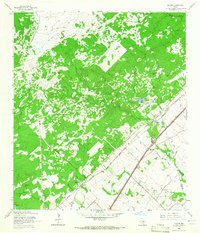 1964 Hunter1965 Print · USGSMid-century Comal County is characterized by a dense network of family cemeteries and dual-rail transit through the settlement of Hunter. Researchers can locate historic rural burial grounds like Rosenthal Cem and trace the paths of the Missouri Pacific and Missouri Kansas Texas lines.5 unique versions available
 - 1964 Map of Martindale, 1966 Print
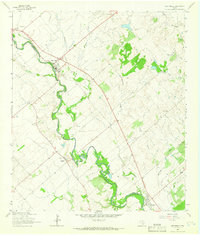 1964 Martindale1966 Print · USGSThe river-bottom lands of Caldwell and Guadalupe counties come alive in the mid-1960s as the San Marcos River winds past rural farmsteads. Researchers can trace family history through a dense network of local burial sites including Martindale Cem, Staples Cem, and Kennedy Cem.3 unique versions available
Showing maps 1-25 of 49
Top cities of Hays County
- San Marcos historical maps
- Kyle historical maps
- Buda historical maps
- Dripping Springs historical maps
- Wimberley historical maps
- Woodcreek historical maps
See more
Frequently asked questions
- What are the different types of historical maps available for Hays County?
- What is the oldest map of Hays County?
- Where can I purchase historical maps of Hays County for my home or office?
- Where can I download high-res historical maps of Hays County?
- Are there historical topographic maps available for Hays County?
- Is there historical aerial imagery available for Hays County?
- Where are historical maps of Hays County sourced from?