Old Maps of Kyle, Texas for Genealogy
Trace your family roots with 36 historic maps of Kyle. These high-res maps reveal old neighborhoods, homesites, landmarks, and streets — helping you uncover where your ancestors lived and how the area evolved over time.
- Explore historic neighborhoods: Identify where your relatives may have lived in the 1800s or 1900s.
- Compare maps over time: Trace the changes in streets, buildings, and landmarks for multi-generational research.
- Perfect for genealogy & ancestry research: Used by family historians and researchers to map out lineage and migration.
These maps are an incredible resource for exploring your personal connection to Kyle's past.
Kyle, TX maps
(36)- 1896 Map of Austin
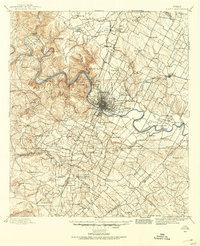 1896 Austin1896 Print · USGSAustin and its surrounding counties are shown in the mid-1890s, capturing the transition from frontier river crossings to a rail-centered regional hub. Researchers can trace historic river access points like Cameron Ferry alongside vanished landmarks such as Johnson's Institute and Moore & Berry's Store.
 - 1897 Map of Austin
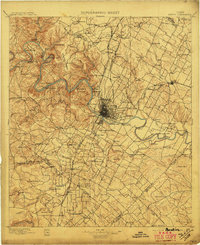 1897 Austin1897 Print · USGSTexas in the late 1890s reveals a capital city defined by its river and an expanding railroad network. Genealogists and historians can trace family-named landmarks and early centers of learning like Saint Edward's College, Johnson's Institute, and Anderson Mill.
 - 1910 Map of Austin
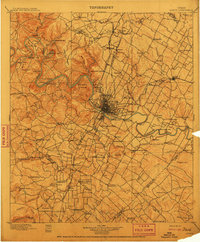 1910 Austin1910 Print · USGSAustin and the surrounding Travis County hill country are captured here at the start of the twentieth century. Genealogists and researchers can locate pioneer landmarks like Anderson Mill, Mc.Kinney Falls, and numerous river crossings including Lohmann Ford.3 unique versions available
 - 1911 Map of San Marcos
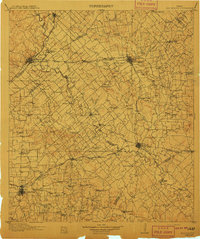 1911 San Marcos1911 Print · USGSCentral Texas at the peak of the railroad era shows a landscape of small farming communities and country schools. Genealogists can trace family footprints across Comanche Flat or locate long-gone sites like Highpoint School and Bethany Church.2 unique versions available
 - 1919 Map of San Marcos
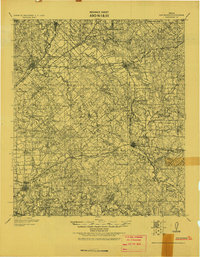 1919 San Marcos1919 Print · USGSTexas at the close of the Great War was a landscape of river-fed farms and emerging rail corridors between San Marcos and Lockhart. Genealogists can trace family footprints through numerous rural landmarks like Clark Chapel, High Prairie School, and Larremore.
 - 1953 Map of Seguin, 1965 Print
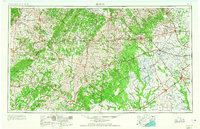 1953 Seguin1965 Print · USGSSouth Texas in the early fifties shows a thriving river-and-rail economy across the Guadalupe and Colorado basins. Genealogists and historians can trace rail routes like the Southern Pacific through Seguin, locate oil wells, or find the Gary AAF near San Marcos.4 unique versions available
 - 1954 Map of Austin, 1964 Print
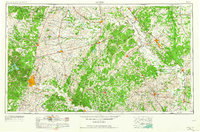 1954 Austin1964 Print · USGSCentral Texas is captured during a period of steady growth as the capital city and its neighboring farm towns began to modernize. Researchers can trace historic rail corridors like the Southern Pacific RR or locate landmarks such as Bergstrom Air Force Base and Pilot Knob.4 unique versions available
 - 1958 Map of Seguin
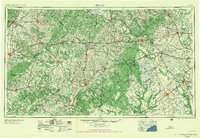 1958 Seguin1958 Print · USGSSouth Texas in the late fifties was a network of river-valley settlements and active oilfields tied together by major rail lines. Genealogists and historians can trace family-named sites across Rabb Prairie, locate the Behring Store, or follow the Southern Pacific through Schulenburg.
 - 1958 Map of Buda, 1960 Print
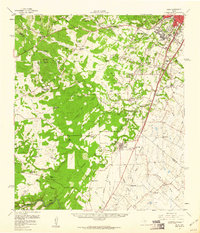 1958 Buda1960 Print · USGSBuda and the southern reaches of Travis and Hays Counties are seen here in the late fifties during a period of steady ranching and early suburban growth. Genealogists and local historians can trace family ranch lands and historic sites like Science Hall, Goforth, and the Old San Antonio Road.2 unique versions available
 - 1964 Map of Uhland, 1966 Print
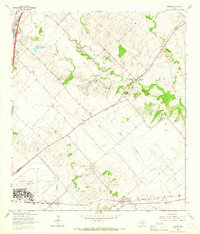 1964 Uhland1966 Print · USGSThe Blackland Prairie of Hays and Caldwell Counties comes into focus during the mid-1960s, a time when small agricultural hubs still dominated the landscape. You can trace family roots through localized sites like Doyle Cem, San Juan Ch, and the rail-side community of Maxwell.3 unique versions available
 - 1964 Map of San Marcos North, 1966 Print
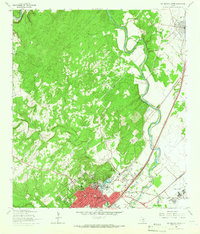 1964 San Marcos North1966 Print · USGSThe hill country transition near San Marcos and Kyle is documented here in the mid-1960s, showing the intersection of river, rail, and university life. Researchers can trace the grounds of Southwest Texas State College or find family sites at Kyle Cem and Guadalupe Cem.5 unique versions available
 - 1968 Map of Buda, 1971 Print
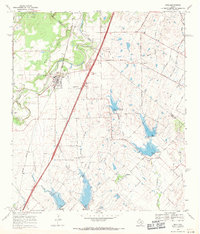 1968 Buda1971 Print · USGSThe Hays and Travis County borderlands come to life in this late sixties survey of the Buda area. Genealogists and historians can trace family names and early rural centers through sites like Allen Cem, Science Hall, and the Martin Ch.4 unique versions available
 - 1968 Map of Mountain City, 1971 Print
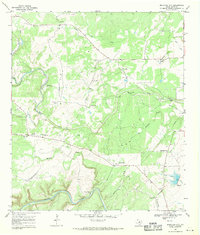 1968 Mountain City1971 Print · USGSTexas Hill Country ranching life is well-documented here in the late sixties, showing the vast estates and rural outposts south of Austin. Researchers can trace family legacies at Kuykendall Ranch, Ruby Ranch, and the Barton Cem near the banks of Onion Creek.4 unique versions available
 - 1985 Map of Austin
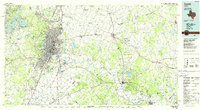 1985 Austin1985 Print · USGSCentral Texas in the mid-eighties reveals a region in transition, balancing rapid urban growth in Austin with deep-rooted rural landscapes. Genealogists and historians can trace family locations near St Johns Ch, the Science Hall schoolhouse, and long-standing communities like Webberville and Manchaca.3 unique versions available
 - 1985 Map of Seguin, 1986 Print
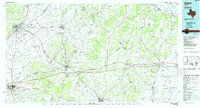 1985 Seguin1986 Print · USGSCentral Texas in the mid-1980s is defined by its vital oil industry and the crossroads of major interstate and rail networks. Genealogists and historians can trace the development of Luling Oil Field, identify the site of Old Flatonia, or locate family landmarks near St James and Palmetto State Park.2 unique versions available
 - 1995 Map of San Marcos North, 1998 Print
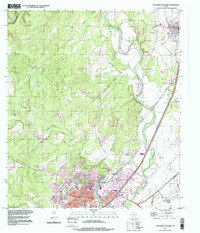 1995 San Marcos North1998 Print · USGSHays County at the end of the twentieth century shows a landscape defined by the growing corridor between San Marcos and Kyle. Trace family history at the San Vincente Cem or explore the riverfront developments near Spring Lake and Fivemile Dam Park.
 - 2010 Map of San Marcos North, 2010 Print
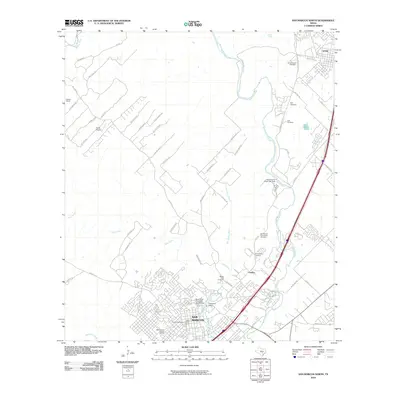 2010 San Marcos North2010 Print · USGSSan Marcos and Kyle appear at a moment of significant growth in the early twenty-first century, spanning from the university campus to the Blanco River. Researchers can trace historic preservation sites like the Belvin Street Historic District and local landmarks such as the Belger-Cahill Lime Kiln.
 - 2010 Map of Mountain City, 2010 Print
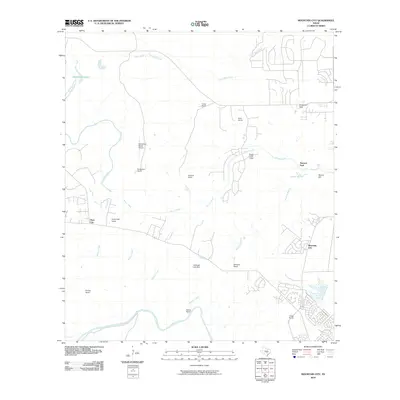 2010 Mountain City2010 Print · USGSHays County's ranching heritage and expanding residential pockets are captured here during the first decade of the millennium. Genealogists and local historians can trace legacy estates like Kuykendall Ranch and landmarks such as Flatrock Ford or the Onion Creek Lodge.
 - 2010 Map of Uhland, 2010 Print
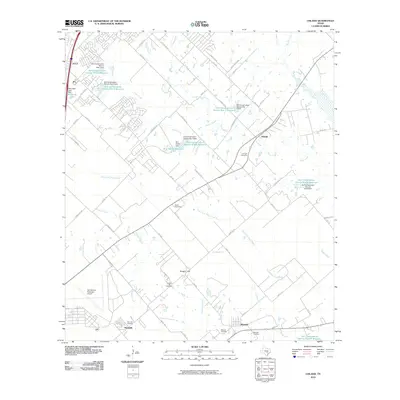 2010 Uhland2010 Print · USGSKyle and Uhland sit at the heart of this Central Texas landscape during a period of steady suburban transition. Researchers can trace rural family heritage at Live Oak Cemetery, Doyle Cemetery, and the historic settlements of Maxwell and Reedville.
 - 2010 Map of Buda, 2010 Print
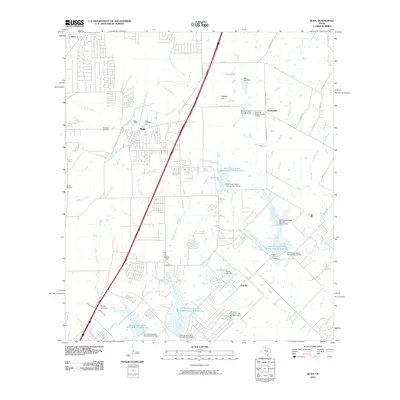 2010 Buda2010 Print · USGSThe Buda area south of Austin shows a landscape of suburban growth and traditional ranchland during the early 2000s. Genealogists and historians can trace local family roots through sites like Antioch Cemetery, the Science Hall school site, and the historic Old San Antonio Rd.
 - 2013 Map of Buda, 2013 Print
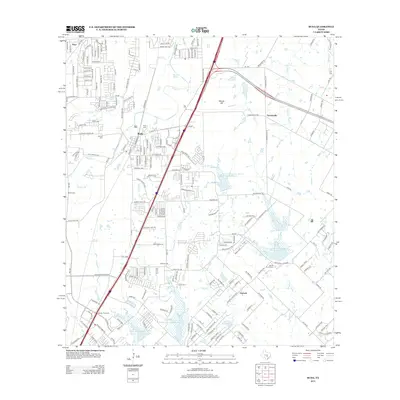 2013 Buda2013 Print · USGSThe suburbs south of Austin were undergoing significant transformation in the early twenty-first century as new neighborhoods filled in around old ranch lands. Genealogists and historians can trace the legacy of early settlers at Manchaca Springs, Antioch Cem, and the Science Hall school site.
 - 2013 Map of Mountain City, 2013 Print
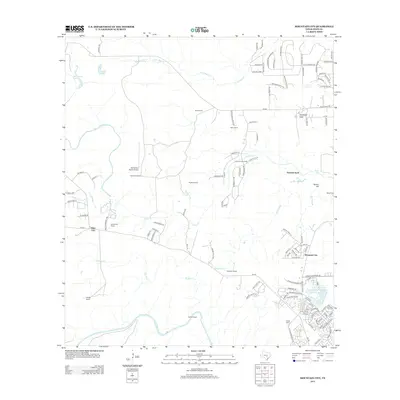 2013 Mountain City2013 Print · USGSMountain City and the surrounding ranchlands are shown in this period of transition between rural heritage and suburban growth. Researchers can trace the layout of family estates like Ruby Ranch or locate historical sites such as Barton Cemetery and Barber Falls.
 - 2013 Map of Uhland, 2013 Print
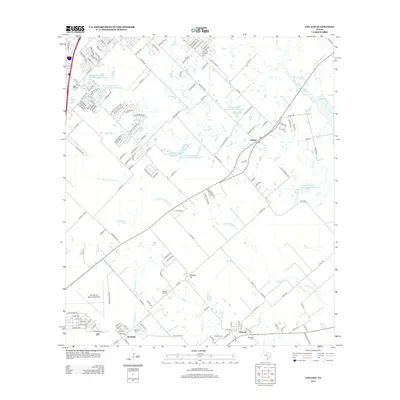 2013 Uhland2013 Print · USGSThe rural expanses between San Marcos and Lockhart are captured here in the early twenty-first century as suburban growth meets traditional Texas farm country. Researchers can locate several historic burial grounds like Live Oak Cem and Doyle Cem or trace the winding path of Plum Cr.
 - 2013 Map of San Marcos North, 2013 Print
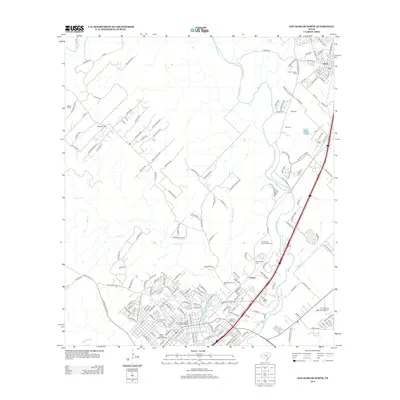 2013 San Marcos North2013 Print · USGSHays County at the start of the 2010s shows a landscape of historic preservation and modern expansion between Kyle and the river headwaters. Genealogists and historians can locate several burial sites like San Vincente Cemetery and explore the Hays County Courthouse Historic District.
 - 2016 Map of San Marcos North, 2016 Print
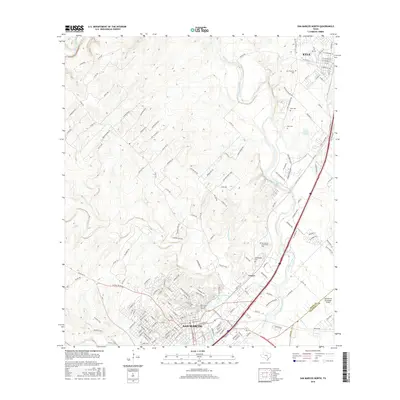 2016 San Marcos North2016 Print · USGSHays County at the height of its modern expansion shows the developing corridor between Austin and San Antonio. Researchers can trace the legacy of the Edwards Aquifer at San Marcos Springs or locate family roots at Guadalupe Cem and Kyle Cem.
Showing maps 1-25 of 36
Top cities near Kyle
- Austin historical maps
- New Braunfels historical maps
- San Marcos historical maps
- Buda historical maps
- Lockhart historical maps
- Dripping Springs historical maps
See more
Frequently asked questions
- What are the different types of historical maps available for Kyle?
- What is the oldest map of Kyle?
- Where can I purchase historical maps of Kyle for my home or office?
- Where can I download high-res historical maps of Kyle?
- Are there historical topographic maps available for Kyle?
- Is there historical aerial imagery available for Kyle?
- Where are historical maps of Kyle sourced from?