1970s Maps of Jeff Davis County, Texas
Explore 43 historic maps of Jeff Davis County from the 1970s. These maps offer a rare glimpse into what life looked like during the 1970s — showing old roads, neighborhoods, homes, and landmarks that have changed or disappeared over time.
Whether you're researching your family's past, planning a metal detecting trip, or studying how Jeff Davis County's landscape evolved across the 1970s, these high-resolution maps are a powerful tool for exploring the history of this region.
- Focus on a specific era: All maps on this page are from the 1970s, giving you a focused view of this time period.
- See what’s changed: Compare century-old streets, trails, and buildings to today's modern landscape using overlays and satellite layers.
- Research with precision: Use these maps for genealogy, historical research, land use analysis, or educational projects.
- View, download, or print: Maps are fully viewable online in high resolution, and can be downloaded or printed for your own records.
Start exploring Jeff Davis County's history through authentic maps from the 1970s. This is your window into the past.
Jeff Davis County, TX maps
(43)- 1970 Map of Gomez Peak, 1973 Print
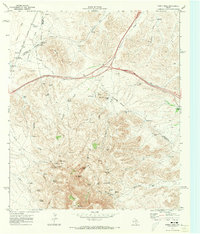 1970 Gomez Peak1973 Print · USGSThe High Desert ranchlands of West Texas are captured here at the start of the 1970s. Trace old family outfits and remote outposts like Dyer Camp, Cowden Ranch, and the Cowan Homestead among the peaks and springs.2 unique versions available
 - 1970 Map of Kent, 1973 Print
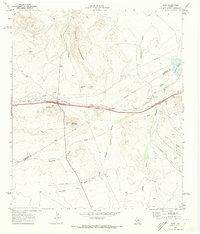 1970 Kent1973 Print · USGSNear the Apache Mountains in the early seventies, the Texas and Pacific railroad and local ranching interests define the landscape. Researchers can trace the layout of Kent, locate old water tanks like Lippy Tank, and find the Patterson settlement.
 - 1970 Map of Sotol Hill, 1973 Print
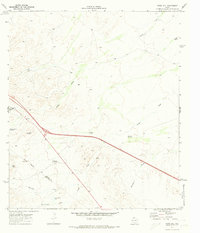 1970 Sotol Hill1973 Print · USGSReeves and Jeff Davis counties are shown here as they appeared in the early 1970s, defined by the isolated ranching outposts of West Texas. Researchers can trace historic land use through cattle-rearing infrastructure like Lether Ranch, Canyon Windmill, and Highway Tank.
 - 1970 Map of Fencepost Draw, 1973 Print
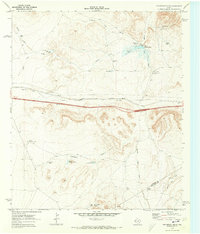 1970 Fencepost Draw1973 Print · USGSCulberson and Jeff Davis counties are captured here in the early seventies, showcasing a landscape defined by ranching outposts and railroad transit. Trace the Texas and Pacific line or locate remote camps like Fencepost and Middle Horse Camp Tank.
 - 1972 Map of Casket Mountain, 1974 Print
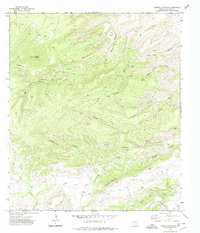 1972 Casket Mountain1974 Print · USGSThe Davis Mountains in the early seventies remain a backcountry of steep canyons and high mesas. Researchers can trace historic access routes across Cook Flat or locate remote water sources like Mill Tanks and Spring tucked within Big Aguja Canyon.
 - 1972 Map of Swayback Mountain, 1974 Print
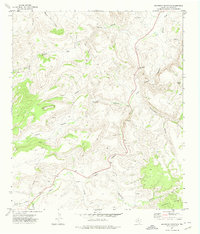 1972 Swayback Mountain1974 Print · USGSJeff Davis County ranch lands are captured here in the early seventies, showcasing a landscape of high mesas and deep desert canyons. Genealogists and historians can trace family-named landmarks like Powell Ranch and McCutcheon Canyon or locate the vital crossing at Wild Rose Pass.
 - 1972 Map of Big Aguja Mountain, 1974 Print
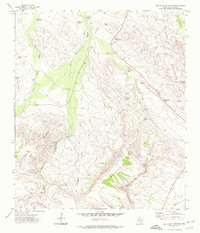 1972 Big Aguja Mountain1974 Print · USGSJeff Davis County ranching is captured here in the early seventies, showing a landscape defined by remote outposts and vital water sources. Researchers can trace historic routes like the pack trail through Big Aguja Canyon to landmarks like Seven Springs Ranch and T and P Lake.
 - 1972 Map of Lobo, 1975 Print
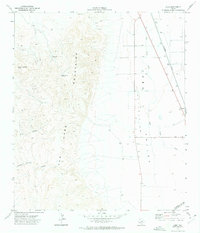 1972 Lobo1975 Print · USGSThe Trans-Pecos desert in the early seventies centers on the rail siding of Lobo and the massive Van Horn Mountains. Researchers can trace ranching infrastructure like the High Lonesome Windmill and the path of the Southern Pacific railroad.
 - 1972 Map of Mesquite Spring, 1975 Print
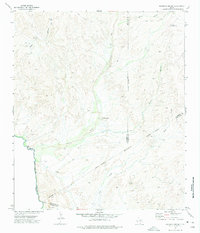 1972 Mesquite Spring1975 Print · USGSThe High Desert borderlands along the Rio Grande appear in detail in the early 1970s. Researchers can trace remote water sources like Mesquite Spring, isolated outposts at Sixty Six, and the winding path of the Green River.
 - 1972 Map of Fort Davis SE, 1975 Print
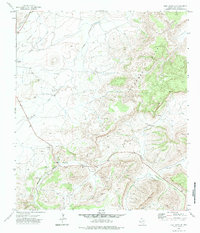 1972 Fort Davis SE1975 Print · USGSJeff Davis County in the early 1970s shows a landscape of high mesas and deep canyons where ranching life and travel corridors intersect. Trace the paths of Limpia Creek, explore the terrain around Arkansas Mesa, and locate local landmarks like Hillcrest Cem and Camp Musquiz.
 - 1972 Map of Alpine North, 1975 Print
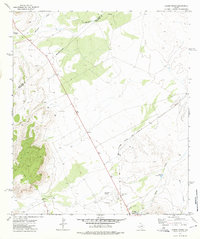 1972 Alpine North1975 Print · USGSThe high desert outskirts of Alpine are captured here in the early seventies, showing a landscape defined by ranching and rail. Genealogists and historians can trace the Atchison Topeka and Santa Fe line or locate the Merriwether Ranch and Municipal Airport.
 - 1972 Map of Fort Davis, 1975 Print
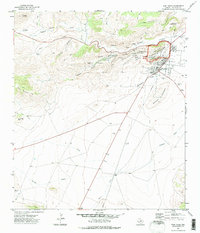 1972 Fort Davis1975 Print · USGSFort Davis and the high desert canyons of Jeff Davis County are captured here in the early 1970s. Researchers can locate the Fort Davis National Historic Site, Pioneer Cem, and the historic Anderson Sch among the volcanic peaks.
 - 1972 Map of Mitre Peak, 1975 Print
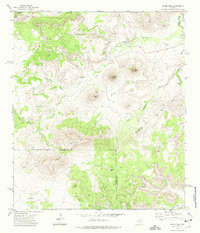 1972 Mitre Peak1975 Print · USGSThe high desert of Jeff Davis and Brewster counties is captured in the early 1970s as a land of dramatic summits and remote canyons. Researchers can trace the trails and water sources surrounding landmarks like Mitre Peak, Mitre Peak Camp, and the heights of the Twin Mountains.
 - 1972 Map of Soldier Spring, 1975 Print
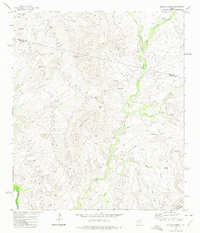 1972 Soldier Spring1975 Print · USGSThe high desert of West Texas and the international border come into sharp focus in the early seventies. Trace the remnants of an Old Railroad Grade or locate remote ranching outposts like Ninetysix Camp and Soldier Spring.
 - 1972 Map of Mano Prieto Mountain, 1975 Print
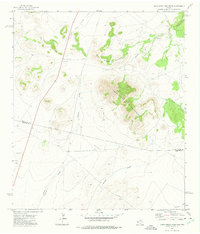 1972 Mano Prieto Mountain1975 Print · USGSJeff Davis and Presidio Counties appear here in the early 1970s, showing a landscape defined by high peaks and long desert washes. Researchers can trace land boundaries across Puertacitas Mountains or locate landmarks like Musquiz Canyon and Ponder Draw.
 - 1972 Map of Antelope Flat, 1975 Print
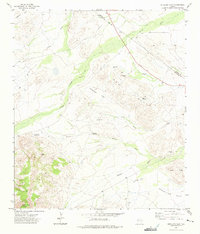 1972 Antelope Flat1975 Print · USGSJeff Davis County ranchlands are documented here in the early seventies, showing a high-desert landscape of seasonal draws and remote water works. Researchers can trace land use through named wells and windmills like Joe Kingston Well and the Pole Pen Windmill.
 - 1972 Map of Chispa, 1975 Print
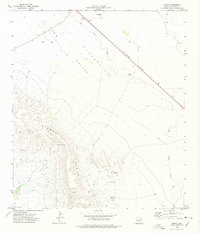 1972 Chispa1975 Print · USGSJeff Davis County ranching and rail history are captured here in the 1970s as the Southern Pacific tracks cut through the Lobo Valley. Researchers can trace old ranch boundaries at C Means Ranch and White Ranch or locate desert water sources like Ninety-six Spring.
 - 1972 Map of Ninetysix Ranch, 1975 Print
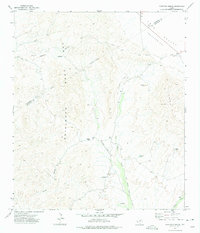 1972 Ninetysix Ranch1975 Print · USGSJeff Davis and Culberson Counties in the early 1970s reveal a high-desert landscape defined by the Van Horn Mountains. Trace the isolated Ninetysix Ranch, an Old Railroad Grade, and remote water features like Baldy Tank.
 - 1972 Map of Chispa Mountain, 1975 Print
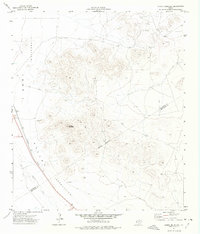 1972 Chispa Mountain1975 Print · USGSThe Trans-Pecos high desert of the early seventies is revealed here, where the Southern Pacific rail line bisects the Lobo Valley. Researchers can trace the county line across Chispa Mountain or locate the site at Danube.
 - 1972 Map of Bennett Ranch, 1975 Print
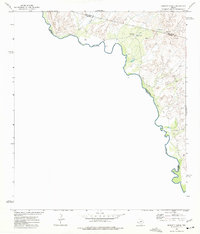 1972 Bennett Ranch1975 Print · USGSThe high desert of Presidio County meets the international border in the early 1970s, where the river carves through a landscape of deep canyons. Researchers can locate remote infrastructure like the Bennett Ranch, its adjacent Landing Strip, and Ash Spring.
 - 1972 Map of Little Aguja Mountain, 1975 Print
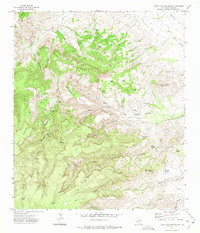 1972 Little Aguja Mountain1975 Print · USGSThe Davis Mountains in the early 1970s reveal a landscape of isolated camps and high peaks reached only by trail. Trace old routes through Trickey Gap Park or locate the Madera Springs Lodge and Buffalo Trail Scout Camp.
 - 1972 Map of Toyahvale, 1976 Print
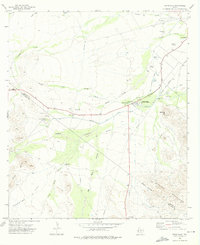 1972 Toyahvale1976 Print · USGSReeves County in the early seventies is revealed as a desert landscape transformed by vital water systems and springs. Genealogists and local historians can trace irrigation networks like the Main Canal and locate sites like Pueblo Vitoria and Balmorhea Cem.
 - 1973 Map of Fort Stockton, 1974 Print
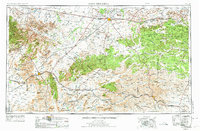 1973 Fort Stockton1974 Print · USGSThe Trans-Pecos region of West Texas comes alive in the early seventies, from the desert flats of the Stockton Plateau to the heights of the Davis Mountains. Researchers can trace the legacy of frontier outposts and rail lines through Fort Davis Nat Hist Site, Alpine, and the Southern Pacific RR.
 - 1978 Map of Bare Mountain
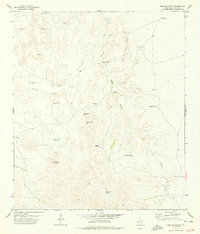 1978 Bare Mountain1978 Print · USGSJeff Davis County ranch lands are documented here during the late 1970s, highlighting the essential water network of this high-desert region. Researchers can trace the layout of historical ranching operations via Twiford Spring, Mescalero Windmills, and Sheep Camp Windmill.
 - 1978 Map of Friend Mountain
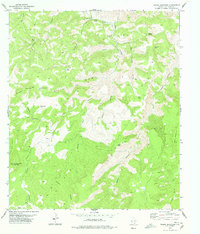 1978 Friend Mountain1978 Print · USGSJeff Davis County in the late seventies is a landscape of high ridges and isolated water sources. Researchers can trace remote jeep trails to landmarks like The Lodge, Bonanza Spring, and the high peaks of Friend Mountain.
Showing maps 1-25 of 43
Top cities of Jeff Davis County
Frequently asked questions
- What are the different types of historical maps available for Jeff Davis County?
- What is the oldest map of Jeff Davis County?
- Where can I purchase historical maps of Jeff Davis County for my home or office?
- Where can I download high-res historical maps of Jeff Davis County?
- Are there historical topographic maps available for Jeff Davis County?
- Is there historical aerial imagery available for Jeff Davis County?
- Where are historical maps of Jeff Davis County sourced from?