1900s (20th Century) Maps of Taylor Landing, Texas
Explore 12 historic maps of Taylor Landing from the 1900s (20th Century). These maps offer a rare glimpse into what life looked like during the 1900s — showing old roads, neighborhoods, homes, and landmarks that have changed or disappeared over time.
Whether you're researching your family's past, planning a metal detecting trip, or studying how Taylor Landing's landscape evolved across the 1900s, these high-resolution maps are a powerful tool for exploring the history of this region.
- Focus on a specific era: All maps on this page are from the 1900s, giving you a focused view of this time period.
- See what’s changed: Compare century-old streets, trails, and buildings to today's modern landscape using overlays and satellite layers.
- Research with precision: Use these maps for genealogy, historical research, land use analysis, or educational projects.
- View, download, or print: Maps are fully viewable online in high resolution, and can be downloaded or printed for your own records.
Start exploring Taylor Landing's history through authentic maps from the 1900s. This is your window into the past.
Taylor Landing, TX maps
(12)- 1943 Map of Fannett East, 1959 Print
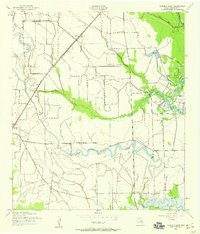 1943 Fannett East1959 Print · USGSJefferson County is mapped during the early 1940s, showing a coastal landscape of bayous and railroads at the height of its mid-century industrial growth. Researchers can trace family history at Broussard Cem or follow the Gulf Colorado and Santa Fe line through Cheek.2 unique versions available
 - 1945 Map of Fannett East
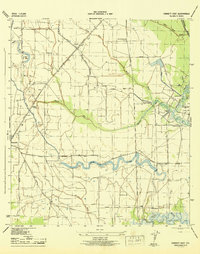 1945 Fannett East1945 Print · USGSJefferson County coastal prairies and bayous are captured here during the mid-1940s. Researchers can trace local lineage through Broussard Cem, visit the old Fannett School, and map the water-driven economy of Lovell Lake and Bayou Din.
 - 1950 Map of Houston, 1953 Print
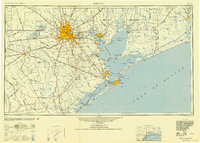 1950 Houston1953 Print · USGSCoastal Texas in the early fifties reveals a landscape of massive civil engineering and industrial transit. Genealogists and researchers can trace the growth of the Houston suburbs and the maritime infrastructure of Galveston Bay, including the Gulf Freeway and the Texas City Dike.
 - 1956 Map of Houston, 1963 Print
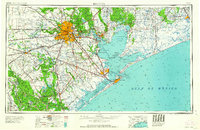 1956 Houston1963 Print · USGSSoutheast Texas in the mid-fifties is captured here as a powerhouse of oil and maritime trade. Genealogists and historians can trace the foundations of Houston and its ports, alongside landmarks like the Rice Institute and the Spindletop Oil Field.2 unique versions available
 - 1962 Map of Fannett East, 1964 Print
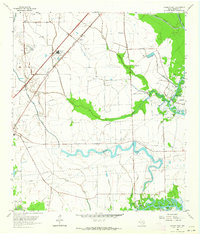 1962 Fannett East1964 Print · USGSJefferson County in the early sixties was a landscape where coastal bayous met a growing industrial infrastructure. Genealogists can locate family sites like Broussard Cem while tracing the rail-side growth of Fannett and Cheek near the Gulf Colorado and Santa Fe line.
 - 1962 Map of Alligator Hole Marsh, 1964 Print
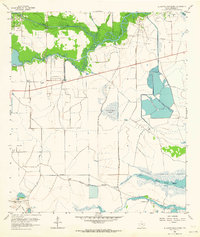 1962 Alligator Hole Marsh1964 Print · USGSJefferson County’s coastal wetlands and petroleum fields are captured here during the industrial boom of the early sixties. Researchers can trace the mid-century footprint of the Fannett Oil Field, the Mc Fadden Ranch, and the winding Willie Slough.
 - 1962 Map of Big Hill Bayou, 1964 Print
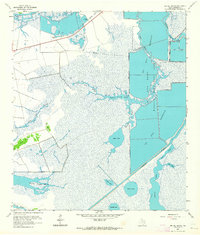 1962 Big Hill Bayou1964 Print · USGSJefferson County’s coastal marshes were undergoing significant hydrological changes in the early sixties as industrial infrastructure expanded. Researchers can trace the original wetlands surrounding Gum Island and the path of the Intracoastal Waterway near Shell Lake.3 unique versions available
 - 1975 Map of Houston, 1977 Print
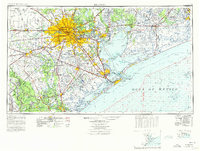 1975 Houston1977 Print · USGSThe Texas Gulf Coast in the mid-seventies shows a sprawling Houston metropolis linked to the sea by the massive Houston Ship Channel. Researchers can trace the mid-century industrial landscape from the Astrodome to the Lyndon B. Johnson Space Center.2 unique versions available
 - 1983 Map of Anahuac
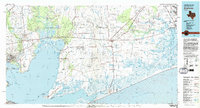 1983 Anahuac1983 Print · USGSThe Upper Texas Coast and its energy-driven landscape are detailed here in the early eighties. Genealogists and historians can trace coastal settlements like Anahuac and Winnie alongside the storied Spindletop Oil Field and the Anahuac National Wildlife Refuge.2 unique versions available
 - 1993 Map of Big Hill Bayou, 1994 Print
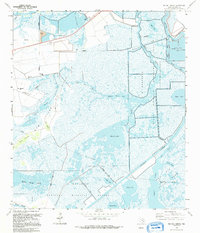 1993 Big Hill Bayou1994 Print · USGSCoastal Jefferson County in the early nineties reveals a landscape of industrial energy production intertwined with massive wildlife preserves. Researchers can trace the Big Hill Oil Field and Humble Cut alongside protected areas like Sea Rim State Park.
 - 1993 Map of Alligator Hole Marsh, 1994 Print
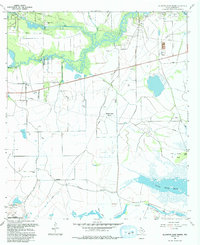 1993 Alligator Hole Marsh1994 Print · USGSCoastal Jefferson County in the early nineties shows a landscape deeply integrated with the energy industry and tidal wetlands. Researchers can trace petroleum infrastructure and local landmarks like the Strategic Petroleum Reserve, the Port Arthur Country Club, and the La Belle Oil Field.
 - 1994 Map of Fannett East
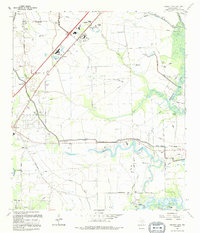 1994 Fannett East1994 Print · USGSJefferson County's coastal prairie is shown here in the 1990s, where industrial pipelines and oil wells meet traditional ranching and bayou life. Researchers can locate family landmarks like Broussard Cem or trace the early development of Fannett and Cheek.
End of results
Showing maps 1-12 of 12
Top cities near Taylor Landing
- Beaumont historical maps
- Port Arthur historical maps
- Nederland historical maps
- Groves historical maps
- Port Neches historical maps
- China historical maps
Frequently asked questions
- What are the different types of historical maps available for Taylor Landing?
- What is the oldest map of Taylor Landing?
- Where can I purchase historical maps of Taylor Landing for my home or office?
- Where can I download high-res historical maps of Taylor Landing?
- Are there historical topographic maps available for Taylor Landing?
- Is there historical aerial imagery available for Taylor Landing?
- Where are historical maps of Taylor Landing sourced from?