1900s (20th Century) Maps of Knox County, Texas
Explore 24 historic maps of Knox County from the 1900s (20th Century). These maps offer a rare glimpse into what life looked like during the 1900s — showing old roads, neighborhoods, homes, and landmarks that have changed or disappeared over time.
Whether you're researching your family's past, planning a metal detecting trip, or studying how Knox County's landscape evolved across the 1900s, these high-resolution maps are a powerful tool for exploring the history of this region.
- Focus on a specific era: All maps on this page are from the 1900s, giving you a focused view of this time period.
- See what’s changed: Compare century-old streets, trails, and buildings to today's modern landscape using overlays and satellite layers.
- Research with precision: Use these maps for genealogy, historical research, land use analysis, or educational projects.
- View, download, or print: Maps are fully viewable online in high resolution, and can be downloaded or printed for your own records.
Start exploring Knox County's history through authentic maps from the 1900s. This is your window into the past.
Knox County, TX maps
(24)- 1954 Map of Wichita Falls, 1966 Print
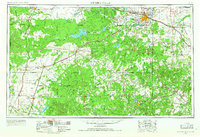 1954 Wichita Falls1966 Print · USGSNorth Texas in the mid-fifties is captured here as a landscape of expanding oil fields and vital rail corridors. Genealogists and historians can trace family roots through rural landmarks like Bacon Chapel and the rail-side growth of Seymour and Archer City.3 unique versions available
 - 1958 Map of Wichita Falls
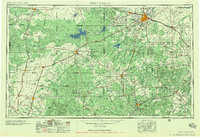 1958 Wichita Falls1958 Print · USGSNorth Texas during the late fifties reveals a landscape defined by the booming petroleum industry and established rail hubs. Researchers can trace the development of Wichita Falls and discover rural landmarks like Barton's Chapel or the Hull-Silk Oil Field.
 - 1962 Map of Antelope Creek NW, 1965 Print
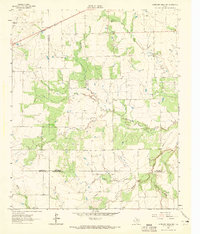 1962 Antelope Creek NW1965 Print · USGSThe Baylor and Knox County line in the early sixties shows a landscape where ranching met the growing oil industry. Researchers can trace family ties at the Bomarton Cem or follow the path of the Fort Worth and Denver railroad and Millers Creek.2 unique versions available
 - 1966 Map of Truscott North, 1968 Print
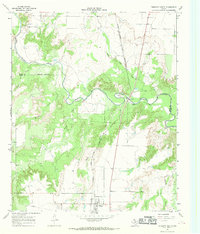 1966 Truscott North1968 Print · USGSKnox County and Foard County meet in this mid-1960s survey of the rolling breaks along the North Wichita River. Researchers can trace the Atchison Topeka and Santa Fe rail line and locate landmarks like the settlement of Truscott and the Gaging Sta.2 unique versions available
 - 1966 Map of Santa Rosa Lake SW, 1968 Print
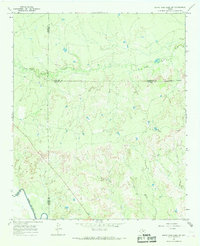 1966 Santa Rosa Lake SW1968 Print · USGSThe Rolling Plains of North Texas are captured here in the mid-1960s, showing the rugged ranch lands where Baylor, Foard, and Wilbarger counties intersect. Genealogists and researchers can trace local landmarks like Corral and Waggoner or follow the paths of South Beaver Creek and the North Wichita River.
 - 1966 Map of Soap Creek, 1968 Print
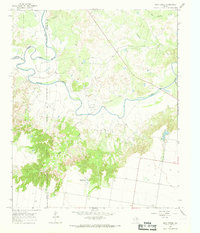 1966 Soap Creek1968 Print · USGSThe confluence of the Wichita River forks in North Texas is captured here in the mid-1960s. Family historians and researchers can locate the Henson Cem and trace the Arledge Ranch Landing Strip among the drainage of Soap Creek.
 - 1966 Map of Colwell Creek, 1969 Print
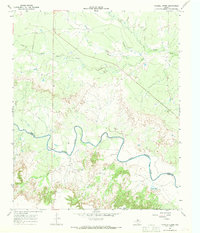 1966 Colwell Creek1969 Print · USGSNorth Texas ranch land and the winding breaks of the North Wichita River are captured here in the mid-1960s. Genealogists and local historians can trace family landmarks like Massingill, K Camp, and the uniquely named Ignorant Ridge.
 - 1966 Map of Truscott South, 1969 Print
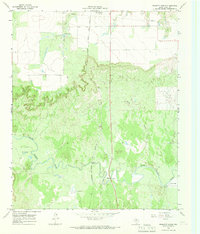 1966 Truscott South1969 Print · USGSKnox County ranch lands and the winding river breaks are captured here in the mid-1960s. Researchers can locate the Truscott Cem, trace the Atchison Topeka and Santa Fe rail line, and find landmarks like Beavers Ranch.
 - 1966 Map of Halsell Ranch, 1969 Print
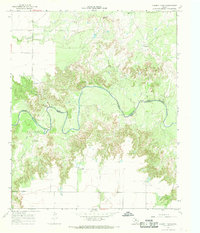 1966 Halsell Ranch1969 Print · USGSRanching life on the Foard and Knox County line is documented here during the mid-sixties, centered on the North Wichita River. Researchers can locate specific pastoral landmarks like the Halsell Ranch, West Camp, and the essential Deadman Windmill.
 - 1966 Map of Gilliland, 1969 Print
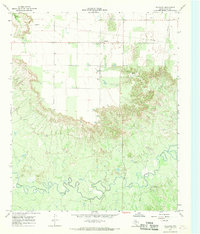 1966 Gilliland1969 Print · USGSKnox County ranching and river geography are frozen in time during the mid-sixties. Researchers can trace family landmarks like the Bennett Ranch, the quiet settlement of Gilliland, and the many bends of the South Wichita River.
 - 1966 Map of Big Four Ranch, 1969 Print
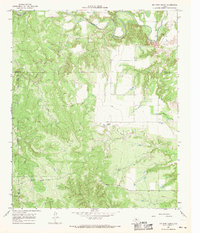 1966 Big Four Ranch1969 Print · USGSSpanning the tri-county border of Foard, King, and Knox in the mid-sixties, this map reveals the ranching heart of North Texas. Genealogists and researchers can trace family-named landmarks like Masterson and the historic Big Four Ranch among the forks of the Wichita River.
 - 1966 Map of Bomarton, 1969 Print
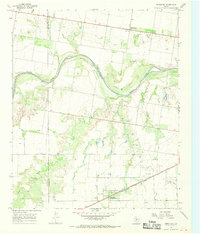 1966 Bomarton1969 Print · USGSThe Baylor and Knox County line comes alive in the mid-1960s as a landscape of winding riverbanks and railroad commerce. Trace the path of the Fort Worth and Denver railroad past Bomarton or explore the drainage of the Brazos River and Lake Creek.
 - 1966 Map of Maverick Flat, 1969 Print
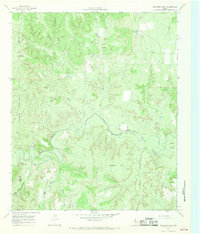 1966 Maverick Flat1969 Print · USGSRanching outposts and rugged canyonlands define this portion of North Texas in the mid-sixties. Researchers can trace land use at the Alexander Ranch (Headquarters) or locate vanished locales like Hog Camp and Glover along the South Wichita River.2 unique versions available
 - 1966 Map of Vera, 1969 Print
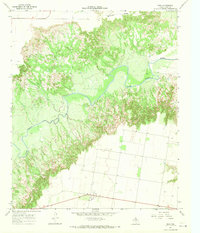 1966 Vera1969 Print · USGSKnox County ranching and river lands are captured here during the mid-sixties, showing the transition from flat prairie to the breaks of the South Wichita River. Researchers can trace local landmarks like the town of Vera, a local Cem, and the distinct topography of Ignorant Ridge.
 - 1967 Map of Cedar Mountain, 1969 Print
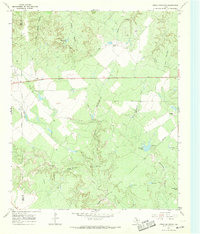 1967 Cedar Mountain1969 Print · USGSThe ranchlands of Knox and King counties appear here in the late sixties, showing a landscape of family-run operations and intricate canyon systems. Researchers can trace land use through named features like Williams Ranch, Croton Windmill, and the Prospect site.2 unique versions available
 - 1967 Map of Hefner, 1969 Print
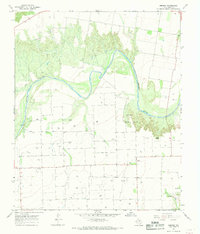 1967 Hefner1969 Print · USGSKnox County in the late sixties is defined by its rural settlements and the winding path of the Brazos River. Researchers can trace local lineage at Friendship Cem or locate industrial sites like the many Oil Well and Gravel Pit locations.
 - 1967 Map of Benjamin, 1969 Print
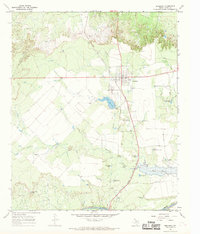 1967 Benjamin1969 Print · USGSBenjamin and the surrounding Knox County ranchlands are documented here in the late sixties as the rail-and-ranch economy shaped the territory. Genealogists and local historians can trace family-named sites like Hamilton Ranch, the local Rodeo Ground, and the path of the Atchison Topeka and Santa Fe railroad.
 - 1967 Map of Knox City NW, 1970 Print
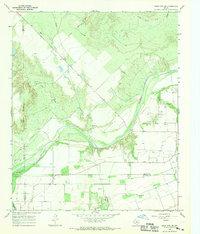 1967 Knox City NW1970 Print · USGSThe Brazos River valley in the late sixties reveals a landscape of petroleum exploration and winding creek beds along the Knox and King county lines. Genealogists and researchers can locate the settlement of Hamilton, trace the route of Mc Faddin Lane, and identify numerous early Oil Wells.
 - 1967 Map of Rhineland, 1970 Print
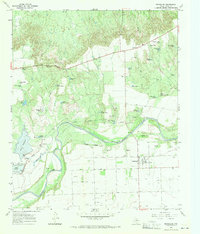 1967 Rhineland1970 Print · USGSThe Knox County ranching country south of the Brazos River is captured here in the late sixties. Genealogists and researchers can trace the rural layout around Rhineland and locate family-named landmarks like Atkinson Tank and Ward Field.
 - 1968 Map of Munday West, 1970 Print
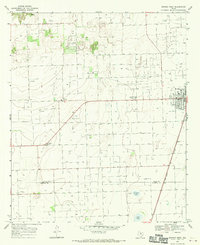 1968 Munday West1970 Print · USGSThe West Texas ranchlands and oil patches of the Knox-Haskell county line are shown here in the late sixties. Genealogists and historians can locate the Gillespie Ch Cem, the tracks of the Fort Worth and Denver, and the vintage Drive-in Theater.
 - 1968 Map of Munday East, 1970 Print
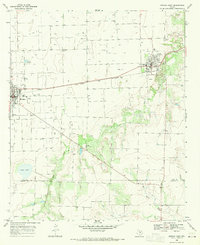 1968 Munday East1970 Print · USGSKnox County agricultural life and the mid-century oil boom intersect in the late sixties near the Haskell County line. Researchers can trace the Fort Worth and Denver rail corridor, family history at Old Goree Cem, and aviation at Petty Airfield.
 - 1968 Map of Knox City, 1970 Print
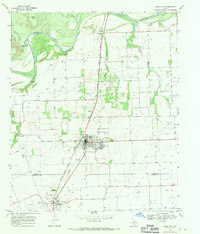 1968 Knox City1970 Print · USGSNorth Texas in the late sixties was a landscape defined by the Brazos River and the rail lines. Trace the local geography from the Knox City Cem down to O'Brien, following the Atchison Topeka and Santa Fe railroad through the cotton country.
 - 1985 Map of Lake Kemp
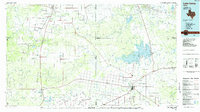 1985 Lake Kemp1985 Print · USGSThe North Texas plains come into sharp focus in the mid-eighties as a region defined by its vast reservoirs and deep-rooted agricultural hubs. Genealogists and local historians can trace the rural landscape surrounding Seymour, the rail lines of the Burlington Northern, and landmarks like The Narrows.2 unique versions available
 - 1985 Map of Haskell
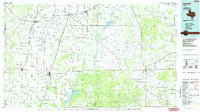 1985 Haskell1985 Print · USGSIn the mid-eighties, this West Texas region highlights a robust agricultural and petroleum economy centered on Haskell and Throckmorton. Trace rail history along the Burlington Northern or locate family roots near Goree and Throckmorton Cem.2 unique versions available
End of results
Showing maps 1-24 of 24
Top cities of Knox County
Frequently asked questions
- What are the different types of historical maps available for Knox County?
- What is the oldest map of Knox County?
- Where can I purchase historical maps of Knox County for my home or office?
- Where can I download high-res historical maps of Knox County?
- Are there historical topographic maps available for Knox County?
- Is there historical aerial imagery available for Knox County?
- Where are historical maps of Knox County sourced from?