1900s (20th Century) Maps of Taylor County, Texas
Explore 39 historic maps of Taylor County from the 1900s (20th Century). These maps offer a rare glimpse into what life looked like during the 1900s — showing old roads, neighborhoods, homes, and landmarks that have changed or disappeared over time.
Whether you're researching your family's past, planning a metal detecting trip, or studying how Taylor County's landscape evolved across the 1900s, these high-resolution maps are a powerful tool for exploring the history of this region.
- Focus on a specific era: All maps on this page are from the 1900s, giving you a focused view of this time period.
- See what’s changed: Compare century-old streets, trails, and buildings to today's modern landscape using overlays and satellite layers.
- Research with precision: Use these maps for genealogy, historical research, land use analysis, or educational projects.
- View, download, or print: Maps are fully viewable online in high resolution, and can be downloaded or printed for your own records.
Start exploring Taylor County's history through authentic maps from the 1900s. This is your window into the past.
Taylor County, TX maps
(39)- 1954 Map of Big Spring, 1965 Print
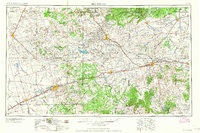 1954 Big Spring1965 Print · USGSWest Texas in the mid-1950s shows a landscape of growing oil towns and vital rail links along the Texas and Pacific RR. Researchers can trace the development of Big Spring, find smaller settlements like Knott and Lomax, or locate landmarks such as Boyds Chapel and Signal Mountain.4 unique versions available
 - 1954 Map of Abilene, 1966 Print
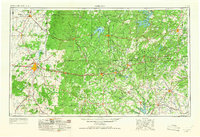 1954 Abilene1966 Print · USGSThe Texas Big Country comes into focus in the mid-1950s as petroleum and new water projects reshape the landscape. Local historians can trace the Butterfield Trail, find the Fort Phantom Hill Ruins, and locate numerous small communities along the Texas & Pacific line.2 unique versions available
 - 1957 Map of Hawley, 1958 Print
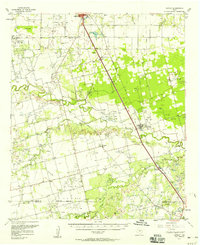 1957 Hawley1958 Print · USGSJones and Taylor Counties are captured in the late fifties during a period of significant petroleum expansion and rural settlement. Genealogists and historians can trace family roots at Hawley, Anson, and the Cosden Refinery, or locate old landmarks like the Hodges Sch.
 - 1957 Map of Merkel, 1958 Print
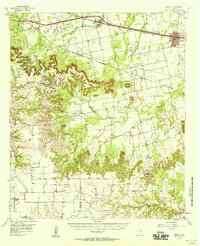 1957 Merkel1958 Print · USGSThe West Texas plains near the Taylor and Nolan county line appear here in the mid-fifties, dominated by the oil industry and the rail corridor. Researchers can locate early schools and burial sites like Merkel High Sch, Dora Cem, and Butman Camp.2 unique versions available
 - 1957 Map of Kirby Lake, 1958 Print
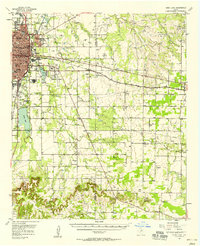 1957 Kirby Lake1958 Print · USGSAbilene was expanding toward the eastern oil fields and southern ranch lands in the late fifties. Genealogists can trace family names at the Potosi Cem and Eula Cem, or locate earlier rural landmarks like the Denton Sch (Aban'd) and Potosi Sch (Aban'd).2 unique versions available
 - 1957 Map of Abilene West, 1958 Print
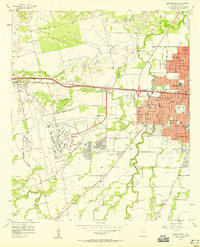 1957 Abilene West1958 Print · USGSPost-war expansion in West Texas is captured here as the city reaches toward the newly established Dyess Air Force Base. Researchers can trace the development of McMurry College, locate the Tye Cem, and see the early layout of Crescent Heights.5 unique versions available
 - 1957 Map of Abilene East, 1958 Print
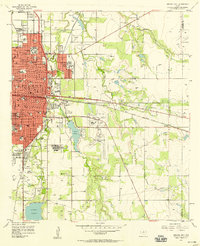 1957 Abilene East1958 Print · USGSAbilene emerges as a flourishing West Texas educational and medical center in the mid-fifties. Researchers can trace the footprints of Hardin-Simmons University, the old Airport (Aban'd), and the grounds of the West Texas Fairground.4 unique versions available
 - 1957 Map of Nugent, 1958 Print
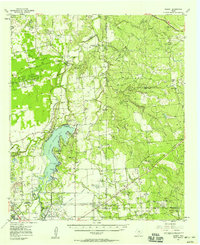 1957 Nugent1958 Print · USGSThe West Texas ranchlands and oil fields of Jones and Taylor counties are captured here in the late fifties. Genealogists and local historians can trace the foundations of Hamby, the Fort Phantom Hill ruins, and family landmarks like the Davis Ranch.
 - 1957 Map of Hawley, 1958 Print
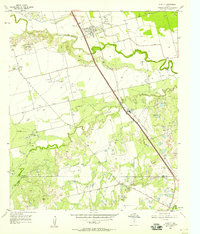 1957 Hawley1958 Print · USGSWest Texas ranching and petroleum interests converge in the late 1950s along the winding Clear Fork Brazos River. Researchers can trace the mid-century industrial footprint of the Cosden Refinery and the Hawley Oil Field alongside the Old Anson Road.4 unique versions available
 - 1957 Map of Noodle, 1958 Print
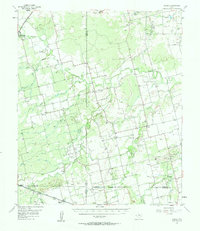 1957 Noodle1958 Print · USGSJones and Fisher Counties appear here during a mid-century period of active oil exploration and railroad transport. Researchers can trace the rural infrastructure of Noodle and Sylvester, alongside landmarks like Newman Ch and the Raven Oil Field.
 - 1957 Map of Hamby, 1958 Print
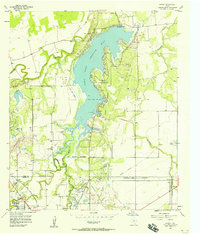 1957 Hamby1958 Print · USGSThe West Texas plains northeast of Abilene are captured here in the late fifties as water infrastructure transformed the landscape. Trace the shores of Lake Fort Phantom Hill and find local landmarks like the Drive-in Theater and the community of Hamby.4 unique versions available
 - 1957 Map of Buffalo Gap, 1958 Print
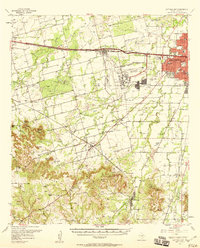 1957 Buffalo Gap1958 Print · USGSMid-century Abilene and the surrounding Taylor County landscape are captured here as the city expanded westward toward the new military installations. Local historians can trace family roots through the Buffalo Gap Cem, the campus of McMurry College, and the rail stops of the Abilene and Southern.2 unique versions available
 - 1958 Map of Big Spring
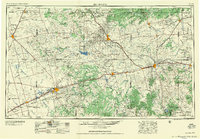 1958 Big Spring1958 Print · USGSThe West Texas oil boom was in full swing during the late fifties, transforming the landscape around Howard and Mitchell counties. Genealogists and historians can trace the growth of Big Spring and Snyder alongside industrial landmarks like the Kelly-Snyder Oil Field and the Santa Fe rail lines.
 - 1958 Map of Abilene
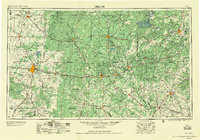 1958 Abilene1958 Print · USGSMid-century West Texas comes alive in this survey of the Abilene and Stephenville region during a period of steady oil expansion and military growth. Genealogists and local historians can trace the paths of the Texas & Pacific RR through historic towns, locate the Fort Griffin Ruins, and find smaller settlements like Desdemona and Lueders.
 - 1967 Map of Shep, 1969 Print
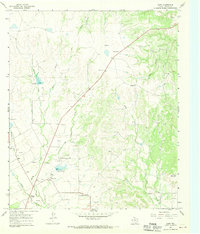 1967 Shep1969 Print · USGSTaylor County ranching and oil country come into focus in the late sixties, showing the area's development before modern expansion. Researchers can trace family sites at Shep Cem, locate early Oil Wells, and follow the winding path of Spring Creek.2 unique versions available
 - 1967 Map of Hylton, 1969 Print
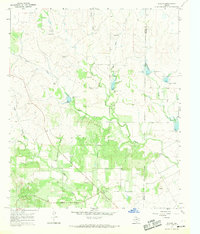 1967 Hylton1969 Print · USGSThe rural landscape of Nolan and Taylor Counties comes alive in the late sixties, centered on the ranching and resource economy of Hylton. Genealogy researchers can locate family sites at Campbell Cem or Hylton Cem among the bends of Valley Creek.
 - 1967 Map of Church Peak, 1969 Print
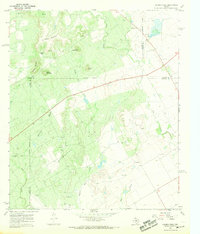 1967 Church Peak1969 Print · USGSWest Texas ranching and oil production meet at the borders of Runnels and Coke counties during the late sixties. Genealogists and historians can locate the Fort Chadbourne (Site) and trace industrial activity at Fort Chadbourne Field and the Refinery.2 unique versions available
 - 1967 Map of Wingate, 1969 Print
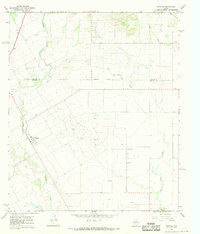 1967 Wingate1969 Print · USGSWingate and the surrounding West Texas oil fields are captured here in the late 1960s. Researchers can trace the rural communities of Pumphrey and Sliger, locate family graves at Pumphrey Cem, and follow the winding course of Valley Creek.
 - 1967 Map of Tuscola, 1969 Print
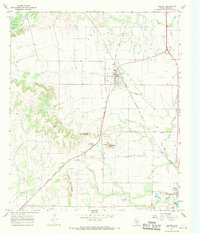 1967 Tuscola1969 Print · USGSSouthern Taylor County was a hub for rail and ranching when these tracks still carried freight through the hills. Genealogists and historians can trace the paths of the Abilene and Southern through Tuscola or find family sites like Lemons Gap Cem and McBee Cem.
 - 1967 Map of Lake Abilene, 1970 Print
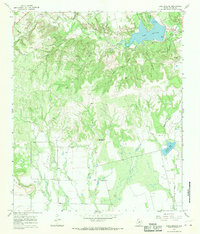 1967 Lake Abilene1970 Print · USGSTaylor County in the late 1960s shows a landscape of growing recreation and active energy production. You can trace the boundaries of Abilene State Park, locate rural sites like Moro Ch, and survey the widespread Oil Wells across the Oil Field.3 unique versions available
 - 1967 Map of Lawn, 1970 Print
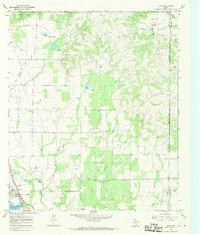 1967 Lawn1970 Print · USGSLawn and the Taylor-Callahan county line are captured here in the late sixties, showing a period of rural industry and community life. Researchers can locate the Cope Cem, trace the A T AND S F railroad, or find mid-century landmarks like the local Drive-in Theater.2 unique versions available
 - 1967 Map of Goldsboro, 1970 Print
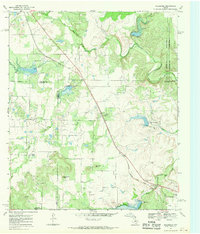 1967 Goldsboro1970 Print · USGSCentral Texas ranching and oil country come into focus in the late sixties as petroleum development reshaped the quad-county borderlands. Genealogists and historians can trace family-named peaks, the Midway Cem, and old stops like Goldsboro or Tokeen (Content).
 - 1967 Map of Bradshaw, 1971 Print
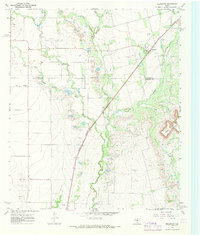 1967 Bradshaw1971 Print · USGSRunnels and Taylor Counties are captured here in the late sixties as the local economy balanced ranching with oil exploration. Genealogists and researchers can trace the Abilene and Southern rail line past Bradshaw and Drasco, locating old Oil Wells and a rural Cem.
 - 1967 Map of Bald Knob, 1979 Print
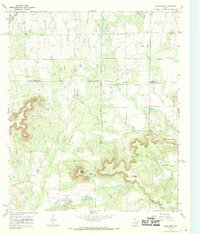 1967 Bald Knob1979 Print · USGSRunnels and Taylor Counties are captured here in the late sixties during a period of active petroleum production and ranching. Researchers can locate remote burial sites at Dewey Cem and Counts Cem or trace the Abilene & Southern rail line.
 - 1984 Map of Merkel West
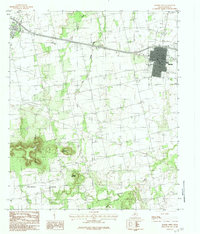 1984 Merkel West1984 Print · USGSWest Texas ranching and oil infrastructure meet in the late 1970s between the settlements of Merkel and Trent. Trace the rugged elevations of Blowout Mountain and the winding path of Mulberry Canyon alongside landmarks like Rodeo Dr.
Showing maps 1-25 of 39
Top cities of Taylor County
- Abilene historical maps
- Merkel historical maps
- Tye historical maps
- Tuscola historical maps
- Buffalo Gap historical maps
- Lawn historical maps
See more
Frequently asked questions
- What are the different types of historical maps available for Taylor County?
- What is the oldest map of Taylor County?
- Where can I purchase historical maps of Taylor County for my home or office?
- Where can I download high-res historical maps of Taylor County?
- Are there historical topographic maps available for Taylor County?
- Is there historical aerial imagery available for Taylor County?
- Where are historical maps of Taylor County sourced from?