1900s (20th Century) Maps of Ophir, Utah
Explore 12 historic maps of Ophir from the 1900s (20th Century). These maps offer a rare glimpse into what life looked like during the 1900s — showing old roads, neighborhoods, homes, and landmarks that have changed or disappeared over time.
Whether you're researching your family's past, planning a metal detecting trip, or studying how Ophir's landscape evolved across the 1900s, these high-resolution maps are a powerful tool for exploring the history of this region.
- Focus on a specific era: All maps on this page are from the 1900s, giving you a focused view of this time period.
- See what’s changed: Compare century-old streets, trails, and buildings to today's modern landscape using overlays and satellite layers.
- Research with precision: Use these maps for genealogy, historical research, land use analysis, or educational projects.
- View, download, or print: Maps are fully viewable online in high resolution, and can be downloaded or printed for your own records.
Start exploring Ophir's history through authentic maps from the 1900s. This is your window into the past.
Ophir, UT maps
(12)- 1915 Map of Fairfield, 1957 Print
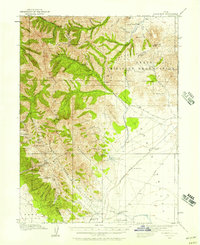 1915 Fairfield1957 Print · USGSThe Oquirrh Mountains and Cedar Valley come alive in this early twentieth-century survey of Utah's mining and military landscapes. Genealogists and historians can trace rail stops at Fairfield Sta, mining claims at Queen Mine, and the National Cemetery.
 - 1917 Map of Fairfield
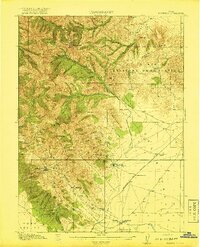 1917 Fairfield1917 Print · USGSThe Oquirrh Mountains and Cedar Valley appear here just before the close of the first World War. Genealogists and industrial historians can trace the mining networks of Ophir, Mercur, and the Chloride Point Mine alongside the early Fairfield settlement.2 unique versions available
 - 1918 Map of Stockton
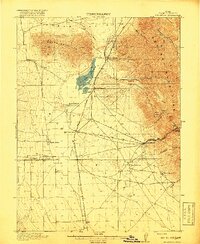 1918 Stockton1918 Print · USGSTooele County mining and ranching culture are caught in detail just before the close of the Great War. Genealogists and historians can trace the rail lines connecting Stockton and Ophir, as well as named family properties like Bales Ranch and Johnson Ranch.4 unique versions available
 - 1953 Map of Tooele, 1968 Print
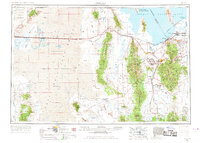 1953 Tooele1968 Print · USGSTooele County is shown here in the 1950s, a vast landscape transitioning between the industrial growth of the Salt Lake Valley and isolated military testing grounds. Researchers can trace the routes of the Western Pacific railroad and locate historic outposts like Iosepa Ranch and St John Station.3 unique versions available
 - 1955 Map of Stockton, 1957 Print
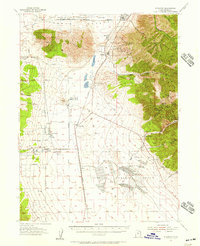 1955 Stockton1957 Print · USGSThe mining camps of the Oquirrh Mountains and the sprawling military installations of the Tooele Valley meet in this mid-century survey. Researchers can trace the rail-to-mine network connecting Stockton and Bauer to high-elevation sites like Ophir and the Shooting Star Mine.2 unique versions available
 - 1955 Map of Tooele, 1958 Print
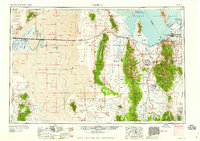 1955 Tooele1958 Print · USGSTooele County and the Great Salt Lake are captured here during the mid-fifties, an era of burgeoning military testing and industrial mining. Researchers can trace the rail sidings at Salduro Station, the grounds of the Deseret Chemical Corps Depot, and the International Smelting Co facilities.3 unique versions available
 - 1968 Map of Mercur, 1970 Print
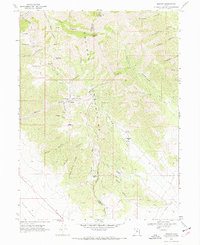 1968 Mercur1970 Print · USGSThe Oquirrh Mountains mining district comes into sharp focus during the late 1960s, revealing a landscape of industrial extraction and high-altitude settlements. Trace the legacy of gold and silver production at the Geyser Marion Mine or locate the historical footprints of Sunshine (Site) and Manning (Site).2 unique versions available
 - 1979 Map of Rush Valley
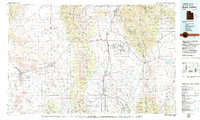 1979 Rush Valley1979 Print · USGSTooele and Utah Counties during the late seventies reveal a unique transition from historic mining and ranching to modern military operations. Researchers can trace the Union Pacific Railroad past historic sites like Fairfield and mining camps such as Ophir.2 unique versions available
 - 1980 Map of Ophir
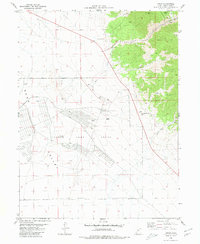 1980 Ophir1980 Print · USGSOphir and the surrounding Oquirrh Mountains are shown in the late 1970s as a landscape of intensive mining and military operations. Researchers can locate the Montana Mine and the extensive grounds of the Tooele Army Depot alongside local landmarks like Bates Ranch.2 unique versions available
 - 1993 Map of Mercur
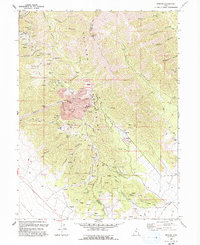 1993 Mercur1993 Print · USGSThe Oquirrh Mountains in the 1990s show a landscape shaped by Utah's mining legacy. Genealogists and historians can trace the remnants of historic camps like Mercur (Site) and Sunshine (Site) alongside the massive Open Pit Mine.
 - 1993 Map of Ophir
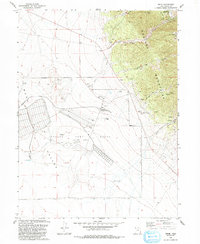 1993 Ophir1993 Print · USGSThe mining heights of the Oquirrh Mountains meet the broad Rush Valley in this 1990s record of Utah's industrial and military heritage. Researchers can trace the extensive mine works around Ophir, find the Cemetery, and locate the Tooele Army Depot (South Area).
 - 1997 Map of Mercur, 2002 Print
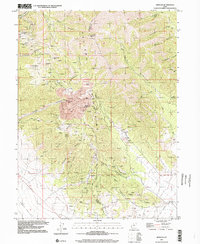 1997 Mercur2002 Print · USGSThe Oquirrh Mountains in the late twentieth century reveal a landscape of deep mining history and forgotten town sites. Genealogists and historians can trace the foundations of Mercur, Manning, and Sunshine alongside an Old Railroad Grade.
End of results
Showing maps 1-12 of 12
Top cities near Ophir
- West Jordan historical maps
- South Jordan historical maps
- Eagle Mountain historical maps
- Herriman historical maps
- Tooele historical maps
- Grantsville historical maps
See more
Frequently asked questions
- What are the different types of historical maps available for Ophir?
- What is the oldest map of Ophir?
- Where can I purchase historical maps of Ophir for my home or office?
- Where can I download high-res historical maps of Ophir?
- Are there historical topographic maps available for Ophir?
- Is there historical aerial imagery available for Ophir?
- Where are historical maps of Ophir sourced from?