1960s Maps of Wayne County, West Virginia
Explore 15 historic maps of Wayne County from the 1960s. These maps offer a rare glimpse into what life looked like during the 1960s — showing old roads, neighborhoods, homes, and landmarks that have changed or disappeared over time.
Whether you're researching your family's past, planning a metal detecting trip, or studying how Wayne County's landscape evolved across the 1960s, these high-resolution maps are a powerful tool for exploring the history of this region.
- Focus on a specific era: All maps on this page are from the 1960s, giving you a focused view of this time period.
- See what’s changed: Compare century-old streets, trails, and buildings to today's modern landscape using overlays and satellite layers.
- Research with precision: Use these maps for genealogy, historical research, land use analysis, or educational projects.
- View, download, or print: Maps are fully viewable online in high resolution, and can be downloaded or printed for your own records.
Start exploring Wayne County's history through authentic maps from the 1960s. This is your window into the past.
Wayne County, WV maps
(15)- 1960 Map of Jenkins
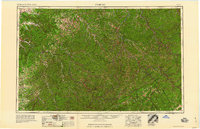 1960 Jenkins1960 Print · USGSEastern Kentucky and the West Virginia borderlands are captured at a mid-century peak of the coal and rail era. Trace the industrial corridors of the Chesapeake and Ohio RR through mountain hubs like Hazard and Jenkins.
 - 1960 Map of Huntington
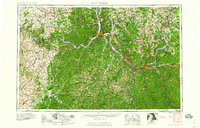 1960 Huntington1960 Print · USGSThe tri-state river valley thrived in the late fifties as a hub of heavy industry and Appalachian rail transit. Genealogists and historians can trace the connection between river towns like Ashland and Portsmouth or locate family homesteads near Coleman Ridge.
 - 1962 Map of Prichard, 1963 Print
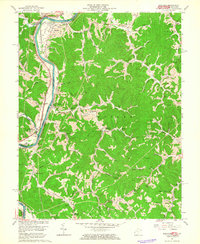 1962 Prichard1963 Print · USGSThe Big Sandy River valley and its busy rail lines define this borderland in the early 1960s. Genealogists can trace family names through Shannon Cem or find local landmarks like Brick Church and Catalpa.5 unique versions available
 - 1962 Map of Louisa, 1963 Print
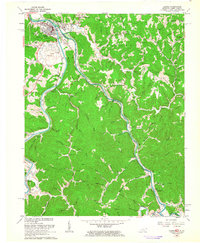 1962 Louisa1963 Print · USGSThe confluence of the Tug and Levisa Forks at the West Virginia border defined the rail and river life of the early sixties. Genealogists can locate dozens of family burial grounds and rural landmarks such as Smith Chapel, Greenlawn Cem, and Torchlight Sch.
 - 1962 Map of Wayne, 1963 Print
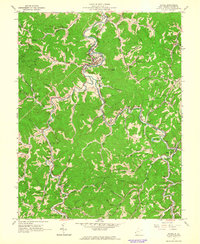 1962 Wayne1963 Print · USGSWayne County in the early sixties was a landscape defined by the winding Twelvepole Creek and a network of small mining and rail communities. Genealogists can locate family burial sites like Stephens Cem and Crockett Cem or trace rural landmarks like Kennedy Chapel.3 unique versions available
 - 1962 Map of Nestlow, 1963 Print
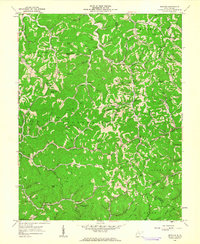 1962 Nestlow1963 Print · USGSThe rural borderlands of Wayne, Cabell, and Lincoln counties are captured here in the early sixties, showing a landscape of isolated hollows and ridge-top knobs. Genealogists can trace family footprints across dozens of sites like Sanson Cemetery, Beech Fork School, and the community of Nestlow.3 unique versions available
 - 1962 Map of Radnor, 1964 Print
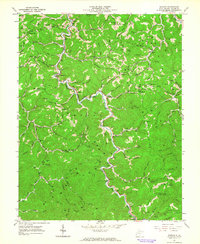 1962 Radnor1964 Print · USGSWayne County in the early 1960s is defined by its deep hollows and family-named cemeteries along the West Fork Twelvepole Creek. Genealogists can trace hundreds of family sites including the Watts and Perry Cem, Lycans Ridge Sch, and the community at Radnor.3 unique versions available
 - 1962 Map of Kiahsville, 1964 Print
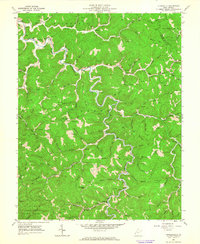 1962 Kiahsville1964 Print · USGSWayne and Lincoln counties appear here in the early sixties as a bustling network of gas wells and hollow-side mines. Researchers can trace family sites like Copley Cem and Pat Maynard Cem or locate old community hubs like Kiahsville and McComas.2 unique versions available
 - 1962 Map of Ranger, 1964 Print
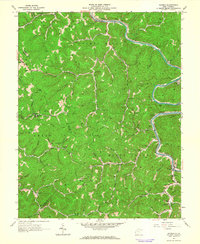 1962 Ranger1964 Print · USGSLincoln County's river-and-rail corridor is captured here in the early sixties, as the coal and timber economy moved along the Guyandotte River. Genealogists can trace family landmarks like Hatfield Cem or locate the old Sias Sch and Harts High Sch.2 unique versions available
 - 1963 Map of Webb, 1964 Print
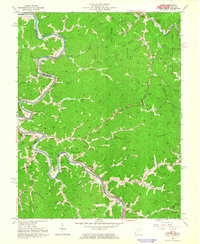 1963 Webb1964 Print · USGSThe Tug Fork valley comes to life in the early sixties, showing the vital link between the Norfolk and Western rail line and river towns. Genealogists can locate family landmarks like Salmons Cem, Thomas Copley Ch, and the Baker Gap Sch.4 unique versions available
 - 1963 Map of Wilsondale, 1964 Print
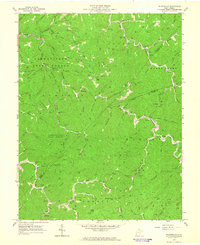 1963 Wilsondale1964 Print · USGSWayne and Mingo Counties are documented here in the early sixties, showing a landscape defined by the timber and energy industries. Genealogists can trace family names through dozens of mountain burial sites like Ferguson Cem and Spaulding Cem.3 unique versions available
 - 1963 Map of Trace, 1964 Print
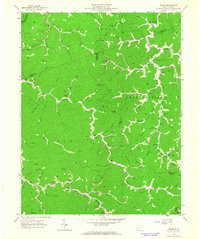 1963 Trace1964 Print · USGSSouthern West Virginia’s hollows and ridgelines are captured here in the early sixties, showing the remote communities along Twelvepole Creek. Family historians can trace local roots through numerous landmarks like Mullins Cem, Hugh Dingess Sch, and McCloud Ch.2 unique versions available
 - 1963 Map of Kermit, 1964 Print
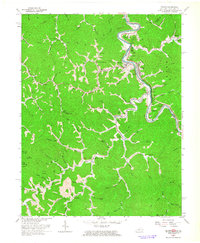 1963 Kermit1964 Print · USGSThe borderlands of the Tug Fork river come into focus during the early sixties, showing the tight-knit communities of Kermit and Warfield. Genealogists and historians can trace family locations through sites like Brewer Cem, Marrowbone Sch, and the remote Cassidy Lookout Tower.4 unique versions available
 - 1968 Map of Huntington, 1970 Print
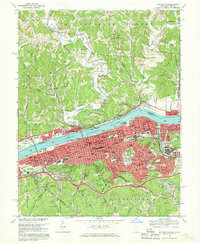 1968 Huntington1970 Print · USGSHuntington and the Ohio River valley reached a peak of industrial and rail connectivity during the late sixties. Genealogists and historians can trace family locations through Spring Hill Cemetery, numerous city schools like Buffington Sch, and the riverside rail networks of the B & O.4 unique versions available
 - 1968 Map of Catlettsburg, 1970 Print
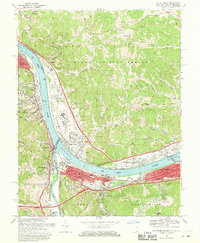 1968 Catlettsburg1970 Print · USGSThe tri-state junction of Kentucky, Ohio, and West Virginia is captured here in the late sixties at the busy confluence of the Big Sandy and Ohio Rivers. Researchers can trace the industrial footprint of Kenova and Catlettsburg or locate family sites like Sandhill Cem and Mt Pleasant Ch.3 unique versions available
End of results
Showing maps 1-15 of 15
Top cities of Wayne County
Frequently asked questions
- What are the different types of historical maps available for Wayne County?
- What is the oldest map of Wayne County?
- Where can I purchase historical maps of Wayne County for my home or office?
- Where can I download high-res historical maps of Wayne County?
- Are there historical topographic maps available for Wayne County?
- Is there historical aerial imagery available for Wayne County?
- Where are historical maps of Wayne County sourced from?