Old Maps of West Allis, Wisconsin for Metal Detecting
Plan your next treasure hunt with 53 historic maps of West Allis. Find old homesites, ghost towns, trails, and gathering spots that may be lost to time — perfect for identifying promising metal detecting locations.
- Locate forgotten sites: Uncover places like long-lost settlements, abandoned rail lines, or gathering spots.
- Plan better hunts: Use map overlays combined with LiDAR or satellite views to narrow in on historically rich areas.
- Made for detectorists: Thousands of hobbyists use these maps to discover relics, coins, and hidden history.
Use these historic maps to boost your research and find new opportunities beneath the surface of West Allis.
West Allis, WI maps
(53)- 1891 Map of Bayview
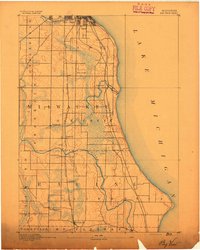 1891 Bayview1891 Print · USGSSouthern Wisconsin at the close of the nineteenth century reveals a landscape of burgeoning rail corridors and quiet farming townships along the Lake Michigan shore. Genealogists and local historians can trace early settlements like Paynesville, Caledonia, and Franksville.2 unique versions available
 - 1891 Map of Muskego, 1896 Print
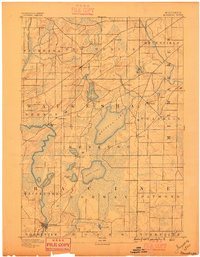 1891 Muskego1896 Print · USGSSoutheast Wisconsin in the early 1890s was a landscape of expansive lake systems and rural townships connected by early rail and river routes. Genealogists can trace family holdings and vanished crossroads like Big Bend, Prospect Hill, and Denoon.
 - 1892 Map of Milwaukee
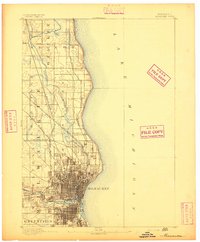 1892 Milwaukee1892 Print · USGSWisconsin’s industrial heartland is documented here during a period of rapid rail expansion and urban growth along the western shore of Lake Michigan. Genealogists and historians can trace the early rail junctions and settlements such as Schwartzburg Junction, Mequon Sta., and Thiensville.2 unique versions available
 - 1892 Map of Waukesha
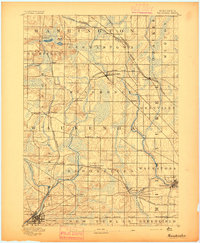 1892 Waukesha1892 Print · USGSSoutheast Wisconsin in the 1890s was a critical junction of rail lines and river valleys connecting small industrial settlements. Trace the early development of Waukesha and Wauwatosa before suburban expansion, or locate vanished stops like Templeton and Brookfield Junction.
 - 1901 Map of Milwaukee
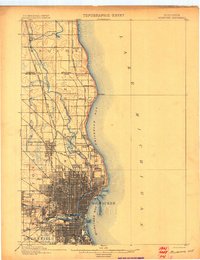 1901 Milwaukee1901 Print · USGSThe Milwaukee lakefront and surrounding townships are shown here as a burgeoning industrial and rail corridor at the start of the 1900s. Trace early property and rail development at Whitefish Bay, Wauwatosa, and the defunct Dillman Sta. depot.
 - 1901 Map of Waukesha
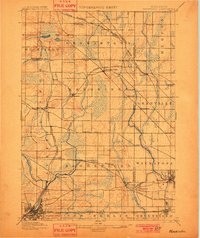 1901 Waukesha1901 Print · USGSSoutheastern Wisconsin at the turn of the century shows a landscape transitioning from rural townships to a complex rail-linked corridor. Genealogists and historians can trace the exact locations of early communities like Freistadt, Fussville, and Brookfield P.O. along the Menomonee River.
 - 1901 Map of Bayview
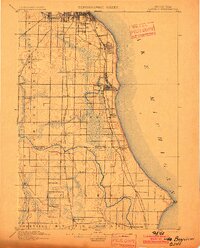 1901 Bayview1901 Print · USGSThe Lake Michigan shoreline south of Milwaukee comes alive in the late Victorian era as industry and rail lines expand. Trace early coastal growth in Cudahy and South Milwaukee, or locate old interior settlements like New Coeln, Kilbournville, and Lamberton P.O..4 unique versions available
 - 1901 Map of Muskego
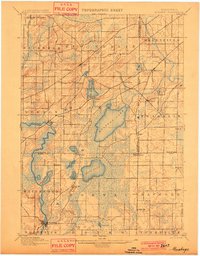 1901 Muskego1901 Print · USGSSoutheastern Wisconsin at the close of the nineteenth century was a landscape of budding dairy hubs and interconnected glacial lakes. Researchers can trace early rural life across these townships, finding legacy sites like Union Church, the path of the Wisconsin Central Railroad, and original footprints for Tess Corners and Big Bend.4 unique versions available
 - 1906 Map of Waukesha
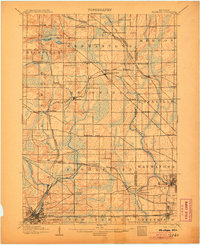 1906 Waukesha1906 Print · USGSWaukesha and the Milwaukee outskirts thrive at the turn of the century during a height of rail connectivity. Genealogists can trace family footprints in early settlements like Freistadt, Lannon, and the neighborhoods of Wauwatosa.4 unique versions available
 - 1906 Map of Milwaukee
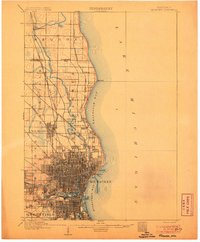 1906 Milwaukee1906 Print · USGSThe Milwaukee lakefront and its surrounding townships show the height of early twentieth-century rail and river development. Researchers can trace ancestral property near National Home or locate vanished stops along the Lake Shore Line and Chicago Milwaukee and St Paul RR.4 unique versions available
 - 1954 Map of Rockford
 1954 Rockford1954 Print · USGSThe Rock River valley and the Illinois-Wisconsin borderlands are captured here in the mid-1950s during a period of robust industrial and agricultural activity. Genealogists and historians can trace rail-era corridors like the Illinois Central RR and locate landmarks from Big Foot Prairie to Lake Geneva.
 - 1954 Map of Milwaukee, 1967 Print
 1954 Milwaukee1967 Print · USGSCoastal life and maritime commerce across Lake Michigan are seen here during the mid-fifties, bridging Wisconsin's industrial hubs and Michigan's timberlands. Genealogists and historians can trace the rail lines of the Grand Trunk Western and find long-established ports like Ludington, Port Washington, and Muskegon.3 unique versions available
 - 1955 Map of Rockford
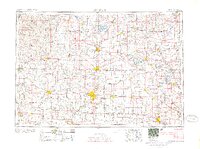 1955 Rockford1955 Print · USGSThe Rock River valley and southern Wisconsin dairy country are shown here in the mid-fifties as the region's manufacturing centers grew. Genealogists and historians can trace the paths of the Chicago and North Western RR and Illinois Central RR through hubs like Rockford and Beloit.
 - 1957 Map of Madison, 1967 Print
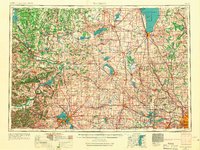 1957 Madison1967 Print · USGSSouth-central Wisconsin in the mid-fifties reveals a landscape of industrial hubs and glacial lakes linked by a dense rail and highway network. Genealogists and historians can trace the development of lakeside communities and find notable sites like Badger Ordnance Works and the Horicon National Wildlife Refuge.3 unique versions available
 - 1958 Map of Milwaukee
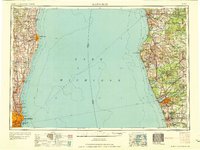 1958 Milwaukee1958 Print · USGSThe shorelines of Lake Michigan in the late fifties reveal a landscape of bustling ferry ports and growing industrial suburbs. Genealogists and historians can trace rail networks like the Chesapeake & Ohio and locate landmarks such as Little Sable Point and Holy Cross Church.
 - 1958 Map of Milwaukee, 1960 Print
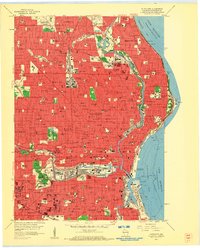 1958 Milwaukee1960 Print · USGSMid-century Milwaukee is a landscape of dense neighborhoods, massive rail yards, and industrial lakefronts during its peak urban era. Genealogists and historians can trace the city's growth through dozens of parochial schools like St Marys Sch and large burial grounds including Wanderers Rest Cemetery and Forest Home Cemetery.3 unique versions available
 - 1958 Map of Milwaukee, 1960 Print
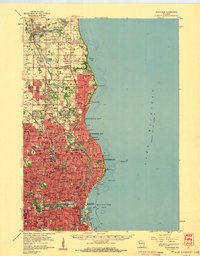 1958 Milwaukee1960 Print · USGSGreater Milwaukee and the Ozaukee County border appear here at the end of the fifties, when the city’s residential and academic core was firmly established. Genealogists can locate family-named institutions like St Rose Sch & Ch, trace the lakefront in Whitefish Bay, and find old rail lines such as the Chicago and North Western.3 unique versions available
 - 1958 Map of Greendale, 1960 Print
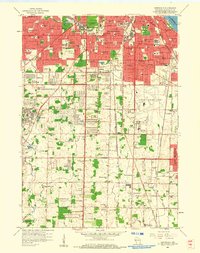 1958 Greendale1960 Print · USGSSouthern Milwaukee and its neighbors are seen here in the late fifties, as suburban expansion begins to surround major hubs. Genealogists can trace family plots across Forest Home Cemetery and St Adalberts Cemetery, or locate vanished landmarks like the County House of Correction.3 unique versions available
 - 1958 Map of South Milwaukee, 1960 Print
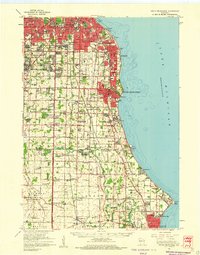 1958 South Milwaukee1960 Print · USGSCoastal Milwaukee County and northern Racine County show a landscape of rapid mid-century development and heavy industry along Lake Michigan. Researchers can trace the layout of family-named roads and rural schools like Caddy Vista Sch, alongside major landmarks like General Mitchell Field and Paynesville Chapel.2 unique versions available
 - 1958 Map of Wauwatosa, 1961 Print
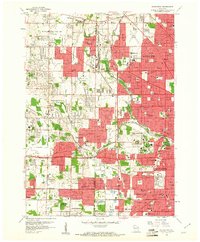 1958 Wauwatosa1961 Print · USGSMilwaukee's western suburbs expanded rapidly during the late fifties as residential neighborhoods grew around long-standing institutions and rail lines. Local historians can trace the footprint of Wisconsin County Institutions, the Zoological Park, and Mount Mary College.4 unique versions available
 - 1958 Map of Racine, 1971 Print
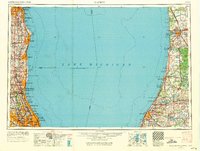 1958 Racine1971 Print · USGSThe Lake Michigan shoreline in the late fifties was a study in contrasts between the industrial bustle of Kenosha and the quiet woods of the Allegan State Forest. Genealogists and historians can trace the urban footprint of Evanston or locate strategic sites like Fort Sheridan and the Wind Point Light.3 unique versions available
 - 1958 Map of Rockford, 1974 Print
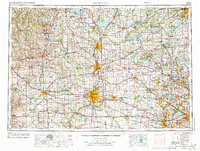 1958 Rockford1974 Print · USGSNorthern Illinois and southern Wisconsin are shown here in the mid-twentieth century as rail-dependent industrial towns began to interface with growing lakefront communities. Genealogists can trace family roots through settlements like Saylesville and Tess Corners or locate historical landmarks like the Rockford Ordnance Depot.4 unique versions available
 - 1959 Map of Hales Corners, 1960 Print
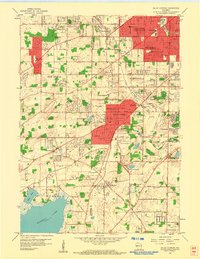 1959 Hales Corners1960 Print · USGSThe suburban and rural landscape southwest of Milwaukee is frozen in time during the late fifties, as traditional farms meet post-war growth. Researchers can trace the legacy of local institutions and small hubs like St Martins, Tess Corners, and the Sacred Heart Monastery.4 unique versions available
 - 1959 Map of Waukesha, 1961 Print
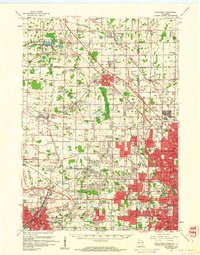 1959 Waukesha1961 Print · USGSSoutheast Wisconsin was undergoing a massive suburban transformation in the late fifties as Milwaukee expanded west. Trace the growth of post-war neighborhoods and infrastructure near Goerkes Corner, Timmerman Airport, and the Lannon limestone Quarries.3 unique versions available
 - 1959 Map of Hales Corners, 1980 Print
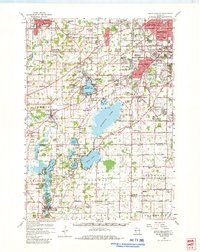 1959 Hales Corners1980 Print · USGSSoutheast Wisconsin in the late fifties is captured here during its transition from rural lake country to suburban centers. Researchers can trace family sites at Durham Cem, locate early airfields like Rainbow Airport, or study the grounds of Heg Memorial Park.
Showing maps 1-25 of 53
Top cities near West Allis
- Milwaukee historical maps
- Racine historical maps
- Waukesha historical maps
- Wauwatosa historical maps
- Brookfield historical maps
- New Berlin historical maps
See more
Top neighborhoods of West Allis
- Conrad Gardens historical maps
- Greenfield Park historical maps
- Henderson Park historical maps
- Honey Creek Settlement historical maps
- Rose Hill historical maps
- LaFollette Park historical maps
See more
Frequently asked questions
- What are the different types of historical maps available for West Allis?
- What is the oldest map of West Allis?
- Where can I purchase historical maps of West Allis for my home or office?
- Where can I download high-res historical maps of West Allis?
- Are there historical topographic maps available for West Allis?
- Is there historical aerial imagery available for West Allis?
- Where are historical maps of West Allis sourced from?