1960s Maps of Lind, Wisconsin
Explore 6 historic maps of Lind from the 1960s. These maps offer a rare glimpse into what life looked like during the 1960s — showing old roads, neighborhoods, homes, and landmarks that have changed or disappeared over time.
Whether you're researching your family's past, planning a metal detecting trip, or studying how Lind's landscape evolved across the 1960s, these high-resolution maps are a powerful tool for exploring the history of this region.
- Focus on a specific era: All maps on this page are from the 1960s, giving you a focused view of this time period.
- See what’s changed: Compare century-old streets, trails, and buildings to today's modern landscape using overlays and satellite layers.
- Research with precision: Use these maps for genealogy, historical research, land use analysis, or educational projects.
- View, download, or print: Maps are fully viewable online in high resolution, and can be downloaded or printed for your own records.
Start exploring Lind's history through authentic maps from the 1960s. This is your window into the past.
Lind, WI maps
(6)- 1961 Map of Poy Sippi, 1963 Print
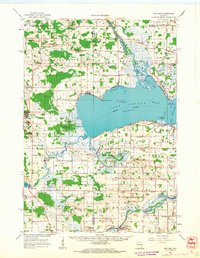 1961 Poy Sippi1963 Print · USGSThe Lake Poygan region of Wisconsin comes alive in this early 1960s survey, showing the intricate river-and-marsh economy before modern expansion. Researchers can trace family sites at Fountain Valley Sch & Ch, the Welsh Cem, or follow the banks of the Poy Sippi River through historic lakefront settlements like Tustin.2 unique versions available
 - 1961 Map of Redgranite, 1963 Print
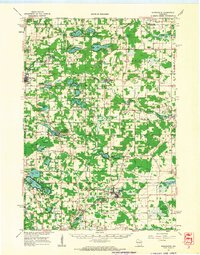 1961 Redgranite1963 Print · USGSWaushara County’s kettle lake country is captured here in the early sixties, showing a landscape shaped by stone quarries and summer camps. Researchers can trace the Chicago and North Western rail line and find local landmarks like St Marks Cem and the Wild Rose State Fish Hatchery.2 unique versions available
 - 1961 Map of Saxeville, 1966 Print
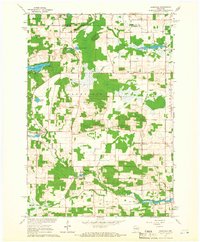 1961 Saxeville1966 Print · USGSThe rural town of Saxeville and the surrounding Waushara County countryside are captured here in the early sixties. Genealogists and researchers can trace family roots at Cedar Cem or Hilltop Cem, and locate landmarks like the Wild Rose Sch and Emaus Ch.2 unique versions available
 - 1961 Map of Poy Sippi, 1968 Print
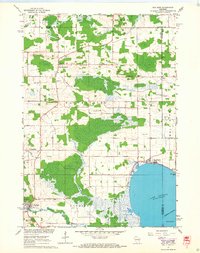 1961 Poy Sippi1968 Print · USGSThe marshlands and crossroads of Waushara County are captured here in the early 1960s as they meet the shores of Lake Poygan. Researchers can locate historic rural centers like Poy Sippi and Tustin, alongside parish sites like Emmaus Ch and St Johns Sch.2 unique versions available
 - 1969 Map of Weyauwega, 1971 Print
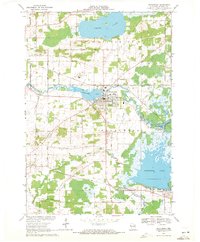 1969 Weyauwega1971 Print · USGSWeyauwega and the surrounding Waupaca County countryside are captured here in the late sixties as the river-and-rail economy remained central to the region. Researchers can trace family-named sites like Butternut Ridge, find local landmarks like the Waupaca County Fairground, and locate cemeteries including Oakwood Cemetery and Hobart Cem.2 unique versions available
 - 1969 Map of Waupaca, 1972 Print
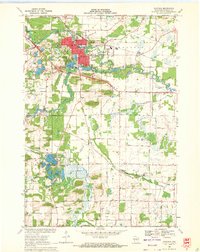 1969 Waupaca1972 Print · USGSWaupaca and its surrounding townships are captured in the late sixties as the area balanced its river-based industry with growing recreational lakefronts. Genealogists and local researchers can locate St Mary Magdalene Cem, the settlement of Little Hope, and the path of the Soo Line railroad.
End of results
Showing maps 1-6 of 6
Top cities near Lind
- Waupaca historical maps
- Wautoma historical maps
- Redgranite historical maps
- Weyauwega historical maps
- Manawa historical maps
- Iola historical maps
See more
Frequently asked questions
- What are the different types of historical maps available for Lind?
- What is the oldest map of Lind?
- Where can I purchase historical maps of Lind for my home or office?
- Where can I download high-res historical maps of Lind?
- Are there historical topographic maps available for Lind?
- Is there historical aerial imagery available for Lind?
- Where are historical maps of Lind sourced from?