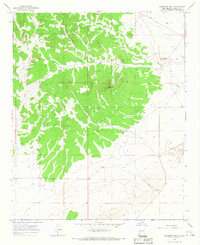
1963 Map of Anderson Peak
USGS Topo · Published 1967About this map
Anderson Peak rises as the central landmark of this high-altitude landscape in Catron County, New Mexico. The 1963 field survey documents a remote ranching territory defined by its essential water infrastructure rather than permanent settlements. A network of unimproved dirt roads and light-duty tracks connects a series of family-named water sources, including Boaz Well, Carter Well, and the McClute Well. These features, along with Five Troughs Well, illustrate the critical importance of groundwater management for livestock in the arid Southwest during the mid-20th century. To the east, the terrain shifts near Snake Hill, where the map identifies the Rock House Well. The distribution of these named points and the carefully mapped fence lines offer a detailed look at mid-century land use and property boundaries in a region where the natural topography dictated the pace of development.
Find a feature on this map
13 named features on this map. Tap any name to fly to it.
Don’t see what you’re looking for? This feature index may not catch every label — zoom into the map to look around manually.
Map Details
Editions of this 1963 Anderson Peak Map
This is the sole edition of this map. No revisions or reprints were ever made.
Other maps of this area
1954 · Tularosa
USGS Topo · 1:250,000
1954 · Socorro
USGS Topo · 1:250,000
1958 · Socorro
USGS Topo · 1:250,000
1958 · Tularosa
USGS Topo · 1:250,000
1962 · Socorro
USGS Topo · 1:250,000
1963 · Datil
USGS Topo · 1:24,000
1964 · Crosby Springs
USGS Topo · 1:24,000
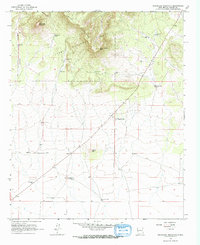
1965 · Sugarloaf Mountain
USGS Topo · 1:24,000
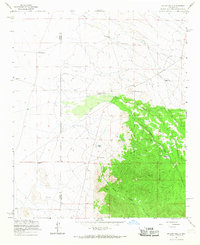
1965 · Kellog Well
USGS Topo · 1:24,000
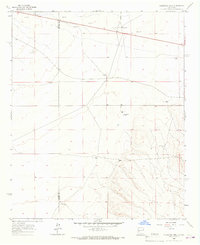
1965 · Augustine Well
USGS Topo · 1:24,000