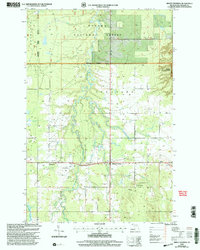
1999 Map of Bruce Crossing
USGS Topo · Published 2004About this map
Bruce Crossing serves as the central hub of this Upper Peninsula landscape, situated where the Baltimore River meets several distinct tributaries. The topography, revised by the USDA Forest Service in the late 1990s, reveals a mix of timber management and local utility infrastructure within the Ottawa National Forest. Small settlements like Baltimore and Gem are linked by rural routes such as Brown Road, while the inclusion of the Bruce Crossing Cem and a Private Landing Strip near the river provides specific touchpoints for genealogists and local historians. The area is defined by its complex drainage network, featuring uniquely named water bodies like Fifteen and One-half Mile Creek and Inkala Creek. Evidence of local industry is visible through scattered Gravel Pits and a Communication Tower, illustrating the modern utility of this northern Michigan forest land.
Find a feature on this map
29 named features on this map. Tap any name to fly to it.
Don’t see what you’re looking for? This feature index may not catch every label — zoom into the map to look around manually.
Map Details
Editions of this 1999 Bruce Crossing Map
This is the sole edition of this map. No revisions or reprints were ever made.
Other maps of this area
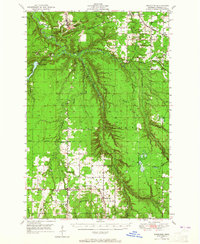
1949 · Rockland
USGS Topo · 1:62,500
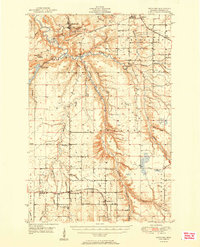
1951 · Rockland
USGS Topo · 1:62,500
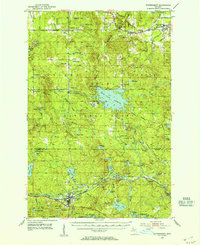
1952 · Watersmeet
USGS Topo · 1:62,500
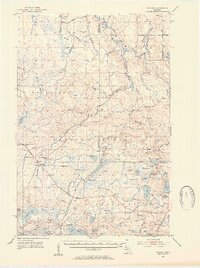
1952 · Thayer
USGS Topo · 1:62,500
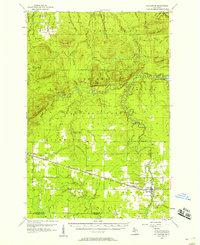
1956 · Matchwood
USGS Topo · 1:62,500
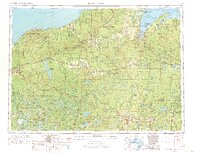
1958 · Iron River
USGS Topo · 1:250,000
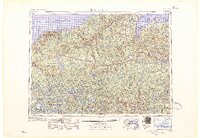
1960 · Iron River
USGS Topo · 1:250,000
1961 · Iron River
USGS Topo · 1:250,000
1967 · Iron River
USGS Topo · 1:250,000
1979 · Ontonagon
USGS Topo · 1:100,000
Featured Places
- Stannard Township, MI
- Rockland Township, MI
- McMillan Township, MI
- Bruce Crossing, MI
- Haight Township, MI