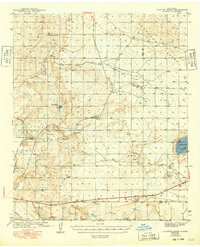
1943 Map of Clayton Basin
USGS Topo · Published 1949About this map
The Potash Co of America Mine anchors the western edge of this landscape, reflecting the burgeoning industrial development of the Permian Basin in the late 1930s and early 1940s. Situated on the border of Eddy and Lea Counties, the terrain transitions from the high Querecho Plains into the depression of the Clayton Basin, a region defined by its critical water sources and rugged relief. Isolated outposts like Lusk Ranch and Wood Ranch provide evidence of the area's cattle ranching heritage, while the presence of the Atchison Topeka and Santa Fe railroad line highlights the vital transportation corridors required for mineral extraction. Natural features such as the Maroon Cliffs and the wide alkaline expanse of Laguna Plata emphasize a landscape where geography dictated both settlement patterns and industrial potential during this era of New Mexico's growth.
Find a feature on this map
18 named features on this map. Tap any name to fly to it.
Don’t see what you’re looking for? This feature index may not catch every label — zoom into the map to look around manually.
Map Details
Editions of this 1943 Clayton Basin Map
2 editions found
Other maps of this area
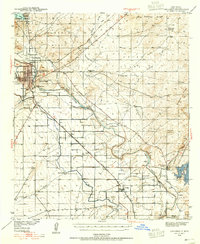
1939 · Carlsbad
USGS Topo · 1:62,500
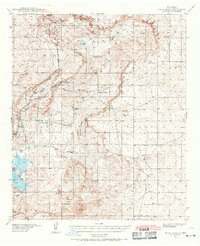
1939 · Nash Draw
USGS Topo · 1:62,500
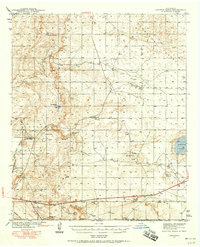
1942 · Clayton Basin
USGS Topo · 1:62,500
1943 · Carlsbad
USGS Topo · 1:62,500
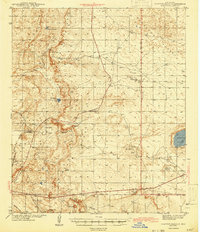
1943 · Clayton Basin
USGS Topo · 1:62,500
1943 · Oil City
USGS Topo · 1:62,500
1943 · Nash Draw
USGS Topo · 1:62,500
1954 · Carlsbad
USGS Topo · 1:250,000
1954 · Hobbs
USGS Topo · 1:250,000
1955 · Red Lake SE
USGS Topo · 1:24,000