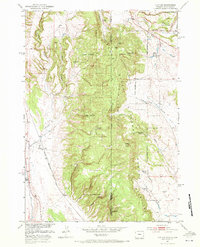
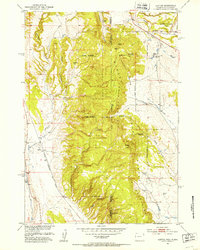
1951 Map of Clifton
USGS Topo · Published 1972About this map
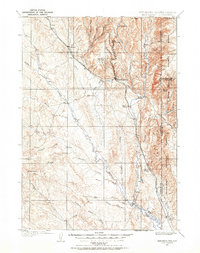
The Black Hills National Forest dominates this landscape along the border of Wyoming and South Dakota, where steep ridges and deep canyons define the transition from the plains. The Chicago Burlington and Quincy railroad line cuts through the western valley, following the path of Whoopup Creek past the settlement of Clifton. This rail corridor was essential for connecting the high country to the broader Missouri River Basin during the mid-century era. Evidence of early rural infrastructure and shifting demographics is visible in the Clifton School (Aband) and several Gravel Pits (Inactive). Higher elevations are marked by the Elk Mountains Lookout Tower and Wildcat Peak, which provided vital vantage points for forest management. Numerous water sources, such as Ferguson Spring and Dugout Spring, suggest the importance of reliable water for ranching operations like the Blaine Ranch.
Find a feature on this map
32 named features on this map. Tap any name to fly to it.
Don’t see what you’re looking for? This feature index may not catch every label — zoom into the map to look around manually.
Map Details
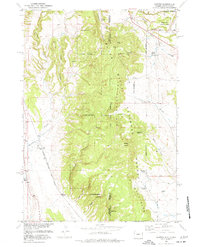
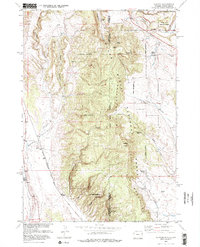
Editions of this 1951 Clifton Map
4 editions found
Other maps of this area
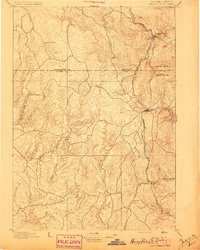
1896 · Harney Peak
USGS Topo · 1:125,000
1899 · Newcastle
USGS Topo · 1:125,000
1901 · Harney Peak
USGS Topo · 1:125,000
1901 · Newcastle
USGS Topo · 1:125,000
1951 · Owens
USGS Topo · 1:24,000
1951 · Dewey
USGS Topo · 1:24,000
1951 · Dewey SW
USGS Topo · 1:24,000
1951 · Newcastle
USGS Topo · 1:24,000
1951 · Fanny Peak
USGS Topo · 1:24,000
1951 · Clifton
USGS Topo · 1:24,000