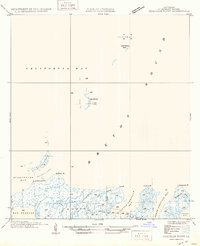
1949 Map of Coquille Point
USGS Topo · Published 1949About this map
Plaquemines parish marshlands and the open waters of Breton Sound define this coastal survey, based on aerial photography from the mid-1930s. The landscape is a complex network of wetlands and tidal inlets, where Fort Bayou and Rattlesnake Bayou cut through the soft sediments of the delta. Isolated landforms like the Hog Islands and Sable Island rise from the shallow waters of California Bay and Quarantine Bay, marking the precarious boundary between land and sea. In the southern portion of the sheet, the marsh is segmented by a grid of shallow ditches and land lines recorded by the General Land Office. Navigation points such as Coquille Pt and Raccoon Pt anchor the shoreline, illustrating the shifting geography of the Louisiana coast before modern coastal erosion significantly altered these barrier features.
Find a feature on this map
19 named features on this map. Tap any name to fly to it.
Don’t see what you’re looking for? This feature index may not catch every label — zoom into the map to look around manually.
Map Details
Editions of this 1949 Coquille Point Map
This is the sole edition of this map. No revisions or reprints were ever made.
Other maps of this area
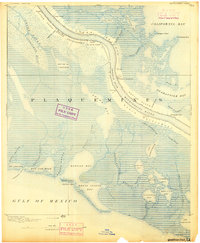
1892 · Quarantine
USGS Topo · 1:62,500
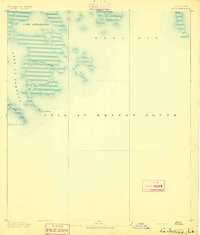
1893 · La Fortuna
USGS Topo · 1:62,500
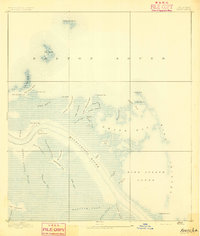
1893 · Forts
USGS Topo · 1:62,500
1893 · Dime
USGS Topo · 1:62,500
1935 · Taylor Pass
USGS Topo · 1:31,680
1935 · Tropical Bend
USGS Topo · 1:31,680
1941 · Black Bay
USGS Topo · 1:62,500
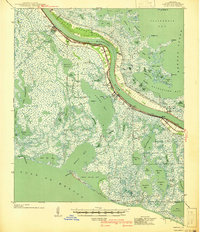
1941 · Empire
USGS Topo · 1:62,500
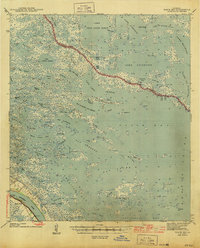
1944 · Black Bay
USGS Topo · 1:62,500
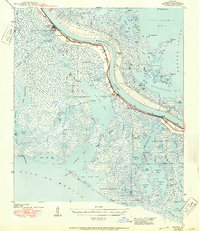
1944 · Empire
USGS Topo · 1:62,500