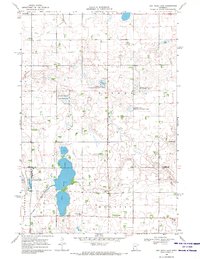
1968 Map of Dry Wood Lake
USGS Topo · Published 1970About this map
The prairie wetlands of western Minnesota are defined by water and wildlife conservation in this late 1960s survey. The landscape is dominated by the sprawling Dry Wood Lake, which sits at the convergence of several townships and counties. This area serves as a significant ecological corridor, evidenced by the numerous protected zones such as the Dablow State Wildlife Management Area, Reimers State Wildlife Management Area, and multiple tracts of National Wildlife Management Area.
Find a feature on this map
19 named features on this map. Tap any name to fly to it.
Don’t see what you’re looking for? This feature index may not catch every label — zoom into the map to look around manually.
Map Details
Editions of this 1968 Dry Wood Lake Map
This is the sole edition of this map. No revisions or reprints were ever made.
Other maps of this area
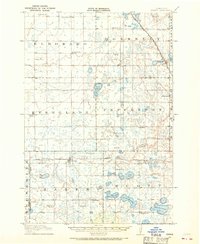
1910 · Chokio
USGS Topo · 1:62,500
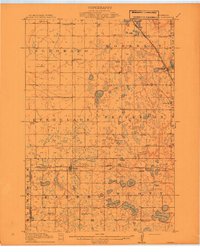
1912 · Chokio
USGS Topo · 1:62,500
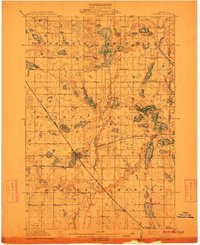
1912 · Morris
USGS Topo · 1:62,500
1953 · Milbank
USGS Topo · 1:250,000
1953 · Saint Cloud
USGS Topo · 1:250,000
1957 · Saint Cloud
USGS Topo · 1:250,000
1958 · Milbank
USGS Topo · 1:250,000
1958 · Saint Cloud
USGS Topo · 1:250,000
1968 · Lake Oliver
USGS Topo · 1:24,000
1968 · Artichoke Lake NW
USGS Topo · 1:24,000